In the Bujinkan system of martial arts, we are reminded constantly of how adapting is the key to survival. This is not different from what we all hear in our daily lives and at work, “Change is the only constant”. Practitioners who have trained for many years are reminded every now and then that we need to be able to unlearn techniques. Techniques are vital in the early part of one’s martial training journey. But over time, the concept behind the technique is more important the technique itself. If the concept is not explicit, it needs to be realized with training, be it with peers or seniors or different teachers.
But martial arts manuals, scrolls and books contain techniques. They do contain concepts, but these are not easy to practice without what in the Bujinkan is called “kuden”. “Kuden” is knowledge that is transmitted orally, and is not present in literature or manuals. It is a part of experiential learning. This fact leads to another statement that we hear fairly often, “The book will not fight for you”. Variants of this statement are “Do not fall in love with the book/technique” and “Sticking to a technique in a real fight will get you killed”.
So, it is drilled into a practitioner of the Bujinkan that with experience it is very important to not become someone who “collects techniques”. One needs to learn to respond to the attack or situation as it presents itself. One cannot depend on techniques. This is not a new concept and all of us face changes regularly in life and unexpected challenges every now and then. But we deal with these as a matter of course. We might be irritated, angry or sad and experience other negative emotions at the moment of the challenge. But we deal with it and move on, maybe even laugh over it in hindsight and if we are lucky, gain something positive from the experience.
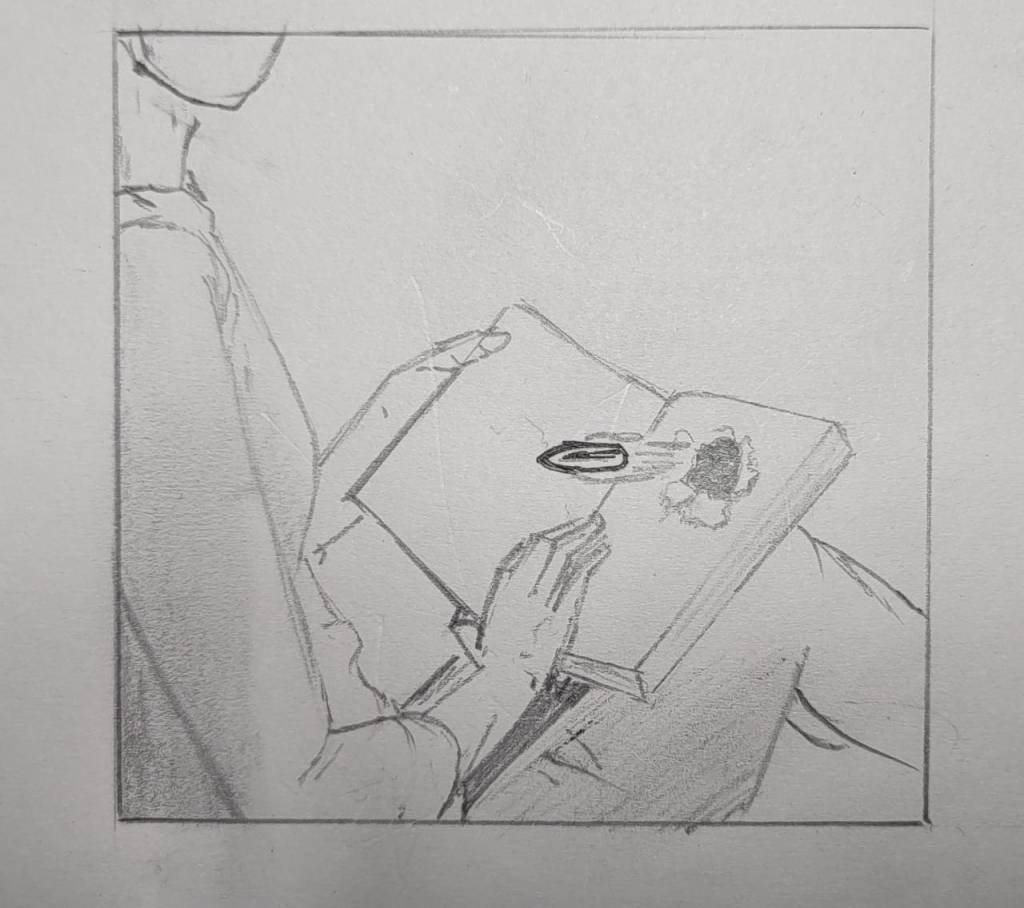
Adherence to dogma from just one book might be detrimental to any person. Exposure to multiple opinions and sources of knowledge and ideas is vital. Art work by Vishnu Mohan
We are currently in the high noon of elections in India. The general elections of 2024 for the Lok Sabha are starting in a few days. Like everyone else in the grand democracy that is India, I have political opinions and also have a blog. 🙂 Add to this my love for and experience, such as it is, in the Bujinkan, and my political opinions are coloured by concepts and learnings from the martial arts.
I started this article with a reference to books and the knowledge in them. I also mentioned how they cannot be an exact guide to life, even if what they contain is vitally important. Multiple books might help us lead a better life, but no one of them can be THE BOOK to live life by. This is common sense, even if some or A BOOK has a far greater influence on our lives than others. Of course, these days we can replace the “book” in the previous few statements with the media that one consumes most.
The rest of this article is my opinion about a few things that are heard every now and then in Indian media as part of the current political discourse.
We hear a lot these days about how the Constitution of India is supreme, when it comes to informing our social interactions on a day-to-day basis. This assertion is made on various media platforms. It is assumed that it is common sense to realize this. It is supposed to be “known” that the Constitution is what defines the current Republic of India.
The reference to the constitution being supreme is mainly mentioned in reference to the way the Government conducts itself. But considering that the Government is elected by the people, would this not extend to the electorate? Perhaps it does not, but it could, as elucidated below.
The electorate might appreciate a specific aspect of the government or a political party and hence vote for the same. At the same time, if the Government or a party senses a specific aspect as the pulse of the electorate that votes for it, will they focus on it to increase their chances of winning an election? It would seem likely. If the “aspect” that is likely to bring a party or a government to power is in contradiction to an existing Constitution, what happens then? Would the government or party not want to deviate from the existing principles of the constitution to achieve victory? If yes, would that mean that the electorate is what was responsible for an eventual change to the constitution? If this is true, would the argument that government should adhere to the constitution not extend to the electorate? As they are responsible for the creation of the government. Since the electorate is the people, does not the expectation of adherence to the constitution then not extend to the people of the country as well? It is hard to have a clear answer, but the answer does seem to be a yes. The people are expected to adhere to the constitution.
In this way of thinking of the relationship between the Constitution and the Country (more than just the republic, including the geography and the life forms within it), the people of the Republic of India are supposed to be a People of the Book. Of course, the Book here is the Constitution of India. One can’t help but feel that the Constitution thus makes Indians exclusively like the followers of Abrahamic religions, who are the people generally referred to when one thinks of “People of the Book”. The Jews, the Christians and the Muslims all follow one “Book” respectively.
But the Indian people have always followed several different traditions even when it comes to governance, administration and law and order. There have been multiple treatises in the past that attest to how government and interaction of people “should be”. A few these could be Vidura Neeti, Krishna Neeti, Shukra Neeta, Brihaspati Neeti, Chanakya Neeti, the practices of the medieval South Indian kingdoms, the practices of the various Sultanates in India etc.
But none of these were binding on the administrators during different periods of history. They could and in some cases did know of many of these various traditions. They used these in the ways they though best, based on the situation and context of the same. This is not unlike one using a library or the internet to refer to all possible sources of knowledge to come up with a new feasible solution, in a given space and time. There is no need to adhere to a “Single Tradition” even if some facets of the same are useful. This then makes Indians if anything, a “People of the Library”. This is not something I have come up with; I heard Dr. David Frawley use it once and it seems apt.
The memory of past governance traditions is alive, even if in an imperfect manner (the notion of a Dharma Rajya, for example). Also, these governance traditions of the past are part of the cultural identity for many Indians, for they are a part of the socio-religious knowledge and texts that are a part of one’s upbringing and heritage.
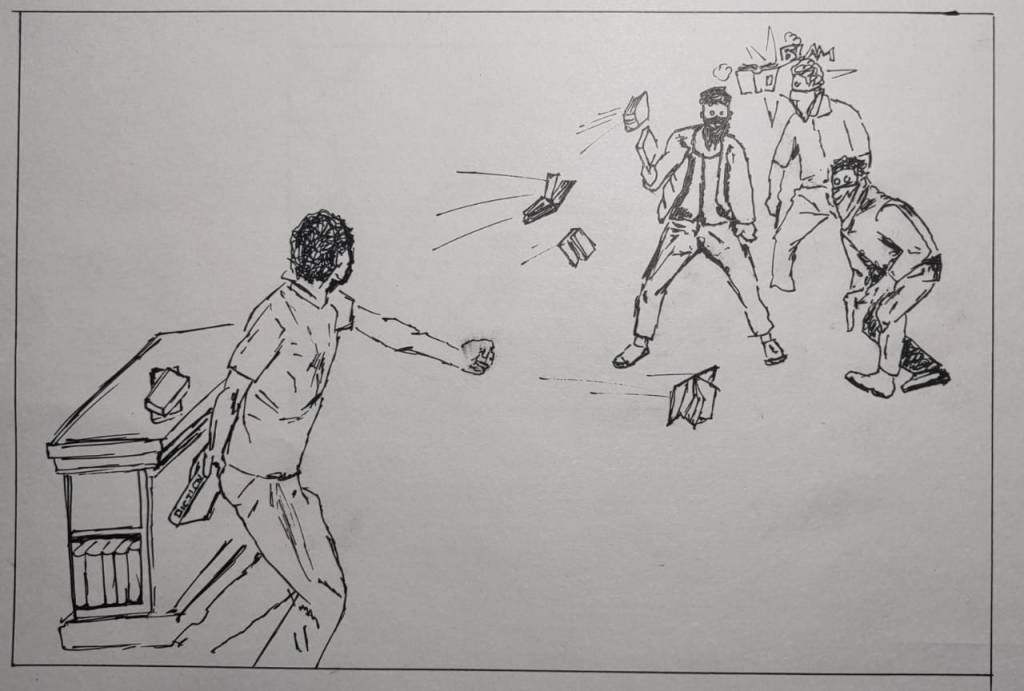
The contents from a library will serve to help oneself over the course of a lifetime. 🙂 Artwork by Vishnu Mohan
Now consider the article in the link seen below. It came out a little after the Prāna Pratishta of the Rama temple at Ayodhya. It speaks of how the Government is supposed to adhere to “Constitutionalism”. The article only addresses the Government and not the citizens.
https://scroll.in/article/1062519/in-its-74th-year-indias-constitution-has-been-emptied-of-its-soul
But if, as I was pondering earlier, the Government is the people, does the need to adhere to “Constitutionalism” extend to the people as well? The article literally adds an “ism” to the Constitution. Considering how the culture of Hindus also has an “ism” at the end, “Hinduism”, one can’t but help feel like the article is really close to telling people that there is a primary religion we owe allegiance to, the religion of the Constitution. This again feels like an attempt to make Indians a “People of the Book”, the Book being the Constitution of the Republic of India. I reiterate, this is my feeling, not something I am certain of, but it does seem plausible.
Next, consider the following article. It specifically speaks of how “culture” and maybe even “customs” should not have a place in law, with respect to marriages.
https://thewire.in/law/marriage-equality-narasimha-supreme-court-cji-chandrachud
I am not aware if the author is of the inclination that this should be the case in general or only with respect to marriages and similar social relationships/contracts. But if it is in general, again, there is an argument against cultural precedents in governance. This again would extend to a cultural memory of other traditions of governance being a no-no as well.
Considering the opinions expressed in the above two articles, is it not akin to telling people that no matter what, their belief systems, culture and traditions are going to be second to the Constitution? If the past traditions of governance are linked to their religions and cultural identity, what then? Will this subordination not be exacerbated if the memory of past governance traditions is alive? I am not certain I have clear answers to these. I only have opinions, and those are not static. Based on my limited experience, this is also true for many other people.
India has a hoary tradition of ideas and texts related to governance having commentaries (Bhāshya) written about them. These commentaries can have criticisms and preferences as well. There could even be suggestions of what in a given text should be followed and what should not. This is not unlike an amendment to a doctrine when the same is needed (whatever the root cause for the same might be).
Considering this tradition of criticism and change to traditions of governance, what if the electorate prefers a change to the Constitution or addition of newer (or older) traditions of governance into the same? Would this be a threat to the constitution or a violation of “constitutionalism”? I would opine that neither is true.
After all, the idea of the constitution NOT being THE BOOK is well known. Otherwise, there would not be 106 amendments to the document. It is an organic, living document that is changed as the nation evolves. There might be a lag in the change and the speed of response, but that it should be changed is not disputed.
Indians thus, do not believe that this latest tradition is perfect, but needs constant correction, just like past traditions of governance. Some of these might be informed by other traditions, not even necessarily from the geography of present or past India. The Library, will be referred to no matter what. The numerous and consistent amendments to the tradition of the Constitution itself is a testament to this. “The Library” here refers of course, to the other traditions of Governance that are in the memory of the citizens. These are the various Smritis and the “Nitis” that I referred to earlier and the overarching concept of a “Dharma Rājya”.
Granted, the Constitution of India is very long and fills in several books, but it certainly is a single tradition of governance, administration and law and order. Assuming that Indians will by default adhere to this latest tradition, specifically when memory and knowledge (and baggage) of other similar traditions from the past persists, is a bit rich.
So, when people make assertions that suggest India will cease to exist if the Constitution (or the institutions it defines) stops being sacrosanct are both right and wrong. They are wrong because India has always been India and never static, but always in flux, which seems to be its natural state. They are wrong because the Constitution will be yet another tradition in the Library to refer to, never to be excised from our collective existence. They are wrong simply because Indians are not a “People of the Book”, and the Constitution does not define the geography or the life that thrives within it. They are right because they only refer to the “Republic of India” and not “India” when they make this assertion. This prerequisite has to be stated and again and again, and never wrongly assumed to be common sense. They are right because India was never meant to be stuck to a given tradition for too long. India is always dynamic and in flow and that is what defines it, the absorption of traditions and the expansion of “The Library”.
 Mundane Budo