HANUMAN Vs PREDATOR – Part 1 of 6

Chapter 1 – The failed hunt
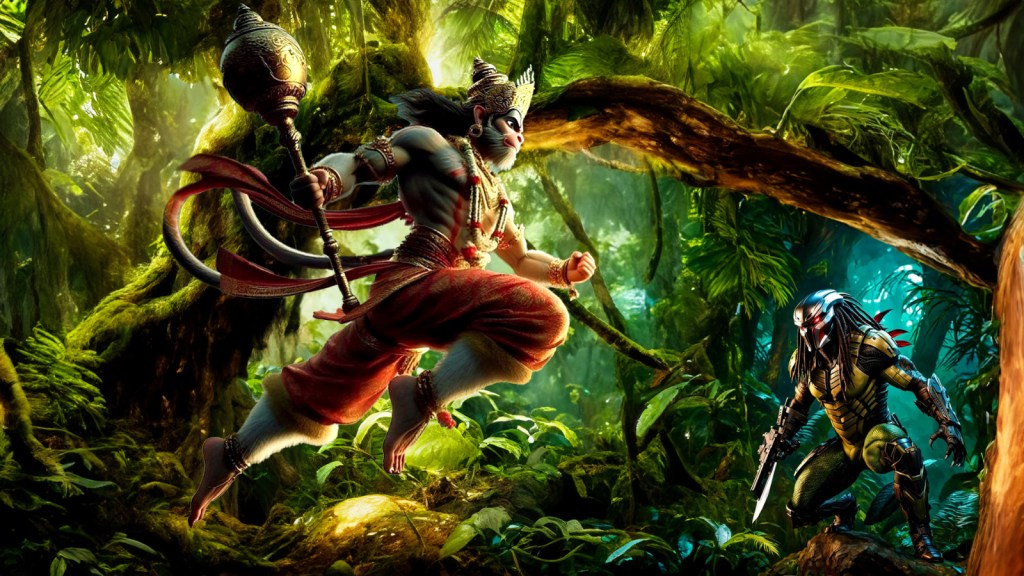
Artwork by Adarsh Jadhav (with use of AI)

Disclaimer: The following story is a work of fan fiction. It is purely meant for entertainment purposes and not for any commercial or profit related purposes. I do not own any of the characters mentioned in the story. The Gods and characters from stories of Hindu tradition and not owned by anyone for they are living divinities. The character of the Predator is the one from the Predator movies, distributed by 20th Century Fox. The character of the Predator was created in the film “Predator” (1987) directed by John McTiernan.

Hanuman, Jambavan and Garuda were chatting away to glory under the clear starlit sky in the western mountains. It was incredibly hot in the jungle and the proximity to the brook nearby was a relief. Dinner was done and they were all three content.

They had not met in nearly 300 years and there was a lot of catching up to do. The bright and brilliant night sky was irresistible and that’s what drove their conversation, “How had the stars changed in the last 1500 years”. They were staring at a gap between two trees and debating what stars were there in the centuries past.

That’s when a shimmering in the air was noticed by them, most clearly by Garuda, with his eagle eyesight. Jambavan bristled internally. He was the oldest of them and had the keenest instinct. The other two felt his worry before they sensed the danger.

There was something amiss. The atmosphere changed. There was no physical change in either the 3 ancients or in the surrounding landscape. But a battle had begun. The adversaries were not yet known, but they were all three certain of a malevolent presence.

Hanuman changed his grip around one mace and reached out for the other with his tail, very gently, without obvious intent. Jambavan carried no weapons and relaxed, but more like a seasoned warrior awaits a battle with an all pervading calm. Garuda felt a flash of anger before relaxing. His wing feathers realigned gently. No one would have realized the defensive movement, save the two with him.

None of them would initiate the attack. That would reveal their strength and intent. Revealing one’s strength was the best way to reveal one’s weakness and give the enemy an opening for a counterattack. Also, an enemy who did not know of their awareness of him or her would not be alerted that initial surprise was lost and hence change tactics.

The conversation they were having never missed a beat. All the other subtle changes happened in increments and none would be the wiser. Over the course of the next few nimishas (minutes) they kept the talking on. But the feeling of being observed and hunted never went away. It just got stronger. They all felt the danger shift around them. As they waited for a move that never came, they came to an unspoken decision. It was time to flush the stalker out, or eliminate him or her. With their experience, there was no risk of hurting an innocent.

Hanuman then stood up and stretched, just like anyone sitting for too long would. He was still stretching, when his tail suddenly lashed out. It was like a whip, only a prehensile whip. One of his twin maces was held at the end of it. His tail struck into the lower branches of a tree a short distance away. There was a solid thunk. And a body fell out of one of the branches.

As the body was falling, Garuda flew. He was less than a blur. He was where he was sitting one moment and the next he was on the body that had fallen. In the kshanas (moments/seconds) it had taken for it to fall, he had seen the shape of it and determined how it would fall. He landed exactly on the body to pinion the limbs of the stalker. The creature was smaller than he was. Two long blades were still sliding out of the top of its wrist. He pushed down on them and snapped them like they were twigs. They were twigs, for one of the strongest creatures on the planet, maybe in the universe.

The stalker was strong. The snapping of the blades had freed one of its arms and punched Garuda’s jaw. That enraged the great bird. He had always been one to anger quickly. He absorbed the blow and in the movement of his body absorbing the punch, he slid off the stalker’s side and in the same motion pulled on the arm that had struck. His move pulled the creature off its back and up. Garuda had pulled his right leg to his chest as he had rolled off. Now with his arm still gripping the stalker he pushed his leg out. That flung the stalker over him and several feet away.

The stalker seemed slower now. There were green glowing patches on parts of its body. Garuda, however was up in a flash and was about to fly in for the finish, but he saw Jambavan standing over the stalker and indicating to him to slow down.

As Jambavan looked on, he heard the creature make guttural and clicking noises. Its right hand was struggling to work on something on its left wrist. Due to a sense of sudden dread at the focus of the stalker, Jambavan, went down on his knees on the left arm and snapped it with a very efficient twist of the wrist, push of the arm into the shoulder and pressure against the elbow in the wrong direction.

The stalker gave a shrill squeal and drew a chakra with its weak right arm to strike at Jambavan. But Hanuman, who had walked up, brought his mace down on the stalker’s chest heavily. That left silence in the night, with the moon just rising and lightening the sky. All three stood around their stalker for a few minutes. The stalker was dead now, the danger past.

With the moon rising, they set about examining the one that had dared attack them. It was an unusual occurrence. Nothing living had dared attack these three in a very very long time. And when it had last happened, nothing solitary had attacked any of the three.

Hanuman asked his elders, “This is not any Asura I’ve ever encountered. Nor any animal I’ve seen. What manner of Asura or animal is this?” Jambavan and Garuda had seen the world for far longer than Hanuman, but both were unsure. “Neither a Kalakeya nor a Nivatakavacha” said Garuda. “Does not look like a Daitya, Danava or the later Rakshasas to me” admitted Jambavan. “And it is too big to be a shape shifting Pishacha or a Yaksha” opined Hanuman.

Jambavan leaned in closer and said “There is something strange about the face; it seems to be a mask to me”. He fiddled around the face and there was a hissing of gases. With that the mask seemed to loosen. Jambavan carefully lifted it off to reveal the horrific visage underneath.

There was a high scaly and slimy forehead. The head was topped with very long matted hair. There were four mandibles surrounding the mouth in its snarl of death. The eyes were small in the large face.

“Well, that’s the ugliest creature I’ve ever seen.” grumbled the great bird. Jambavan examined the rest of the body and said, “The blood in this creature seems to be green!!”

Hanuman and Garuda also noted the presence of armour on the chest, arms and legs. Only the midriff seemed bare, though covered by a net.

“None of us has seen this kind of creature or asura earlier. That can only mean this is a being from beyond Bhoomi, unless Lord Vishnu deliberately kept the presence of this kind from us.”, said Hanuman. Garuda was surprised, “That is highly unlikely.” He was the closest to Lord Vishnu of the three, though all three of them could be considered part of the Preserver’s inner circle. They were less devotees of the God and more his instruments, better still friends over the ages.

“This creature is an immaculate hunter.” said Jambavan. The other two concurred, “The intent we felt was really pure and incredibly strong. Far stronger than that in any predatory animal.”

“Also, it seems to be able to stay invisible, maybe using some yantra (device/technology). When I first fought with it, there was some shimmering and sparks in parts of the armour. Parts of it were invisible, then shimmered and became visible.” said Garuda. The other two were thoroughly impressed with this ability.

“Well, nothing more to learn for now.” said Hanuman. “We might as well get some rest in a different place.” They all walked a few yojanas (unit of distance, about 12 KM) form the scene of confrontation and settled in to relax. There was little conversation and all were anyway deep in thought. They all drifted off to sleep. There was no risk in that, they were all three supreme warriors after all, sneaking up on them was beyond impossible.

Back where they had left the slain body of the stalker, there was another shimmering in the air, a much larger shimmering than that noticed by the three. A large vimana (aircraft) appeared in the air and 5 creatures resembling the deceased stalker appeared around the body. One seemed in charge and there was some clicking and hissing. 4 of them picked up the body and disappeared. The one left behind raised its left wrist to its mask, where its mouth would have been. There were more hissing and clicking noises. And then several creatures appeared around the one in charge. There were maybe 50 of the creatures. More hissing and clicking followed and the group moved out in the direction taken by the three great ones. As they went, smaller groups split away. The hunt was on, again.

Next chapter – The Ambush, on 4th July 2024
Why the Prince can’t be PM, yet

In a previous article of mine where I was extolling the relevance of the festivals of Aayudha Pooja and Vijayadashami*, I had described the concept of “Shinken Gata” in the Bujinkan system of martial arts. The Shinken Gata is also a test students of the Bujinkan go through in some dojos. Shinken Gata can be roughly translated as “The Form (Kata) where the Spirit (Shin) in the Weapon (Ken)”. The test involves facing multiple opponents who attack at the same time from different directions, while attempting to perform specific forms.

In my experience, some of the learnings from this test for a student are,

  • Fatigue sets in really fast
  • Multiple opponents cause disorientation
  • Techniques and forms fail routinely and cannot be relied upon
  • Fear sets in when there are multiple opponents, even in a safe simulation
  • The objective of the test was never to check the form. It was to show that the spirit (“Shin”) is the true weapon. One keeps going until there is no life left.
  • Failure will occur. One strives despite this awareness. It is sometimes possible to prepare to avoid failure, not always.

This test is in some ways similar to the “Kobayashi Maru” test in the Star Trek franchise. This test will always result in the individual being tested failing. Its objective is to test character and also to teach that one has to do one’s best despite the knowledge of impending and certain failure.

The Shinken Gata in the dojo where I train is usually administered before a student starts training weapons. In the past, there used to be many of dropouts post the test, but this has reduced in recent years. Individuals did not always drop out because the test was too hard or because they failed. Many a time people left AFTER they passed. I am not certain why, but one reason I have come to expect is that the passing of this test is very satisfying, euphoric even; hence the person who has passed is satisfied with what has been achieved and no longer has a drive to train further.

Those that pass the test and continue training have renewed vigour and train harder for a while. But the learnings from the test remain for a very long time. Those that do not experience the Shinken Gata test always want to. It is like not having tested oneself. Add to this the feeling that one has never experienced a real fight (fortunately) and has not even endured it in simulation, and one always feels deficient.

The simulated reality of the Shinken Gata makes one better prepared for a real conflict, even ones not physical, with an acceptance of reality and its unexpected nature. This experience in most cases helps one endure and survive, if not thrive. Shinken Gata even as a simulation shows what might be needed in the face of death, while facing overwhelming odds. One does everything one can, until the very last instant (the proverbial throwing of the kitchen sink or burning the boats). Hopefully this drive will enable survival and perhaps victory or achievement of an objective.

In my opinion it is something similar to this feeling of Shinken Gata that is part of the moulding of individuals who successfully become leaders. What they do with the leadership once it is achieved is a different matter altogether. This idea is the focus of this article. At the time of writing this article, we are still in the course of the 2024 Indian election to the Lok Sabha; there is still one last phase of voting to go. Hence, me being as political as any other Indian, am sharing some thoughts on why the Lord of the Congress cannot be the PM, at least not yet.

Consider the following well-known rulers/leaders/administrators from various points in Indian history and their struggle to attain the throne/leadership.

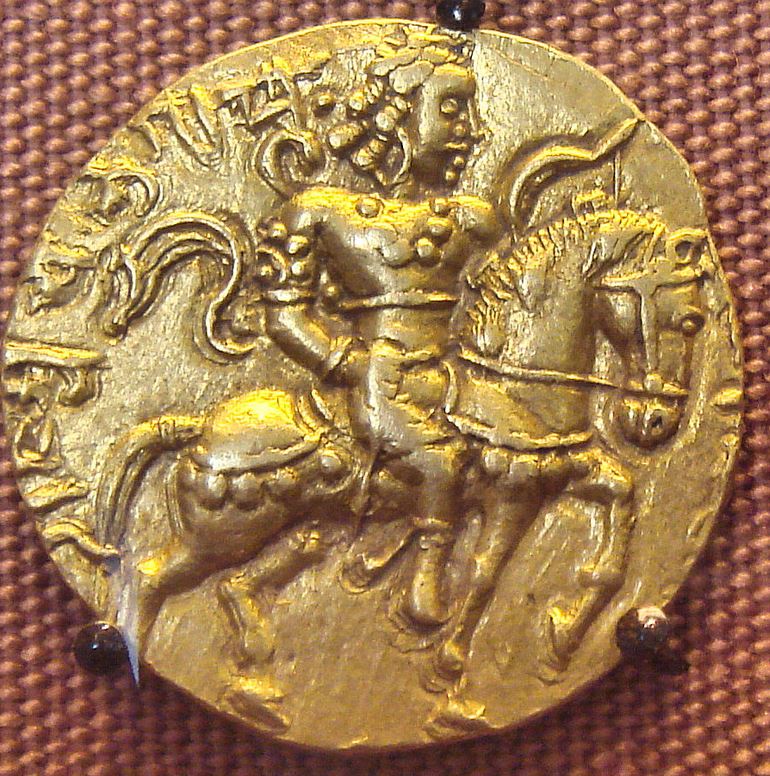
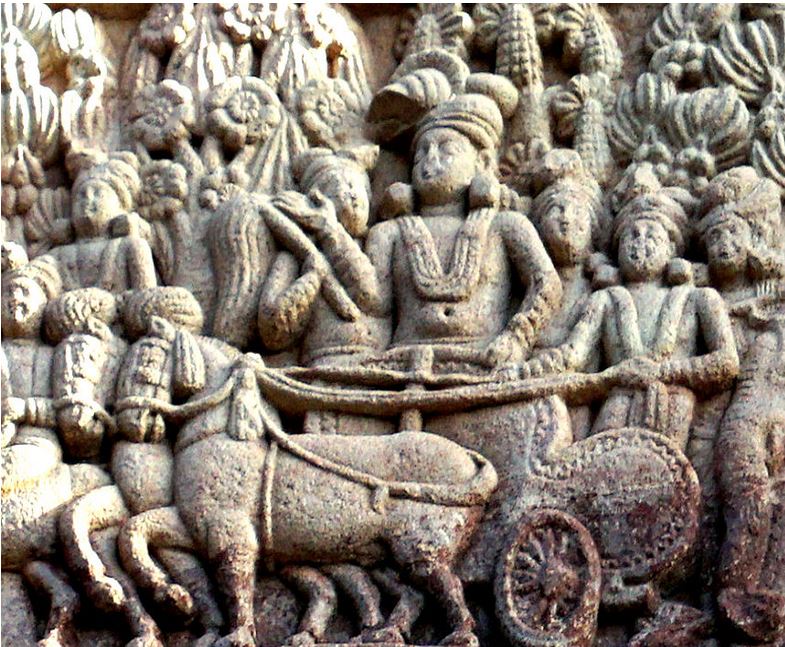
Left to Right – Ashoka, Chandragupta 2nd Vikramaditya, Harshavardhana. Credits for all 3 images – Wikipedia

  • Ashoka Maurya had to fight and kill his brothers to achieve the throne of Maghada in the third century BCE.
  • Chandragupta 2nd Vikramaditya had to dethrone his brother Ramagupta to achieve kingship of the Gupta Empire in the 4th century CE.
  • Harshavardhana’s brother Rajyavardhana was the Pushyabhuti king. He was killed treacherously. Harsha had to fight King Shashanka of the Gauda kingdom to protect his family and kingdom in this uncertain time. His limited success in the war protected his kingdom and he took the throne of Thanesar in the early 7th century CE.
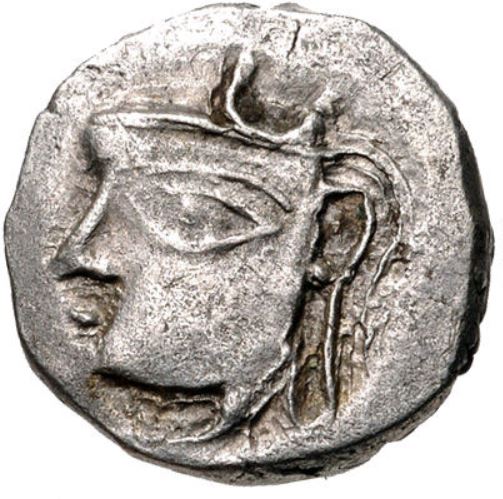
  • Pulakeshi 2nd had to fight against his uncle Mangalesha who was the regent and had usurped the throne. This victory in the internecine conflict resulted in his taking the throne of the Chalukya kingdom in the early 7th century CE.
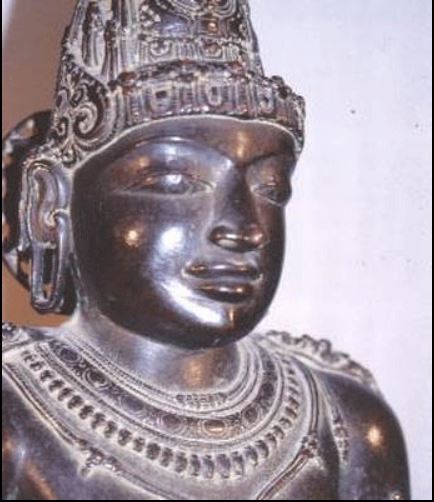
  • Raja Raja Chola had to fight off enemies from within the Chola Empire and also fight external enemies before becoming the king in the late 10th century CE.

Left to Right – Pulakeshi 2nd as depicted in a statue in Badami, Karnataka, Raja Raja Chola depicted in a bronze sculpture. Credits for both images – Wikipedia

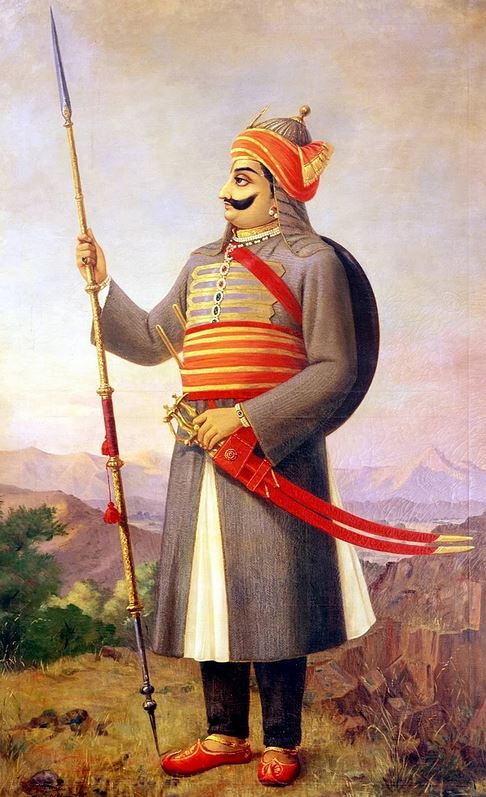
  • Rana Sanga had to survive his elder brother’s enmity to become the king of Mewar early in the 16th century CE.
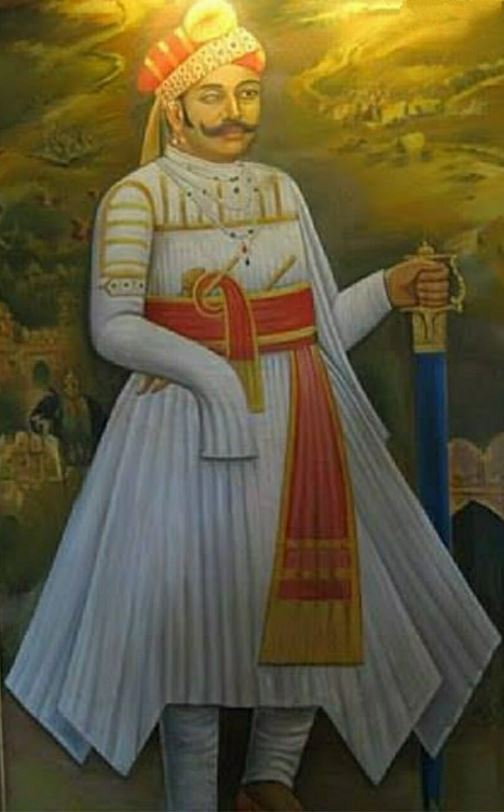
  • Rana Pratap had to survive attacks from the Mughals and also intrigue by his brother before claiming the throne of Mewar in the latter half of the 16th century.

Left to Right – Rana Sanga, Rana Pratap. Credits for both images – Wikipedia

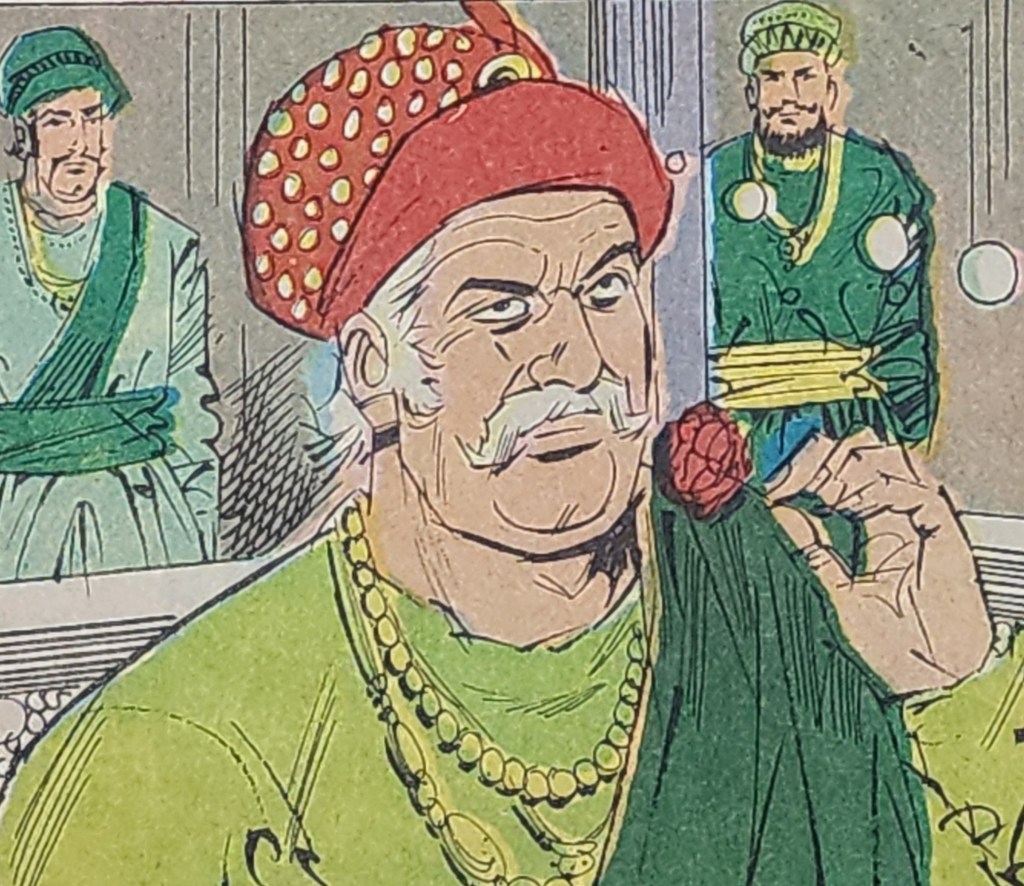
  • Akbar had to fight and win the 2nd battle of Panipat against the forces of Hemu to win the throne of Delhi, during the middle of the 16th century CE.
  • Aurangzeb killed his brothers and jailed his father on his way to becoming the Mughal emperor during the middle of the 17th century CE.
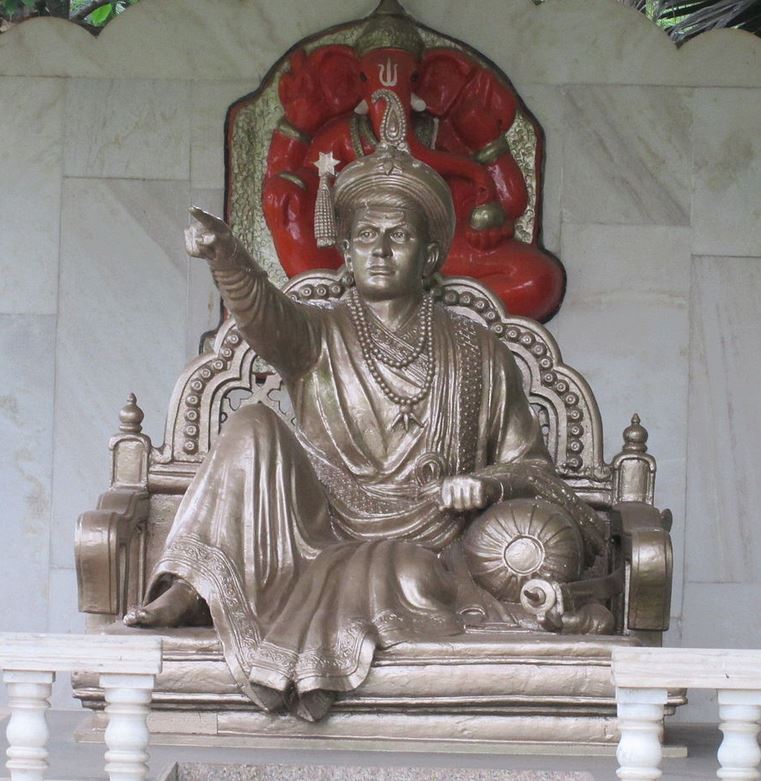
  • Peshwa Madhav Rao had to overcome his uncle Raghunath Rao before taking over as Peshwa of the Maratha Confederacy and restoring its glory after their defeat in the third battle of Panipat. This was in the latter half of the 18th century CE.

Left to Right – Akbar as depicted in the Amar Chitra Katha publication “Birbal The Wise”, Peshwa Madhav Rao as depicted in a statue in Maharashtra. Credit for the image on the right – Wikipedia

  • In the 20th century PM Indira Gandhi had to split the Congress party on the way to becoming the powerful leader that she came to be.
  • Lastly, in the current century, consider PM Narendra Modi. When he was the new CM of Gujarat in 2002, the tragedy of Godhra and the following riots occurred. After this incident, he had to survive opponents within the party, endure international ignominy and be acquitted by the enquiries and judicial processes that followed over the years. He then had to overcome challenges from within the BJP before becoming the PM candidate before the 2014 Lok Sabha elections.

In all of the above cases, the individual who became ruler or leader had to face serious, almost existential threats to their selves or at least to their leadership ambitions. The leaders either faced very serious external threats or, in most cases, had to fight internecine conflicts before becoming the ruler or leader. I opine that this struggle early in their careers, is akin to the Shinken Gata, but with vastly greater consequences. It is likely this relentless fight to achieve the top post that stood them in good stead later, as they achieved success in keeping the top post against all challenges and also added more fame to their time as the ruler/leader.

This is not to say that those who do not survive a civil war or severe external threats will not become rulers or leaders and be successful thereafter. The examples of Bindusara, Samudragupta and Rajendra Chola demonstrate this. These rulers inherited kingdoms which were not on the brink of war and did not fight family on the way to the throne. Yet they are remembered as successful monarchs, even great ones, in the case of the latter two.

I am suggesting that when one fights hard to achieve the top post, and especially when one fights a civil war to achieve the same, even if it is not bloody and only full of intrigue, the chances of becoming a great leader is higher. Even if one is not yet fighting for the top post of PM or monarch, but has had to fight to achieve the highest post or any objective one aspired to, the struggle and endurance is likely to stand that individual in good stead should she or he aim higher, maybe for the top post.

Conversely, if the highest post one has held is handed to that individual on a platter, and that person aims higher, for the post of PM in today’s context, the lack of struggle to achieve the previous highest position could come as a handicap. The experience of a fight or conflict of any kind would lend itself to the strife that needs to be endured to win an election against a powerful opponent. And any fight to be PM would indeed involve powerful (skillful, wily, ruthless, choose your adjective) opponents.

Apply this to the principal challenger for the post of PM in the current elections, Rahul Gandhi. He has not had to fight against his own party members to become the leader of the Congress party. But he has been fighting for the post of PM for ten years now. Of course, it can always be said that he is not keep on the post of the PM, but if one chooses to believe that, that is their choice.

Rahul Gandhi is facing current PM Narendra Modi, who is as incredible an opponent as there can be. Rahul Gandhi was going up against a seasoned political and electoral warrior forged over the course of many past conflicts without any such history on his side. If Rahul Gandhi had had to fight hard to become Congress President, would that experience have changed his fortunes against Narendra Modi? I suspect that would indeed have been the case. This lack of past conflicts did him in, in both 2014 and 2019.

But things have changed in the last year. Since 2023, Rahul Gandhi is a much different political warrior compared to the one he was in both 2014 and 2019. The fight and defeats of the last two elections have been experience after all. Add to this the urgency or desperation to win or at least not lose as badly as the last two times have made him a stronger competitor. He is more fiery, applying greater effort and using all means that he can perhaps consider. In my limited observation, this includes building a coalition of limited strength and using the skill sets and resources of individuals and organizations outside India.

The drawback to these efforts will likely turnout to be the late start. The improved efforts will not result in the leader of the Congress becoming PM in 2024. The experience gained has not translated into successful application of the same to overcome the current PM. Hence, the Prince cannot be the PM. But, the struggles of the 2024 elections will translate into ability, if the effort is sustained. And hence, the Prince is not the PM, yet. His struggles could have put him on the long road to eventual success. But that, the future will tell, perhaps in 2029.

Disclaimer – I am not a historian, nor a specialist in the social sciences, and I could wrong about all the above points.

Notes:

* https://mundanebudo.com/2023/10/23/aayudha-pooja-vijayadashami-the-most-important-festivals-for-the-martial-arts/