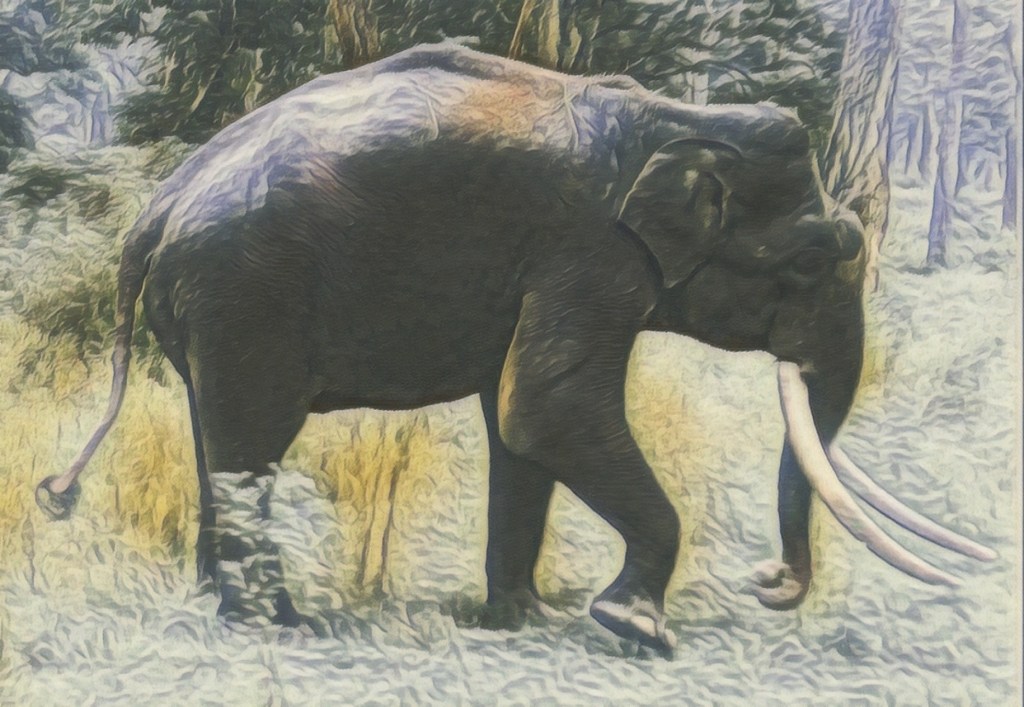
A majestic tusker in the Nagarahole Tiger Reserve
Nine years ago, on a trip to Japan one of our mentors made a very interesting statement. It was a trip to train at the Bujinkan Hombu1 dojo with some of the senior most teachers in the system. At that time, a lot of us had passed the Sakki2 test to receive the 5th Dan just a few years previously. Many more of our buyu3 passed the test and achieved the 5th Dan during that trip. The 5th Dan is a requisite to receive a “Shidoshi”4 certificate, which is a prerequisite to start teaching the students of the Bujinkan.
During that trip, one of our mentors, Sensei Darren Horvath, said something very interesting. Sensei Darren has always considered the teachings in the dojo as applicable to human life as a whole, and not just as those applicable in a physical altercation.
He said that the achievement of the rank of “Shidoshi” means that the person who achieves this should be able to, in the near term, at least double her or his income, as a result of the learning achieved so far. This was in the context of how the learning from becoming a Shidoshi should lead to a considerable improvement in the quality of life of the Shidoshi. Considering how monetary wealth is vitally important in modern day life, there should be a surplus of it, which allows for other pursuits important to one’s life. It was in light of this opinion that the earlier statement was made.
To put it simply, personal prosperity is supposed to be an outcome of the training put in, to achieve the Shidoshi certification. This could be classified under the personal or self-development that results from training the martial arts. The Sakki test that needs to be passed on the way to a Shidoshi certification requires development of trust in one’s own intuitive abilities. This can also be called mindfulness or awareness of any situation. This development of an individual is expected to help one advance in aspects of life that have nothing to do with physical combat or the martial arts.
As a Hindu and an Indian, the idea of prosperity is an intersection between Budo and Hindu culture that stands out. This idea inspired this post. Personal prosperity (including monetary wealth), as I understand it, is a vital aspect of Hindu culture. One of the Goddesses we routinely pray to is Lakshmi, who is the Goddess of wealth and also the consort of Lord Vishnu. Another divinity, who is not prayed to as much is Kubera, who is considered the God of Prosperity & Wealth. Kubera is also the lord of the Yakshas.
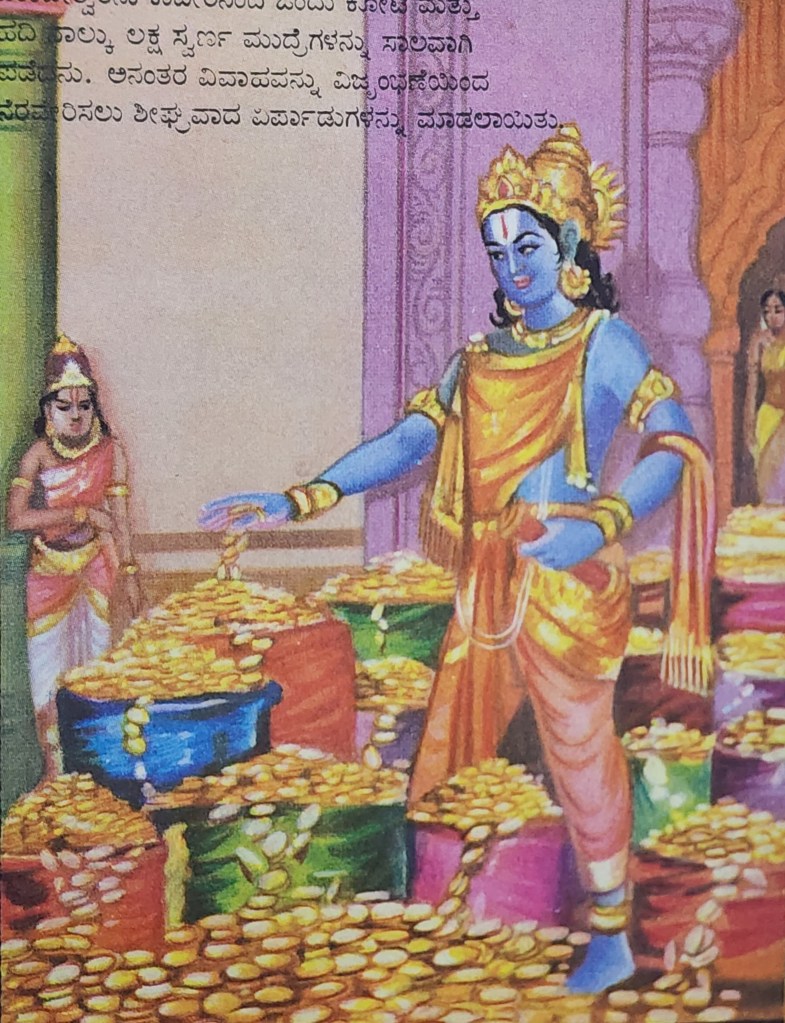
The wealth of Kubera represented by his loan to the wedding of Lord Venkateshwara. Image credit – “Venkateshwara Taanada Chitragalu”, published by Pioneer Publications
In a previous article of mine, I had shared a sutra* from the Arthashastra, one line of which says “Dharmasya moolam arthaha”. This means that “artha”, or wealth, is the root of Dharma. Wealth is vitally important for Dharma to exist and permeate all walks of life. Dharma, as I understand it, is “that which sustains”. This means that Dharma is doing what needs to be done to sustain a good life. This is why Dharma is sometimes referred to as “doing the right thing” or “doing the best thing possible in a given situation”. Thus, wealth, or prosperity, is very important for a good life by doing the right things. Personal prosperity is the root!
One symbol of prosperity in India, since a very long time, is the elephant. This is perhaps because people or institutions who owned an elephant(s) in India were prosperous, for owning an elephant was expensive, not to mention maintaining several of them. One of the eight forms of Devi Lakshmi is titled, “Gaja Lakshmi”, where Gaja means an elephant. The elephant is associated with Lakshmi as she is the Goddess of Wealth/Prosperity, and the elephant is a symbol of the same.
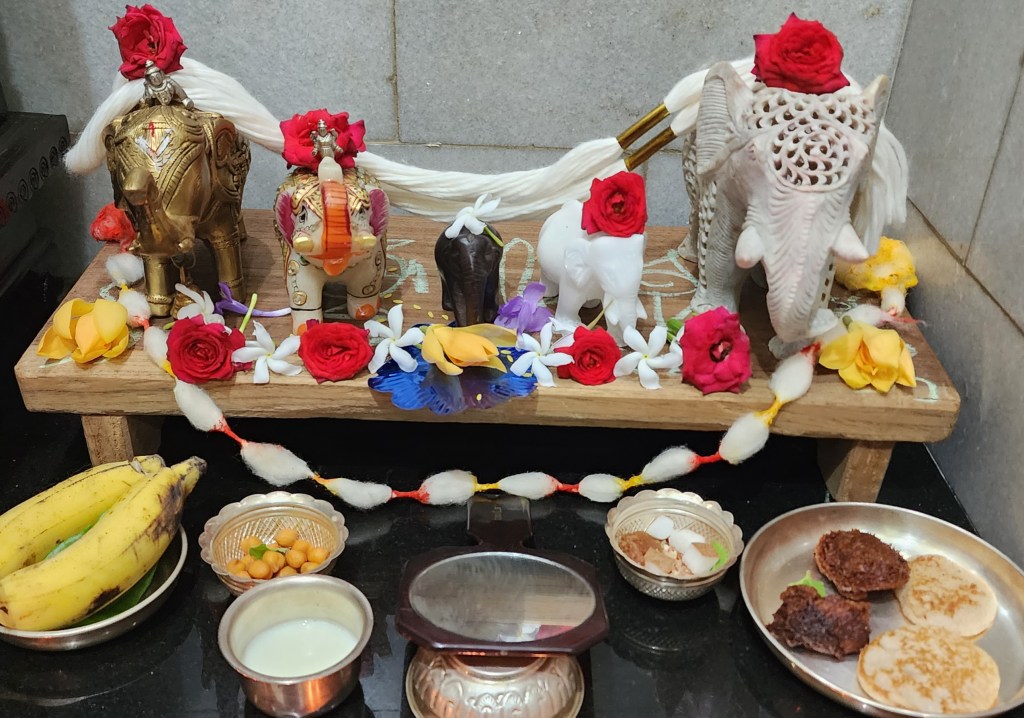
A representation of the arrangement during the celebration of Aane Habba (Elephant Festival)
15th of December, 2024 was celebrated as “Aane Habba” or “The Elephant Festival”. The date of the festival changes every year as it is based on the Tamil Solar calendar. This is a festival specific to my community and not a festival that is widely observed in India, or elsewhere. But the day on which the Aane Habba is celebrated is observed variously by different Hindu communities. The day on which the festival falls is the Poornima (full moon day) of the Kartika month according to the Tamil Solar calendar. It is an auspicious time and hence is celebrated under different names by different groups.
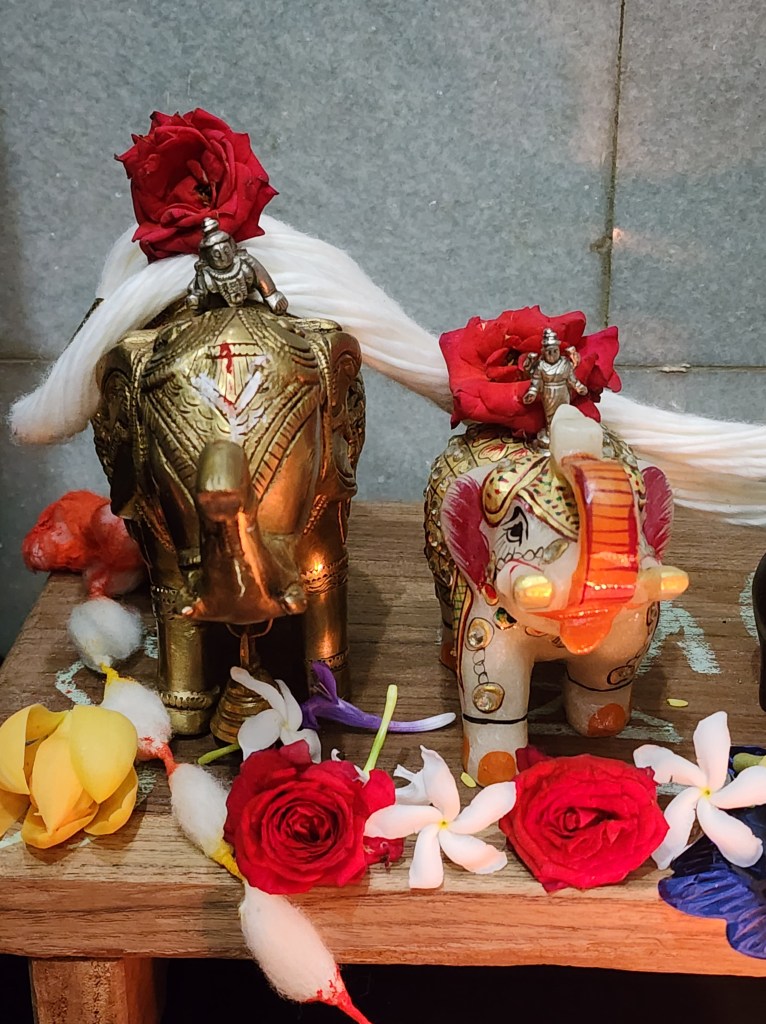
Devi Lakshmi on the white elephant above
One of these is “Kiru Deepavali” or “Little Diwali”. Another is “Vishnu Deepam”. Yet another festival that occurs a day or two earlier is “Karthigai Deepam”
The Kartika month itself is very important for historical reasons. The “Bali Jatra” festival happens in the state of Odisha during this month. Historically this was the beginning of the voyage from India to South East Asia (Bali in particular) for trade. Bali Jatra is associated with the Kartika Poornima festival. This occurred on 15th November in 2024. This voyage generated enormous wealth historically for the merchants involved and for the nations along the coast. This is the Poornima based on the Lunar calendar, hence the difference in the date of the festival.
The Aane Habba itself is specifically celebrating the elephant, which is another way of saying that we celebrate prosperity and wish for more of it, and in perpetuity. This specific aspect of the festival brings us back to the same idea in Budo which I started with. The notion of personal prosperity seems vitally important, if one is a Hindu. The same idea being reflected as an objective for Budo practice, makes it a wonderful reason to train the same. 😊
Notes:
1 Hombu – headquarter
2 Sakki – intuition
3 Buyu – martial family
4 Shidoshi – Master Instructor
* https://mundanebudo.com/2024/01/18/maryada-purushotham-rama-and-the-martial-arts-control-is-the-key/
 Mundane Budo