“Fortress India” and the essence of “Totoku Hysohi no Kamae”

The murder of Hindu tourists in Kashmir earlier this week has severely affected all of us Indians. We are all coping with it in our own ways. Since I have a domain and blog, I am using them to deal with the sadness, anger and other feelings. Perhaps some of the ideas shared here might resonate with others, though that is neither necessary nor the objective of this post.

The most important thing that any practitioner of the martial arts learns is protection of the self. One can choose to use the word “defence” instead of “protection”. This is true whether one is practicing an art form that involves weapons or an unarmed fighting style. When I refer to weapons, I mean both weapons of offence and defence. Examples of weapons of defence include body armour and shields.

The emphasis on protection or defence is revealed by a very important aspect. I will use the Bujinkan system of martial arts to explain this because that is the art form I am familiar with. We are taught that even weapons of offence are first and foremost, SHIELDS. Whether one is using a sword or a spear or a staff, all weapons of offence, we are reminded that these weapons are to be used a SHIELDS before their ability to cause harm to an opponent is utilized.

When one is using a staff, or bo, the basics taught include ukemi with the staff. Ukemi refers to receiving an attack, in other words, how to protect oneself with a bo in response to an attack. This same is true while using a spear. One learns how to receive an attack and hopefully redirect it away from oneself. While using a sword, one learns how to use the strong part of the blade and the tsuba, or the disc guard on a katana to stop an attack and the middle part of a blade to control or redirect an attack – the principle is similar to how a staff or spear is expected to be used.
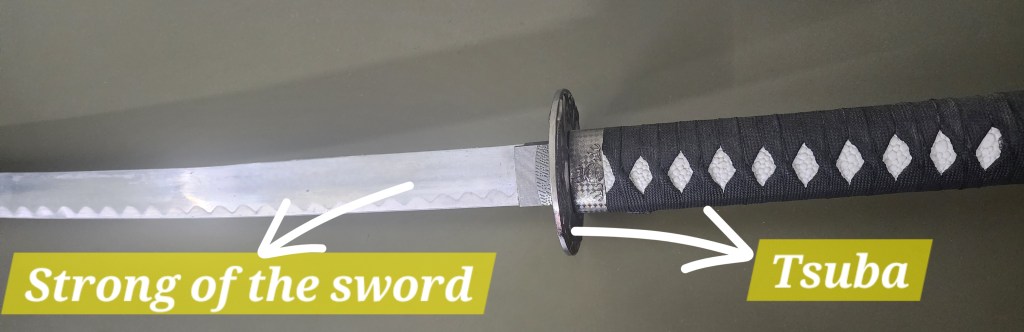
I must add, I am referring to traditional martial arts here, specifically to the use of shastra*, as we call weapons that are not discharged, in India. This means that the attacks I am referring to could come from swords, axes, staffs, spears and other polearms. To protect oneself, and use one’s own offensive weapons like swords or spears as shields, all one has to do is put the weapons between oneself and the weapon(s) wielded by the opponent(s).

The importance of using even weapons of offence as protection is demonstrated by the concept having a posture named after it! There is a kamae called “Totoku Hyoshi no Kamae” in the Bujinkan. A kamae can mean “posture” or “attitude” (posture of the mind/spirit). “Totoku Hyoshi no Kamae” can be translated as “hiding behind the sword”. The reference to the sword is because we learnt this kamae while training the sword. But this kamae could refer to any weapon, when it could be called “hiding behind the weapon”. Simply put, this means using the weapon as a shield, by putting it between the wielder and the opponent (or opponent’s attacking weapon).

One of the senior most sensei of the Bujinkan system and soke of the Shinden Fudo Ryu is Nagato Sensei. I distinctly remember him saying, one should “Leave no opening” while facing an opponent. His statement was made with respect to how one should move in response to an attack by an opponent. He meant that when one responds, he or she should ensure that there is no opening left for the opponent to exploit. Until this is achieved, there is little sense in attempting a counter attack. Of course, this is incredibly hard to achieve and requires years of incessant training.

Another learning from Sensei’s statement is that one should keep moving in response to an attack until there are no openings left for an opponent to attack after the initial one. It need not mean that one moves or responds to the very first attack in a manner that denies any further openings. That could be a happy outcome, but not to be expected, much less depended on.

This brings us to the use of armour. One can “use any weapon as a shield” and move to “leave no opening”. The two together mean that one should move in response to an attack while using one’s own weapon as a shield. This movement will ensure that the shield is in the right place to protect its wielder. Like I said earlier, this is difficult to achieve without a lot of training and practice. Lack of training can be mitigated with the use of armour.

In any fight the conditions are always unpredictable and many a time, unknowable. In such a case, body armour is important. When the individual cannot move as required or utilize a weapon as protection, the armour takes the attack and protects its wearer. Further, armour also increases the opportunities to use a weapon of offence as it was intended, to harm the opponent.

While an armour protects the one wearing it, training is also needed to maximize the protection afforded by armour. No armour is without its openings and chinks. The openings are usually at the joints, the back of the leg and the arm pits. These openings are necessary to enable movement in armour. These openings will be targeted by opponents and practice is needed to keep these attacks at bay.

The above image shows openings in Plate Armour. Image credit – Wikipedia.

Historically, armour and weapons have evolved in response to each other. I will take the example of western armour to elucidate this. In the early Middle Ages chain-mail was worn over gambesons as armour. Later coats of plates were worn over the mail and gambeson combination. Eventually, a full plate harness came about. The full plate armour meant that the person wearing it was pretty much impervious to any weapon on the medieval battlefield. But this armour had openings as well, in the places I referred to earlier. To better protect the arm pits, chain mail was used under the plate. The elbow and knee joints eventually had articulated plates to enable movement while affording protection. The back of the legs were always vulnerable, but eventually plates were added there as well.

But weapons evolved to challenge armour. The estoc evolved from the regular sword, as a stiffer pointer version of the same. This allowed half-swording as men-at-arms and knights grappled to stab through the joints of plate armour. Daggers with reinforced points appeared to enable the same. And poleaxes evolved to combine hammers, axes and spears. The poleaxe could bludgeon opponents in armour to cause blunt force trauma and concussion like injuries. The spear point of this weapon could stab into joints and eye slits in the helmets that accompanied plate armour.
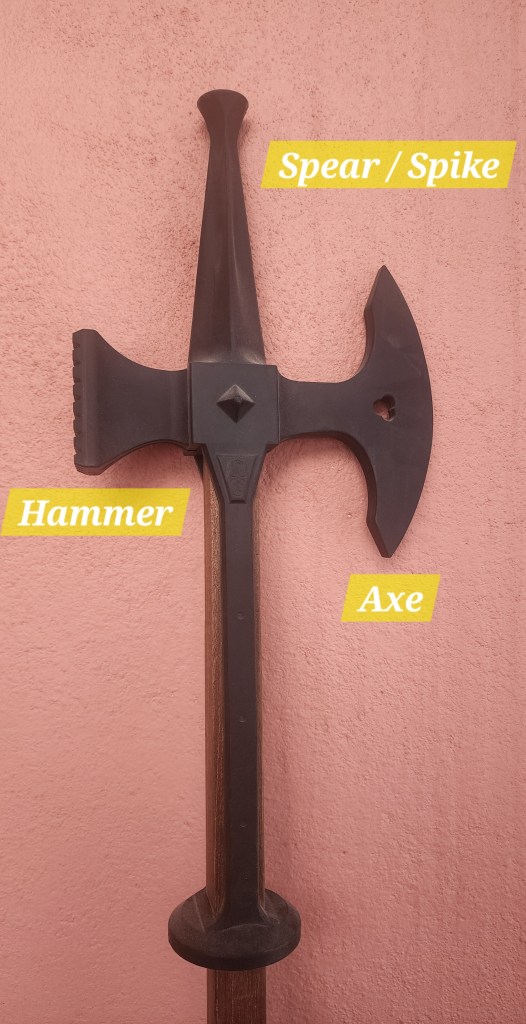
The head of a Poleaxe

When all the previous points are considered together, the following points should be clear.

  • Protection or defence is of paramount importance.
  • Every armour has its openings that can be exploited.
  • One needs to train to move to protect the openings.
  • Even weapons of offence are first and foremost a shield for protection.
  • A counter attack can only come when protection is achieved and there are no openings left for exploitation.

With the above points in mind, let me look at the situation we Indians and the Indian Government are in, post the terrorist attack in Pahalgam in Kashmir. Before I start, I must mention that I am not an expert in geopolitics or geo-strategy. I am not a defence expert or an ex-soldier. Nor am greatly aware of how international relations and diplomats work. I am just a layman, with experience in martial arts, the knowledge of which drives some of my thinking. I am as sad and angry as most of my fellow Indians and its diaspora. This post, specifically what comes next, could be considered my rant, or a means of venting; either way, it is me trying to make sense of what is going on and what could come next. When I say what comes next, I do not mean a response by India to the terrorism it has been subjected to, I mean how we Indians share opinions and react to what the administration does, or has done.

There are many people who are wondering why there was no security in the Baisaran valley in Pahalgam where 26 Hindu tourists were murdered by terrorists. That is a fair question and the government has admitted there was a lapse. Over the last 6 years tourist numbers in Kashmir were continuously on the rise and violence was on a steep decline. Hence it was assumed that normalcy was pretty much back and tourists would not be targeted as that affects the local economy. One aspect of normalcy is that overt security presence is minimized. All of this seems to have been a temporary truth and hopefully normalcy will indeed return in the near future, perhaps with overt security presence. Either way, the lack of security leads to a point that has been raised even when violence was on the wane in Kashmir and in the naxal belt. I have heard this point referred to by some as “Fortress India”.

I have heard the term “Fortress India” mean two things. First is to ensure that India’s territorial integrity is inviolable. The second is to ensure that the life of every Indian is protected within the country. The second is usually in reference to protection from terrorist violence. In my opinion, this concept of Fortress India is the same as “Totoku Hyoshi no Kamae”. It means that protection is paramount. “Fortress India” refers to the country as a whole, while “Totoku Hyoshi no Kamae” refers more to the protection of an individual. Protection of the nation includes protection of its critical assets and infrastructure apart from the people and includes protection from cyber warfare and any 5th generation warfare attempts.

Once protection or defence of a nation is paramount, weapons invariably come into the picture. And like mentioned earlier, every weapon is first and foremost a shield. To demonstrate this, the first example would be the nuclear weapons possessed by some 10 countries in the world. The nuclear option has always been a deterrent, in other words a shield. Countries possess nuclear weapons to prevent other countries from causing damage beyond a “threshold” (however they define it). No one would ever dare to use one, at least as of now.

This concept of “protection” extends in a slightly different manner to modern day “stand-off” weapons. These include missiles launched from various platforms, but mostly aircraft. These can be launched from a distance far enough away to prevent the aircraft from being targeted by the air defence platforms of enemy nations. So, the range of the missile, or glide bomb, is the defence to the platform, while still being able to deploy the offensive (destructive) capability of the missile. This is the same as moving to a position to safely parry an attack from the opponent and carrying out the counter when “there is no opening” exposed to exploitation. In the case of the aircraft, the distance from the anti-aircraft weaponry is the “safe position” when there “is no opening” to attack for the air defence systems.
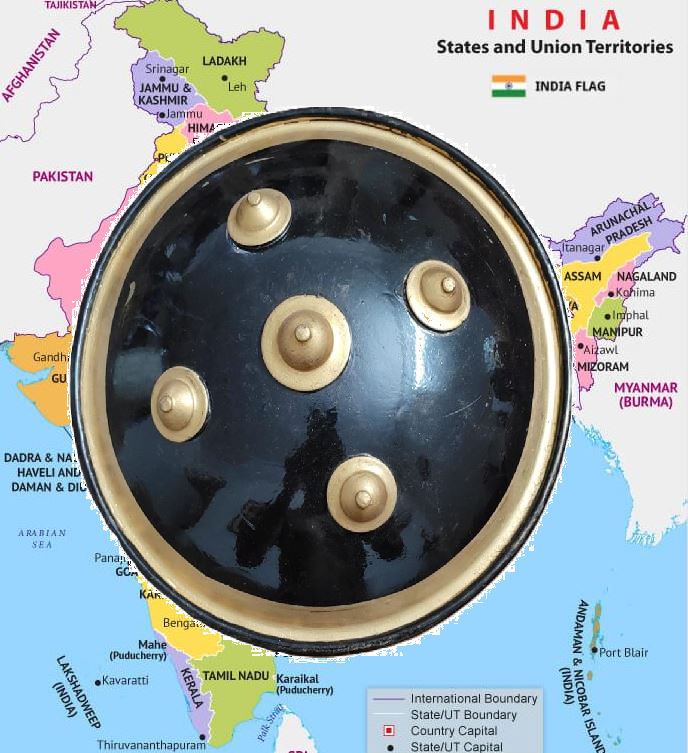
A shield for the nation, easy for visual representation, but very hard in reality.

The “protection” aspect extends to any air assault being able to have an electronic warfare suite, to jam the radar of incoming attack missiles. Then there is the ability to conduct network centric warfare, where an AWACS can guide a missile fired by a fighter aircraft. Or the aircraft that is using its radar can guide a missile fired by another aircraft which is part of the same mission package. All of this requires that vastly complex technologies work together precisely. And this working together or networking, requires a great deal of training. In other words, in a strike package, some aircraft are protecting the other aircraft which are carrying out the attack. So, this is the basic concept of traditional martial arts at a personal level scaled up to massive technological deployments at the scale of national armies.

And that brings me to the concept of resources, time and money. For a modern day martial arts practitioner, there is a huge cost to keeping up with the practice, even as just a hobby. The training equipment is not cheap, and time has to be set aside for the practice, both of which are hard even if one is passionate. And seeing improvements in one’s martial abilities takes time, years even, and for recognizable changes to manifest in personal and professional lives takes longer still. This same is true for the protection of nations. Vast resources are needed, and the time taken to evolve and improve technologies runs into decades. The cost to society due to defence related expenditure can be large. So, not all nations can afford technological superiority. This includes cyber warfare and war for the minds and morale of national populations.

Lastly, technological progress, just like personal ones, will see failure, and learning from the same is needed. Losses will be faced, and overcome. Who can state that nothing has changed in India’s defence architecture since the 2019 Balakot strike and the consequences of Pakistan’s Operation Swift Retort? I would say no one can. And if someone said it, they would be wrong. Longer range missiles have been inducted, better EW suites are available, software defined radios have been introduced to overcome jamming, and more improvements are on the way.

Grey zone warfare has perhaps been used (unknown gunmen) as well. Have there been improvements in intelligence and cyber warfare capabilities? I have no idea. And improvements are happening at an impressive pace in the development of laser weapons and scramjet engines. Both of these bring us closer to an Indian version of the Israeli “Iron dome” missile defence. Just so we do not forget, there is already a ballistic missile defence shield based on the Prithvi missile. This has been deployed for a few years now. So, development is happening incrementally and continuously.

But this is not to say that there is no scope for improvement and there are certain projects that are more cause for disappointment among the general public than the rest (think Kaveri engine and the infrastructure needed for its testing). And speaking of disappointment, we come to the war being waged against the fabric of Indian society.

We are a polarized country, just like the rest of the democratic world. Homogenous non-democracies will always attempt to exploit fissures in our societal fabric, like the fault lines of caste, religion and militant leftist ideologies. This is no different than finding an opening in armour. A united national populace is armour for a nation, and the splintering of the same if the creation of an opening to attack.

This begs the question, are we protected against “narrative warfare”. It seems we are, at least for now. And are we using it successfully against adversaries? I do not know. Perhaps we are and I do not know, or maybe we are not very successful at it, yet.

This leads to the question, are we citizens responsible for protecting our own selves and hopefully each other in this narrative assault? Perhaps we are. And if yes, how successful have we been? Considering how polarized and tribal we are in current times with social media access, perhaps we are successful in not being defeated by narrative, but not successful is ensuring the opponents of the nation realize that the attack will always fail, for certain. It seems that foreign adversaries still see opportunities for success here. There is sufficient friction in the country to enable these attacks.

There is an old Bedouin saying, which goes, “I against my brother, my brother and I against our cousin, my brother and our cousin against the neighbours, all of us against the foreigner.” I suppose in the Indian context, considering the size of our population, we can expand it to something like this.

“Me against by brother or sister. My sibling and I against the family. My family and I against the village or city. My city and I against the country. My country and I against the enemy nation.”

The spirit of this saying is that no matter our differences, we unite against a threat to the nation, be it foreign or domestic. We perhaps need to train how to protect each other in the narrative wars to come.

With that I conclude this post. This article is more of a coping mechanism for me, venting if you will, as I confessed earlier. So, I do not have a clear conclusion. Just a bunch of thoughts and connections I have strung together.

Notes:

* Shastra (weapons that are not discharged), not Shaastra or Shāstra (fields of knowledge/study)
The Magic of the Feet, from Bhakti to Budo, Kamae to Tradition

In large parts of India, among Hindus, touching the feet of elders and teachers or bowing down to them, is a common practice. It is an extension of bowing down before the Gods and Divinities. When I say bowing down, it is not the Japanese bow, or one seen in a historical European context.

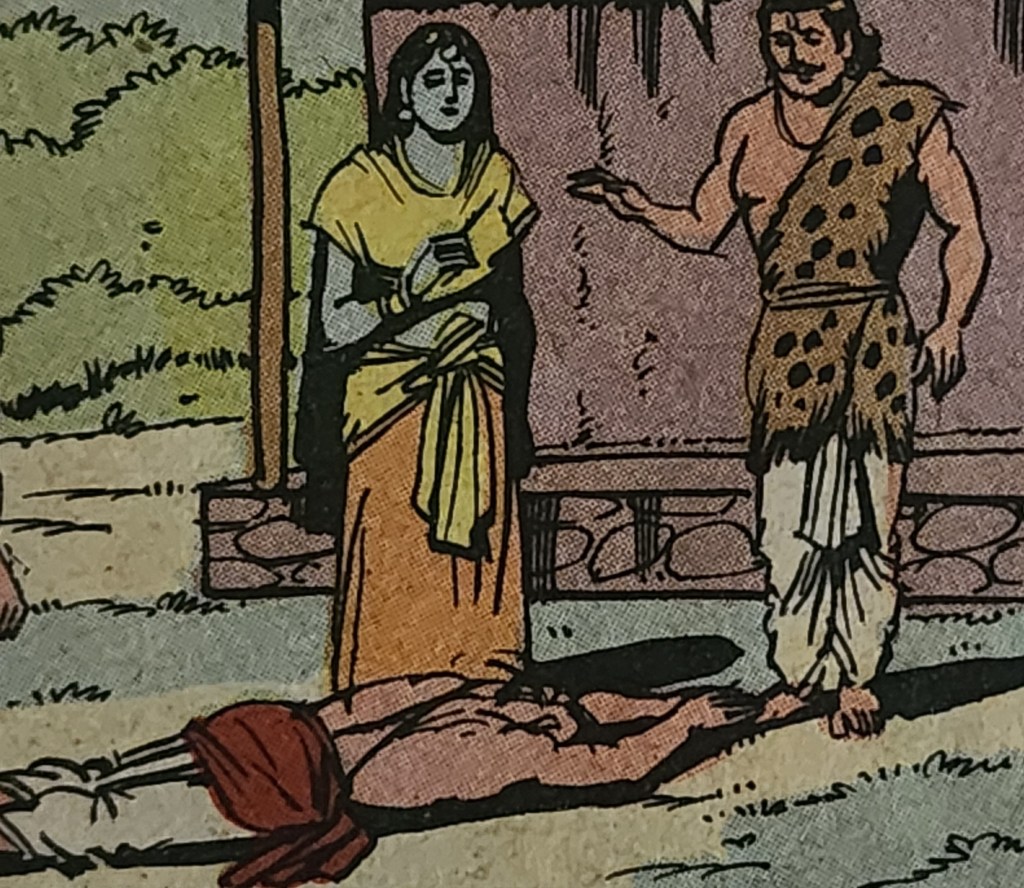
We do what is called a “Shāstānga namaskāra” or “Dheerga Danda namaskāra”. Men do a full prostration in front of Divinities. Women sit on their knees touch their foreheads to the floor in front of the Gods. The same is done in the presence of our Gurus, some teachers and elders in the family, community or society based on the situation.

Two depictions of the “Dheerga Danda Namaskaara”. Image credits – (L) “Mahabharata 23 – The Twelfth Year”, published by Amar Chitra Katha, (R) “Mahabharata 20 – Arjuna’s Quest for Weapons”, published by Amar Chitra Katha

Touching the feet is not something generally performed with the Gods. This is done mostly with humans we revere. In this case, one bows down and touches either the feet or the ground in front of the feet. This is an abbreviation of the prostration described earlier, performed in the interest of space and time. A further simplified version is just bowing down and touching the knees of the person*.

Irrespective of the exact nature of the “bow”, the act denotes showing respect to the Gods or to the person before whom the same is performed. It is not exactly an act of deference or subservience, it is purely one of respect, and maybe bhakti (loosely translated as “devotion”). It could be an act of deference, but that was not, as far as I know, the original intent and is not the intent in most parts of modern India today.

The key point of the “bow” is to touch or be in front of the feet of the individual(s) towards whom respect is being shown. The Feet are, in this sense, the most important aspect. This extends to the point where we consider the ground that is trod by the feet of great people and Gods as sacred ground.

It was common practice, perhaps it still is, for elders who accompany younger folk to any temple, to tell them to look at the feet of the idol of the deity. This is a constant reminder and is passed on from generation to generation. In Kannada, it is called, “Paada nodu”. In Hindi it would be, “Pair dekho”. It literally translates to “look (nodu/dekho) at the feet (paada/pair)”. In this vein, touching the feet is “Paada muttu” in Kannada and “Pair chuo” in Hindi. “Muttu” and “Chuo” translate as “touch”.

So, the focus of Bhakti and the act of showing respect always involves THE FEET.

The other field where the focus on the feet is vitally important is the Bujinkan system of martial arts; I daresay this is the case with all martial arts.

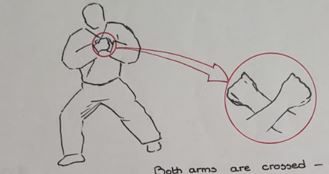
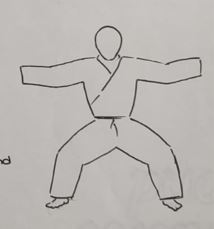
Among the first things that a student learns on starting in the Bujinkan is “Kamae”. “Kamae” could be considered “posture”, of the physical body. It could also refer to “attitude”, which is the “posture of the mind”, which in turn refers to displays or the exuding of non-physical aggression, confidence, fear and the like. For the purposes of this article, I am referring to the physical posture.

Two depictions of Kamae (physical posture). Sketches by Vishnu Mohan.

Kamae, when seen by an onlooker, predominantly shows the posture of the hands and the legs as a whole. But the kamae as experienced by the budoka (practitioner of budo), has greater focus on the core and the feet. The core because it holds the upper and lower halves of the body together. And the feet because it ensures balance and determines potential movements the body can perform, from said kamae. I will focus only on the key aspects regarding the feet in this article.

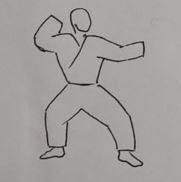
One of the key things that I have learnt from my teacher, mentors and seniors in the Bujinkan is that the weight should be towards the front half of the feet, i.e. towards the ball of the feet and the toes. The weight of the body should NOT be on the heels in any kamae. This holds true even for the most basic of the kamae, Shizen no Kamae, which can be translated as “Natural posture”. For those not in the know, this kamae just involves standing naturally in a relaxed posture.

Two more depictions of Kamae (physical posture), one with a weapon. Sketches by Vishnu Mohan.

The distribution of the body weight on the feet is absolutely crucial in the Bujinkan! To reiterate, it must be on the front half of the feet. This is vital because, making any movement from any given kamae, is faster with the weight on the ball and toes of the feet. Triggering any movement if one had loaded one’s heels is definitely slower. This is because the body is a lot more stable and rooted if one is standing on one’s heels. This in turn means that the inertia that needs to be overcome to initiate a movement is greater if one is on the heels.

When I say the “time taken to initiate a movement”, it is not too much, it could be a fraction of a second. But this time difference makes a definite difference during training and most certainly in a conflict situation that involves real harm. It could be termed “a split-second difference which makes all the difference”. This difference need not be distinctly visible to an onlooker, but any practitioner of the martial arts, certainly a practitioner of the Bujinkan, experiences this time and time again, perhaps in every class.

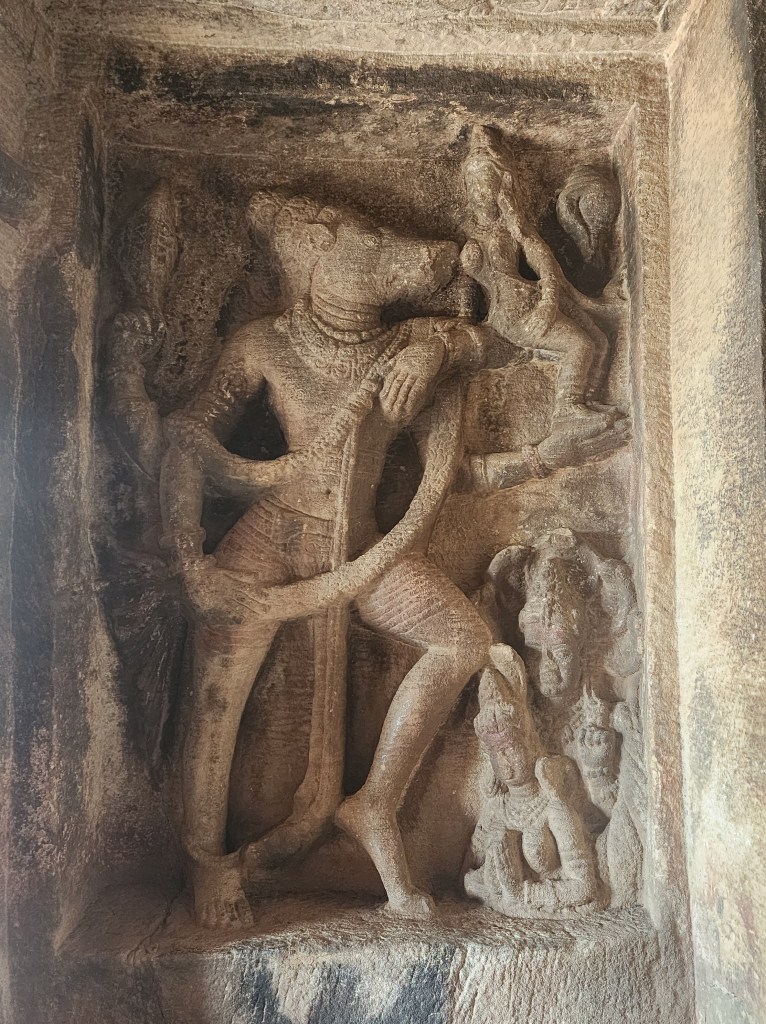
The distribution of the weight on the feet brings us full circle, back to the feet in Hindu culture. Specifically, to the depiction of the feet in sculpture produced by Hindu culture.

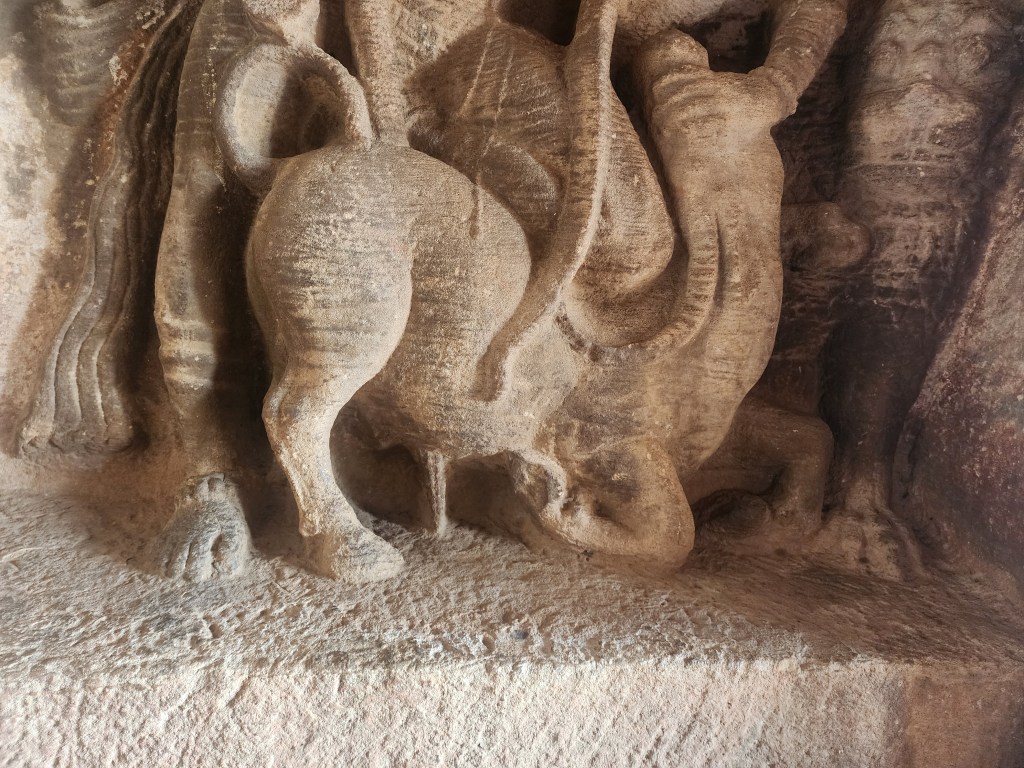
Lord Varaha saving Bhoodevi – carving in Cave 3 in Badami, Karntaka, India. The image on the right is a close up of the feet in the image on the left. Observe that the weight is either on the front half of the feet or on the side of the feet. Photograph by the author.

Consider any architectural or sculptural marvel from Indian history. It could the temple in Madurai, the sculptures in Mahabalipuram, the carvings on the magnificent temples at Halebeedu, Hampi or Badami, the marvels at Ellora or the historical monuments around Sanchi and Vidisha, or the many many others I have not mentioned here. All of them depict stories from Hindu culture. These include stories from the Mahabharata and Ramayana and the deeds of Lord Vishnu, Lord Shiva and Devi Durga. Many sculptures and bas reliefs depicting these stories show the human form in martial action. This includes the use of weapons and unarmed combat. Apart from the stories themselves, almost all temples have guardians carved on either side of the entrance to the Garbha Griha (literally “home or abode of the womb”), or sanctum sanctorum. These guardians always bear weapons.

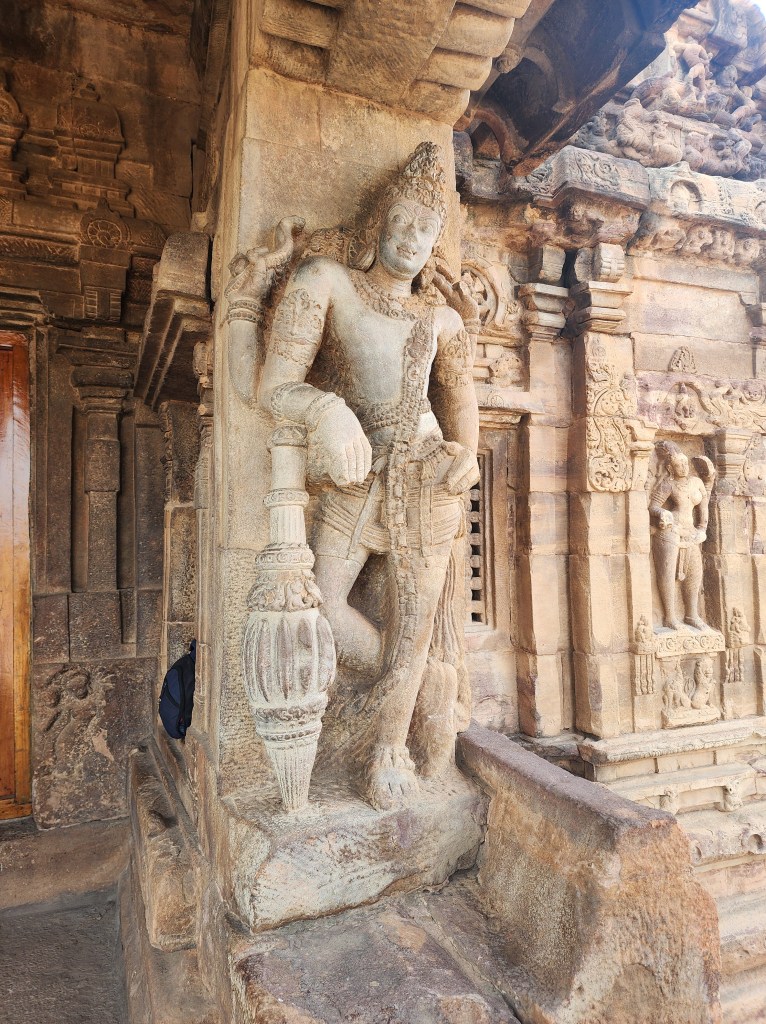
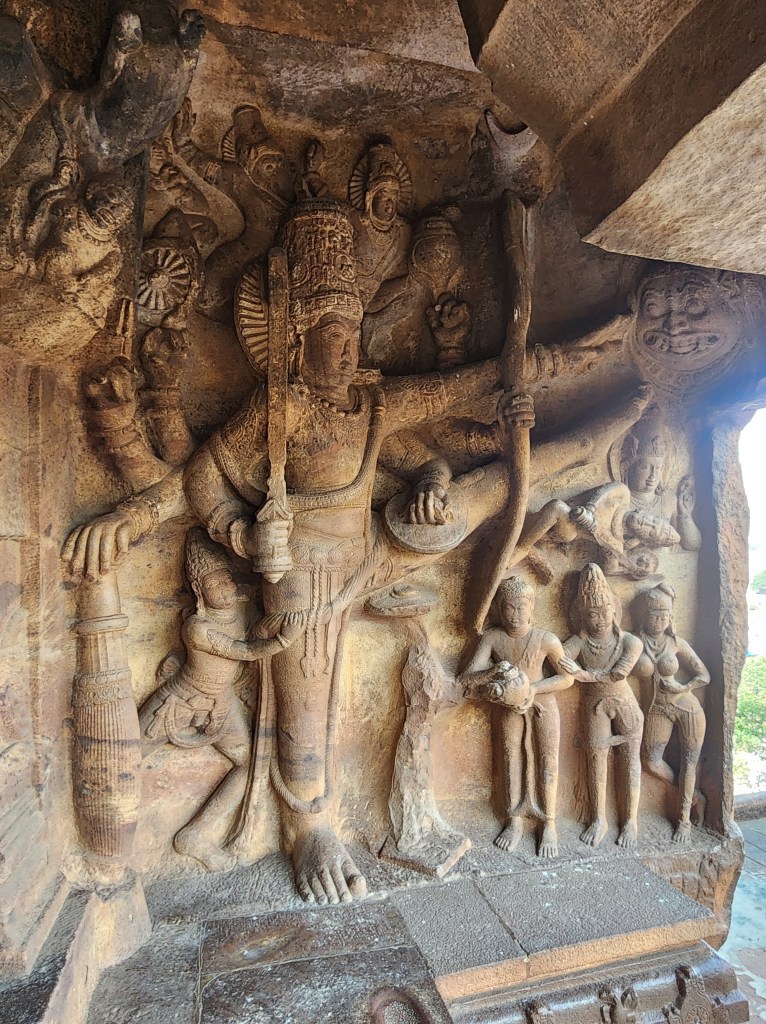
The image on the left shows Lord Shiva destroying the Asura Andhaka (Aihole, Karnataka, India). Observe that the body is leaning forward and hence the weight will be on the front half of the feet. The image on the right from Pattadakal, Karnataka, India, shows a “Dwaarapalaka” (Guardian at the door). Observe that the individual is leaning on the weapon (mace/gada) and the weight is either on the front or the side of the foot. The weight of the body is not on the heels in either image. Photographs by the author.

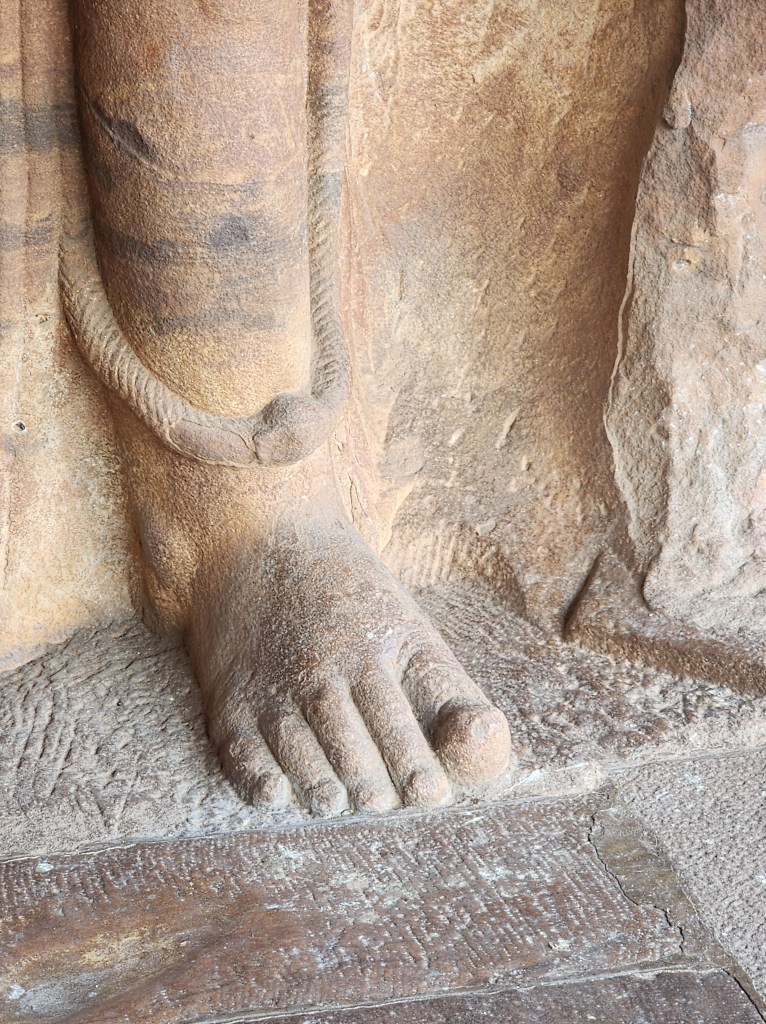
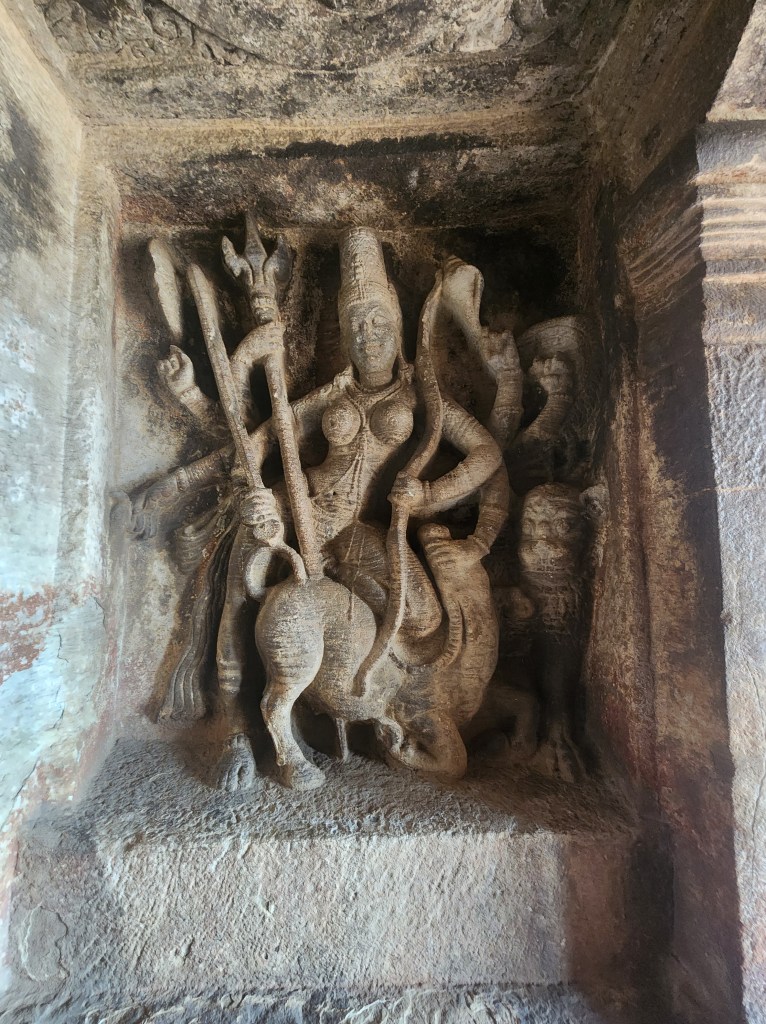
Now consider the depiction of the feet in the sculptures showing martial action. Almost all of them show the body weight on the front half of the feet, irrespective of the kamae or posture depicted in the sculpture. This also extends to the posture of the guardians at the doorway to the Garbha Griha. Individuals might be shown leaning on the weapon they wield but are never depicted with the weight on the heels.

I am sharing multiple images with this article, that show the posture of the feet from a few different temples. One of them even shows the crimping of the little toe when the foot is lifted as if in a potential axe kick!

The image on the left, from Cave 3 in Badami, Karnataka, India, shows the Trivikrama form of Lord Vamana. Observe that he is standing on one leg. The image on the right is a close up of the left foot in the image on the right. Observe the crimping of the last 2 toes, as the weight is distributed to the front and side of the foot. Photograph by the author.

It is well known that temples in India have historically been more than just places of worship. They have been cultural centres, malls, schools/training centres, banks and treasuries, apart from just places of worship. The carvings on the temple walls were intended as teachings and storytelling features, sometimes both. Everything from tales from history and ethics to practices of intimacy were carved on temple walls. This was, according to some, because a lot of this knowledge was not taught directly.

Temples were thus a means to learn what was not yet in books and was not taught specifically as a subject in schools. So, considering this intent, in my opinion, what is carved in the temples are depicting what is, in all likelihood, the correct way one is supposed to load one’s feet. Therefore, the depictions of feet of warriors, even if they are deities, is showing how the weight distributions on the feet works, in marital arts in India.

The image on the left, from the Ravanaphadi Cave in Aihole, Karnataka, India, depicts the Mahishaasuramardhini. The image on the right is a closeup of the left foot of Devi Durga. Observe that weight is clearly on the side and front of the foot. Photograph by the author.

This continuum of importance of the feet and more importantly, the weight distribution on the feet is awesome indeed, at least to me. If one is a Hindu, it will be well known that feet are important to Bhakti and if one is a budoka practicing the Bujinkan the importance of weight distribution on the feet would be a key learning. The two come together in the depiction of the feet in sculpture seen in Hindu temples. Perhaps the best place for a budoka to appreciate the kamae of the feet is in a sculpture in a Hindu architectural marvel and being a Hindu, it is impossible to miss the kamae of the feet, for the feet is what one is culturally conditioned to observe. An absolute win-win combination. 😊

Notes:

* When a person touches the feet of another, the person whose feet is touched, almost always offers āshirwāda, which can loosely be translated as blessings. So, there is a responsibility placed on the person receiving the respect. It is not just to foster an air of superiority. A person being shown respect must have the humility to know that āshirwāda is due, even if not expected.

A, B, C, D, E – Conflict Management in Budo, Industry and Life

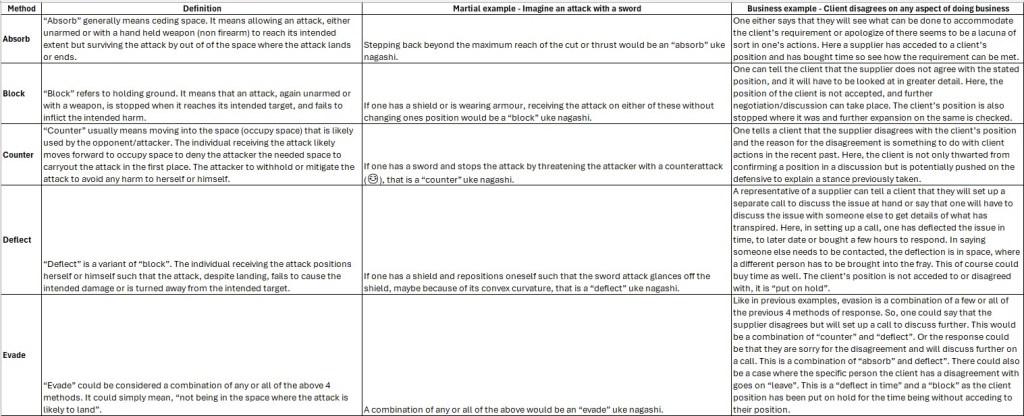
The above image summarizes the 5 methods of conflict management described further in the article, with examples

In this article I am suggesting that conflict management in human life, be it in the martial arts or at work, in different industries or in personal relationships, follows similar patterns. Hence, experience at work or in relationships or in the martial arts can bleed into one another. The experience in any is likely to be beneficial in the others.

One of the first things that a student of the Bujinkan learns is the “Uke Nagashi”. Uke Nagashi can be roughly translated as “receive the opponent in flow”. In practical terms, it means “how to respond to an attacker”. In generic terms that might be used in multiple martial art systems, “Uke Nagashi” could be called “ways to defend or block or parry”.

There are two ways in which Uke Nagashi are classified, for ease of learning by beginners. Over years of practice, the importance of Uke Nagashi does not diminish, it takes on a more central role, but is not top of mind in regular practice. One of the ways of classifying the Uke Nagashi is beautiful and simple, for it is alphabetic. Five Uke Nagashi are defined. These are,

  1. A – Absorb
  2. B – Block
  3. C – Counter
  4. D – Deflect
  5. E – Evade

A reasonable description of the above 5 methods of Uke Nagashi are seen below.

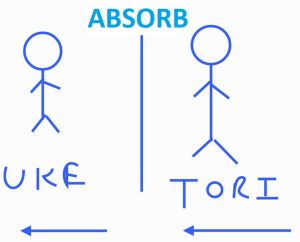
“Absorb” generally means ceding space. It means allowing an attack, either unarmed or with a handheld weapon (non firearm) to reach its intended extent but surviving the attack by out of the space where the attack lands or ends.

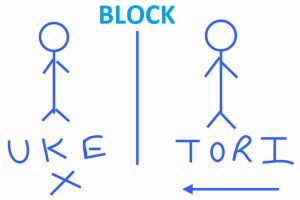
“Block” refers to holding ground. It means that an attack, again unarmed or with a weapon, is stopped when it reaches its intended target, and fails to inflict the intended harm.

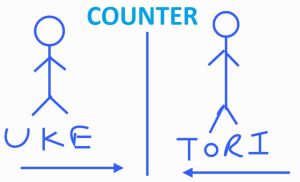
“Counter” usually means moving into the space (occupy space) that is likely used by the opponent/attacker. The individual receiving the attack likely moves forward to occupy space to deny the attacker the needed space to carryout the attack in the first place. The attacker could be forced to withhold or mitigate the attack to avoid any harm to herself or himself.

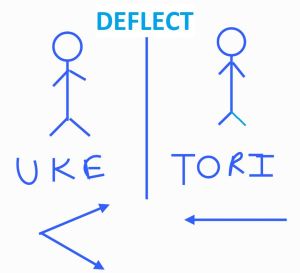
“Deflect” is a variant of “block”. The individual receiving the attack positions herself or himself such that the attack, despite landing, fails to cause the intended damage or is turned away from the intended target.

“Evade” could be considered a combination of any or all of the above 4 methods. It could simply mean, “not being in the space where the attack is likely to land”.

The above could be a hard to visualize, so an example to visualize the five Uke Nagashi could be the following. Imagine an attack with a sword.

  • Stepping back beyond the maximum reach of the cut or thrust would be an “absorb” uke nagashi.
  • If one has a shield or is wearing armour, receiving the attack on either of these without changing ones position would be a “block” uke nagashi.
  • If one has a sword and stops the attack by threatening the attacker with a counterattack (😊), that is a “counter” uke nagashi.
  • If one has a shield and repositions oneself such that the sword attack glances off the shield, maybe because of its convex curvature, that is a “deflect” uke nagashi.
  • A combination of any or all of the above would be an “evade” uke nagashi.

The above are a perspective through the prism of the martial arts. I posit that the same methods of response to various conflict situations are what we use on a day-to-day basis at work. I further suggest that these five methods of responding are used at all levels of organizations, not just the entry levels or middle management or the higher echelons of leadership.

To elucidate this point, I share the following examples. Consider a scenario where a client disagrees on any aspect of doing business. The 5 five methods of responding to this would be something like those mentioned below.

  • “Absorb” response – One either says that they will see what can be done to accommodate the client’s requirement or apologize if there seems to be a lacuna of some sort in one’s actions. Here a supplier has acceded to a client’s position and has bought time so see how the requirement can be met.
  • “Block” response – One can tell the client that the supplier does not agree with the stated position, and it will have to be looked at in greater detail. Here, the position of the client is not accepted, and further negotiation/discussion can take place. The client’s position is also stopped where it was and further expansion on the same is checked.
  • “Counter” response – One tells a client that the supplier disagrees with the client’s position and the reason for the disagreement is something to do with client actions in the recent past. Here, the client is not only thwarted from confirming a position in a discussion but is potentially pushed on the defensive to explain a stance previously taken.
  • “Deflect” response – A representative of a supplier can tell a client that they will set up a separate call to discuss the issue at hand or say that one will have to discuss the issue with someone else to get details of what has transpired. Here, in setting up a call, one has deflected the issue in time, to later date or bought a few hours to respond. In saying someone else needs to be contacted, the deflection is in space, where a different person has to be brought into the fray. This of course could buy time as well. The client’s position is not acceded to or disagreed with, it is “put on hold”.
  • “Evade” response – Like in previous examples, evasion is a combination of a few or all of the previous 4 methods of response. So, one could say that the supplier disagrees but will set up a call to discuss further. This would be a combination of “counter” and “deflect”. Or the response could be that they are sorry for the disagreement and will discuss further on a call. This is a combination of “absorb” and deflect”. There could also be a case where the specific person the client has a disagreement with goes on “leave”. This is a “deflect in time” and a “block” as the client position has been put on hold for the time being without acceding to their position.

I have considered a scenario which involves a business interaction. The manner of responses would apply to personal relationships as well. Consider any disagreement with a spouse, a parent, sibling, child or friend. All these disagreements are conflicts of varying scales with the consequences ranging from financial ones to reputational ones to just considerations of ego. The responses in all of the disagreements/conflicts can be classified into one of the five defined earlier in this article.

So, if the “5 methods” of responding or uke nagashi are applicable in just about any conflict, either physical or not and be it in business or in personal life, this cannot be something new. It is not an invention of mine. It is just an observation of an application in the Bujinkan system of martial arts to life beyond the dojo. The “A B C D E” seem to have always been applied by humans.

So, if the ways of responding are not new discoveries and something that we humans have always been doing, why am I writing this post? The answer is as follows.

Generally, even if an idea is well known, if we externalize it, by writing it down or making a video or picture of the same, it is easier to remember. Also, if we can rely on an external medium and not just memory to remember an idea, it is easier to express and evolve the idea from its base. This also frees up our memory without any worry of losing ideas due to focus on other pieces of knowledge.

There are also stressful times when we lose track of what we already know and an external reminder of what we could apply based on existing knowledge and experience in such a situation tends to be helpful. Consider it as having access to one’s notes or a textbook, or a manual or support webpage or just a search engine, if not AI LLMs. 😊

To take an example from popular fantasy, consider the Harry Potter series. Professor Dumbledore uses a “Pensieve”, a magical device which he uses to look at his own memories from an external perspective, that helps him with new realizations. This aspect also has a parallel in the Bujinkan. One of our mentors, Daishihan Darren Horvath, once said that to be able to improve as a martial artist, one should be able to look at one’s own movement from an external perspective.

That brings us full circle. Perhaps being able to look at our actions in life, at work and in personal relationships, should be able to help us achieve better movement and flow during practice in the dojo. The A, B, C, D and E of responses seem pervasive, likely due to their facilitation of preserving one’s life, or position or opinion at work and in life outside the dojo.

Notes:

Uke – Attacker

Tori – Defender