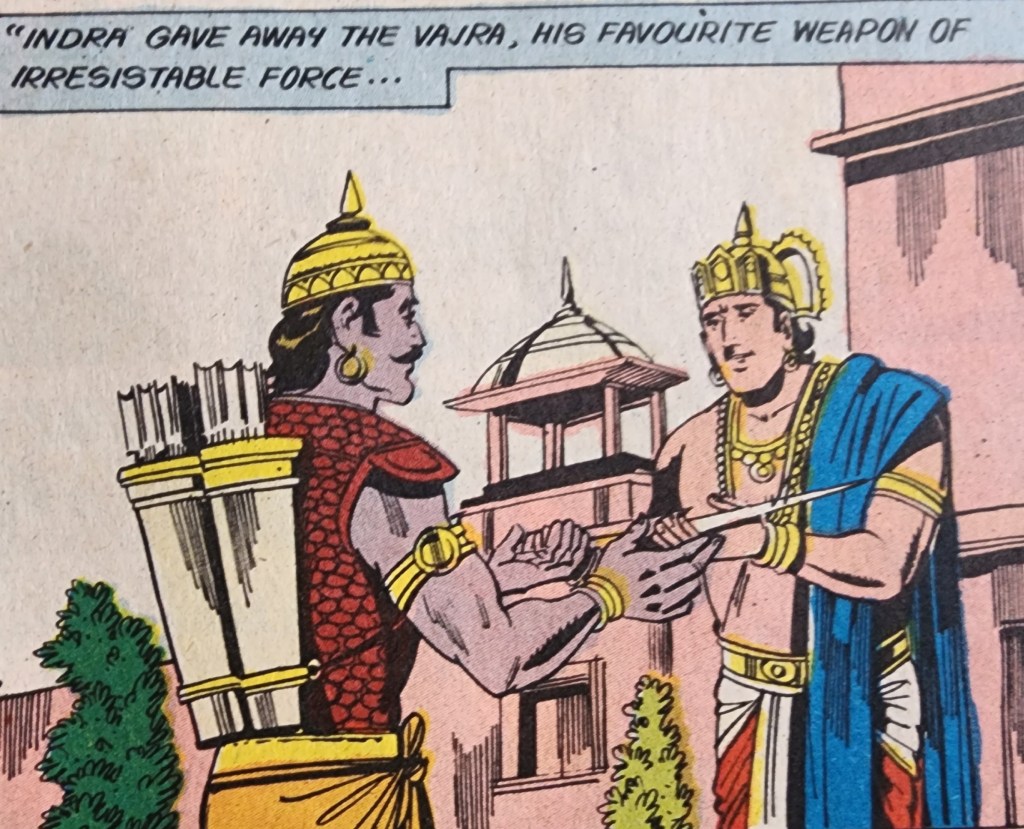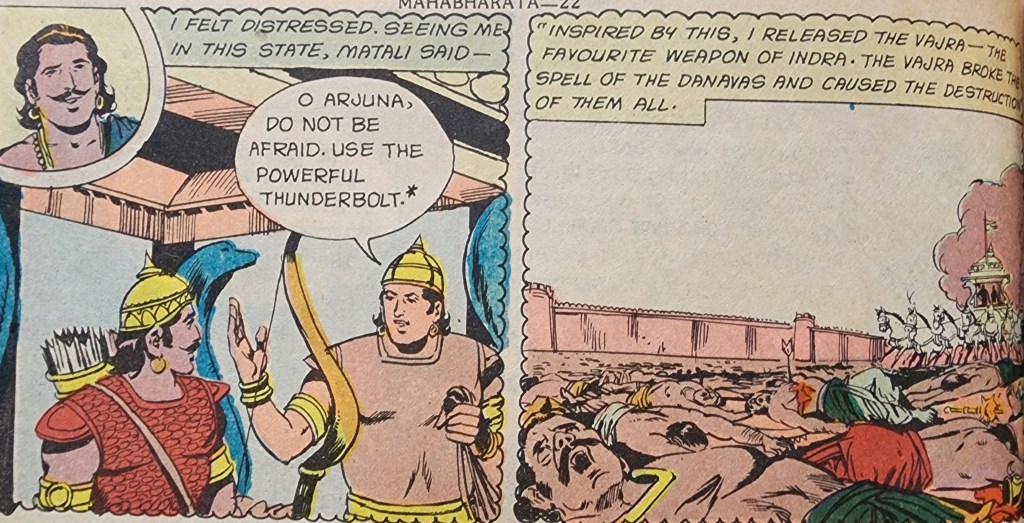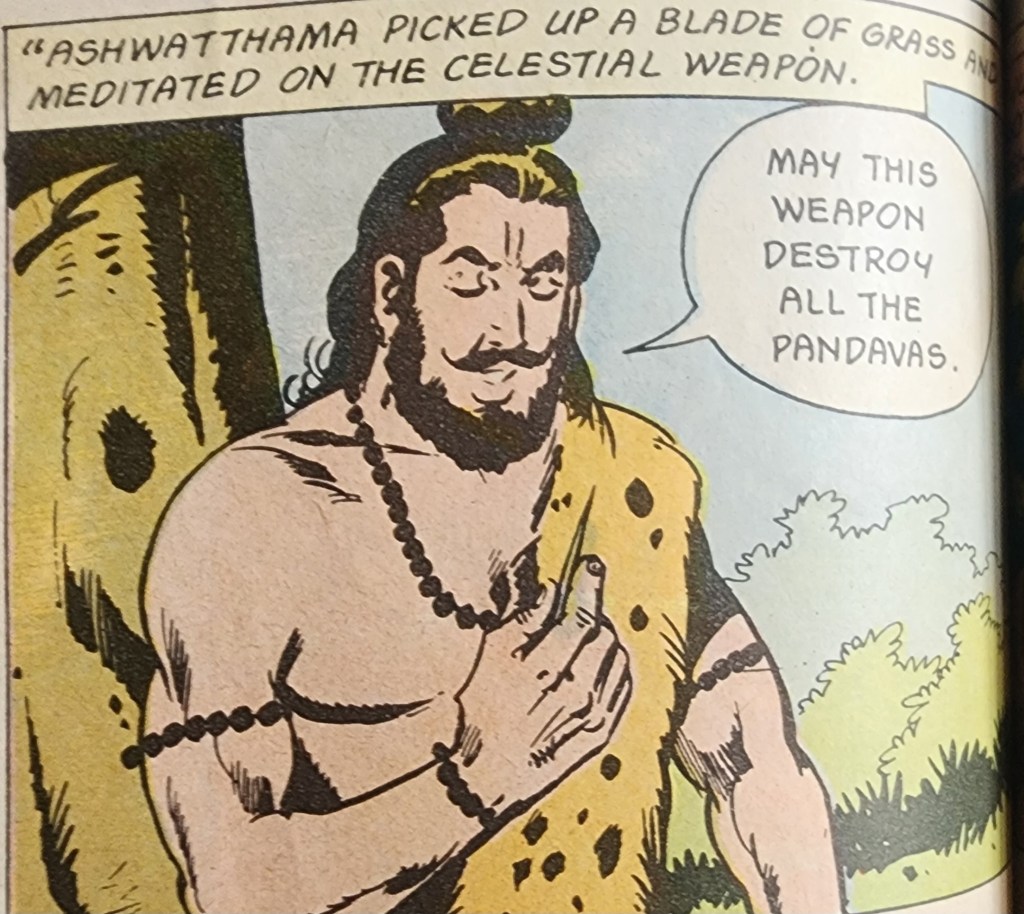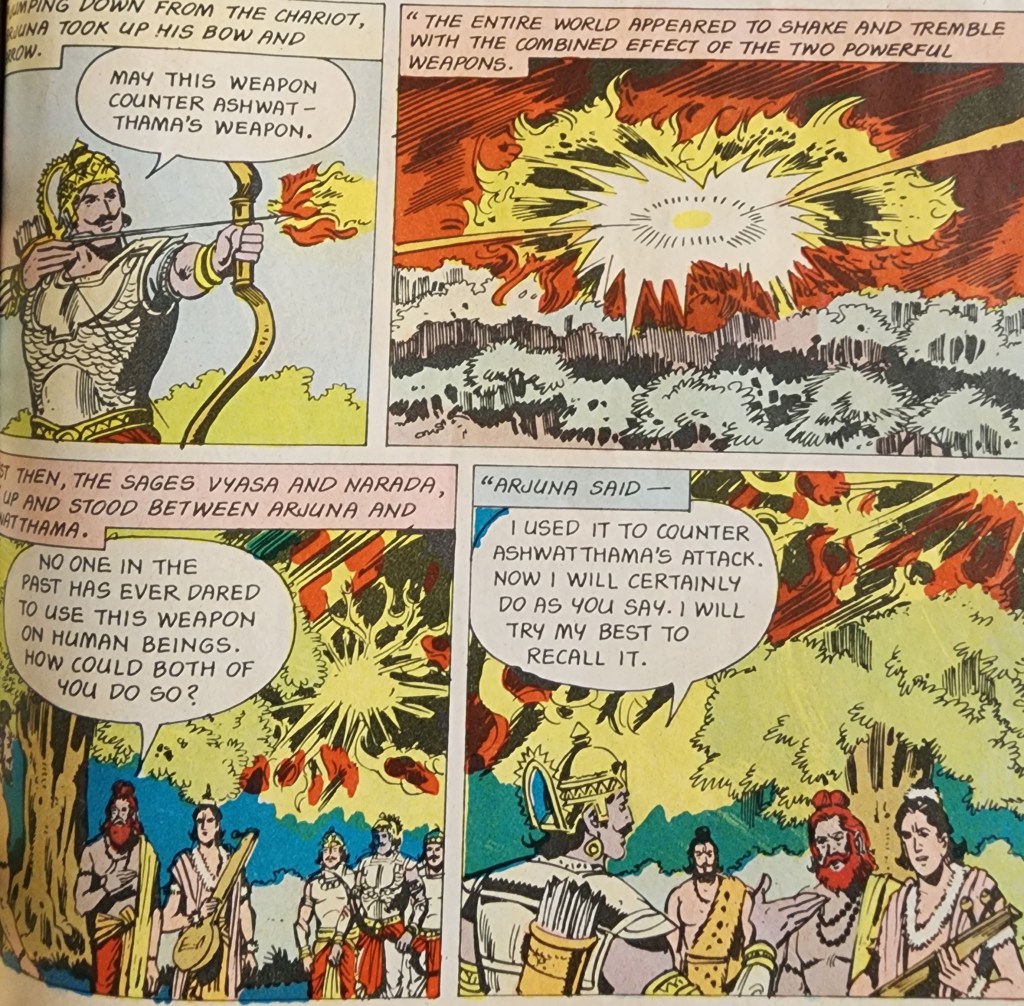
Connect, Control – Part 2; Boons, Blessings, Curses & The Sakki Test

The test for the fifth dan in the Bujinkan is also called the “Sakki” test. Sakki here generally refers to “intuitive ability”. For those that are not a part of the Bujinkan, I am describing the test. The test involves two people, one administering the test and another who is being tested. There are other people around who determine if the person passed the test or not. The person administering the test and those determining if the test was a pass or not are all holders of the 15th dan, which is the highest rank in the Bujinkan system (there are a couple of other higher administrative ranks).

The person taking the test sits in an approximation of the Vajrasana and the person administering the test stands behind her or him. Both the individuals have their eyes closed for the duration of the test. The person in Vajrasana is hopefully in a meditative state. The person standing behind her or him cuts down at her or his head with a padded/training sword. The expectation is that the person in Vajrasana should sense the attack based on the intent of the person cutting and move out of the way just in time (not too early either). If he or she moves in time and does not get hit, the test is a pass, else it is a fail, and the person has to try again. When it is said “move”, it could be a roll, break fall, getting up in time, or anything else. The “pass or failure” in the test is determined by the other 15h Dans who are observing the test or by the Soke, Hatsumi Sensei himself.

The key for this test is to “sense the intent of the cut”. The intent is present before the action of cut and hence the person will always survive being hit if he or she moves in response to the intent and not in response to any other of the five senses. The stimulus from these five might not allow time enough to get out of the way of the sword.

From my teacher and all my seniors and mentors, who have greater experience with the Sakki test, I am given to understand that the test is for both the person cutting and the one evading the cut. While the person who passes the test is the one who evades the cut, the true challenge apparently is for the one cutting. It is the responsibility of the person cutting to establish a connection with the one taking the test. If they can establish the connection, they are also successful in transferring the intent to the person, which triggers the movement. So, the test is more to allow the person being tested to realize that he or she has the intuitive ability and can trust the same, it is not to test the extent or timing of the same. This in turn puts the responsibility of the passing or failing on the person delivering the cut. So, if the person fails, it could mean that the person cutting did not have the connection with the person taking the cut. And this is perhaps why many people who have given many cuts to different people think it is a responsibility to “give a good cut”. I have seen people tell each other that they are sorry that they could not give a good cut as well. There are a lot of videos of the Sakki Test on YouTube, which one can look for to get a sense of the same. I am not going to link any as it is impossible to decide which one is the best representation of the same. 😊

The challenge in the test is that all external disturbances which could distract one from the task at hand, the test, is removed, as are all other stimuli like sound, sight, smell and touch. Pure instinct might be triggered if one is not thinking of the same, but just thinking about it makes it very hard and the removal of the five conventional senses acts in the same way.

Thus, the key to the entire 5th dan test is the “connection” between the tester and the tested. And this important aspect of the test led to this article. I will hopefully elucidate this key concept with what has been normal behaviour in Hindu culture over a very long period of time.

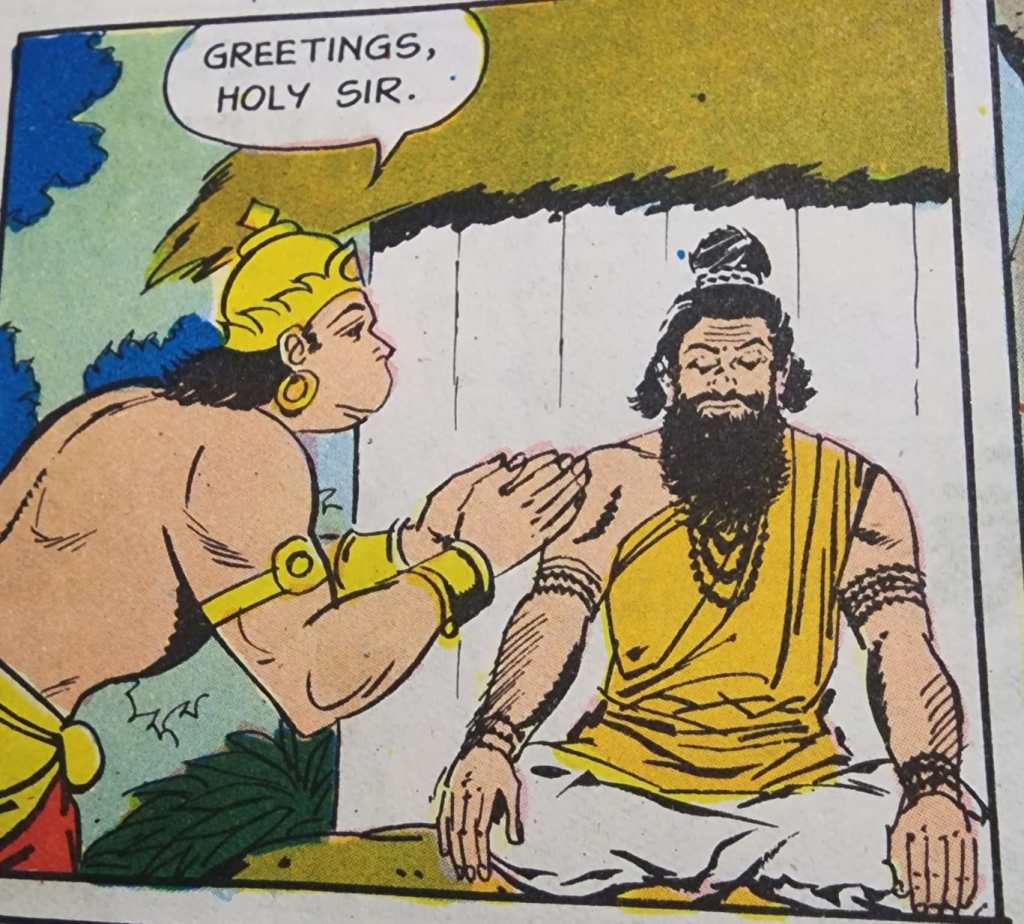
Anyone who has watched even a few episodes of the many “Mythological” serials on the various TV channels would have seen one character or the other seeking the Aashirwada (or Aashirwad) of many others. An Aashirwada can be considered a “Blessing”. The act as seen on TV would generally involve one character who is either younger by age or achievements or abilities, touch the feet of another character or perform a prostrated namaskaara at the feet of the other, either in greeting, farewell or to specifically seek the blessing of the other person. The other person obviously has greater experience or wisdom in any of the attributes just mentioned and offers blessings.

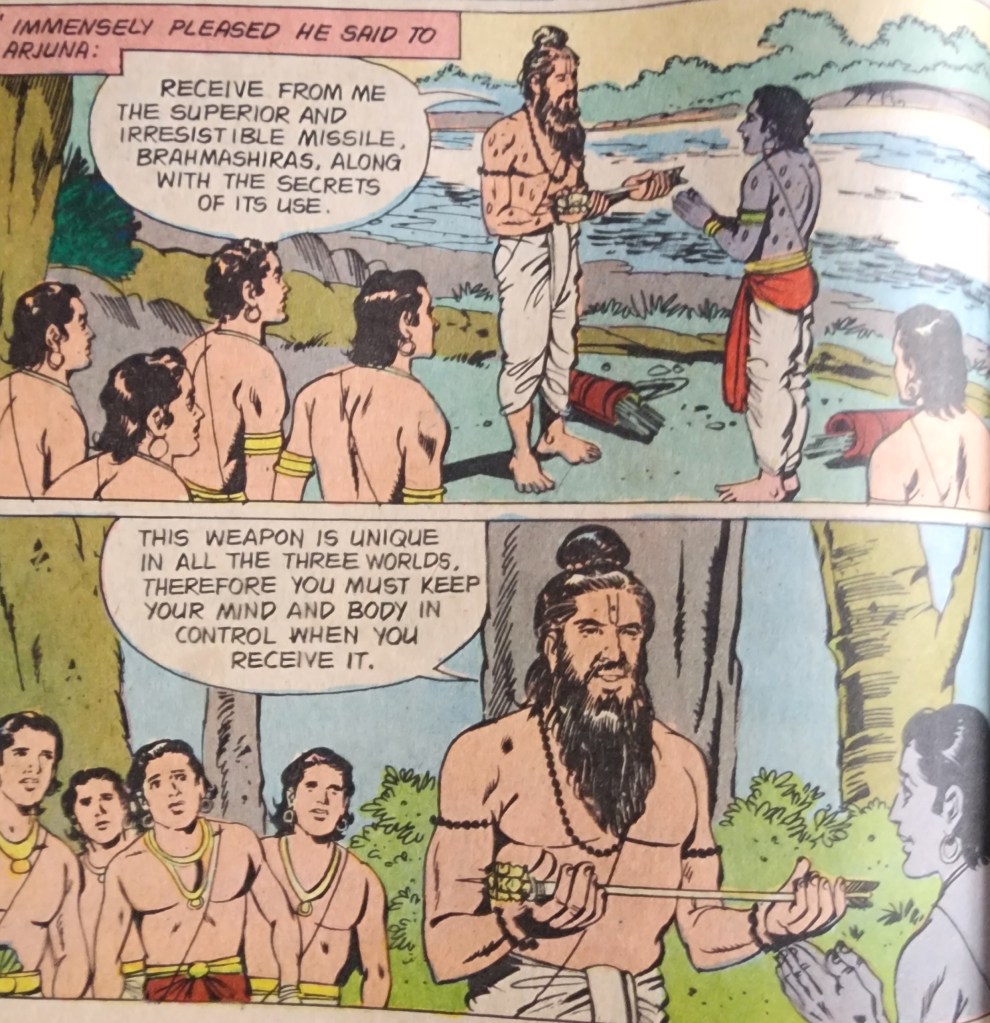
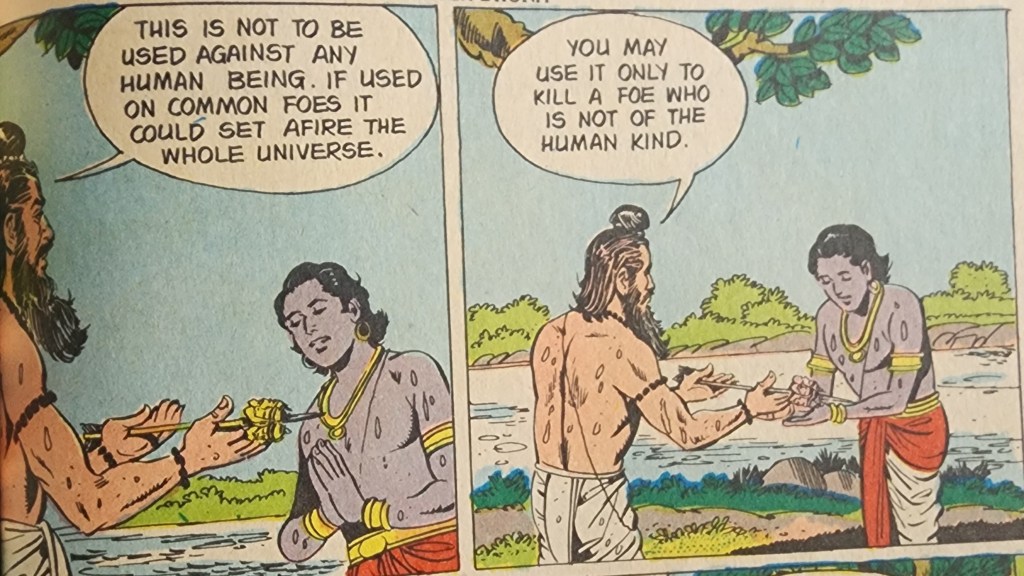
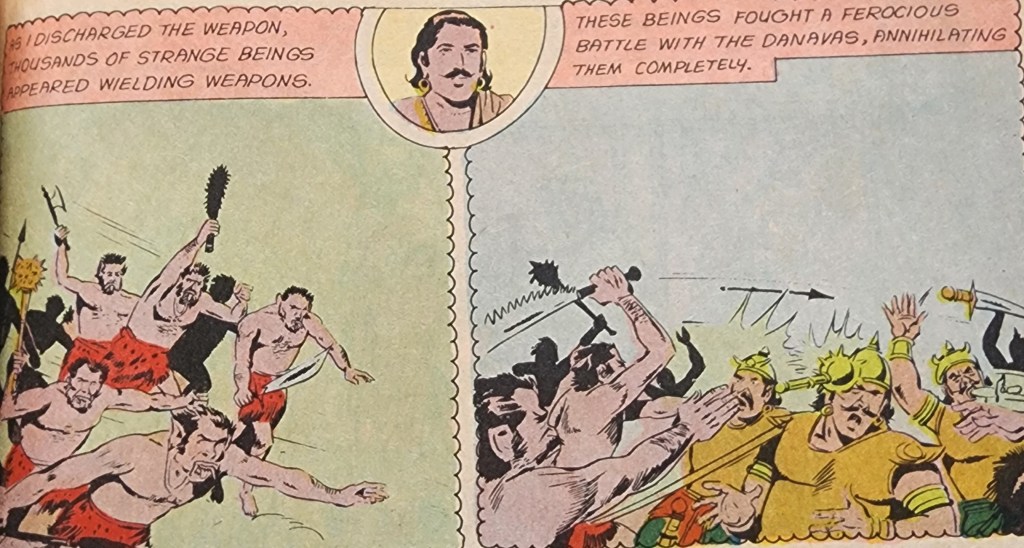
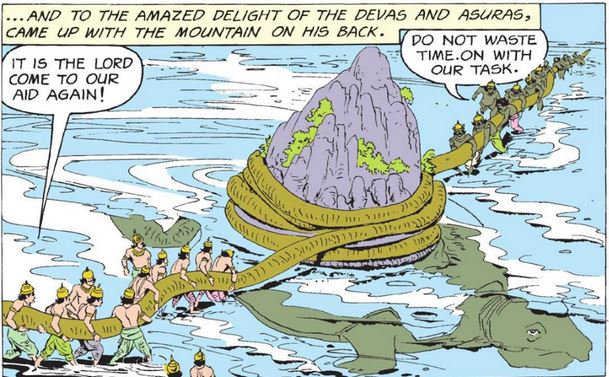
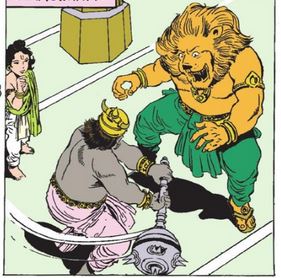
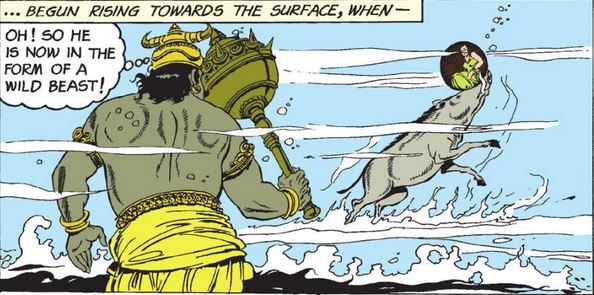
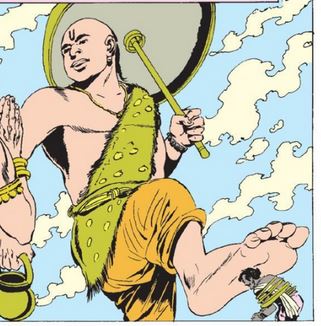
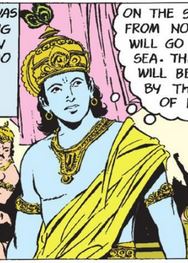
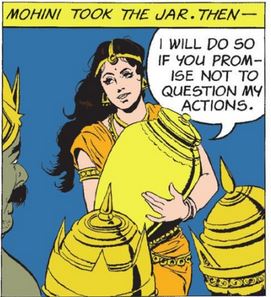
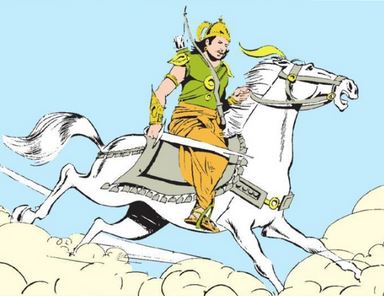
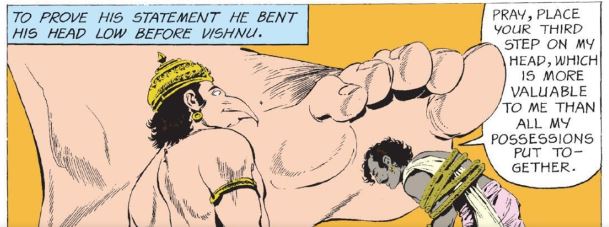
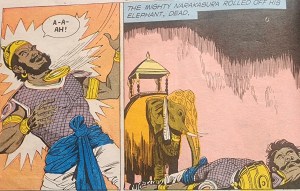
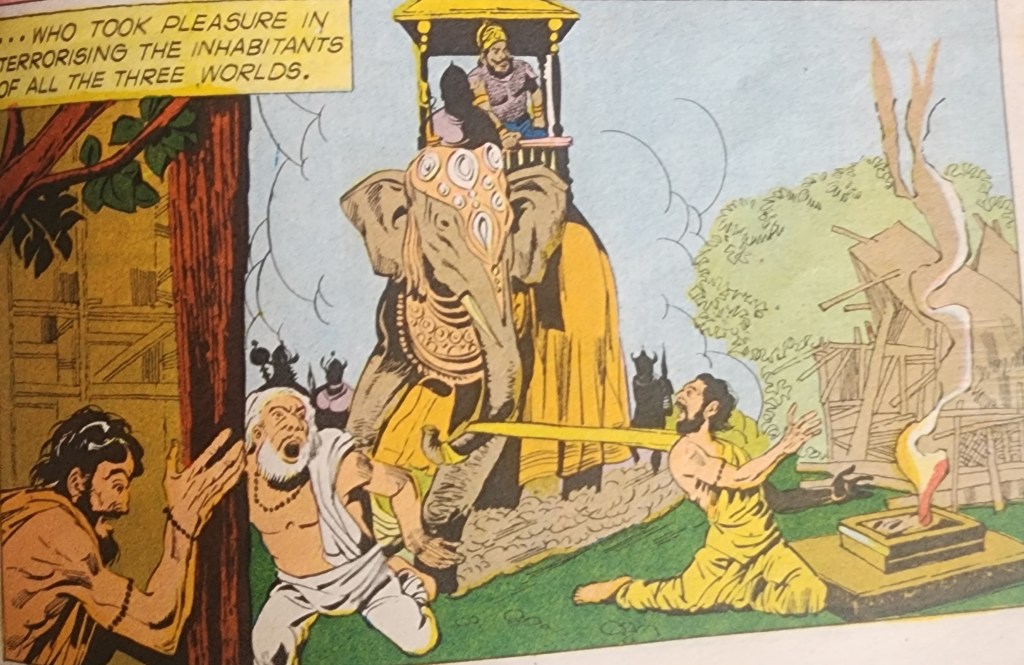
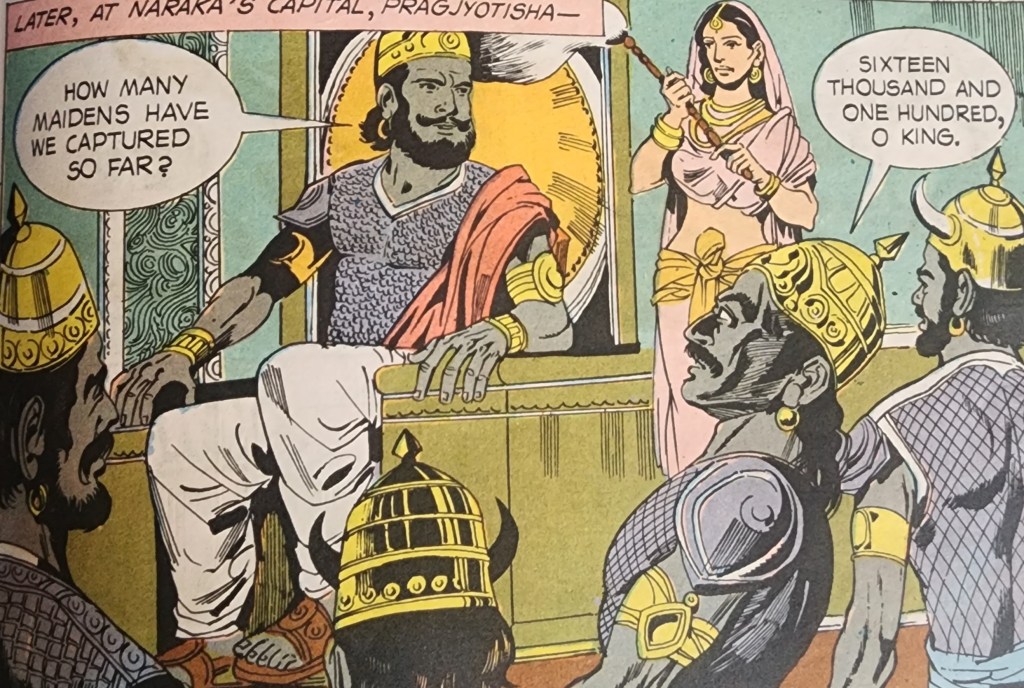
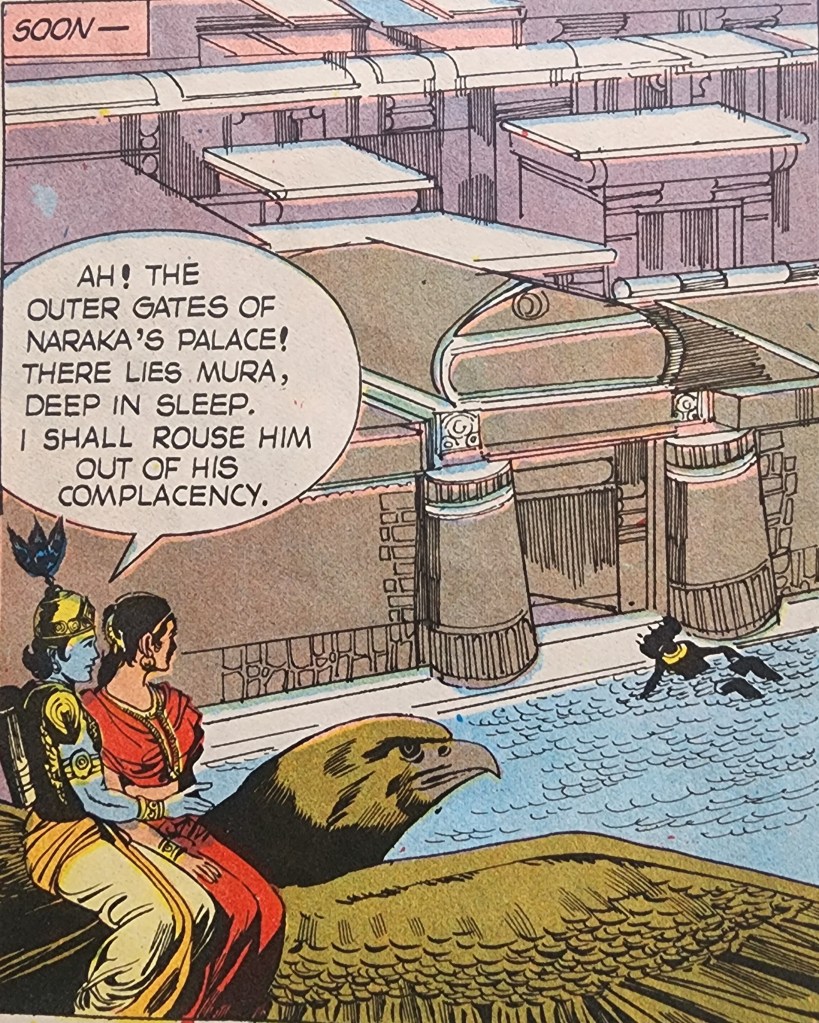
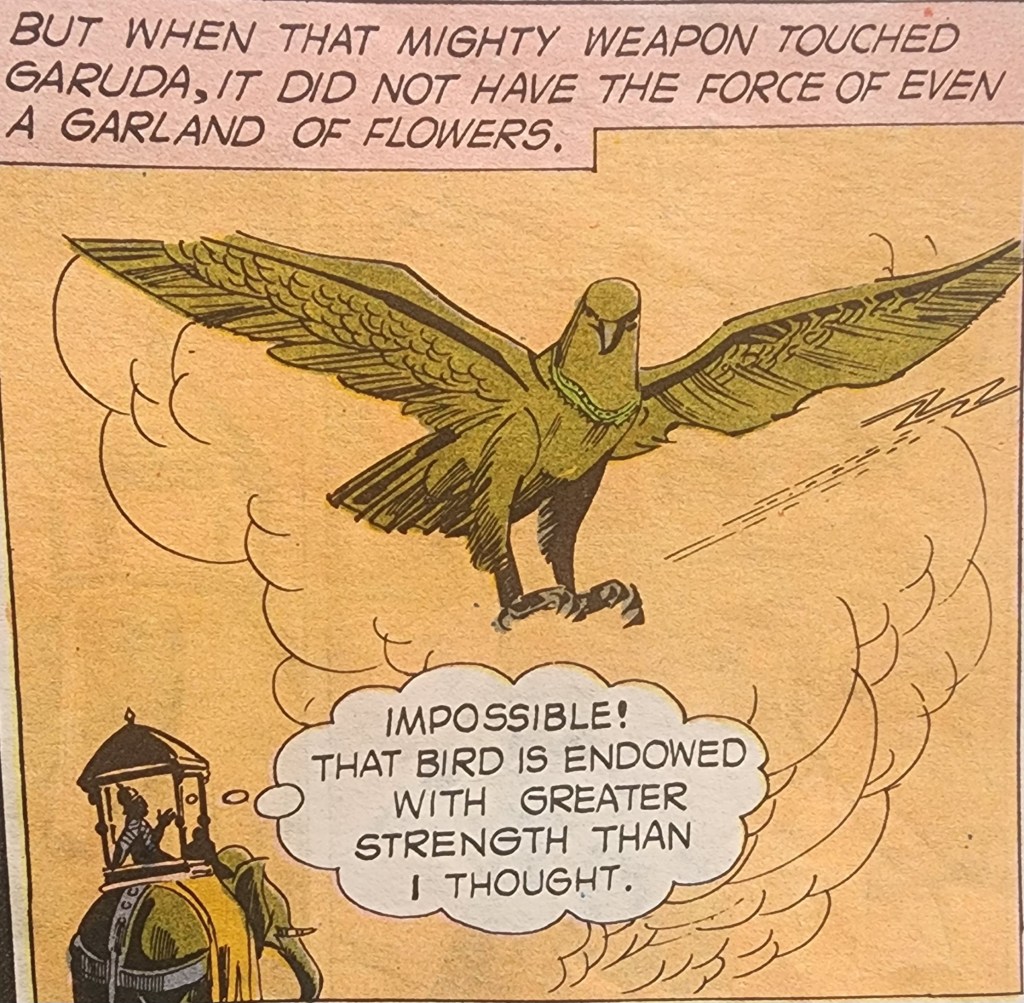
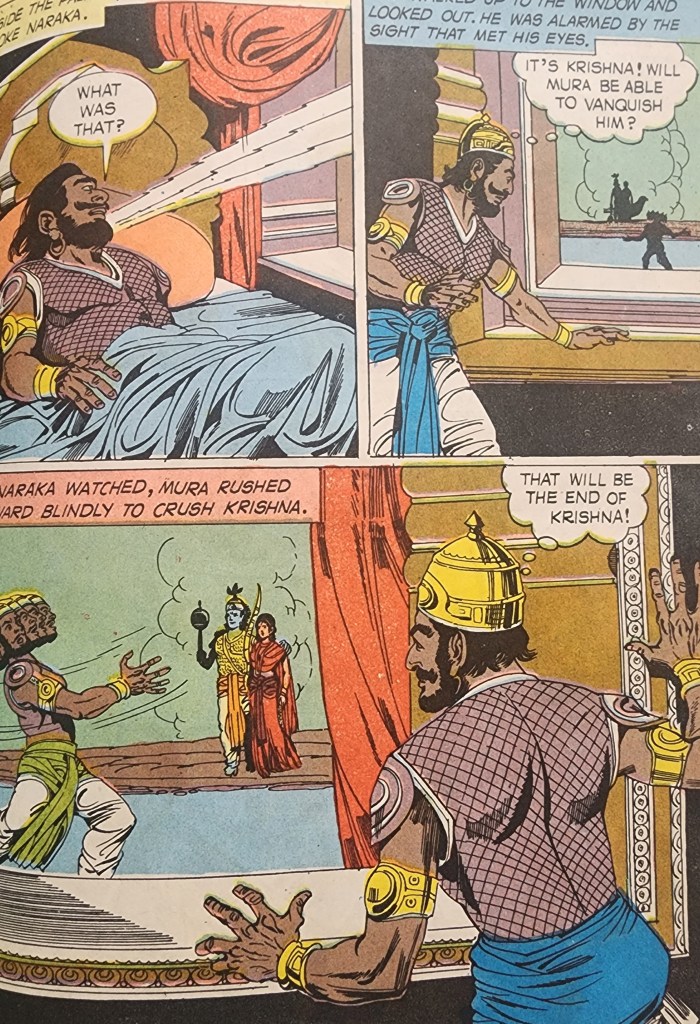
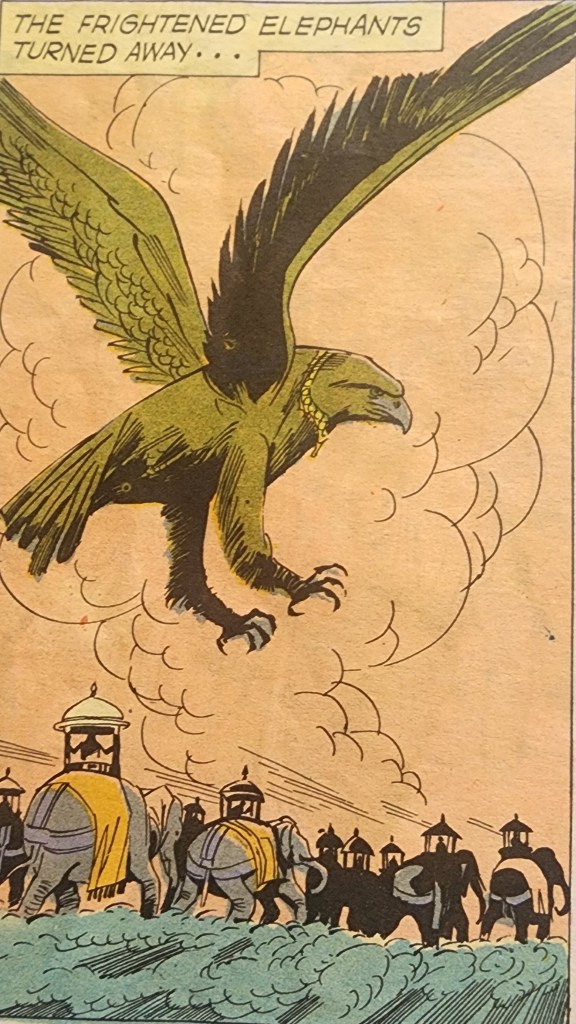
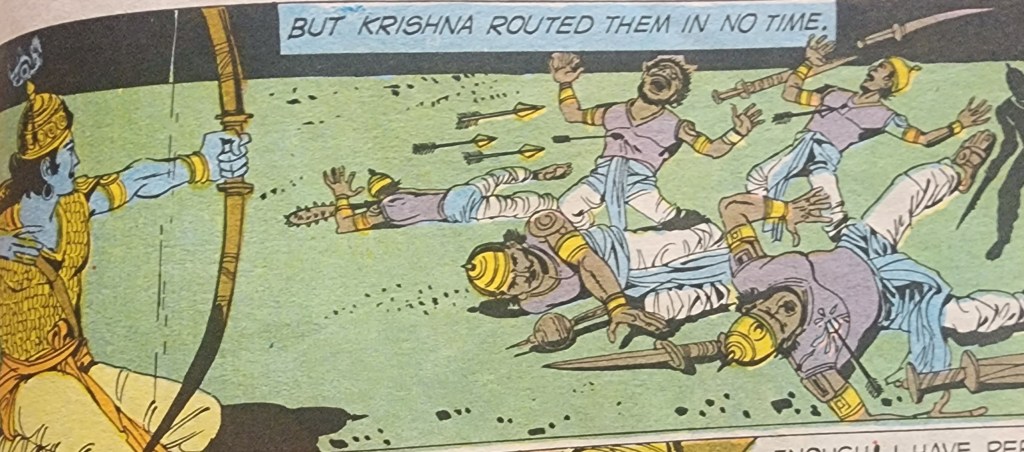
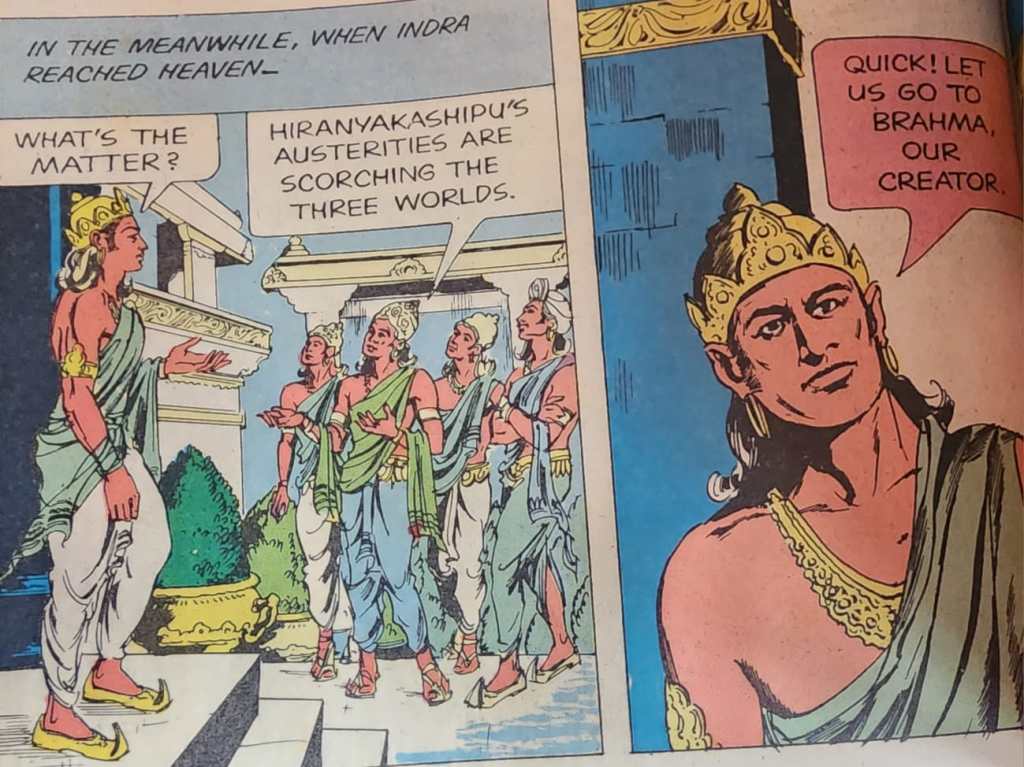
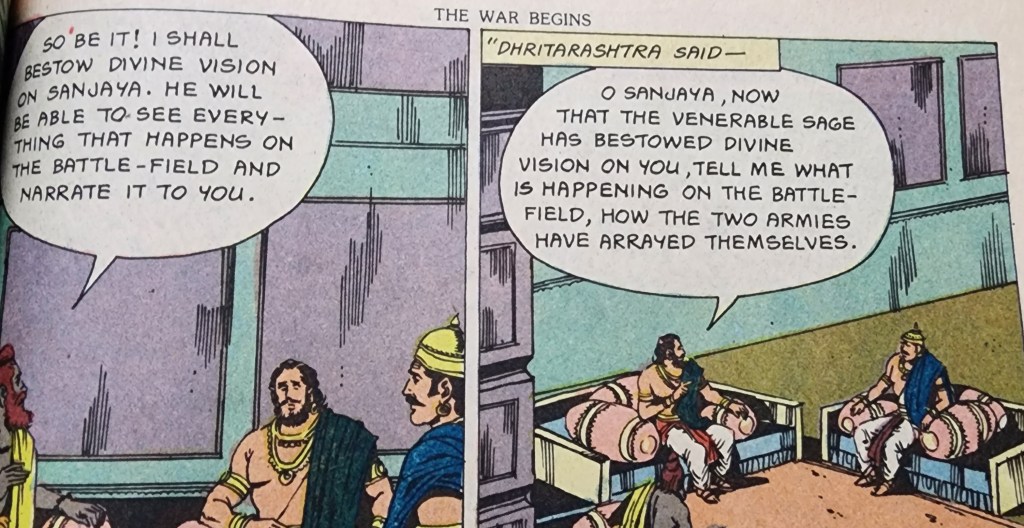
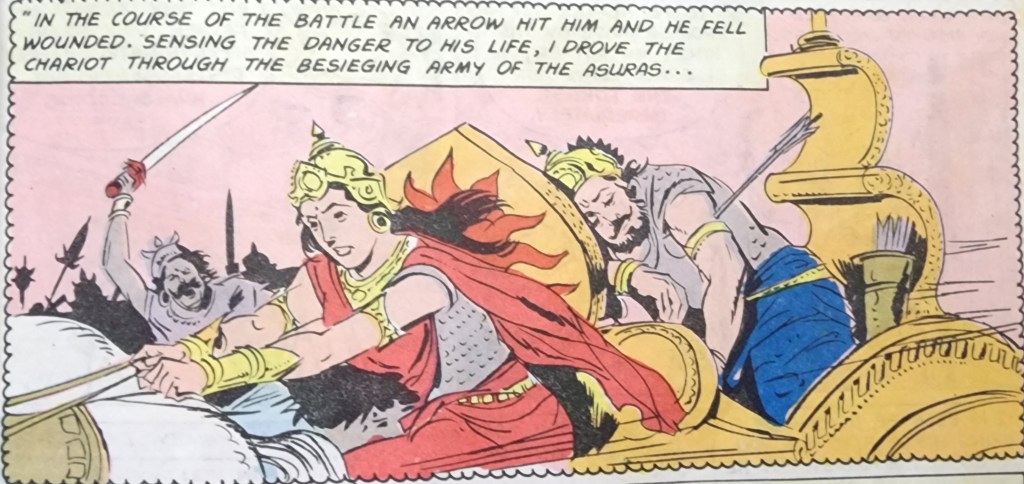
Credit for the images (left to right) – From “Enter Drona”, Mahabharata – 5 & “Hanuman to the rescue”, both published by Amar Chitra Katha

Some of the oft uttered blessings we see are (this is a very small sample set) –

  • Aayushmaan / Aayushmati Bhava – Have a long life
  • Vijayee Bhava – Be victorious
  • Yashaswi Bhava – Be successful
  • Keertiman / Keertimati Bhava – Be well known / achieve fame

These examples are from Hindi. But the same can uttered in any of the many languages in India. Most importantly, this is not an act just seen on TV or web series. Seeking the blessings/aashirwaada is an ancient practice that all of us continue with to this day. We specifically seek the blessings of elders and gurus. As we get on in our years, we might have to bless the youngsters in the family, and this need to be ready to pass on the blessings is what prompted this article.

Are the blessings just words that are uttered? Like wishing someone well? Or can they genuinely have a beneficial impact on the person who has received the blessings? And if the effect has to manifest in reality, what are the requirements on the part of the one giving the blessing and the one receiving the blessings? These are questions I do not have answers to, and any answers for the same would be welcome. But I do have some thoughts on the matter which I shall share. These are purely opinions based on personal experience, observation, and martial training.

Blessings are important to different people to varying degrees, depending on their upbringing, life experiences, association with specific individuals, association with places and objects linked to individuals and associations of many other types that people can think of. Places are considered sacred or blessed based on their association with Divinities or events that are associated with the same. Sites of old family homes are also considered blessed due to association with one’s own grandparents and ancestors. In these cases, the effort put into the journey to get to these places itself becomes achievement of an “experiential blessing”, where the experience of the journey is part of the blessing.

Either way, whether the blessing is from a person or due to a journey or a location, the connection is key. Belief is a connection, or at least the “option of giving a connection a chance”. Based on this observation, in my opinion, the blessing is no different than the ability to transmit intent in the sakki test, with the “connect” being the key aspect in both. In a conventional setting, the “intent” is the good will or desire for success of the one seeking the blessing. I opine that just as one can transmit intent in the Sakki test, the good will can be transmitted if the “connection” between the one blessing and the one seeking the same is strong. And just as the intent in the test can move a person, the will of the person blessing, can positively impact the one being blessed. This will be explored further below, with boons and curses.

Blessings of a more specific nature and perhaps of a more powerful variety can be called “Boons” and the opposite of “Boons” are “Curses”. Blessings are much simpler and seen in all human interactions where elders and teachers “wish for” or “bless” their wards, students and juniors, a favourable outcome in life. Let us consider “Boons” and “Curses” for a further exploration of connection and control.

Once again, anyone who has read stories from Hindu culture will surely have noticed the following two things. People meditate and perform penance(s) to earn “Boons” that grant them abilities beyond those of normal humans, and make the ones earning the boons almost equivalent to Gods. On the other side of the same, great Sages “Curse” people and even the Devas and Gandharvas for their indiscretions and mistakes, the consequences of which are dire and painful, and have to be endured for long periods of time.

A Boon is called a Vara in Kannada or maybe Var (if the language is closer to Hindi than to South Indian languages). Varadaana or Vardaan is the granting of a boon. A Vara is more than a Blessing in the stories. It grants the one receiving the same special abilities. These could include very long life spans, protection from harm from all but a few forms of attack, great knowledge or wisdom, incredible strength beyond that imaginable by any mortal human, or the ability to possess, use and retrieve weapons of unimaginably destructive potential.

Obtaining a Vara is no easy task. Firstly, one needs to demonstrate the eligibility to request a Vara and then also demonstrate the traits needed to wield the ability granted by the Vara. One requests the granting of a Vara by great beings that are not human or are superhuman; Varas are granted by the Devas or Lord Brahma or Lord Shiva. Even earning their presence requires expending great effort over long periods of time. Getting these divine beings to appear before one where the request for the Vara can be made is the demonstration of eligibility to ask for a Boon.

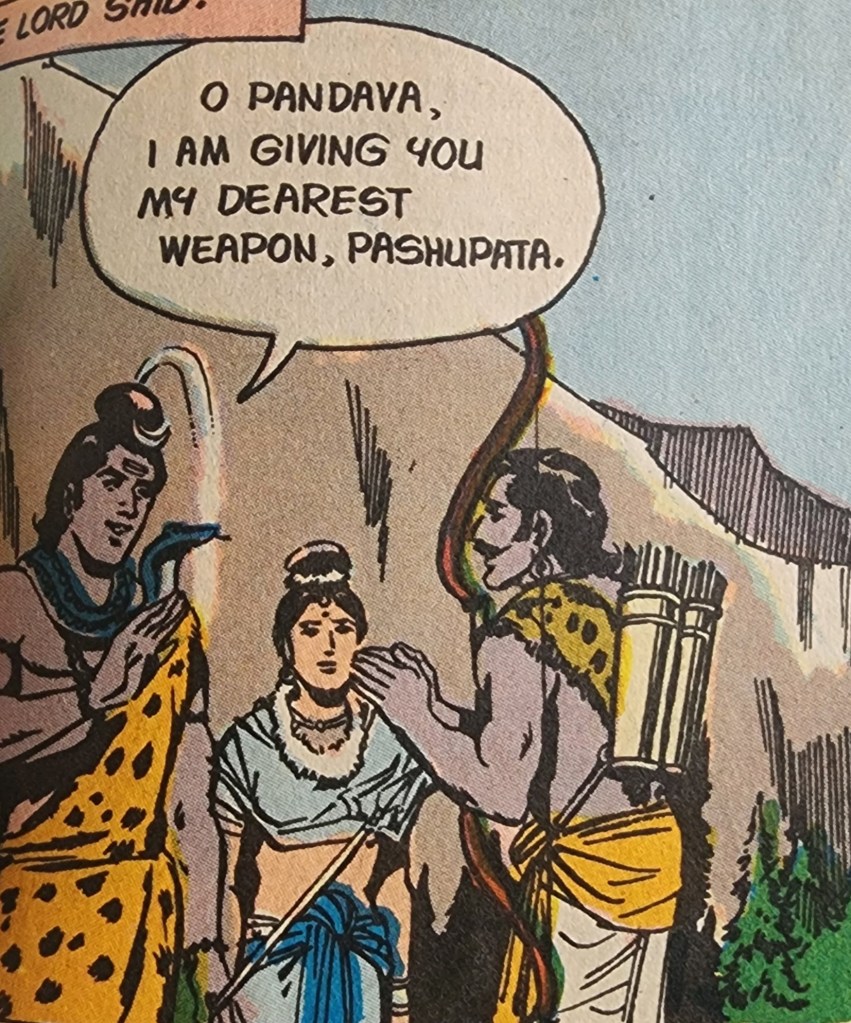
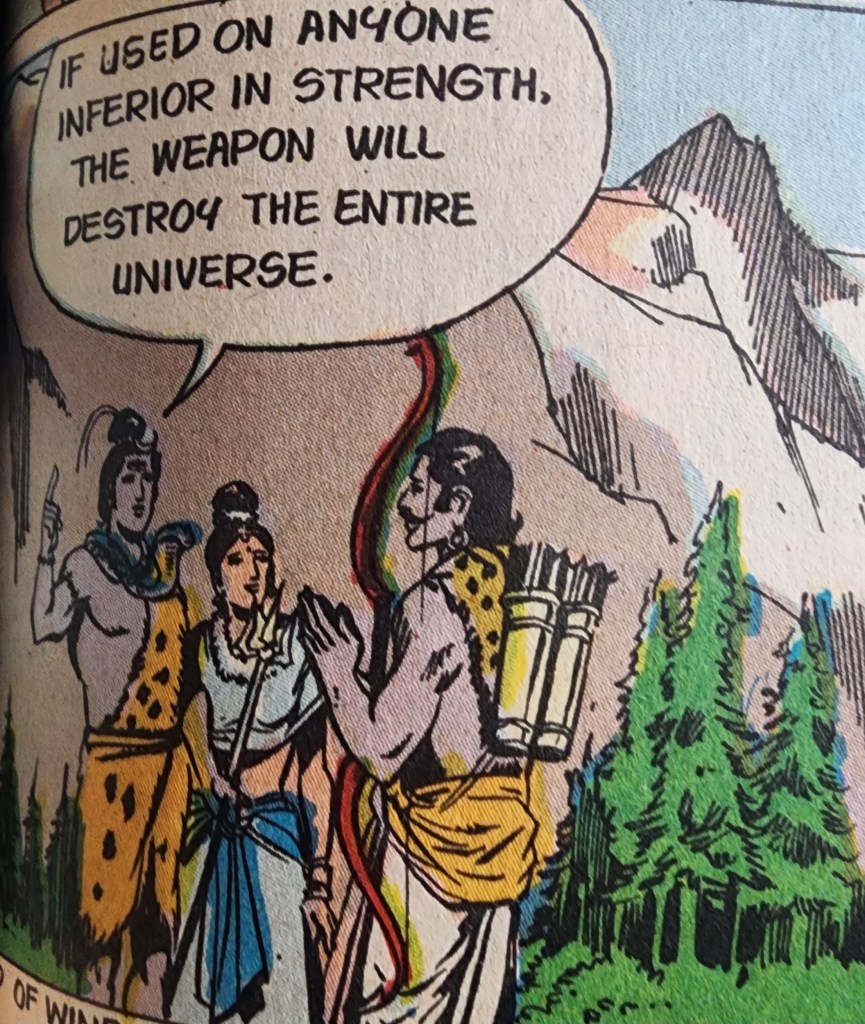
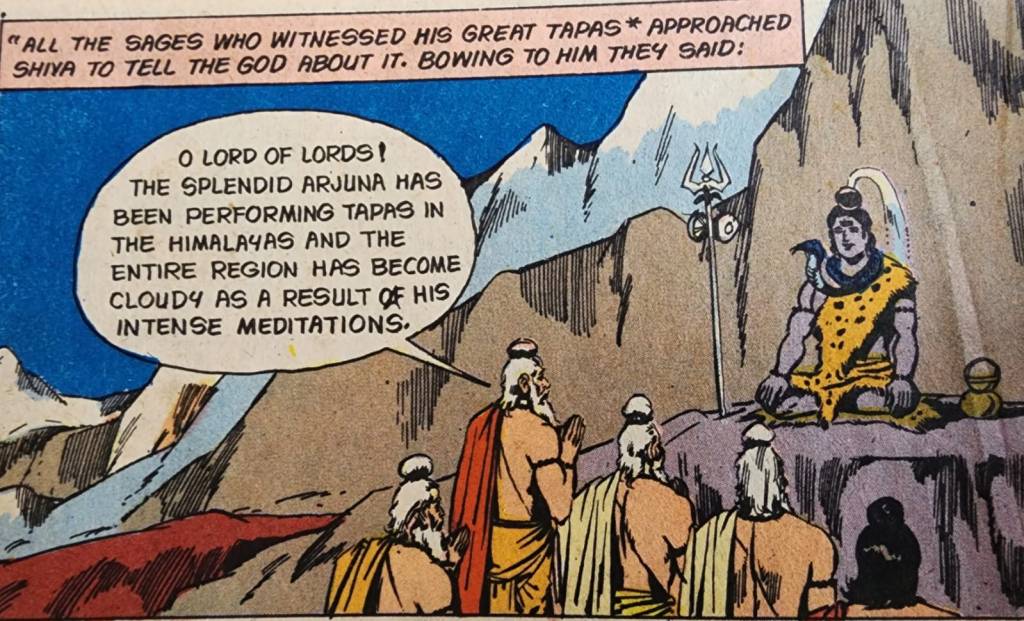
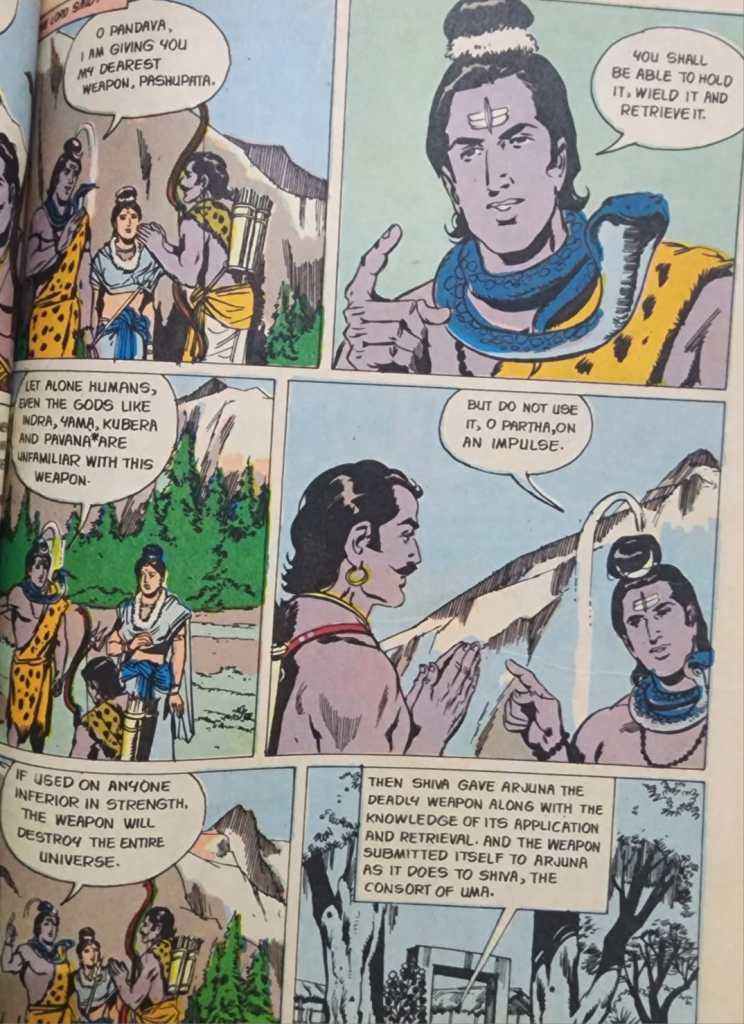
A common feature we see in many stories is that the means to request the presence of a divine being is meditation, also referred to as penance. This is shown as meditating on the God whose presence is being requested with singular focus for long durations of time, with no breaks. In the case of Arjuna when he was on a quest to acquire the Paashupataastra, Lord Shiva tested him by appearing in human form and forcing him to fight, and thus reveal his abilities, apart from just the meditation. Based on my understanding, the qualities that are demonstrated while performing Tapas (meditation) are, perseverance, dedication, focus, drive, resistance to pain, self-control and most importantly, letting go of the self **.

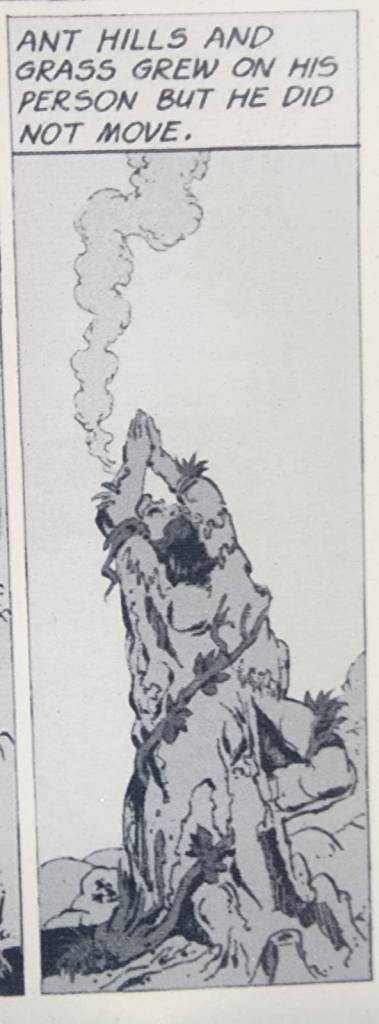
If the God whose presence is desired is impressed or convinced by the qualities seen, she or he appears to the person performing the meditation and grants them the opportunity to request a Vara of their choice. The letting go of the self is shown in some stories to be so complete that anthills or trees grow on the person, as if they were just a rock and not a sentient being anymore. There are also cases where there are multiple tests like with Arjuna that have to be overcome, apart from the meditation; these could be as diversions or disturbances to the meditation or something that needs to be endured in one’s life (the duration may vary).1

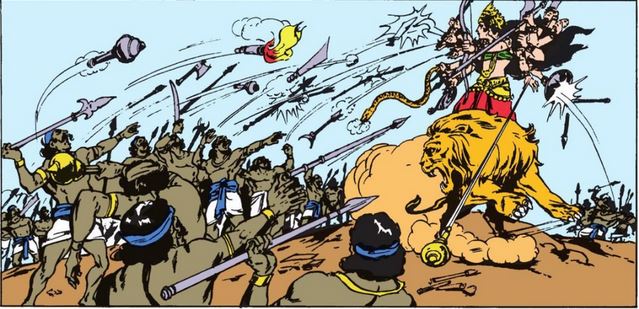
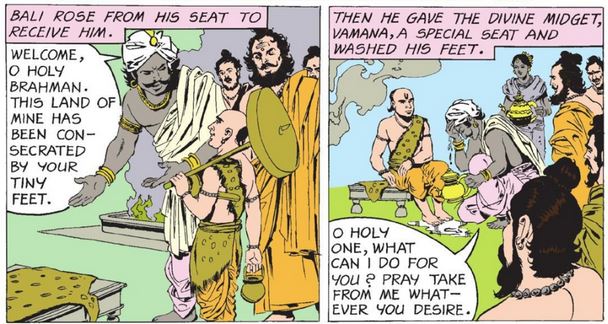
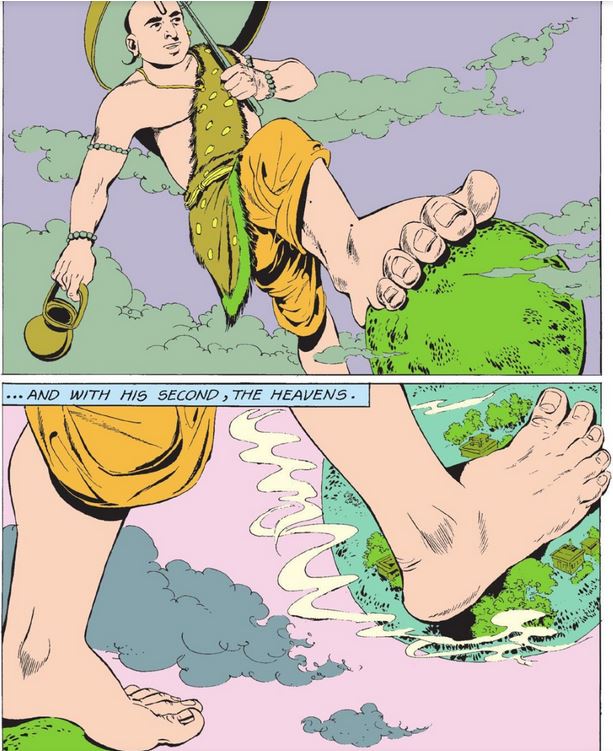
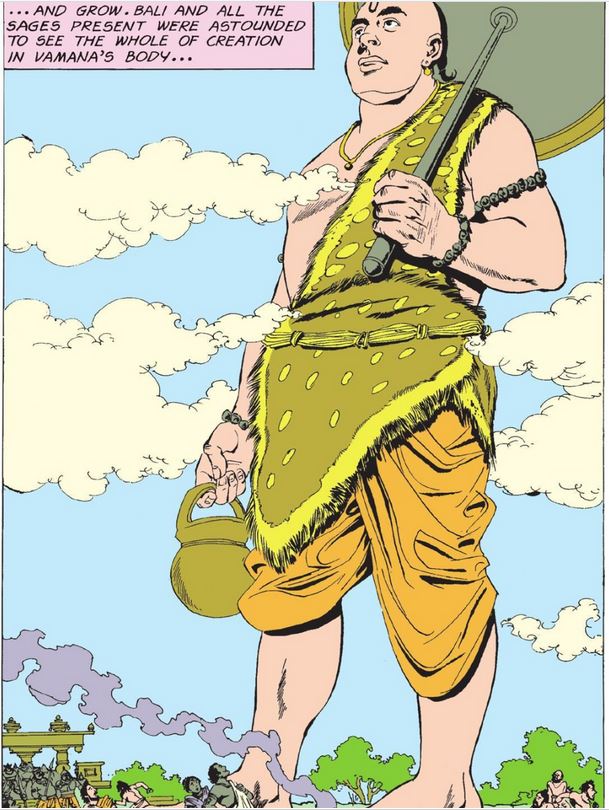
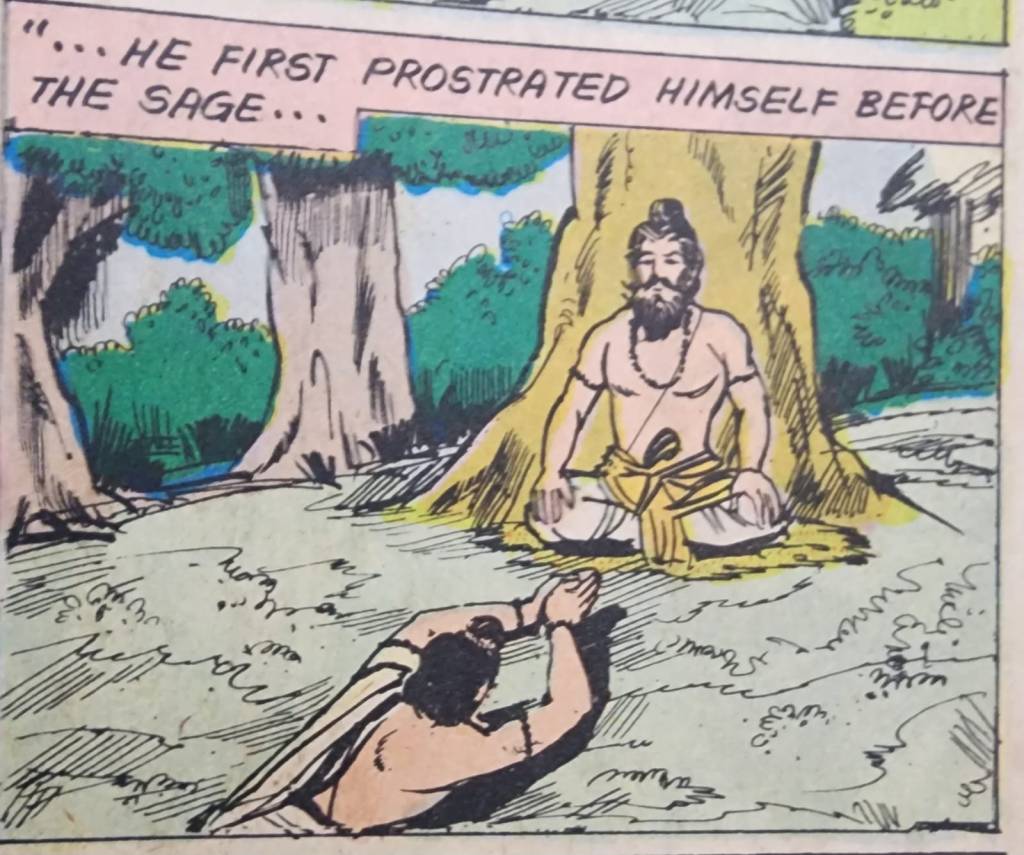
Image credit – “Dashaavatara”, published by Amar Chitra Katha (Kindle edition)

Many individuals request immortality and are denied the same as it goes against the natural order of things, and are told to request something else that will aid in the ambitions of their lives. A miniscule sample of Varas requested by individuals are mentioned below. Observe that these Boons could be granted to extraordinary individuals who went on to become “villains” in their lifetimes due to tremendous ego post the acquisition of the Vara.

  • Taarakaasura requesting Lord Brahma to be unkillable by anything other than a son of Lord Shiva (when Lord Shiva a widower and in deep meditation for ages).
  • Arjuna requesting Lord Shiva to grant him the ability to use the Paashupataastra.
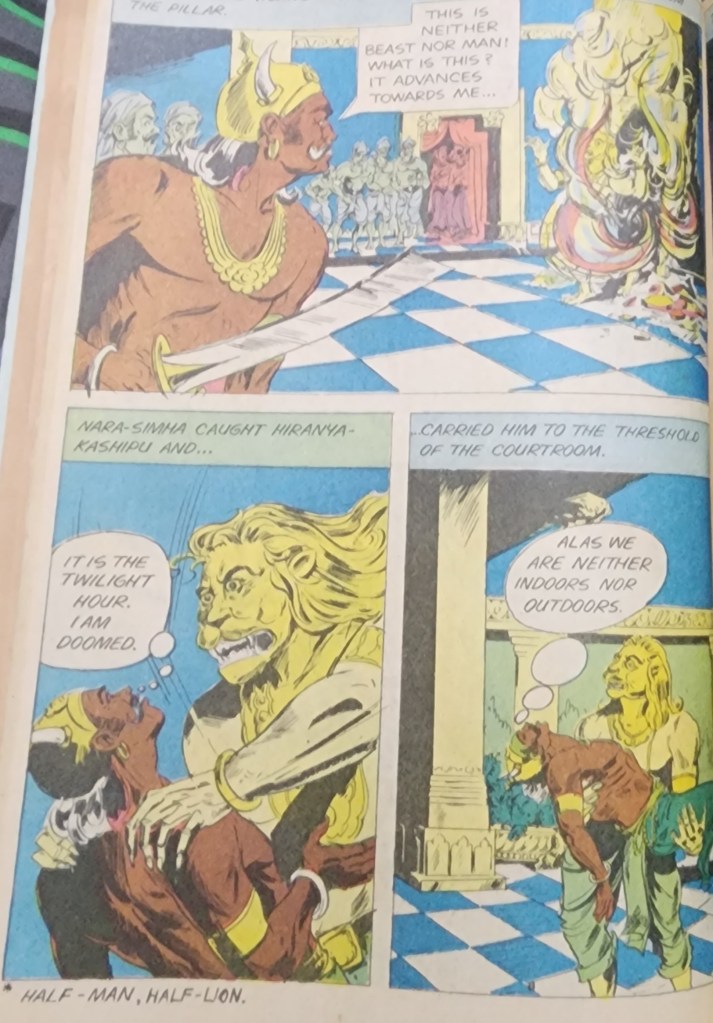
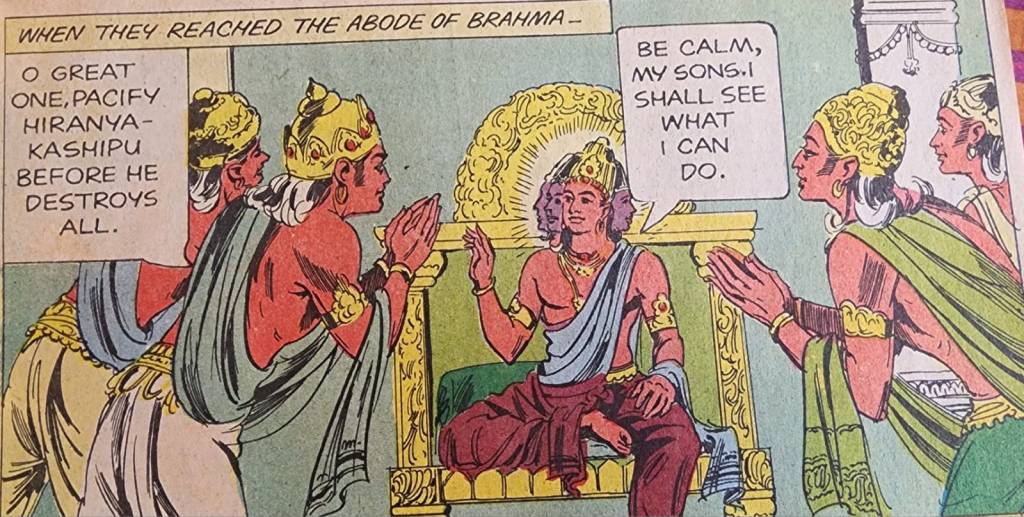
  • Hiranyakashipu requesting Lord Brahma to be unkillable by any human, animal, weapon, during the day, at night, inside or outside any structure.
  • Mahishaasura requesting Lord Brahma to be unkillable by any male.

Credit for the images (left to right) – “Prahlada” and “Arjuna’s quest for weapons”, “Mahabharatha – 20”, both published by Amar Chitra Katha

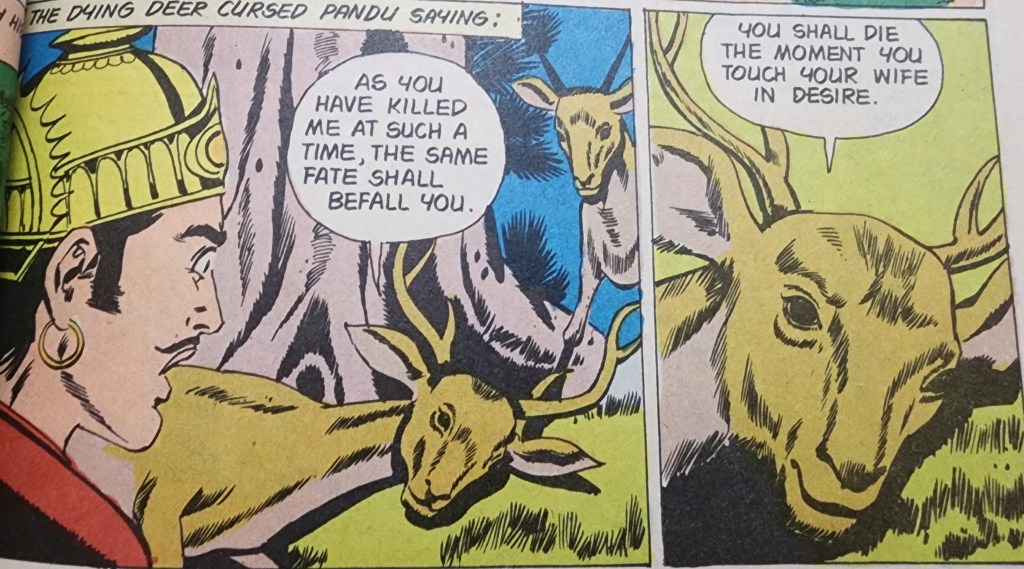
A Curse is the opposite of a Boon. A Curse is a called a “Shaapa” in Kannada and Shraap or Shaap in Hindi. While a Vara bestows a specific ability or protection to an individual, a Shaapa or Curse causes a specific & severe problem to the individual who has been cursed. Many a time, once the curse is uttered, the person who is cursed is penitent and begs for forgiveness. When this happens, the person who has uttered the curse also states a remedy to the same. But there is definitely a long period of suffering involved before the curse is lifted.

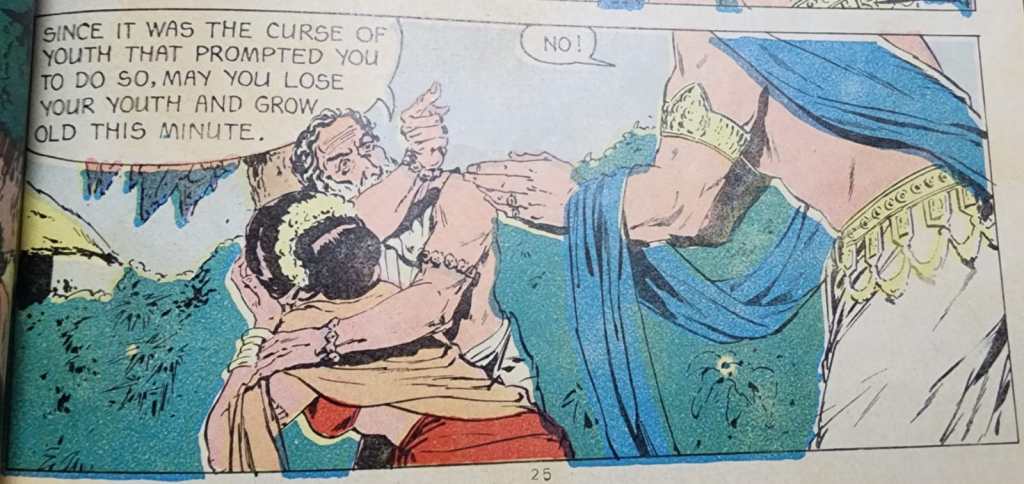
Credit for the images – “Yayati” published by Amar Chitra Katha

In this last aspect a Shaapa is like a Vara; in one case it takes a long time of repentance with inconvenience to serve out the time of the curse and in the other, one needs to endure a long time of inconvenience to be eligible to ask for a Boon. So, in either case the qualities one must acquire and demonstrate are the same, even if the origin of the demonstration is opposite in nature. Surviving a curse has a root cause beyond oneself while the effort to gain a boon lies within oneself. In a way a curse is surviving an uke’s (opponent’s) attack while a boon is being a tori (defender), voluntarily against an uke. Striving for a boon also has an aspect of the Musha Shyugyo (warrior’s journey) in that the journey begins voluntarily and the person who ends the journey is much changed from the one who started the same, due to the trials and hardships endured during the same.

From my recollection of stories from Hindu culture, curses are uttered by great Sages or Maharishis who have several years’ worth of Saadhana (practice in the right rituals, meditation and scripture) and knowledge. They utter the curse due to a grave indiscretion or blunder on the part of the person who is being cursed. These mistakes generally stem from an inflated ego after great achievement and this mistake then messes with the natural order, or rhythm of goings on in the universe. A tiny sample set of curses are mentioned below.

  • Durvasa cursing Indra to lose his strength, ability and “Tejas” (radiance or vitality)
  • Agastya cursing Nahusha to live on Earth as a snake until he is relived of the same
  • Shukracharya cursing Yayati to perpetual old age unless one of his sons is willing to exchange his youth with him
  • Apsaras and Gandharvas are cursed on many occasions for losing a sense of space and propriety while performing the arts in the presence of others
  • Ahalya & Indra being cursed by Rishi Gautama for their infidelity

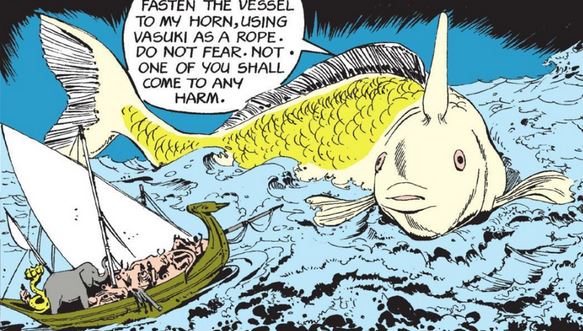
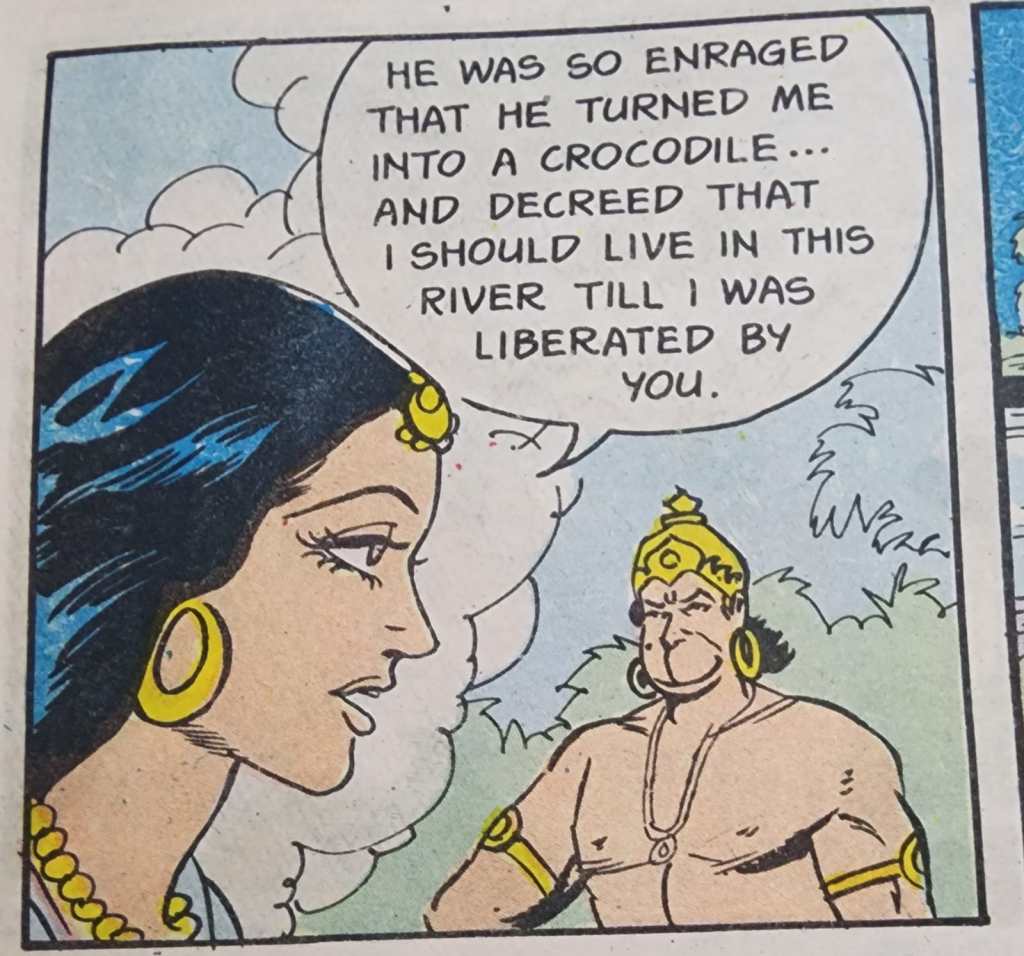
Credit for the images (left to right) – “Nahusha”, “Hanuman to the rescue”, both published by Amar Chitra Katha

A curse has consequences for both the person who utters the same and the one who is cursed. Perhaps this is true in the case of a boon as well, but may not be apparent in the stories as the entities bestowing the Vara are divine and there is no comparing such a being to a human, and so consequences are hard to identify. However, a curse, even when uttered by a Maharishi, is still by a human being acting against another human, even though the one uttering the curse is a highly evolved and accomplished human.

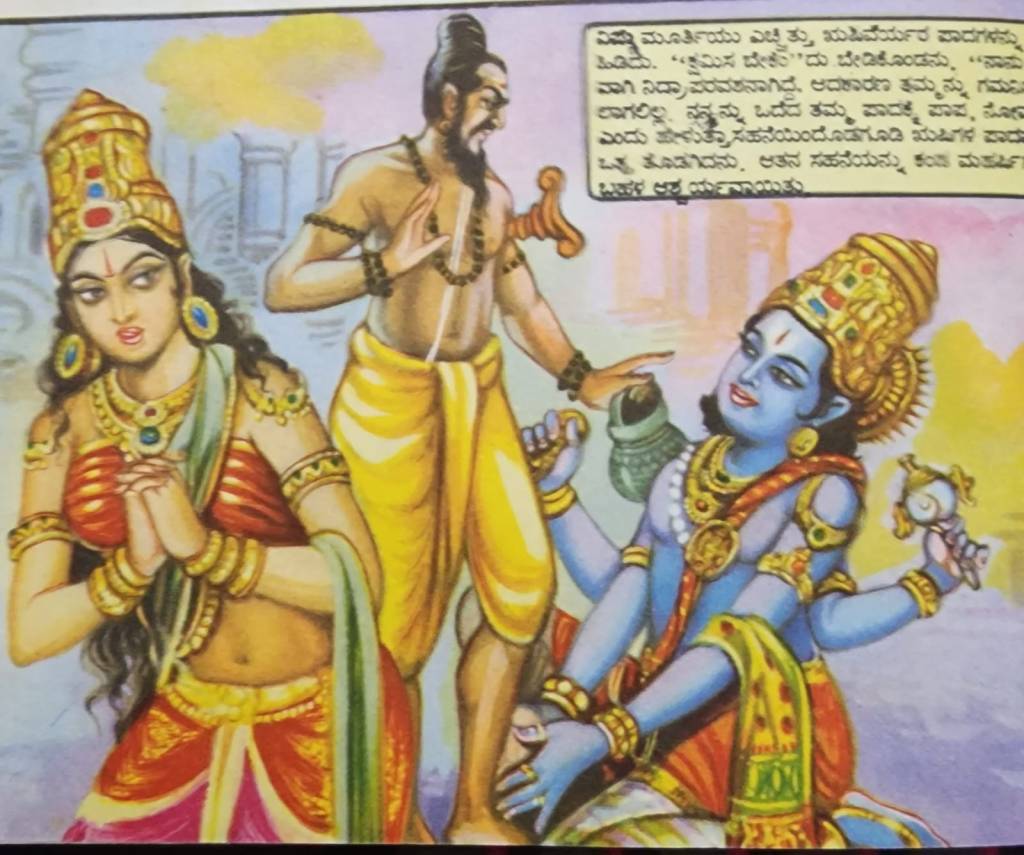
A case of the person cursing another and paying for the same is seen in the story of Rishi Brighu cursing Lord Vishnu for not receiving him as a good host should, when he visited Vaikunta (Lord Vishnu’s abode). Rishi Brighu, in his arrogance cursed a God! One of the Trimurthy no less! Lord Vishnu accepted the curse and touched the feet of the Rishi, but while doing so, he blinded the eye that existed in the foot of Brighu. This eye had allowed the Rishi to walk fast and almost float on the ground while not having to use his two normal eyes while moving about. But after this incident, he was forever slowed down and a great deal of his arrogance went with his extra eye.

Image credit – “Venkateshwara Taanada Chitragalu”, published by Pioneer Publications – above image depicts Lord Vishnu accepting the curse by Rishi Brighu as described earlier

I have not heard of any stories other than this one that explicitly mention the consequences of uttering a curse or bestowing a boon on anyone, for the person who delivers either the boon or the curse. When I mean consequence in this case, I refer to the ability or skill or strength that is expended in making the boon or a curse a reality. But this can be inferred from the story of the great sage Vishwamitra.

Before he became the Brahmarishi Vishwamitra, he was the king Kaushika. The king Kaushika wanted to become a Brahmarishi who would be considered an equal to the Brahmarishi Vasistha. So, he performed severe penance and meditated for years to achieve the abilities of a Brahmarishi, one of which was a complete control of one’s senses and desires. On three occasions, after developing great abilities on the path to becoming a Brahmarishi, he had to expend the gained abilities to succeed in activities he indulged in.

Once, his meditative focus was broken by the extremely beautiful Apsara, Menaka, which whom he later had a daughter. This was a case of not having mastered his senses and desires. Next, after achieving great prowess through meditation, he expended the same in creating a second Swarga (roughly translated as Heaven or the abode of Lord Indra) for the King Trishanku who wanted to enter Swarga without first dying. On the third occasion, he expended the abilities developed through austere meditative penance in trying to show low, the King Harishchandra, whose values he wanted to see broken (Vishwamitra failed and Harishchandra never strayed from his values).

In all three situations, Vishwamitra lost the abilities already developed and had to start with a great deficit on the path to becoming a Brahmarishi. He eventually did succeed, but the concept is quite clear. Acting on a boon or a curse, if we can consider the creation of a second Swarga as a boon and causing hardships to Harishchandra as a curse, results in the great Sage expending abilities developed over many years. It takes equally long to develop the same abilities again. I personally think a good analogy here could be an accident endured by a sportsperson or a martial artist. A lot of time is spent in recovering from the injury first and then even more time is spent is training the body and mind back to the peak they had once scaled, if this is at all possible.

Alternatively, it can be considered as the effort one has to spend in achieving a successful attack, like a flurry of punches and kicks at great speed or relentless grappling, both of which require a vast investment in money, time and effort to execute in the first place, and then to survive with successful execution; then there is the risk of injury and failure, which require more time and energy to overcome and try again later, if necessary. In a modern context, it is like investing in an expensive weapons platform like a drone swarm; losing it in a failed mission and then having to invest in a better platform and further resource expenditure in creating or refining doctrines for the usage of the new platform.

So, the boon or the curse, requires the person who bestows either to have already achieved complete control over the self and several other aspects of the universe. An extraordinary example of this would be the boon given by Maharishi Durvasa to Kunti. He was pleased with her attention to duty when she was in charge of his hospitality when he visited her father Kunti Bhoja. So, he granted her a boon which allowed her to summon the Deva of her choice to bestow a child on her, and she could do this 5 times! So, Maharishi Durvasa could grant the ability to summon a Deva to a human being! This means that we cannot even begin to comprehend the abilities that Durvasa possessed!

Image credit – “Bheeshma’s vow”, “Mahabharata – 2”, published by Amar Chitra Katha

This example brings into focus another aspect of a boon or a curse. The person bestowing either, on another individual, can actually control multiple aspects of the universe and get them to behave differently for specific individuals for several years at a time. This of course is impossible for mortals and the examples from the stories are all of extraordinary humans who are on par with the Gods or the Gods themselves, when they are uttering the boon or the curse.

But let us look at this from a more mundane everyday aspect. But before we consider examples from our everyday life, I share an opinion of mine. Boons, curses and blessings are transactional in nature. These are received in response to specific actions. The person receiving any of these will have performed a series of actions for a duration of time, which results in the person towards whom these actions were directed, bestowing the boon, curse or blessing. But there is a difference between blessings (aashirwaada) and boons (vara). The shaapa is not something one works towards but is the result of an indiscretion and perhaps a result of not letting go of one’s ego and NOT working correctly towards whatever the objective was.

A Vara is something specific that a person wants and can be granted by a superior or divine entity. In order to gain an audience and demonstrate eligibility for the vara, she or he performs the requisite actions, which can be physical or meditative in nature. But a blessing need not be something that is specifically worked towards. One performs one’s duties or responsibilities with complete focus and attention to detail. This is a demonstration of great self-control and management of one’s reaction to given surroundings. The individual(s) who are on the receiving end of this diligent activity are greatly pleased by the same. This results in the impressed person offering a blessing as a reward in return for the services or whatever else was received.

So, an aashirwaada need not be sought after, but is received as a reaction to a job or an activity well done, where as a vara is something that is sought after and activities are performed towards that objective. Consider this, the boon bestowed on Kunti was actually a blessing. Her hospitality towards Maharishi Durvasa was not with the objective of a boon, but just a job well done. In response to this, she was blessed by Durvasa with the boon. Now consider the Tapasya performed by any great Asura, say Hiranyakashipu, this was with the specific objective of achieving a boon which bestowed great abilities on him, which would in turn allow him to defeat the Devas.

A simpler example of a blessing would be an elder blessing someone younger with a long life, when the younger person touches her or his feet. The blessing in this case is a reward for remembering that this is the right way for a youngster to greet an elder. This system is also a good positive reinforcement in preserving one’s culture and way of life.

With the above observation, we can consider a few situations from daily life, which could represent boons, blessings and curses. We have all experienced appreciations and rewards at work. These range from appreciative emails to merchandise to pictures on a “wall of fame”. These are more common compared to promotions and pay hikes. They are handed out more often as they are less expensive to organizations and also reinforce (hopefully) behaviour that is preferred. We also tip generously depending on the quality of service we receive at hotels and restaurants. These, in my opinion, are analogous to blessings as they are in response to an impressive activity.

Now consider promotions and pay hikes. These are much harder to come by and are objectives which require a plan and set activities that demonstrate eligibility. An individual spends a few years understanding what the parameters needed for either of these are, and working towards the same. It requires networking, measurable achievements and the sheer effort to achieve visible experience. So, the pay hike or promotion here is a vara/boon and the activities are the tapasya or saadhana that goes into achieving the same. This is because it is a specific objective that is worked towards.

What about shaapa and curses? The explicit situations that define these are cases where one has to leave a job or bear the cost of activity or behaviour that lead to integrity issues. These can be one misusing client data or accepting bribes at work to alter expected decisions. It is a negative consequence of errors at work. When these are inadvertent, the curse could be very minor, like a mail with an apology which smooths things over.

But a curse could also be invisible and long term, which is also realized much later. These could be situations where one’s relationships are broken due to too much self-indulgence in career related objectives, or a sportsperson suffering debilitating injury due to not enough breaks or insufficient detraining time. This is akin to the statement “the path to hell is paved with good intentions”.

A last point regarding blessings here. Many of us would have experienced situations where we receive appreciation mails or certificates and don’t really care for them and are definitely not motivated to either repeat the same kind of hard work or keep up the level of effort that resulted in the appreciation in the first place. This happens for many reasons, especially if there is a statement like “we need to do even better the next time”, which makes the appreciation more of an expectation setting. This could also be as there are blessings given when one is working towards a boon (appreciation instead of a pay hike). Why would this kind of mismatch occur? I opine that this is due to what we discussed initially about blessings, boons and curses. A distinct lack of “Connect”. Individuals know when the appreciations are just a matter of course after some time and also when they come from senior leadership who have no visible impact on their work lives. All they do is append a signature to a set of words composed by someone else. So, there is an attempt at a blessing, but the lack of connect, renders it empty of any effect. This connect I am referring to is the rapport that any leadership develops with its teams and how it is nurtured through trials and tribulations at work.

Having considered how blessings can be rendered pointless, we need to consider cases even from the stories in Hindu culture where boons could end up being curses. Remember the blessing that became a boon to Kunti by Maharishi Durvasa? Kunti after the rishi had departed, either in innocence or curiosity invoked the boon, with Lord Surya, before she was married. This resulted in the birth of her son Karna, whose life was partially responsible for the great carnage in the battle of Kurukshetra apart from being an extraordinary tragedy on a personal level. So, a blessing was a boon, the use of which with no negative intentions still became a curse not only for Kunti but for entire kingdoms!

Image credit – “Bheeshma’s vow”, “Mahabharata – 2”, published by Amar Chitra Katha

Similarly, Ashwatthama is cursed by Lord Krishna at the end of the Kurukshetra war. He is denied the release of death and is functionally immortal for the rest of the Yuga cycle. An additional point is that a wound in his forehead caused by removing a jewel that was present there would never heal. This was a jewel that always granted him good health. If one recalls, all the great Asuras asked for immortality from Brahma to compensate for the Amrita the Devas had. But when the same was not an achievable boon, they asked for other great abilities that enabled them to subjugate the Devas despite the Amrita. So, Ashwatthama was granted immortality, which was considered a desired vara by many, as a curse! An extension of this could be that the boons achieved by the great Asuras always resulted in incredible pain and hardship as a result of the wars they unleashed. So, a boon for them became a curse for many others. And this resulted in the many avataaras of Lord Vishnu to slay these Asuras. So, the line between a boon and a curse is thin, but not invisible.

The means to assuage this problem also returns to the twin concepts of connection and control. One needs to continue with the self-control one possessed before receiving the boon after the act, perhaps to a greater degree. This is because the person enhanced by the boon possesses a far greater potential to cause damage to the universe around her or him. In other words, her or his ability to control the surroundings requires an equal increase in self-control to prevent her or his boon from becoming a curse for others! And in order to keep the control of others benevolent or at least less harmful, the ability to connect with others and better feel or empathize with their motivation and desires is vitally important. So, a boon or a blessing, degenerates into a curse over time with a lack of connection and control.

A modern-day example of a boon tending towards a curse is international monetary aid. We hear terms in the media of some countries being “addicted to monetary aid from the IMF (International Monetary Fund)”. In Indian media this is used in the context of countries like Pakistan and Sri Lanka. In the case of Pakistan, the country has never developed a governance system that allows the country’s economy to expand and its populace to prosper. It has approached the IMF multiple times, every few years, to save it from economic defaults. The aid package from the IMF is a boon which is used with no connect with the needs of the country and its populace, and becomes an addiction, and this is a curse.

This observation can be expanded to the economic and military aid the USA provided to the various dictators in South and Central America, Africa and the Middle East during the Cold War years. The aid allowed friendship between the dictator (not the country) and the government of the USA, but this allowed the USA to control the dictator keep the socialist and communist rebels at bay. However, this control did not allow prevention of atrocities on the population of the countries. So, the boon of aid led to “control through benevolence”, of the dictator, but the same became a curse in the long term for the populations of several countries. This is not unlike blessings from fake spiritual Gurus who are basically conmen. They have wonderful words and can connect with people, but their intent can only generate empty blessings which are definitely not boons but could be curses, as they have no control over anything, not even themselves.

The converse of this could be true as well. And we can consider something I have heard from a very senior practitioner of the Bujinkan as an example of this. My mentor says that in all your interactions with people, try to connect with them, get a sense of their requirements, what makes them happy, what really troubles them and the like. This connect is to be done in earnest, not with an objective of studying them, like one might study bird behaviour. This kind of connection could turn to a good rapport or friendship and lead to us providing really useful suggestions while not seeming superior or overbearing. This leads to them remembering the connection and might result in their feeling responsible for helping us when we need the same. This is “control through gratitude, camaraderie and responsibility”*. The words used are the same as those used in the earlier paragraph, but the context is entirely different! My mentor says that this is an objective of all Bujinkan practitioners and should be a key goal of training. He says that one should be able to control rooms full of people with this ability to connect. But of course, a connection on this level is really hard to achieve and requires self-control abilities that sometimes seem to be just wishful thinking. :-P

One last point regarding control here, at a level simpler than the one mentioned in the previous paragraph. From being generous with tips to approving promotions to enforcing a separation from a job to sending appreciation mails, all these instances stem from a connection, but can only be enacted when there is control over multiple aspects to ensure the desired outcome, be it the situation (appreciation mails), budget (pay hikes), seniority or responsibility (promotion or separation) in organizations. When this control is employed, it could lead more connect and even better control, like a virtuous cycle.

The appreciation mail that is not of any motivational value is a case of control without connect, control of the situation where one is aware of the outcome that warrants the appreciation and the ability to send the same, but no connect that adds value to the words of appreciation.

This aspect of control is also true in the martial arts. I have discussed connect and control with respect to the martial arts in greater detail in my previous article, the link to which is seen in the notes below***.

In conclusion, it seems quite clear that the concept of self-control and connecting to others and one’s surroundings as a precursor to control over others and the environment, even in a benevolent manner is something that humans have considered and chased after for a very long time. It is something that never ends and requires perpetual reinforcement, in the form of case studies which are what the stories from Hindu culture are. And their application spans everything from fighting and conflict management to daily life.

Notes:

*One of the Gojo we are taught in the Bujinkan states “Fumetsu no fusei”. This roughly means “give and give” or “endless giving”. It could mean that one thinks of giving and not the return on investment. This is one of the paths perhaps to the point mentioned above. But then, there is also a concept called “Sente” which is roughly “not making the first move” because one might then become the Uke or attacker and present openings to the opponent/defender. These two points appear to be contradictory, but they depend on the context in which they are used. So, the intent – whether it is benevolence or malice – becomes the key factor while deciding whether “fumetsu no fusei” or “sente” is in action. I have discussed the Gojo in an earlier article, the link to which is seen below.

**I have discussed the concept of “letting go of the self” in a separate article, the link to which is seen below.

***The link to the article where I discuss in greater detail the application of connection and control in the martial arts is seen below.

1There might be other ways to achieve boons, like the story of the birth of Dattatreya. I am referring to the more common ones in this article.

Connect, Control – Part 1; “Connect, Control = Shatrubodha in flow”

An interesting connection between Budo and Bharatiya tradition

There are two concepts that are taught in the Bujinkan system of martial arts which are very simple to state but extremely difficult to express and achieve. The two concepts are “Connect” and “Control”. These concepts are mentioned to everyone practicing in the Bujinkan from their early days as practitioners and fairly often. But they are only expected to be practiced in earnest after several years of experience. Let me attempt to express what these concepts mean (at least to me), how they are intended to be understood and the context for the same.

I will start with the concept of “Connect”. There are four other concepts that have been shared as part of the training in the Bujinkan over the last seven or eight years. I have heard these from my teacher and mentors who in turn have heard the same from Soke Hatsumi Sensei back in Japan. These concepts are,

  • Do not use strength (Chikara Janai)
  • Do not fight (Tatakai wa Janai)
  • Match the Uke/opponent (Awaseru)
  • Do not sever the connection (En no Kirinai)

The original Japanese phrases that convey the idea are also mentioned above. There are several practitioners with vastly greater experience than I that have written about and explain each in detail. I would encourage everyone to read the same. I am not going into the etymology of the same and will stick to learning from my own personal training and experience.

When the statements “do not use strength” and “do not fight” are mentioned, they do not in any way denote or promote pacifism. They are referring to how one should not have an ego driving their actions in the fight. Using one’s physical strength might win an individual some fights. But it will not necessarily win all fights. One will always face opponents who possess greater physical strength. In a situation where there are multiple opponents, it is highly unlikely that one’s physical strength will match up to the combined strength of the opponents. Further, physical strength will wane to varying degrees for individuals with age. The well-known and obvious solution to this is the development of skill through a lot of training. Martial skills developed through training augment existing strength and also help overcome the strength of the opponent. It is also a means to reduce one’s own dependence on strength.

With the development of “skill” and a drop in the reliance on strength, one aspect that usually comes up in many martial arts, including the Bujinkan is to “use the opponent’s strength or intention against herself/himself”. This leads into the notion of “not fighting the opponent”. There are also statements that state, “Do not trouble the Uke (opponent)”, “Don’t do anything the opponent does not want to do”, “Let the opponent fight herself/himself”.  All of these lead to the same aspect relating to a physical conflict; “even when in a fight, do not fight”. So, what does this mean?

Based on what I have understood, this refers more to one’s state of mind in a fight than the physical actions in a fight. It has more to do with not looking to do violence against an opponent and not refraining from the same. I have delved deeper into this aspect in my older article, “Ahimsa and the Martial Arts – Part 1”, the link to which is present in the notes to this article, seen below. Not fighting an opponent, in simple terms, means that causing harm to the opponent should not be the objective, surviving the fight with as little damage to oneself is.

The moment the objective relates to the opponent, like “causing harm to the attacker” or “winning against the uke”, the ego takes over and becomes a motive which leads one to focus on a specific outcome. This is because winning or getting the opponent to fall or be locked or hit or get injured have specific definitions which need a series of actions, all of which the opponent will also strive to counter while trying to cause harm to the defender (tori). Getting these actions right is very difficult and leads to a slippery slope which might not be possible to overcome.

However, if survival is the only objective, one only needs to focus on not letting the attack succeed. This makes a lot more space available in a fight. Also, the attacker needs to do all the work, while the defender only needs to get into a safe space, albeit continuously. This moving to a safe position opens up the opportunity to gradually move in a way that causes the opponent to just wear out and stop the attacks or lose the ability to do so, which could be due to losing her or his balance, getting hit due to being open while attacking and the like. Either way, the danger due to the attack is mitigated. In short, while only the uke was attacking, the defender (tori) was only staying alive and not fighting, even if it does not appear so to an outside observer. It was all in the state of mind.

Thus, not using strength is about using skill in a conflict and not fighting is about not having an objective vis-a-vis the opponent, but instead moving to stay in the safest possible space during a conflict. Thus, the skills to develop are, to move oneself physically to a safe place and to not have malice towards the opponent.

There are two parts to developing the ability to move in a manner that allows one to be safe. The first of course, is a lot of training, years of practice and experimentation with different people of varying levels of experience in physical conflicts. This includes armed and unarmed fights with and without armour, depending on what is available. In the Bujinkan, this generally does not include modern day firearms and historical weapons which are discharged. But there are other martial arts that do include these, based on the little that I know of these artforms.

The second aspect is to move exactly when necessary and neither too early nor too late. Moving too early means the opponent can correct or change the attack and moving too late means facing the brunt of the attack. Moving at the right time, or more practically, moving as close to the right time as possible, depends on realizing when the attack is coming and having a sense of what the attack is aiming to do. This knowledge of course, is not exact and the prediction of the same is not a precise science. It is a feeling one gets by being in a conflict and over time becomes a “gut feel” or “intuition”. Thus, knowing the timing and danger of any attack is about being aware of the opponent with the experience of having been mindful of many other opponents in the past.

All of this, in concert, means that one should be able to get a read on the opponent while being in the fight. In simpler terms, one needs to be able to “connect” with the opponent to be able to identify when to move and where to move, to stay safe during a physical conflict. If one can largely be able to connect with the opponent and move as required to stay safe, one will have matched the movement of the opponent and thus mitigated the threat posed by one. This is what is meant by the third concept above, which is “Awaseru”, or, to match the opponent.

If one does achieve Awaseru, the next harder concept reveals itself. This is to keep the connection and not lose it. This concept of keeping the connection is called “En no kirinai”, which roughly translates to “do not sever the connection”. If one can connect with the opponent and match her or his movement, the realization of the same, as soon as it occurs, triggers the possibility of breaking the connection as well.

Awaseru, when it does happen, allows one to reduce risk to oneself while the opponent is expending efforts to reverse this and in all likelihood exposing herself or himself to an attack. This might happen over the course of two or three attacks. Once an opening is exposed, there are two possible situations. The first is to exploit the opening to end the fight if possible. But then, this exploitation of an opening might not work as expected because the opponent is very good or too tenacious. In either case, the fight might not end. This is the second situation.

When the fight does not end, the defender should not press the attack unless there is another clear option to do so. If the attack is pressed without a certainty of success (which is very difficult) the uke and tori have switched roles and the opponent can now exploit openings the defender offers. So, not only has the connection been lost, but the opponent can now apply awaseru!

So, if the opponent continues the fight despite realizing one is exploiting openings he or she is revealing, the connection needs to be maintained, matching needs to continue, until a time when the fight logically ends. The realization of awaseru being successful leads to a heady feeling and a possible superiority complex of being able to carry out a successful counterattack. This needs to be guarded against and awaseru needs to hold firm. This, is En no Kirinai in practice. Of course, all this is easy to put into words, but much harder to practice, for identifying when a fight starts or ends is entirely subjective and depends on the fighters and the situation (space and time) the fight is occurring in. The fight only ends when the combatants genuinely are no longer trying to cause physical harm to each other. The connection with the opponent needs to continue until this happens and even possibly after, to ensure that the lull in the fight is not the opponent regrouping for another attack.

This continuous connect with the opponent is Shatrubodha. And Shatrubodha allows control of various kinds, both on the self and the opponent(s). This is good segue to explore the concept of Shatrubodha in greater detail. A last observation before we switch though.

The first two concepts of not using strength and not fighting are not relevant in the context of sport combat. A fight as part of a sport has many rules to protect the fighters, like time limits, a referee, a scoring system, a defined space for the fight, emergency personnel on standby and most importantly weight categories and segregation between the fighters on the basis of gender*. So, the use of strength is completely valid and fighting is the objective. These aspects relate only to a situation where there are no rules protecting individuals. Of course, this does not preclude using skill in conjunction with strength and this happens all the time. The other two concepts of matching the opponent and keeping the connection is valid irrespective of whether the fight is a sport or not. Great sportspersons use these concepts to achieve great heights in their respective fields. These concepts are useful even in non-combat sports, like cricket, badminton, tennis etc, where matching with the opponent and realizing what they might do, due a connection, helps a great deal.

Shatrubodha is a word I have heard from time to time in India over the last year or so. It is generally used by the non-left way of thinking. I heard it on YouTube first and then saw it on a few sites online. It is said by some that it was used by Chanakya in his exposition on statecraft. But I am not sure of this and have not researched if he really used it as part of his work, the Arthashastra. Nor have I spent time verifying if there is anyone who has firmly linked this concept of Shatrubodha to Chanakya.

Shatrubodha, or Shatrubodh (as it might be pronounced by speakers of Hindi) means “a sense of the enemy”. “Shatru” means enemy and “Bodh” is a little harder to translate. It could mean “a sense of”, but I have also seen it translated as “knowledge” or “perception” or even as “information”. Based on these, I opine that “Shatrubodha” could be considered as “knowing the enemy”. It could also be worded as “having a perception of the enemy” or “being aware of the enemy”.

When Shatrubodha is used in the context of an enemy of a nation or a culture or a civilization, it is used to mean that one should always keep an eye on the enemy however possible. It also means that one should study and research the enemy in all possibly ways, irrespective of whether the enemy is an individual, a group of people, another country, an organization or even just a value system or way of thinking that is inimical to one’s own culture and way of life.

From the perspective of martial arts practice, based on my personal experience with the Bujinkan, “Shatrubodha” is the same as having a feeling for what attack might originate from the opponent and when the same might happen. This is what allows us to practice the angle or distance to use and timing to apply in any movement that is made in defence or to protect against any attack. Over time this is what manifests as “Sakkijutsu” (intuitive ability) in martial movements.

Apart from the timing and distance, one other thing that is used in the martial arts is “rhythm”. Any training session or a fight between individuals or between groups has a rhythm. This is visible even in sport fighting and non-combat sports as well. There are intervals when the fight or action on the field is intense and at other times, it is visibly tentative when the two sides are probing and testing each other. There are times when one fighter is aggressive when she or he senses fatigue or confusion in the other and this could lead to an end of the fight or a change of pace if the aggression fails and the other fighter also senses the change in rhythm and changes tack.

This rhythm is keenly influenced by an awareness of the opponent, by having a perception of her or his intentions and by the experience of what she or he can throw at the defender. This sense of the opponent is Shatrubodha and is a vital part of the martial arts. It could even be expanded to say that this is very important in all conflict management situations, even if it is not related to physical conflicts, like a contentious business meeting, a dispute between relatives or friends and the like.

The “sense of the opponent” is something that needs to be obtained by being open to the opponent, her or his movement, rhythm, intentions and like. This being open to the opponent is nothing but the “connection” or “connect with the opponent” that we discussed earlier. It is not being open to the attack without any protection and thus being open to physical injury or worse.

Also, like we discussed earlier with the concept of “En no Kirinai”, this connection or Shatrubodha has to be incessant, or at least until a given fight or conflict is mitigated to an extent where the probability of any physical or other harm is miniscule. Further, being able to connect also requires not having an intention of hurting the opponent, in other words having no intention of fighting or employing strength and being able to match the opponent. So, Shatrubodha is not about defeating an enemy, but about being aware of the enemy at all times and ensuring self-protection.

We can now consider the other aspect that is key in the Bujinkan system of martial arts, which is “Control”. And “Control” begins with “Self-control”. The concepts of not fighting the opponent and not using strength against the same, is about exercising self-control. Further, matching the opponent and connecting with her or him or them while they try to do one harm is self-control that is very difficult to achieve. The urge to fight back to cause the opponent harm is extremely difficult to overcome. Hence, the need for self-control. The ability to achieve this self-control being very difficult is the reason why it is referred to as an important concept. It is a concept that one chases all through one’s training life and comes close to achieving but never does do consistently to one’s own satisfaction. This last bit is based on personal experience and there might be practitioners out there for whom this is child’s play.

Extending this a little further, the advantage of self-control and connecting with the opponent is that one is supposed to be able to nullify a fight with minimal effort, as against using strength or violence against the opponent. This is not to say that one should desist from violence even if that can save one’s life and is the only option that seems to be available. In such a situation one is of course free to adopt that approach and survive. The objective is simply that, to the extent possible one should try to minimize effort in a conflict by avoiding a fight and strength. Instead try to connect with the opponent and get the conflict to dissolve (this is not the same as defeating the opponent).

So, by controlling oneself, one gains the opportunity to achieve the first concept of “connect with the opponent”. Connecting with the opponent in turn leads to the advantages discussed earlier. A little extension here with regard to “self-control”. In order to control oneself, one needs to know one’s own desires and the need to act at certain triggers. This is the origin of deciding where one needs to control one’s actions and motivations. This act of knowing oneself is called “Swyambodha” or “Swayambodh”. This is the opposite of Shatrubodha. It means “knowing oneself” or “being aware of oneself”. So, Swayambodha and Shatrubodha lead to one another. Awareness of oneself allows self-control which allows connection with the opponent which leads to Shatrubodha, which leads to control of the conflict and hopefully its mitigation.

Like we discussed earlier, when one can match the opponent by connecting with her or him or them, one can move in a manner that minimizes the potential harm to oneself. If this can be done in a dynamic and consistent manner, the opponent has to expend a lot of effort in trying to cause harm to the defender. This effort on the part of the opponent reveals openings that can be exploited. Over time and multiple moves, this danger becomes apparent to the opponent as does the lack of success in the expended effort and hopefully leads to a diminishing of the motivation to press on with the attack. Of course, there is also the option of attacking the openings that are revealed and ending the fight. So, by connecting to the opponent, one can stay safe while making the opponent work hard and unsuccessfully. This is achieving control of the conflict situation; where one is safe and can create opportunities to end the conflict. Connection leads to control and this leads to an even better connect. So, it is a virtuous cycle.

If one has heard many individuals and researchers associated with think tanks or evocative retired personnel from the defence services in India, they all emphasize on one thing. This is that people in defence planning need to, from time to time, research and document all the threats, both internal and external, to the country. Based on this assessment, they need to plan and devise strategies to counter each of these threats over time. Considering that these identified threats evolve continuously, one needs to cultivate and work with experts on each of these identified and potential threats. This is nothing but connecting with the enemies of the country to control the threats and identify ways to mitigate the same. The identification of the threat is Swyambodha here and gathering information about the threats, Shatrubodha. The fact that one studies the threats is the act of connecting with the opponent and devising mitigation plans is the control of the risk posed.

While the above is more of a strategic activity, practicing the same in one-on-one (maybe many-on-one) martial arts training sessions is tactical in nature. Of course, in the latter scenario, it has to happen during a fight while the former takes much longer and might last years or decades. The learning from the martial arts can be expanded to conflicts one faces in life, where it is well known that one should try putting oneself in the shoes of the other, to mitigate the conflict and this starts with a realization of one’s ego.

So, in conclusion, based on the above discussion,

Connect, Control = Shatrubodha (with Swayambodha as a precursor)

Notes:

  1. As part of Bujinkan tradition, we have a Kamidana in the dojo. The Kamidana is an equivalent of the “Mantapa” which many Hindus have in their Pooja Rooms at home. In the Kamidana is kept a mirror, the Japanese word for which is “Kagame”. One of the reasons for this mirror being present is to remind oneself when one bows to the Kagame at the beginning of every training session, that one is bowing to oneself, as the superior warrior (or at least the spirit of one) resides within and the attempt is always to reveal and express the abilities/qualities of that warrior.
  2. A SWOT analysis is similar to Swyambodha with a bit of Shatrubodha thrown in (The “T” in SWOT), while the model of Porter’s 5 Forces could be mainly Shatruboda with an element of Swayambodha thrown in (the aspects internal to the industry or the organization).
  3. *There are of course mixed gender events these days, though they are far fewer than segregated events.
  4. Some senior Budoka I have trained with feel that “self-control” is the only real control there is, for one can never control anything in this universe other than oneself.
  5. A couple of interesting observations relating to Shatrubodha that I have seen in works of fiction are mentioned below.
    • In the final book of the expansive Fantasy series, “The Wheel of Time”, called “A Memory of Light”, one of the main characters, called Matrim Cauthon tells another character that he needs to go out into the battlefield and be in the thick of things to get a sense of the fighting. Matrim Cauton is the finest General in the land and he says this as he feels that he needs to understand the flow of the battle to identify the best moves to be made. This is as good a depiction of “Shatrubodha in flow” as I have ever seen. This could be because the author of the series, Robert Jordan (pen name of James Rigney Jr.) was a veteran himself.
    • In a book written by Fredrick Forsyth, I currently cannot recall which one, a character states something on the lines of Israel’s foreign policy being that there are no countries that are friends, only enemy states and neutral states, and so they will spy on everyone. This is a wonderful expression of always having a keen focus on Shatrubodha!
  6. If one has heard Mr. Rajiv Malhotra (search his name on YouTube and Amazon to have a look at his vast body of work) speak, he often refers to how incredible the Shatrubodha of the USA is. He says that at any time, there are universities and think tanks in the US, which are generating what he calls “disaster literature” regarding other nations and cultures. Here, he refers to how closely institutions in the US study societies and nations other than themselves. They use these observations to generate data regarding the negatives of that civilization which can then be used for information and narrative warfare as and when needed, to further US interests. The above is perhaps similar to how the British back during the days of British Raj studied Indian culture with great interest and used that information not just to govern the country but also to control the populace, by dividing and ruling when necessary and by setting up narratives that showed British culture in a superior light compared to native traditions.
  7. Seen below is the link to the article where I discuss my ideas about Ahimsa in greater detail. https://mundanebudo.com/2022/10/13/ahimsa-and-the-martial-arts-part-1/
  8. Apologies for the wordiness of this article and repeating the same ideas over and over. The flow of a fight and the objectives therein were too important to not emphasize with repetition.

Yudishtira, Dharma, Awareness/Mindfulness – A case study through Budo

Early in the Mahabharata, there is an incident that occurs at the ashrama of Guru Dronacharya. He sets up a test for all his students, essentially all the Kuru princes. He has a model of a bird set up on a tree and tests the ability of the students to shoot an arrow at the eye of the bird.

To even be eligible to shoot the arrow, he asks them a set of questions to check their focus on the target. He asks each student what they see, when they have nocked an arrow and drawn the bow. He is checking if they see anything other than the eye of the bird or at least, just the bird. If they say that they see anything else, he tells them that they cannot strike the target and should withdraw.

Eventually of course, only Arjuna succeeds in the test. But what is important here is the response from Yudishtira. He can see everything even while trying to shoot the target, from the bird to the tree, its nest, the leaves and the insects on the tree (the entire ecosystem on the tree) and how he needs to be aware of all that he sees while shooting the arrow, as the action could lead to repercussions that affect these. Guru Drona, while telling him that he will not be able to strike the target with the arrow, is mighty impressed with how complete his vision is, at how he can see everything, in other words, the big picture. This was Yudishtira’s primary ability.

I am not sure if Drona being impressed with Yudishtira seeing everything is part of the original Vyasa Mahabharata or any other version. I have seen this on the Star Plus version of the Mahabharata. I am not sure if they made this up for the series or if it is taken from any original source material either. But the observations of a young Yudishtira is not a fake in any case and suffices for the purposes of this article. The link to the episode where the described event takes place is seen in the notes below1.

Yudishtira was raised to be a king, as was Duryodhana, simply because they were the oldest kids of their respective fathers. The ability to see every aspect of any situation and thus to gauge the ecosystem, is a fantastic ability for a king, who needs to be able to provide prosperity generating administration to a kingdom, and to see through the reasoning and motivations behind the suggestions of the high council (samiti).

Now, a primary difference between Yudishtira and Duryodhana is that the former is always known for his adherence to Dharma (hence the epithet Dharmaraja or Dharmaraya, raya & raja being synonyms) while is the latter is primarily a great warrior, one of the greatest ever.

The thing with Dharma is that it is not an objective quantity. It is a highly subjective thing. It can be broadly defined, at least with respect to a king, as doing that which is right for the kingdom, or society in general. And this “doing right” has to be towards upholding the natural order that permits life to survive and prosper. This includes rights, duties, laws, righteous conduct and so on.

Here, Yudishtira has what is quite literally, a superpower. From his ability to see everything even when he has to focus on the bird’s eye, it is clear that he always can look at the whole picture. Add to this, his yearning, perhaps due to his upbringing, to achieve the ideals of Dharma with every decision he makes, he really is perfectly suited to be a king.

From the Mahabharata itself, we see several instances where Yudishtira reaches out to other learned people when has a query regarding his actions and morals and their adherence to Dharma. This makes him additionally suited to kingship, because he is open to suggestions when a course of action is not really clear, a hallmark of someone who is not a tyrant.

At the same time, Yudishtira never absolved himself from the consequences of his decisions, because he was the one who always took responsibility for it, irrespective of who suggested the course of action, and how justified the ends were. This is demonstrated from his visit to Bheeshma to ask how to fell him and the lie he uttered to kill Drona during the war.

Yudishtira was the best charioteer among the Kuru princes. He was also the best spearman, and perhaps a good player of dice (what we call pagade in the vernacular). All three of these provide more evidence to his ability to be “mindful” and grasp all information about a situation, completely. Observe each of these 3 traits individually.

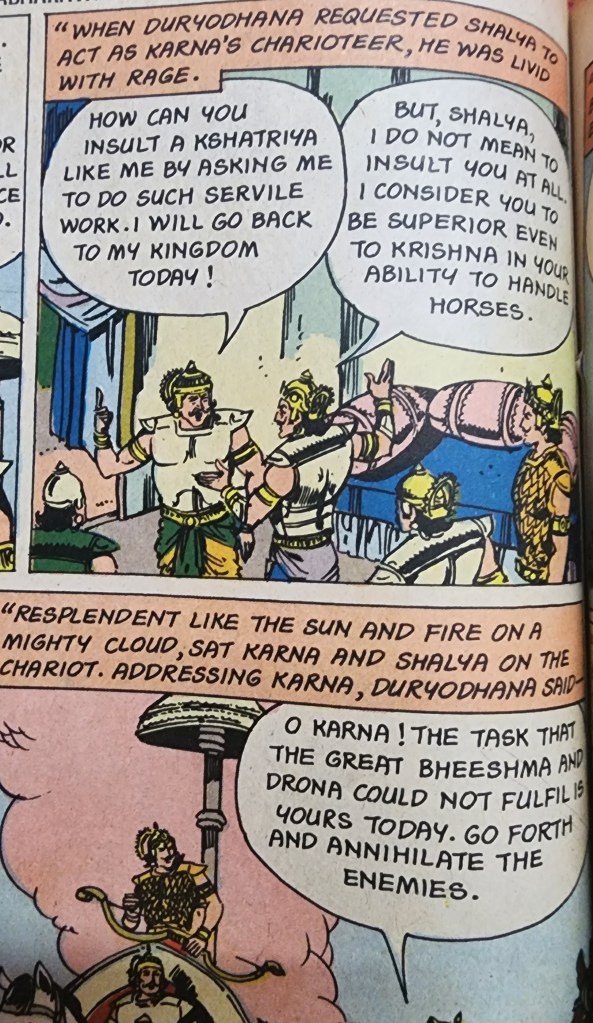
Image credit – Amar Chitra Katha Mahabharata – Chapter 5 – Enter Drona

A good charioteer has to be able to navigate the terrain, his vehicle and the horses; an ability to be aware of one’s environment. A spear is a long range weapon, whether used in a formation of soldiers or individually. In both cases, the wielder needs to be aware of one’s surroundings. To use the weapon effectively, awareness is needed of one’s fellow troops so as not to hurt them and of the space available to effectively use the long weapon. Similarly, with a chariot, the comfort and safety (especially in a war) of the person in the chariot is something a charioteer needs to be mindful of apart from the other things. This is perhaps why great charioteers are remembered by name (Daruka, Shalya, Matali etc.)

Lastly, consider the game of dice, or pagade. This is not unlike a game of cards. You have no control over the value thrown up by the dice. But you use what is given to do the best you can to try and win the game. In other words, you need to be a fine tactician which hopefully translates to strategy when a king does the same with a kingdom. The fact that these games involve gambling does not take away from the skills needed to succeed.

Yudishtira’s skill with the chariot is not really known because there are other great charioteers in the epic, the greatest being Krishna himself. Plus, he was a king and perhaps did not drive chariots around at much himself. His ability with the spear however, is pretty well known.

Yudishtira’s skill with the dice is a tricky one. His loss twice to Shakuni surely suggests he was not very good at it, and Shakuni even says that he is not very good at it. But there is information contrary to this. During the 13th year of their exile, when they are to remain hidden from the Kauravas, Yudishtira hides in the court of King Virata of the Matsya kingdom. He takes the identity of a Brahmin named Kanka. The interesting part of this is that he joins Virata’s court as someone who can instruct Virata in the game of dice! He does indeed instruct Virata and is never caught as someone who is poor at it. Does this not mean that he was good at pagade, but just not as good as Shakuni? Or was everyone else at Virata’s court so bad at pagade that they never realized Yudishtira was bad at it as well? Considering that Kshatriyas did indulge in dice, this may perhaps not be the case. Shakini taunts Yudishtira asking him if he is scared to play during their original match. Could this taunt be effective if it was not expected that a Kshatriya participate in dice without any worry? Is it not likely that this was even uttered only because all Kshatriyas used to play pagade often? I opine this is the case. Yudishtira just came up against the greatest player of that age in Shakuni and hence lost. Hence, just as he was upstaged by Krishna as a charioteer, he was no match for Shakuni at dice and hence is considered a bad player, even if he was in fact a good one. Also, perhaps Shakuni had supernatural advantages, or was very good at cheating and getting away with it (maybe he used loaded dice?).

Image credit – Amar Chitra Katha Mahabharata – Chapter 25 – The Pandavas at Virata’s Palace

Image credit – Amar Chitra Katha Mahabharata – Chapter 18- Indraprastha Lost

Yudishtira’s greatest failure is that he gambled his wife away like an asset. He also gambles away his kingdom and his brothers. His losing his brothers is perhaps the lesser of these evils because they were willing participants in the same game of dice. The gambling away of his kingdom and his wife are equally vile. He was sworn to protect and work towards the prosperity of both. This outcome also enhances the belief that Yudishtira was a bad player of the game of dice irrespective of his skills.

Do we also see the Kryptonite to Yudishtira’s superpower in the very same abilities? If he could see everything including the grey areas clearly, did the fact that he could see it all clearly, prevent him at times from doing the right thing? Let us look at the details.

Why exactly did Yudishtira not walk out of the game of dice? Why did he not fight using arms on the spot? Why did he even place his brothers and wife as objects to be gambled away when he had already lost his kingdom? Let us see if we can arrive at reasons to explain this behaviour of his.

Yudishtira had completed the Rajasooya Yajna successfully a short while before the game of dice. This Yagna had been performed with active support and positive participation by the sons of Dhritarashtra and all the elders of Hastinapura. This list included Shakuni. Did their participation make him believe they no longer held ill will towards the Pandavas? And did he believe that this put an end to the saga of the house of Lac from their youth? Perhaps he did.

In order to perform the Rajasooya Yajna, the Pandavas had carried out military ventures in all four directions. During these, they had militarily defeated many other kingdoms and if not, at least collected tributes from all of them. This wealth was used to perform the Yajna. During this time, Hastinapura had not taken the opportunity to cause them trouble or invade Indraprastha. This despite the land on which Indraprastha stood, was originally Khandavaprastha, a part of the kingdom of Hastinapura. The Kauravas had not attempted to reclaim a now prosperous kingdom when its greatest warriors and armies were occupied elsewhere. Could this fact also have bolstered Yudishtira’s belief in a lack of malice on the part of the Kauravas? Also, perhaps after the military success before the Yajna and the victory over Jarasandha, did he feel Indraprastha was as powerful as Hastinapura? Both the beliefs seem valid based on the facts.

Vidura, an extremely wise man, and prime minister of Hastinapura was the messenger who invited Yudishtira and the Pandavas to Hastinapura for the game of dice. He did warn Yudishtira of the plan by Shakuni to win Indraprastha as a wager in a game of dice, instead of using military might to do the same. So, Yudishtira knew of the ill will and the plan to circumvent any equivalence between the two kingdoms in military capabilities. But the invitation was from Dritharashtra, Yudishtira’s uncle and father figure. Plus there were other elders at the Hastinapura court who were capable of reigning in Duryodhana and Shakuni. So, weighed against Vidura’s warning, his recent experience, and faith in the elders could have suggested to him to adhere to Dharma. And this was very important to him as we have seen. His Dharma was to neither reject the invitation to dice and lose face as a coward nor to disrespect the invitation from his father figure and be seen as one who disrespects his elders (the one who gave him half a kingdom in this case, despite the circumstances at that time).

Image credit – Amar Chitra Katha Mahabharata – Chapter 18- Indraprastha Lost

This overall reasoning could have led him to accepting the invitation to Hastinapura and to his participation in the game of dice. Once there, he was conscious of his duties as an adherent of Dharma to hold to his word. Hence, he stayed at the game while losing everything he never had a real right to lose (at least by modern standards), lest he be considered one who fails to stay at the game, as he had given his word to do.

Now, there could be a more mundane explanation for this. At the time of the game of dice, Indraprastha was a young kingdom, which was prosperous due to the Rajasooya Yagna. Jarasandha had been defeated, and his young son Sahadeva (not to be confused with the Pandava brother) was an ally of the Pandavas. But he was only a new king and not renowned like his father. The Matsya kingdom was not an ally of the Pandavas as yet. Manipur, whose princess Arjuna has married and had a son with, was not an actual ally as there were not relations between them and Indraprastha, and Arjuna’s son there was considered an heir to Manipur, not a prince of Indraprastha. Similarly, Arjuna’s other wife among the Nagas had not earned them an ally, as there was no relation between the Nagas and Indraprastha, and Arjuna had only spent a very short time with his Naga wife Uloopi! Also, we do not know how the other kingdoms the Pandavas had confronted militarily (extracted tribute from) during the Yagna felt towards the Indraprashta. Would they not jump at the first chance to throw off the yoke of the new emperor Yudishtira? The Pandavas had saved 84 kings from certain death when they had defeated Jarasandha, but their payback had been limited to supporting the Rajasooya Yajna, not fighting Hastinapura. So, the Pandavas had no allies to rely on immediately, when they were in the heart of Kaurava power. Add to this, the Kauravas had considerable military allies of their own.

But most importantly, all of this was before Arjuna acquired the vast array of divine weapons. That happened when the Pandavas were in exile. Arjuna acquired the Paashupatastra from Lord Shiva and a host of other weapons from all the Devas while in Devaloka assisting them in the fight against the Kaalakeyas and the Nivatakavachas. Hence, the Pandavas were not really as powerful as they would later be.

So, if Yudishtira had decided to pull out of the game of dice or decided to fight the forces of Hastinapura without any army of his own at his back in a hall full of Hastinapura forces, would they have survived, let alone prevailed? It certainly is doubtful. This could perhaps be the same reason for which they did not fight back right after the events of the House of lac, when they were weaker still, with not even Panchala as an ally. Futher, we do not know if Yudishtira had sufficient troops to help him at that point in Hastinapura. Also, if a king loses a kingdom in a wager, is his army still his own or does it now belong to the victor in the game of dice? We have no idea. But considering that even the venerable Bheeshma is uncertain of what Draupadi can expect when Yudishtira is a slave of Duryodhana’s after having lost, such a doubt is warranted regarding the army of Indraprastha as well.

Thus perhaps, Yudishtira did see everything clearly and while becoming vilified down the ages, made the right decisions to survive, while putting faith in the elders of the Hastinapura court. And his faith turned out to be correct! It was the intervention of Vidura and Gandhari that saved them all. The famous elders like Bheeshma, Drona and Kripa failed to protect the Pandavas, but the women saved them. Draupadi’s conduct in the face of the worst atrocity and the strength of character of Gandhari saved the Pandavas their lives, and even got all their losses, including their freedom and kigdom restored to them! So, Yudishtira’s big picture analysis was correct. The women of his household saved them all. It was just that their rescuers were not the individuals everyone expected, a different set of people who no one imagined would be able to do it. But the fact that they, especially Draupadi, went through the worst of atrocities, is by modern standards, unforgivable. Also, it was such a close thing, that this correctness borders on luck and enduring it can be attributed to stupidity. But is the adherence to Dharma not supposed to protect one from adversity? And is it not said that steadfast practice of Dharma incredibly difficult and it is in especially hard times that its practice is really noticeable? These are questions that everyone has to answer for themselves. But the evidence for Yudishtira’s “big picture” ability does hold forth. It was his superpower and his greatest weakness at the same time, for he and the Pandavas went through the worst of times due to the same big picture reasoning of his.

Image credit – Amar Chitra Katha Mahabharata – Chapter 18- Indraprastha Lost

This then raises the next question of why he agreed to the next game of dice. All the points mentioned in relation to the strategic situation of Indraprastha vis-a-vis Hastinapura still hold. But there are differences. He had his kingdom, its wealth, armed forces and ability to plan for a conflict. Also, the fact that the loser of the second game would have to endure an exile of 13 years (12 in the forest and the last in hiding) was established. After this, the kingdom would be returned to the losing side, if they could escape detection in the 13th year. If they were discovered, the cycle would repeat. So, the Pandavas would be divested of their kingdom and resources if they lost. So, why agree to the game?

There is no clear answer to this. But let us consider a few details. Is it again a case where a Kshatriya once invited to a game of dice cannot decline for fear of being branded a coward? Is this more of a concern for an Emperor than for a king? Yudishtira was considered an emperor after the successful completion of the Rajasooya. So, was this concern great enough to overcome the “once bitten twice shy” learning from the previous game of pagade?

The invitation for the second game was again from Dhritarashtra. We know of the relationship between Yudishtira and his uncle. Was he indebted to him for having been responsible in returning the kingdom after the first game? So, was he obliged to play as a way to repay the favour and show respect to his benefactor? Add to this the fact that this time the game was supposed to be “fair” unlike the last time, when the game was set up for the Pandavas to lose. Was this an opportunity to avenge the defeat from last time in a like manner, an offer that Yudishtira could not refuse? Was he overestimating his ability with pagade to think he could beat a master like Shakuni this time round? Perhaps it was all of these, or maybe not. But without the benefit of hindsight, imagine what would have happened if the Pandavas had won. The Kauravas would be banished to the forest for 12 years. This means a sworn enemy is taken off the board for 12 years during which to strengthen themselves. A tempting proposition, isn’t it!?

Let is now look at the episode of the two games of dice through the lens of Budo. This might reveal some interesting explanations for the same. In the Bujinkan system of martial arts, there are two very important concepts that are drilled into all practitioners from the very beginning, and are revisited all through one’s lifetime in the martial art. These two concepts are Ukemi and Uke Nagashi.

Ukemi is the ability to “receive the ground” when one is thrown or has a fall. It is all about rolls and break-falls in simplistic terms. Uke Nagashi is about receiving an attack by an enemy in different ways. This could be simplistically called parrying an attack. But these concepts go beyond the simplistic physical practice. I remember once being told of a statement by Soke Hatsumi Masaaki made in relation to Ukemi in one of his classes. This statement by Soke said that running away and hiding are also Ukemi. I would posit that if one is protecting oneself from the elements, like saying hiding indoors from the rain or running away from working in the burning summer sun, this is Ukemi. However, I further suggest that running away from a fight or hiding from an enemy would be Uke Nagashi.

So, if Yudishtira chose to survive by not fighting and expecting someone else to save them in the case of the first game of pagade, is it not instinctive Uke Nagashi on his part? Yes, it seems wrong and cowardly in hindsight, but his being mindful and aware of the big picture as we discussed earlier did save their lives and kingdom in the end, which means the Uke Nagashi paid off. Is this not like surrendering against insurmountable odds while waiting for a favourable opportunity to escape?

Now let us consider the second game of dice. Nagato Sensei, one of the senior most teachers in the Bujinkan system has a famous saying, where he states, “Leave no opening”. This is again in reference to Uke Nagashi. Based on my experience of this statement, what he means is that when you receive an attack, your position with reference to the opponent should not only mitigate the attack that was launched, but also ensure that no second attack is possible in that instant as there is no opening for the opponent to exploit. This part is a precursor to the defender being able to negatively affect the attacker due to being a safe position from where to exploit the attacker’s openings which are exposed as a result of the first attack.

Sensei also expands by adding that one needs to lead with Sakkijutsu. Sakkijutsu is the intuitive ability to sense an attack and move to a safe position before the attack lands. This is a continuous process until the attack (not attacker) ceases to exist. So, one should be aware or mindful of one’s situation and hence be able to feel/sense/intuitively know of an attack and move to a position where one is safe from the current and future attacks and then exploit possible openings revealed in the opponent.

If we look at the situation before the second game of dice with this knowledge, things change a little. If a king has to “leave no openings” while responding to an attack against his kingdom, what does that mean? Does it mean find a safe position for himself and his family or a safe situation for his kingdom? I would suggest that it is the latter, considering that Yudishtira was Dharmaraya, who put his duty to his kingdom first.

If Yudishtira’s objective is to protect his kingdom, is it not correct to accept the invitation to dice again? If he has won the same, his greatest enemy would be out of the picture for 13 years with no cost to his armed forces and no economic cost to Indraprashta. If he lost, the negative consequences were only for the royal family of the Pandavas. The Pandavas had reaped the greatest rewards from the establishment of Indraprastha. So is it not only right that they be ready to bear the greatest cost? Perhaps yes.

Next, there is no evidence that Duryodhana was a bad ruler or a tyrant who harmed the citizens of his kingdom. He had many negative qualities, but not as a bad administrator. We will consider the negatives in Duryodhana later in this article. But considering Indraprastha would not be significantly worse off under Duryodhana, if the Pandavas lost the game of pagade, is that not a better Uke Nagashi a king should consider for the sake of his kingdom? If Yudishtira had not accepted the invitation and a war had started right then, the cost to Indraprasta would be much greater.

Also consider this. If the Pandavas were exiled for 13 years, they would have 12 years to increase their strength, plan the defeat of their cousins and retrieve their kingdom, while causing least harm to their citizens. In hindsight, only a part of this happened. Indraprastha was saved at that time, but after 13 years, the Kurukshetra war that ensued was apocalyptic. The rejuvenation of Hastinapura and Indraprastha took the investments of an Ashwamedha Yajna after the war. But without the benefit of hindsight, was Yudishtira not employing his powers of being mindful and seeing the big picture to the best possible use of Indraprastha, even if not the Pandavas? It might have seemed so at the time. The fact that Yudishtira faced up to the consequences of the Kurukshetra war much later is also testament to his being willing to live with his failures and face the consequences.

Consider this; is this whole idea of protecting people until he was able to confidently fight back militarily not similar to retreating in the face of a greater enemy until one finds favourable terrain and weather to harm the enemy with minimal cost to one’s own forces? Is this not something that Wellesley used against Napoleon at Waterloo and was this not the same tactic that resulted in the defeat of Antonio Lopez de Santa Anna of Mexico at the hands of Sam Houston of the Republic of Texas? It is not the same tactic in a battle, but it does seem a similar strategy when applied to nations a whole. So, Yudishtira might have failed in his strategy (if it was that) when he accepted the invitation to the second game of dice, but based on his abilities, it might not have seemed a set result at that time.

While discussing the actions of Yudishtira, there is one aspect that we need to consider. This is more generic, with respect to the actions of all the heroes of the Mahabharatha and all their failings. This is not central to this article and not something we can go into in great detail. But it has to be acknowledged to get an idea about their perspectives, to the extent possible. This relates to the conditioning of people in positions of power during the Mahabharata age. Let us begin with Yudishtira himself.

Was Yudishtira not aware of something called “Aapat Dharma”? The rules (or lack thereof) that come into picture when one’s life and means to survival are threatened. This would have allowed him to not participate in at least the second game of dice. From the little that I know, “Aapat Dharma” or “Aapadharma” suggests that what is “Dharma” or “what is the correct thing to do” changes from when there is no threat to life and means of livelihood to when one is desperately trying to stay alive or save one’s family and means of livelihood.

When things are not life threatening, one needs to follow rules one accepts as Dharma more stringently. When one is under threat, these can be done away with, until “normalcy” is restored. Of course, definitions of “normalcy”, “threat to life” and even “Dharma” itself are subjective and change over time and geography and also with life experiences. It is just that there are some regular practices can be let go of when there is a dire situation. As an example, one might choose to be a vegetarian in one’s own civilized state/place of existence. When this civilized state is taken away, the choice can change with no guilt attached to the same. If one is stuck in a place where there is no opportunity to find vegetarian food, for a duration beyond what one can manage with less or no food, there need be no guilt associated with consuming meat. The same goes if a meat can cure one of a terminal disease.

Was the situation the Pandavas faced during the first game of dice and while reacting to the invitation to the second one not worthy of being considered commensurate with violating Dharma and invoking the escape clause of “Aapat Dharma”? At least from our modern perspective, it would seem that the answer is a resounding YES. The fact that Yudishtira did not and none of the other Pandavas did, suggests that either the situation was not “dire enough” for them to consider putting in abeyance their personal definitions of Dharma. Or, the consequences of the loss of reputation one faced by taking recourse to “Aapat Dharma” was too much to even contemplate the same.

Consider this same situation with a few other venerable characters from the Mahabharata. Bheeshma refused to break his vow of celibacy when he knew he was the best candidate to take over the throne after his half-brothers were dead without any progeny. This was despite his step mother, Satyavati, herself asking him to do so. And Satyavati was the reason for his taking the oath in the first place!

Drona fought for Hastinapura as they helped him earn half the kingdom of Panchaala. Even before this they gave him a job when he was down on his fortunes. Kripa, Drona’s brother-in-law, stuck to Hastinapura’s side in the Kurukshetra was, due to loyalty. Neither Kripa nor Drona was bound by any oath.

Lastly, Karna stuck with Duryodhana because he had stood by him when he was insulted in the demonstration arena by the Pandavas. Even after he was told that he was the eldest Pandava in secret, and this meant he could end the war before it started did not convince him to change sides. He fought the war and died without ever revealing this fact to those who mattered in the war. Also consider another event with Karna. He was known to donate anything anyone asked for after his morning Sandhyavandana. The fact that he never refused anyone at this time was very important to his reputation and he was called “Daanashoora” Karna due to his generous nature. Indra, the king of the Devas, used this firm and predictable behaviour of Karna’s to ask him for the Kavacha (armour) and Kundala (ear rings). The Kavacha and Kundala of Karna’s were divine in origin, coming from Surya, the Sun God. These made Karna impervious to any weapon. He was undefeatable as long as he possessed these. If he had not given these away, it was very likely that the Pandavas would have lost the Kurukshetra war. Yes, he gave them away as his reputation was more important. Of course, he believed he could turn the war without the same and he also believed the Kauravas would win the war. Hence his being revealed as a Pandava was likely more trouble after the victory. But with the benefit of hindsight – he died, the Kauravas lost and he passed on the chance to stop the Kurukshetra war from happening. A lot of human misery followed.

Kunti, the mother of the Pandavas and Karna, did not reveal the truth of his birth to prevent the war either. She did this as Karna asked her not to. They had another agreement which is not very important for this discussion. Similarly, Krishna knew of this secret as well and chose to not reveal the same. He only urged Kunti and Karna to do so. Of course, Krishna is divine and made choices for which he and his clan paid, through the curse of Gandhari, many years after the great war. His thinking is not something one can attempt to decipher.

There is one common thread in all of this. All these folk are terrified of breaking an oath, or a decision, once taken, even if their choice serves something terrible about to transpire. This is because they were all obsessed with their legacies. Their reputation was more important that the consequences to millions of other common folk because of their choices. This issue is seen in Greek mythology as well, where Achilles decided to participate in the Trojan war to build his legacy and fame despite being certain that he would meet his doom there.

This is an aspect Krishna demonstrates as not really Dharmic. One needs to learn to accept vilification if that serves the greater good. He chose to be called “Ranchod”, one who runs away from a battlefield, in order to defeat Kaala Yavana. He also chose to leave his city of Mathura and relocate with the entire populace to Dwaraka. This was to protect his people from Jarasandha’s wrath. He also chose to accept the curse from Gandhari as punishment for not preventing the war. He definitely tried to make people change their thoughts and ways, but did not use his divine abilities to do so. This is apparently to let things take their course with just human actions.

In the Bujinkan, we are taught a concept called “Jokin Hansha”. This refers to “weakness due to a conditioned response”. As an example, consider the fact that we do not do something even in if we realize it to be the right thing to do. This is likely because we “think twice” and decide it is wrong as it goes against what we are expected to do or is tradition (or something similar). This could lead to an adverse outcome. This is the consequence of “Jokin Hansha”. Consider a simplistic example. You do not want to shake hands with someone. Yet if that person extends a hand, we take it. We do not do a “Namaskaara” because we assume the other person might be offended. Conditioning is as pervasive as this and Jokin Hansha refers to negative consequences that occur from actions even as simple as this. Breaking conditioning and doing what one wants to in an environment where conditioned responses rule, has consequences we may not be ready to face. This, on a grander scale is what the heroes of the Mahabharta faced and failed at.

Now, we have considered the strengths of Yudishtira, his weaknesses and potential reasons for those. His adherence to Dharma, his consultative vein and abilities are demonstrated. While all this explains his actions before the war, what makes him a better candidate to be a king as compared to Duryodhana? We shall try to explore this in the following section.

As mentioned earlier, while Yudishtira was more of an introspective person focused on the big picture and adherence to Dharma, Duryodhana was primarily a warrior, who also wanted to be king. There is no indication that Duryodhana was a bad administrator. So, where is the difference between the two?

Duryodhana had one advisor in Shakuni. Duhshasana and Karna were more members of his coterie or mutual admiration society. They were not relevant to dissuading him in any action and did not specifically point out his flaws. Shakuni’s advice was driven by a motive to destroy the Kurus from the inside in order to avenge what he saw as injustice to his sister and his kingdom of Gandhara. Moreover, from what I know, Duryodhana never considered any advice that clashed with his own world view, from any of the other elders in Hastinapura. This shows that his perspectives were not as considered as those of Yuishtira’s. They were what he wanted them to be. He also had never seen the world like Yudishtira had on multiple occasions, while living among the common folk in his early childhood and after the events of the house of lac. He had not endured the hardships of the forest like the Pandavas either.

So, Duryodhana’s vision of Dharma was not exactly based on a “big picture” but what he wanted it to be. This made him a potential agent of chaos. Also, his ego prevented the chances of his ever changing his ways. The man held grudges over a long time, and was single minded in trying to achieve his objectives. While being driven towards one’s objectives is an admirable quality, a king might not have this luxury. His drive could be dangerous to those around him and the country as a whole.

Image credit – Amar Chitra Katha Mahabharata – Chapter 18- Indraprastha Lost

It was Duryodhana’s desire to obtain Indraprastha, subjugate and humiliate the Pandavas and not return the kingdom after 13 years that was the root cause of the destruction of a very large number of lives from several kingdoms during the Kurukshetra war. Of course, it can be said that his being laughed at in the magical hall built by Mayasura in Indraprastha was the reason he wanted to take everything away from the Pandavas. But are the cause and effect commensurate? In modern thinking they are not. But, even by the standards of the day, when personal reputation was above all else, was it warranted? Even if we assume it was, his ability to not adapt to the changing scenario of the situation and being unmindful of the consequences was disastrous. This of course was due to his not being consultative. So, he was never a big picture guy, and thus, could never put his kingdom first, and thus never put Dharma first either.

Image credit – Amar Chitra Katha Mahabharata – Chapter 18- Indraprastha Lost

Lastly, Durypdhana had no ability to “let go”. Something we are taught as martial artists is the ability to let go of anything that is not “worth it”. This can be a position, a technique or a concept we are trying to apply to any fight. An example here might be the following. If strength is not working against an opponent, let go of applying the same and try to take her or his balance with a better position. This is true in any conflict management situation. If negotiation is not working in a conflict between nations, they will let that course of action go and consider covert application of force or an overt display of forces to nudge the negotiation back on track. There need be no guilt associated with letting go of a course of action to pursue something else which has a higher probability of ending a conflict. This was something Duryodhana never could do, while Yudishtira did it all the time.

Image credit – Amar Chitra Katha Mahabharata – Chapter 18- Indraprastha Lost

An example that comes to me vividly about this from recent history is as follows. I remember reading an article a long time ago. I think it was in the early part of the 2000s. I think it was in the newspaper, The Hindu, but I could be wrong. It was about the LTTE failing at negotiations with the Lankan government because it was beholden to the past. Apparently some members of the LTTE felt a negotiated settlement would betray their dead and their sacrifice would be shamed by the same.

In conclusion, Duryodhana, while not being a bad administrator, was a potential source for perpetual conflict. Also, his inability to consider contrarian points of view and ego mania made him an obstacle to any positive change. This is what made him an enemy of Dharma, which, in the epic, is all important. Hence a Dharma Yuddha, with Duryodhana as the antagonist. He was not a mustache twirling villain, or a specifically bad king, but a definite threat to Dharma.

Notes:

1 Mahabharat Ep 42 (watch between the 13 and 16 minute marks)

Jibun No Kesu – An Exploration

There is one concept that is oft mentioned in a Budo class over the last few years. This is perhaps since focus on the essence of Muto Dori was started by Hatsumi Sensei, some seven or eight years ago. This is “Jibun no Kesu”. From what I understand, it means “throw yourself away” or “kill yourself” or “drop yourself”.

This obviously refers to dealing with the self in a combat situation. Of course, this also holds true in any conflict management situation. The concept tells anyone involved in combat to let go of one’s self. This is generally taken to refer to one’s ego. But that definition, while absolutely true, might be a bit simplistic.

The ego part is about not letting anything except the situation in the fight affect oneself. Worry about a plan that might not be going as expected, elation at a plan that is working exactly as or better than expected, thoughts about the outcome of the fight, consequences of victory or defeat, thoughts about reputation after the fight, planning for activities as a consequence of a fight; all of these could be attributed to the ego affecting the fight. Thoughts regarding all of these and maybe more, affect how completely a fighter is in the moment in a fight. It reflects on how well, or not, one can respond to and act towards an existing opportunity or threat; it might even affect being able to identify an opportunity or threat.

The other part of “Jibun no kesu”, could be regarding the physical body itself. While there is no real distinction between the body and the ego – they are the same – they can be discussed separately for learning purposes, like two subsystems of a whole. The ego is more the mental / emotional / intellectual / spiritual component which is not tangible. The physical body is tangible and more like the sensor package of a machine while also partially behaving as the mental component when it comes to reflex actions.

All the perceptions in a fight are from the physical body which houses the five (maybe six – intuition) senses. This also includes the feedback from joints, which can perceive the resistance to a fist strike, a sword cut or a spear thrust. This helps calibrate the flow into the next movement and the next and the next. The physical body also determines the possibilities of action and the limitation of what can be done despite available opportunities. Examples of this are strength in a strike, flexibility of joints, reach available to limbs and the like.

“Jibun no kesu” says both the ego and the physical body must be dropped. This is, in my understanding, an opening into the concepts of “not fighting the opponent”, “not doing anything the opponent does not want to do” and the world famous idea of “using the opponent’s strength against him/her”. These are not concepts I will attempt to explore here as such, for “Jibun no kesu” is proving to be a handful by itself. That said, these concepts and “Jibun no kesu” might seem counter intuitive, for if there is no physical body, how is the opponent to be dealt with? Or if there is no ego, is there a need for conflict management at all?

The nature of the contradiction mentioned above is partly the answer as well. If a lack of ego can lead to a lack of conflict, wouldn’t that be great? And if there is no need to deal with an opponent, is there an opponent at all? And thus, is there no conflict either? And if that is the way to deal with a conflict, isn’t that awesome? No effort, but conflict gone! It is like opponent comes to fight a rock, but realizes there is no need to and goes away. Perhaps, one can learn to be a rock for a duration of a conflict and revert to being human? Does this work?

The answer to the above question is twofold. On the mats, while training a martial art, the answer is a yes. It is not something that can be explained or taught. But is something than can be learnt and definitely experienced. The experience is mostly personal, but quite often is sensed by the opponent and fellow trainees around the person experiencing “Jibun no kesu”.

The answer to the question off the mats, in real life, which might involve conflicts not involving a physical fight, is maybe, and many a time, no. This is because, the definition of a conflict, where a conflict begins and ends and who is an opponent are not clear. What is a threat and what is an opportunity are also hazy in outline. And if the conflict is with people one cares about or at least does not wish to actively harm, all of this is magnified manifold.

With this longwinded introduction, let me get into some examples of what I perceive as examples of “Jibun no kesu” from stories (perhaps history) of Hindu culture. This perhaps adds to the answers or leads to interesting and revelatory questions.

All of us Indians have heard of severe Tapasya being performed by several individuals in stories from our Itihaasa and Puranas (Tapasya is sometimes translated as “penance” in English, but this is simplistic in my opinion and hence I shall not use this translation and stick to the original word). The reason for the Tapasya (sometimes called Tapas) is varied, as are the Gods they perform Tapasya towards. Most popularly, individuals perform Tapasya to please either Brahma or Shiva, in order to request boons that will enhance personal abilities of said individual that helps him/her achieve great personal power and glory. Examples of this would be Hiranyakashipu, Ravana, Rakthabeeja, Bhasmasura and other Asuras who wanted personal power enhancement and also revenge.

Hiranyakashipu loses himself in meditation & plants and anthills grow over him

Image credit – “Prahlad” published by Amar Chitra Katha

There are of course several Sages who not only perform yajnas but spend time in meditation and Tapasya (the two could be the same or different, for Tapasya can also be effort towards an objective) to understand the Universe and in turn achieve abilities that can be extraordinary as a consequence. Examples here would be the many great Sages/Rishis can curse commoners (Agastya cursing Nahusha), Devas (Durvasa cursing Indra) and even the Trimurthy (Bhrgu cursing all three of the Trimurthy) to great effect due to their abilities gained as a result of Tapasya, though the purpose of their Tapasya was never to be able to curse or grant boons to great effect. Examples of boons granted by Rishis would include Durvasa granting Kunti the ability to request children from the Devas and Parashara making the stench of fish disappear from Satyavati. Another interesting case here would be Gandhari, who, due to giving up her vision and being a devotee of Shiva, could turn the body of her son Duryodhana impregnable the one time she decided to use her sight, though this was never the purpose of either her sacrifice or her devotion respectively.

Maharishi Agastya curses Nahusha

Image credit – “Nahusha” published by Amar Chitra Katha

The person performing Tapasya, called a Tapasvi, can be a man or a woman and the motivation for Tapasya can also be revenge (Amba gaining the ability to reincarnate to avenge herself against Bheeshma) or simply personal help in a given situation (Satyavati remembering Veda Vyasa or Draupadi praying to Krishna during the game of dice) or consultation to address a problem (Bhima remembering Ghatotkacha to carry Darupadi while on Vanavaasa or Yudishtira remembering Veda Vyasa for help in planning the Ashwamedha Yajna).

Repentance can also be a motivation for Tapasya, like in the case of Pandu giving up the throne for a life in the forest to repent for killing an innocent Rishi or Duryodhana temporarily deciding to do the same when the Pandavas rescue him from Gandharvas. The hardship of life in a forest is the Tapasya in both these cases.

The one common thread in all of these examples of Tapasya is the ability to give up one or many things or let go of things, including “throwing oneself away” or “throwing one’s self away” (I am considering both the same). Let us consider a few examples of how Tapasya shows the extreme means in which “throwing away one’s self” is depicted in Hindu culture.

Tapasvis are usually depicted as being so completely lost in meditation that plants grow over them and anthills develop all over them. They become inanimate objects for all practical purposes. They have thrown away their physical existence, and perhaps their life itself. But they are not dead, for the object of their Tapasya is not lost and this throwing away of one’s self is what eventually brings the Gods they were meditating towards to appear to fulfil their wish. This shows how the objective of the Tapasya is not lost, even though the self might be. This is a classic case of being in the moment. The focus on Tapasya is the act of the moment and the objective is achieved by being in the middle of several moments.

The above example is throwing away of both mind and body, for all discomforts are accepted and endured, hunger is forgotten, breaths per minute are greatly reduced, heartbeats are supposedly also reduced. The body becomes an inanimate object for all practical purposes. This is an extreme example of the “transcendence of nature” gojo (shizen no choetsu). The tapasvi, while still focused on the objective and the point of focus to achieve the objective, has become inanimate. So much so that plants and ants treat her or him as a support structure, just as trees colonize abandoned buildings or anthills can grow over stones. The tapasvi is a stone with an objective, working with a strength of focus that is unimaginable.

There are also more tangible examples of throwing away one’s self, in the form of literally sacrificing body parts as offerings in a yajna (here a yajna should not be translated as a sacrifice but as a transaction, where an offering, which could be a sacrifice, is only a part).

Ravana, in one version of the Ramayana I saw on TV, performs a yajna to invoke Smashana Tara, an all-powerful form of Shakti who lords over funerary sites, to request a boon of protection against all attacks when he goes to face Rama and his army during the final battle. I am not sure which version of the Ramayana this story is from. To appease Tara and gain her audience by having her appear to him, he makes several offerings. All of these fail to appease the Goddess. So he offers his own heads as offerings in the yajna. He has offered nine of his ten heads and the Goddess still does not appear. He then chooses to offer his tenth head, even if that means ending his life, thus resulting in the failure of the yajna and his objective of winning against Rama. Tara appears to Ravana and grants him his desired boon as he is about to sacrifice his last head and thus his life. This is a case where Ravana is prepared to throw away everything, his life, meaning his body, and ego and also his objective itself, which ultimately results in his achieving the objective. That Ravana loses the fight against Rama is due to various other factors. An interesting aside is that this yajna of Ravana’s, is supposedly considered not in accordance with the Vedas. So, he was even prepared to violate his religious principles.

There is a similar tale about Rama as well in one of the versions of the Ramayana (not Valmiki Ramayana). Though this is not considered in violation of the Vedas, perhaps because it did not involving allying with aspects related to death. Rama has to offer 108 lotuses to Goddess Lakshmi to be able to successfully build a bridge to Lanka from the Indian mainland. He has gathered 108 lotuses, but when the offering is made there are only 107 for the Goddess has hidden one as a test of Rama. Rama has to take a call in the spur of the moment to prevent the offering from failing. He recalls that he is called “Kamalanayana” by Sita, which means that he has eyes like a lotus. So he decides to offer his eye as the hundred and eighth lotus. Again, this is a situation where a person with an objective is willing to throw away one’s self to achieve the same. Here again, Goddess Lakshmi stops him as he is about to pluck his own eye out and grants him his wish.

One needs to bear in mind here that in both the above examples the fact that Rama and Ravana were saved at the last minute is known only in hindsight. When they were in the act of making the sacrifice – throwing one’s self away – there was no expectation of salvation, they would have gone ahead with the throwing away of the self anyway.

Consider yet another example of a tangible letting go of one’s self. Gandhari gave up her sense of sight voluntarily for the rest of her life from the time of marriage, with no desire for anything in return. She was also a great devotee of Lord Shiva. Much later in the Mahabharata, she uses the power of her sight once, to look at Duryodhana, and the power of her unused/restrained vision combined with her devotion of Lord Shiva makes Duryodhana’s body impervious to injury. Another instance of her power is seen when she curses Krishna to have to see the destruction of his clan. This curse comes true some 32 years later. This is an instance of letting go of one’s self not for a specific objective, but gaining the ability to achieving something vitally important as a consequence of that letting go, without ever having wanted to!

Image credit – “Mahabharata 2 – Bheeshma’s Vow” published by Amar Chitra Katha

Some more examples that are as profound but mundane at the same time are the situations where parents can summon their extraordinary children from great distances with just a thought when in dire need. Satyavati, when she has lost both her sons and is facing the extinction of the royal line of Hastinapura, wishes for her other son, the great sage Veda Vyasa to appear to help consult with her and proffer solutions to her conundrum. She only has to wish his presence and he appears to help his mother. Similarly, Bhima, when he is on Vanavaasa with his brothers and their wife, only needs to wish for his son Ghatothkacha’s help and he appears to carry them with his companions. This is something that happens when the family was very tired in their travels and badly needed help. These two are instances in which the children could appear at will to help their parents due their own extraordinary abilities. But the examples are profound as the throwing one’s self away here is exemplified by what the parents gave the children in each case, both were cases where the parent had offered themselves up to another person resulting in their births. It is also exemplifying of parents letting themselves (their personal desires, time and resources) go, to raise and give kids a good life. This is mundane because parents all over the world do this all the time, since time immemorial. It is also profound because this is a “throwing away of the self” that is very well acknowledged.

Image credit – “Mahabharata 36 – The Battle at Midnight” published by Amar Chitra Katha

This idea of letting go of one’s self is not limited to just Bharatiya thinking. I quote here an interesting example I found in a book of fiction no less. This example is from the first book (I do not recall the name) of a series called “The Craw Trilogy”*. I never finished reading this book though it was interesting, and the example I am quoting is from very early in the story. The story is set in the Norse world and there is a situation which has to be answered by some spiritual women who are like leaders in the religion of the Norse before they converted to Christianity. These ladies realize that the situation facing them is dire and a new Rune needs to be created. This Rune will have the power to guide them towards a solution to the dire situation. In order to conceive the Rune, the leader of the ladies goes through a set of ordeals that I can only describe as Tapasya.

The leader of the ladies meditates while subjecting herself to extreme physical hardship for several days. I do not recall all the physical challenges, but the last one is where she submerges herself in flowing water with only her head out of water and that through a hole! And at the end of the meditation, the new rune is carved. The key point here is the meditation of the lady, which is no different from Tapasya. The lady has to let go of even the idea of staying alive to come up with a rune. While this is an example from a work of fiction, the fact that it is from a British writer shows that the idea of meditation while throwing away one’s self is not exactly a rare concept in humankind.

In the example from the novel, the tapasya lasts for several days. This allows a look at how long tapasya might have to last to achieve an objective. How long does one have to be able to let go of one’s self to achieve any objective? Or it is to be a practice that one follows all though one’s life? Or is it for the duration of any given conflict. Well, the examples from Hindu culture do not really offer any answers, except showing that the “feeling” of the passage of time is relative.

The tapasya of the Asuras looking for boons that grant supernatural abilities are depicted to take years and years, sometimes even being said to be tens or hundreds of years. But the lifespans of many of these tapasvis is also said to be extremely long. Apart from the Asuras tough, when one considers the great sages, whose life is tapasya, these large numbers are not common. But then, if plants or ants have to consider a human being an inanimate object, at least several days or weeks have to pass. So, just like time seems to flow very fast when one is solving a critical problem but when the same is considered in hindsight all of it would have happened in a short time, the duration of tapasya could be relative. The duration of tapasya would seem very long for the tapasvi, while it would be shorter for an observer on the outside or to the tapasvi himself or herself in hindsight. If one considers all tapasvis to be normal humans with the same frailties, this would make sense, for normal humans are pushed to the edge of life during tapasya and that does not take too long, even though the abilities gained post tapasya would make such a previous life for the tapasvi hard to imagine due to the sheer magnificence of the same person after the abilities granted by the tapasya.

Having discussed the prevalence of “Jibun no kesu” in Hindu civilizational memory, are there examples of what could affect the practice of the same? As everyone who has attempted to apply “Jibun no kesu” would know, the concept is fantastic and sexy, to be able to transcend one’s nature by throwing one’s self away. But difficult to the point of impossibility to apply and even harder to practice, for anything more than a few seconds, or minutes at best.

This same is shown in the stories from Hindu culture as well. Whenever one is performing tapasya, especially Asuras, their opponents, the Devas try to break the tapasya with distractions that satisfy all human senses. The tapasvi is distracted with the choices food and drink, the greatest comforts and an appeal to human lust; when Apasaras are sent to distract and break a tapasvi’s ability to throw away one’s self by bringing them back to their “senses” and the desires of the self.

What is interesting is that these distractions seem to be used mostly against tapasvis who perform tapasya with a focus towards a single objective, like revenge or the gaining of superhuman abilities to achieve power or wealth. They are not seen to be used against sages and especially not against tapasvis who are women. Perhaps because the duration of the tapasya is a lot longer and interspersed with normal life and thus leaves one less vulnerable towards catastrophic tapasya failure. However, it must be said that women tapasvis, at least in my limited knowledge are never vulnerable to distractions and seem to have greater focus. This is seen in the cases of Parvati performing tapasya to win over Shiva to be her husband or Amba performing tapasya to be able to guarantee a reincarnation in a form that ensures revenge against Bheeshma. I cannot recall if Holika (Hiranyakashipu’s sister) or Mahishi (Mahishasura’s wife) encountered distractions from the Devas in their tapasya for the ability to fight their foes. Perhaps it has something to do with female intuition (Ku no ichi factor?) that lends itself better to transcend challenges?

Image credits (L & R) – “Bheeshma” published by Amar Chitra Katha, “Ayyappan” published by Amar Chitra Katha

One question comes up when we speak of the distractions in tapasya and hence in practicing “Jibun no kesu”, or just when we say how it is difficult to practice – to the point of impossibility. Are there any examples of failed tapasya in stories in Hindu culture? I am not aware of any that explicitly do. However, perhaps the story of Sage Vishwamitra’s trails and travails on the path to becoming a Brahmarishi is nothing but a series of examples of failed tapasya, despite its ultimate success.

Vishwamitra first performed tapasya to acquire Divyastras (celestial or divine weaponry). With these, he failed to defeat Vasishta, who was the one person he wanted to show as beneath him. So, this is not a failure of his tapasya but of the goal he set out to achieve as a result of the success of the same. Next, he gave away the abilities he gained from his renewed tapasya, to build a second Swarga (loosely translated as Heaven) for Trishanku, who wanted a Swarga while still mortal.

After this, he performed further tapasya and yet again he had to give away a lot of the abilities gained when he failed to break king Harishchandra (an ancestor of Rama) into giving up his virtues. This is a case where Harishchandra could practice “Jibun no kesu” at all times in his life and therefore overcome the efforts of a Rajarishi (eventually to become a Brahmarishi). This is fascinating story by itself, in examining letting go and throwing one’s self away that cannot be delved into as it is a really long one.

Post this, Vishwamitra again set about performing tapasya on the path to becoming a Brahmarishi. This time his tapasya was successfully disrupted by the Apsara Menaka, with whom he had daughter (Shakuntala, wife of Dushyanta and mother of Bharatha). After these several failures, Vishwamitra did become a Brahmarishi and made peace with Vasishta, whom he came to deeply respect and become a friend of. Their relationship is borne out by the fact that Vasishta is the one who recommends to Dasharatha that he should send Rama and Lakshmana with Vishwamitra when the latter requests the same (Dasharatha was not keen on the same due the youth and inexperience of his sons).

The summary of Vishwamitra’s experience suggests two things. Except with the incident with Menaka, he always was successful in his tapasya on the path to becoming a Brahmarishi. But perhaps his tapasya on the road of life towards the goal of becoming a Brahmarishi, was not. He was unable to let go of his self in that he was trying to outdo Vasistha or deliberately achieve impossible goals against the will of the Universe. His extraordinary abilities did allow him to temporarily do that, but at the cost of the original objective. It was much later and after several attempts that he did become one of the greatest Brahmarishis, when he could give up his need for outdoing Vasishta. His real “throwing away of his self” was when he could eliminate is own need to be superior to someone else, and just be a Brahmarishi with his knowledge, experience and abilities.

So, from the above observations, “Jibun no kesu” has been prevalent across times in our country. But why was this the case? How did the practice of “throwing one’s self away” influence anyone other the one doing the throwing away? Some of the effects of the extreme tapasya by tapasvis is depicted in the way nature reacts to the same. Extreme weather events like gale force winds, very heavy rain, extending to earthquakes, volcanoes and even meteor showers are described as being caused by the focused power of the tapasya. The weather events are so incredible and destructive that people and even Devas pray to the God who is the object of the tapasya to please grant the boon of the tapasvi to put an end to the inclement weather. Perhaps the Devas who are responsible for the elements lose control of the same due to the effect of the tapasya and hence would rather the tapasya end and they regain control!

Perhaps because a tapasvi becomes a part of nature like a rock or a tree or ants in a colony as he or she lets go of one’s self, the ability to be one with nature and not apart from it allows the tapasvi to affect it more? Or maybe just by introducing an unexpected element to an ecosystem, like to an inanimate object with an objective (a tapasvi who is practicing “Jibun no kesu”), the whole system is thrown out of whack? Either way, this is what is described in some stories.

In reality, this perhaps works in reverse. In a plain old physical fight or a more complex conflict of the mind, if one can practice “Jibun no kesu”, he or she ceases to exist as an opponent to the other. So, instead of affecting nature, one becomes a part of it, like the aforementioned tree or rock or ants. So, the person fighting has nothing to fight against, just as one would not consider a tree an enemy. This greatly increases the probability of the conflict ending. So, just like tapasya might affect the weather and thus force Devas to force the Gods to grant a wish, here one nullifies a fight by removing the opponent, by removing the self, of the same (if the ego of the fighter or the need to fight is eliminated, why is there a fight!). As the saying goes, it takes at least two to have a fight, there can’t be a fight with just one.

Lastly, we observed that tapasvis might have a specific objective (service to a community, revenge, wealth, power, knowledge etc.) or one’s life itself might be tapasya (which leads to great acts when the time and space call for the same without this act being the objective of the tapasya). In both cases, a tapasvi achieves great things by throwing away one’s self.

Similarly, what could be the objective of practicing “Jibun no kesu” in a real fight or conflict with others. It does seem that the effect of tapasya in the stories and “Jibun no kesu” in reality are inversely proportionate – tapasya causes nature to react, while “Jibun no kesu” allows one to become an indistinguishable part of nature – the objective of “Jibun no kesu” is simple and small in real life. It allows one to survive or perhaps be happy, as the case may be, for another moment, and then another and then another. Hopefully one can survive a conflict for another second, minute, hour, maybe many years and perhaps forever.

* Wolfsangel series by M D Lachlan (Mark Barrowcliffe)

Paapada Koda Tumba Beku

The other day my dad and I were watching news on TV. It was bombastic bordering on self-righteous like it is quite a lot of times. But as always it did trigger a conversation about politicians in our country. One thing that is true of us Indians is that almost always people living in one state cannot understand the political choices of our fellow citizens living in another state. We cannot understand why a particular leader or party holds sway in a given state or even a given region. This is not surprising, as people in one region cannot have the context or circumstances of people in another and therefore do not understand the politics of another state.

But one thing that is true is that every party and leader faces a debacle due to an aggregation of what citizens see as mistakes. Leaders and parties are not penalized for one or two mistakes, especially not if they are seen to be a consequence of poor information availability or consequences of well-intentioned decisions that did not pan out as expected. They are voted out however when a sum of decisions of either an individual or a party result in trouble or a lack of improvement for people or when a series of actions are seen, which are seen as deliberately bad or biased.

During our conversation, one proverb came up, “Paapada koda tumba beku”. This is in Kannada. The same in Hindi roughly translates to “Paap ka ghada bharna hai”. This essentially means that one’s vessel bearing one’s misdeeds needs to overflow for that person to pay for said misdeeds. This is a summation of what was expressed in the previous paragraph. Politicians and political parties in India are made to pay when a series of their wrong actions and decisions come home to roost. In other words, their “paapada koda tumba beku”.

From the little that I know this proverb is in reference to the incident in the Mahabharata during the Rajasooya Yajna by Yudishtira. Shishupaala was killed by Krishna during the Yajna. Krishna had made a promise to Shishupaala’s mother that he would forgive a hundred misdeeds of Shishupaala before he faced the consequences of the same. True to his word, Krishna accepted a hundred insults to himself and other attendees at the Yajna before he slew Shishupaala with his Sudarshana chakra. He also made Shisupaala aware of the misdeed limit running out and that he was in danger. But Shishupaala did not heed the warning and paid for it with his life. In other words, when his “paapada koda” was full, he faced the consequences of the same.

With that long winded introduction, I get to the point I was intending to make all along. When we train the Bujinkan (or any other martial art I suspect) in class, we are often shown a form by our teacher(s). As students we then replicate the form to the best of our abilities based on our experience in the dojo. A lot of the time, teachers are teaching concepts with specific forms. These concepts can be expressed with many different forms. For example, our teacher might say, “do not break connection with the uke”, or “En no Kirinai” in Japanese. When training this concept, the form shown by the teacher will almost never work for the student. For the form ends when the uke ceases to be uke, in other words, uke chooses to stop attacking and retreats or calls for an end to that particular interaction with tori. Uke will choose to call an end to the interaction when she or he can no longer take it from the tori, or if she or he realizes that the tori is incapable of protecting her or himself in a meaningful manner.

So, there is no “form” in this situation. There is a continuous flow of physical and intellectual movement until one of the two practitioners calls it off. In other words, when one has had enough. There may be no misdeeds here for a “paapada koda”, but there is a “koda” of ability and tolerance beyond which an uke or tori can take no more or do no more. Until this happens, the flow of movement does not end and one must keep going, do what needs to be done and then the next and the next and the next. And this must be done however it can be done, even if one is now beyond the original “form” that was demonstrated by the teacher to elucidate the concept in the first place.

Notes:

  1. Uke – a practitioner who initiates the attack (mostly during a training session)
  2. Tori – a practitioner who defends against an attack (mostly during a training session), so as to practice a form or concept.
  3. Both the above roles are temporary and for reference purposes only. Neither is true in a real fight or duel.
  4. Paapa / Paap – Misdeed or Sin in Kannada / Hindi, root from Sanskirt if I am not wrong
  5. Koda / Ghada – Vessel in Kannada / Hindi
  6. Tumba beku / Bharna Hai – “Should fill up” or “Should overflow” in Kannada / Hindi

Vyuha and Taijutsu

Chakravyuha (Moving spiral formation) carved on the Hoysaleshwara temple wall, Halebidu, Karnataka

Vyuha is generally identified as a formation for battle. This is something most of us learn from our reading of Amar Chitra Katha comics as kids. We all know that the Chakravyuha was deadly from the Kurukshetra war. We have also heard the names of several other vyuha from the same war, Vajra vyuha, Shakata vyuha, Makara vyuha, Krauncha vyuha, Suchi vyuha, Sarvatobhadra vyuha and many others. What we do not know is the specific advantages and disadvantages of each of these and when they are supposed to be used. Was it at the discretion of the senapati, or raja or were other criteria considered? Like geography, the weather, number and quality of troops and equipment at hand? We do not have, or at least I have not heard of any military manual describing these aspects.

What I find mind boggling is how were these vyuha or formations achieved? How much training of troops is needed to get them into that specific formation? How long does it take? What high levels of discipline is needed to hold these vyuha? And can all troops form all vyuha or was there any specialization? For example, the most popular Chakra vyuha was supposed to be a continuously moving spiral. How was the positioning of the troops decided? And who coordinated the movement? How was communication achieved if a vyuha was fraying at some point or if reinforcements were needed at some point in the vyuha? When was the decision made to abandon a given vyuha and how was that communicated? What were the criteria to decide if the vyuha was ready and if it was successful? Was there some analysis post the use of a vyuha to see if could be improved? There are no ready answers to any of these questions that I know of.

Now, there is this concept of Taijutsu that many Japanese Martial Arts use. The different art forms might use different terms for it, but the concept is the same. In modern day parlance, it is translated for simplicity as body movement or prosaically “art of the body”. Tai meaning body and Justsu meaning “Art of”. But I have been told by my teachers that originally Tai meant a unit of troops and all their equipment like armour, weapons, rations and also their horses or beasts of burden if they had any. So, Taijutsu was meant in the past to mean “Art of a Unit” where a unit is a body of troops. I have heard it said that a Tai was generally meant to be a squad of soldiers, a squad being a smaller unit than a platoon. So Taijutsu was all about working as a team with all that they had access to. One can assume that since there was a specific term for this, it was meant for teams to work together efficiently and effectively.

In the modern day when we train traditional martial arts, we do not really use those concepts for professional fighting, but for various other purposes ranging from entertainment to personal development and everything in-between. Hence, when Taijutsu is used in a modern day martial arts class (teaching Japanese martial arts), it means move your body as one (not a unit of troops moving as one, but your body as one). That means, your core moves and your limbs, neck and head move with it, there are no twists and limb movements that are unnecessary (or stand-alone). This is taught to help keep one’s balance, so as to be more effective in any movement that is carried out, be it with or without weapons (traditional weapons in the context of a class). An example of this would be a punch where only the hand moves and the hips are not lowered or the legs are not in the correct position. This punch would be far less effective compared to one executed with correct movement of the legs and hips which make the punch a lot more devastating.

We also know that there are several martial art forms around the world and they were all used effectively at a given time and place. The fact that they were effective generally means that the practitioners of the art form were trained it its use. This means having some form of Taijutsu, irrespective of the term used for the same. And each of these were designed to give the practitioners of the art form an advantage in the purpose for the use of the art (be it in a narrow palace corridor, in a wooded area, on a boat, as a bodyguard, with large field weapons etc).

With this introduction, we can finally move ahead with what I was thinking. 😊

Each school or art form or ryuha has specific tenets relating to Taijutsu. For example, the Takagi Yoshin Ryu, which we were training when these thoughts came to mind, has among its tenets, the following principles.

  • Stacking the opponent’s hips
  • Using leverage against the opponent’s joints
  • Moving in a direction perpendicular to the opponent’s direction
  • Moving forward and not backward while facing an opponent

Also, from what I have learnt, the Takagi Yoshin Ryu was developed as a school mainly used by bodyguard. Hence, they disarmed and immobilized opponents as against killing them. Perhaps this was to gather information later or to not spill blood in the presence of one’s lord or any other reason. To disarm and immobilize opponents, the tenets mentioned above were built into their Taijutsu.

From my experience with the training of Takagi Yoshin Ryu, it is designed to use the structure of uke’s body and hence a really skilled and experienced practitioner of this Ryu can fight an opponent without the active use of eyesight. This Ryu is a Jutaijutsu and hence fighting happens in close quarters and thus, one can feel the tensions and hence intentions of the uke and counter the same by reading the uke’s joints and body movement. The right distances to achieve a strike or lock are also determined by this feeling. So, over time, the feeling and flow of the Uke (opponent) becomes the driving force for a practitioner and not just the tenets. The tenets lead to the feeling and vice versa in a virtuous cycle. Now, let us expand the same concept to a Vyuha. Was an experienced Senapati (Commander-in-chief of the army) or Raja (King) able to read an enemy’s battle tactics and his own troops requirements the same way one is supposed to read an opponent in Takagi Yoshin Ryu? This is not easy and requires a lot of training time to express successfully in one-on-one combat. So, how much skill, ability, training and natural affinity for the feeling of a battle and battlefield should a practitioner of Taijutsu at the level of a large body of troops need?! This is a question and a matter of awe at the same time. What kind of training and experience would the development of such abilities involve? Where does one begin (as it clearly happened a lot in the past and still happens today)? How did the evolution of information gathering, and technology influence this practice and its evolution? These are questions I do not have answers to, just points to ponder about.

Padmavyuha (Lotus formation), Shakatavyuha (Cart formation) and Suchivyuha (Needle formation) – 3 merged into one, top image

Notes:

  1. The above comic book images are from my personally owned books.
  2. The images of the vyuha are representative only, they are not to be considered exact.

Vali, Sugreeva, Rama, Dropping out, Takagi Yoshin Ryu and Kyojaku jugo Arubekarazu

Remember that part of the Ramayana where Rama has to shoot Vali from hiding, while the latter duels Sugreeva? This sequence brings so many thoughts, what an incredible archer Rama should have been, to be able to shoot one of the duelists, while the duelists did not position themselves in any predictable manner! Or was Sugreeva moving in a specific manner in the duel so as to allow Rama a clear shot at Vali while ensuring he is out of the way of the arrow; how difficult must this have been, while fighting for one’s life and also knowing you could be shot by an arrow intended for your opponent.

A few months ago*, we were applying the feeling and concepts of the Takagi Yoshin Ryu with the Sanshin no Kata and Kunai Waza feeling. This was then added to the Japanese poem about a lack of dualities and how to keep the heart in the place of nothingness to start on the path to wisdom. This was the first time we had heard the poem in its entirety and that too in an artwork created by Nagato Sensei. We had until now only heard the first of the four lines of the poem, “Kyojaku jugo arubekarazu”.

During this training, I observed my teacher Shiva actively let go of all body tension and cause severe problems to the attacker (Uke). He was constantly dropping out of any uke nagashi or movement he made, and this caused serious impediments to the ability and will of the Uke to keep up the attack, and this was clearly visible in a Jutaijutsu like situation. This observation and learning are what prompted the train of thought I am expressing in this article.

So, back to the Ramayana. It is known (I mean from other stories in the Hindu scriptures) that Vali was a warrior of unparalleled strength and skill. He was invincible one on one, there is no doubt there at all. Vali defeated Ravana in single combat so effortlessly, it was not even a fight, just a humiliation for Ravana. And Ravana was as fearsome a warrior as one can imagine. Also, Vali had a boon which rendered his opponent at 50% of his or her fighting ability, and the remaining 50% got added to Vali’s own fighting ability. So, an opponent, the moment he or she chose to become Vali’s opponent was diminished while facing an opponent vastly superior to what one might have been prepared to face.

An aside here, a whole article can be considered to discuss how an opponent’s ability reduces by 50%, from a martial arts perspective, at least from a Bujinkan perspective as I see it.

It is also known that Sugreeva could not take on Vali in a war, where armies would be involved. Sugreeva was a fugitive in Vali’s kingdom and had a band of followers, not an army. Further, he would not have gone to war even if he could, for he did not want a civil war. He only wanted his wife back (held captive as a wife by Vali) and Vali eliminated for the person he had become post the Dundhubi episode. So, it was always going to be single combat between Sugreeva and Vali. Vali himself was never going to shrink away from a duel, such was his justified confidence in his own ability. So, he would not use his troops to cheat and eliminate or capture Sugreeva without defeating him in the duel.

Sugreeva also knew he could not defeat Vali in single combat (Dwand or Dwandwa yuddha). This situation set up the need to eliminate Vali by stealth. We also know that Rama was extraordinary as a warrior. And superlative as an archer. Of course, Vali was a fantastic archer as well, but the duel between him and Sugreeva did not involve bows and arrows. Also, Rama was also really strong, as seen from the ease with which he moved Dundhubi’s skeleton. His strength is also demonstrated when his one arrow felled seven coconut trees. His archery skill is also shown earlier in the Ramayana where he is the best at not only hitting the target but also with the speed of reloading, shooting and restringing his bow.

So, Rama is the perfect choice for taking the shot while the duel takes place. There is also an additional complexity in the situation. Vali and Sugreeva, being brothers, resemble each other very closely. In the first duel between Vali and Sugreeva, Rama cannot decide who to shoot due to this resemblance. Sugreeva has to flee for his life, abandoning the duel. Vali seems to have been satisfied with his victory and his brother’s humiliation and not expanded efforts to eliminate his brother and his band in a great way after this first duel.

With all this as background, let us look at the second duel. This time Sugreeva wore a garland to allow Rama to distinguish him from his brother. Also, I have not heard of, read of or seen any specify strategy planned ahead of the duel that would allow Rama to shoot Vali with minimal risk to Sugreeva. I also do not know if the duel was nudged by Sugreeva by his movements to maneuver Vali to a position where he would be a target while reducing risk to himself.

I also do not know what Vali’s state of mind was or his method of fighting in the second duel. With that said, imagine how incredible this shot that Rama took was. He had only one shot. Clearly the duel was far enough away that he could not distinguish Sugreeva without the garland. The shot had to ensure it hit its target in the midst of a dynamic duel. A fight between two accomplished warriors (Sugreeva was a great warrior, inferior only to Rama, Vali, Ravana and the other superlatives) sees the two always in motion. Neither stands still even if not in contact, to achieve an advantageous position or posture. In this dynamic situation, ensuring that an arrow hits its target before he moves while also being sure that that the arrow does not hit the other person, who might occupy the same position where the target was just a moment ago is scary to even think about!

If the duel was with spears or some other long weapon, the situation might have been easier for Rama because a pole weapon puts a lot of space between the duelists, more than sufficient for an archer as good as Rama. Bur from what I know, the duel was with either gadas (maces) or an unarmed fight (grappling and striking). The gada is not a long weapon and does not put the opponents at a distance that is safe for one from an archer, not to mention unarmed combat, which puts far smaller space between the two.

So, Rama had to not just take a shot, but understand Vali in this specific duel! How difficult is that! If Vali was being nonchalant and letting Sugreeva do the work and fall into strikes or locks, he would have to predict Vali’s nonchalance! If Vali was angry at a second duel in a short span of time and against an opponent who ran away the last time, would he be aggressive and go for the kill and thus ensure a short duel? If this was true, Rama had to be sure to predict Vali’s next attack to take the shot at the right time, considering any delay might spell doom for Sugreeva. And he had to do this with only one reference fight to go by! However much Rama had heard of Vali’s fighting, he had seen him fight only once! So, getting the right shot by going with the flow of a fight he was not involved in; can anyone imagine that! And in a life-or-death situation for his friend; Rama would be considered divine for this ability alone, let alone all his other qualities as a human being! Yes, I am aware of all the exclamation marks in this paragraph, this is how awesome the situation was.

Now let us look at this situation from Sugreeva’s perspective. We do not know if there was a plan beyond Rama killing Vali while he dueled Sugreeva. Sugreeva has received a hiding and barely got away with his life in the first duel. So, what levels of faith mush he have had in Rama to try the same thing again! Imagine this, he was wearing a garland to distinguish himself from Vali. But we do not know what the garland was made of. If it was any regular garland, how much effort would he have to expend to ensure it was not ripped off his neck? And worse still, the garland gave extra holding space for Vali, who was already the superior fighter. Would this be a fatal disadvantage?

Next, how did Sugreeva feel about Rama taking a shot at Vali? How nervous would even a great warrior feel knowing that the slightest error from Rama might end up killing him and not his opponent? Would this knowledge affect his fighting style? And would this change result in Vali realizing something was wrong? And if that had to be overcome, would any change he made to his fighting movement result in a fatal error? Again, this was the second time he was putting himself in harm’s way in a short span of time. If he had a plan and this was also known to Rama, would that even come to pass? What changes in Vali’s state of mind and fighting style would render their plan useless or would that be an advantage?

We can see a lot of questions come up in the mind of any martial artist as we see above. Given all this, both Sugreeva and Rama would have had to go with the flow of the duel and implicitly trust each other’s ability. “NO PRESSURE” in all caps does begin to express the extraordinary danger that Sugreeva was in and hence the expectation from Rama. Did Sugreeva have any sacrificial moves to render Vali open to Rama’s shot? We do not know. But we do know that the plan succeeded. Sugreeva survived, Rama’s shot was successful and fatal for Vali. This achievement in itself calls for reverence not just in Rama, but in Sugreeva’s judgement of people’s abilities and his own skill as a warrior (he had Hanuman in his band after all, that should have been a dead giveaway 😊). Also, as a martial artist, it kind of encompasses the meaning of the “Kyojaku jugo…” poem. Both Rama and Sugreeva had to let go of so many necessities for a PLAN to succeed and trust to just an objective (Vali’s death) and a path (there will be a duel and a shot in stealth at Vali). There could have been no option for any detailing, just a lot of faith in each other and the need to achieve the objective. How incredibly cool is that?

*This article was written back in the beginning of June 2022, before I had started a blog.

“Saino Tamashii Utsuwa” and Shekhar Gupta’s Bell Curve theory of insurgent violence in India

Shekhar Gupta (currently the Editor-in-Chief at “The Print”), a very experienced and eminent (according to most) journalist of India has a theory regarding the lifecycle of violence due to insurgencies. He calls it the “Bell Curve theory”. This theory of his is a part of the inspiration behind this article.

Of course, as the title suggests, this write-up is also inspired by the term “Saino Tamashii Utsuwa”. This was the “Theme of the year” in the Bujinkan system of martial arts, for the year 2009. Saino Tamashii Utsuwa translates as “Expand (or add on to – Tamashii) the vessel (Utsuwa – referring to the capacity of the vessel) of your abilities (Saino)”. In simpler terms it means expand your abilities or skill sets. Considering the Bujinkan is mainly a system of martial arts, this meant, improve your skills or fine-tune your skills, or increase your skill set. It also could mean improve your ability to withstand or endure anything (this could relate to the soul which might represent endurance, patience and other abilities that cannot be objectively measured, but subjectively assessed).

The “Bell curve” Mr.Gupta uses as part of his theory is the normal bell curve used in statistics. He observes, based on his several years of reporting on various insurgencies in India in its different parts that the violence due to these insurgencies follows a Bell Curve. These insurgencies include the ones in the North-East – in Nagaland, Tripura, Mizoram and Assam, in the North – in Punjab and Kashmir and in the South, Centre and East of the country – in the Naxal affected states.

He observes that all these insurgencies start small, when they are not yet a matter of concern for the State (central and state governments). They then grow larger and more violent and eventually a peak of their violence is reached corresponding to the peak of the Bell curve. This is when the State has recognized the threat and trouble of the insurgency but the response to it has not yet reached the peak of its efficiency and effectiveness.

The next stage is when the response of the State, with its military, paramilitary, police, intelligence agencies, media narrative, revenue enforcement and logistics deprivation through all of the above, becomes overwhelming for the insurgents to handle. This forms the falling part of the bell curve, corresponding to the reduction and tapering of the violence. It also corresponds to the State and insurgents beginning a dialogue which eventually results in the end of the bell curve, when violence ends, and a political process begins with a permanent solution taking hold over time.

Sensei Hatsumi Masaaki, Soke of the Bujinkan system of martial arts (he has since handed over the 9 schools of martial arts that comprised the Bujinkan to different and new Sokes) had a system where he would announce a theme for every year. This indicated what the focus of training would be for the next year. This was a practice from around 1993 all the way till around 2016. After 2016, the generic focus has been “Muto Dori” until the pandemic disrupted normalcy.

Some of the themes were tangible and external, like a weapon (Bo, Yari, Naginata etc.) or a style of fighting (taihen jutsu, koppo jutsu, kosshi jutsu etc). But sometimes the theme was more abstract, a concept more than a physical aspect (Saino Tamashii Utsuwa, Rokkon Shoujo, Kihon Happo etc). The theme for the year 2009 was “Saino Tamashii Utsuwa” (sometimes also called “Saino Konki”).

The expectation for the year based on the theme was that the practitioners of Bujinkan improve their skills, in scale and scope. For example, if someone was good with the sword and not the spear, he or she was expected to improve with the spear while fine-tuning their skills with the sword and also to not let it diminish while the other skill is being enhanced. It was also expected that everyone also brush-up on to what they already knew but had lost partially over time. In other words, if the practitioner of Bujinkan is a vessel and that vessel is full to a point with certain skills, they were expected to not only add to the vessel, but also ensure that the size of the vessel increases and is added to, at the same time.

There is an obvious and simplistic observation to be made here. The bell curve looks like a mountain, but when it is turned around, it looks like a vessel. And any vessel is representative of potential or opportunity, as represented by the space in a vessel which can be filled.

This vessel that is represented by the “Utsuwa” in the theme, is also representative of the ability of the Indian State to always increase and improve its own capacity, in its soul and its abilities to deal with challenges of any nature as the State grows, ages and gains collective experience and wisdom. The challenges can be anything; economic, social, political, military or climatic. But here we look at this concept with reference to the insurgencies that Mr. Gupta refers to in his theory.

One should watch the videos on the YouTube channel of “The Print”, where Mr. Gupta explains the bell curve theory. He does a wonderful job of elucidating the same very eloquently. I will try and capture the key points from the theory here.

The early part of the bell curve is one where the State is not reacting to the insurgency as it does not seem much of a problem. But the problem and violence grow in brutality and in the number of incidences of violence. Eventually it reaches a peak when it seems that there will be no end to the increase in the violence. When things are at this peak, the State has already started responding, but while successful in many instances, it does not seem to be successful in reducing the instances of violence or mitigating the cause of the insurgency. This is true in all the following examples of insurgency against the Indian State.

The militancy in Punjab started in the early 1980s and was unabated all through that decade and it peaked in the years of 1991 and 1992. But it waned to being insignificant in the years after 1993. The militancy in the erstwhile J&K state started in 1989 and was unabated through the early 1990s. After this, the violence has diminished greatly. While it still exists today, it is a single burning home (a tragedy nonetheless) compared to the conflagration of the early 1990s.

The insurgencies in the Northeast started in late 1940s and are not yet completely over. But each state in the region had separate peaks and mitigation of the violence. Each state in the region also dealt with the local issues differently and at different periods of time. The insurgency in Mizoram peaked in the 60s and 70s and ended in the 80s. The same in Tripura ended in the 2000s. The insurgency in Assam was at its peak in the late 1990s and early 2000s and has abated to a large extent since. The insurgency in Nagaland has timelines similar that in Assam.

The greatest internal security threat as described by Dr. Manmohan Singh, the activities of Naxals, is also still going on, but is much diminished from the last decade. Though extremely brutal acts still do occur against CRPF personnel, these are reducing in number. The scale of the Naxal problem is vastly greater than the other insurgencies. It encompasses several states. In the words of Mr. Modi, Naxal activities extend from Tirupati (in Andhra Pradesh) to Pashupati (the Pashupatinath temple in Nepal). But the number of districts affected by Naxal activities has reduced significantly in the 2010s.

Mr. Gupta explains that all of these have followed the bell curve and are at various stages on the downward trend currently. The reasons for this are many. Mr. Gupta explains a few of the reasons and some are evident from various media reports over the last few decades, which show the strategies deployed by the Indian State.

In many insurgencies, the Army was deployed initially to deal with the surging violence. The army itself was not trained to deal with insurgents as against conventional enemies. The Army itself had to learn the skills to deal with the problems and also put in place procedures and mechanisms to deal with the problem in different geographies of the country. This also meant they had to start schools in different parts of the country to train troops to deal with the different types of scenarios, in some cases learning from and sharing knowledge with Armed Forces of other countries. Overtime, State Police forces learned specialized skills to deal with the different types of insurgencies and the Central Reserve Police Force (CRPF) also gained a lot of the skills to free up the Army for their more conventional roles.

All of this was backed by learning, building and putting in place structures and resources for continuously improving Intelligence Agencies which led to reducing casualties in the armed response units and reducing collateral damage in any operation. This also led to a greater understanding of what steps could be taken to mitigate the causes of the militancy and also open channels of communication with the insurgents.

With this started a virtuous cycle. The Indian State started with better transport and communication infrastructure which not only helped the armed units but also started off development opportunities in the areas affected by insurgencies. It helped affected communities, specifically tribals (adivasis), interact more with their fellow citizens. It brought better primary education to areas previously left behind. And this led to a greater understanding of the causes of the militancy and a fine tuning of the strategy to counter the same.

With better infrastructure, education and out-reach came the opportunity for more commercial development in underdeveloped areas, especially in the case of Naxal areas, where mining was always a huge opportunity. With development came the challenges of equitable distribution of the benefits, which is still a work in progress, but definitely forward progress.

Another area of the fight (skill set if you will) that the Indian State had to learn and fine tune all the time was the narrative battle and the response to it on many fronts (now there is a stream of economics called “Narrative Economics”!). The State had to firstly counter the narrative of grievances that the insurgency was peddling in almost all examples. This was to break the support the militant received from the locals, who would only do that if they saw examples of development and bought into the path of progress promised by the State. Also, the State had to convince its other citizens, who lived far away from the insurgency affected areas and were not affected by violence, that they were firstly not the villains of the story and that they were taking the right steps as the situation warranted.

An aside – Could the entire arena of narrative combat be akin to the concept of “Kyojitsu Tenkan Ho” that we train in the Bujinkan?

 Once the State had better prepared armed units, intelligence gathering, infrastructure and narrative combat skills, it could choke the logistics of the militants, mainly because the support of locals in the supply chain diminished.

With all the above additions to a State’s abilities, the insurgency was now on the receiving end. This opened the door to creating amnesty and rehabilitation opportunities for militants that would surrender, give up arms and revert to the mainstream of the nation’s citizenry. Once the option of giving up arms without consequences was opened, the virtuous cycle gathered pace and led to greater interaction with inhabitants of the insurgency affected areas, and gave greater momentum to back channel communications which became full-fledged talks to end the insurgency. *This is like allowing an Uke the option of ukemi and disengagement from the fight.

Now that bringing people back from militancy has been mentioned, Mr. Gupta makes a very interesting observation. Apparently, the Indian state avoids killing the top leadership of an insurgency. It does eliminate lower level operatives when necessary, but does not go after the top leadership, because they are the ones who can be negotiated with and convinced to join mainstream politics. This method has apparently resulted in insurgent leaders in the North East, J&K and Punjab joining electoral politics and becoming ministers or even chief ministers in rare cases. Once this happens, the insurgency ends and political processes can take over. When a political process takes over, leaders are held responsible for development. This apparently leads to a populace getting addicted to peace, so long as there is a “peace dividend”.

The “peace dividend” refers to development that improves the quality of life and increases prosperity for a populace over time. This requires actions of the State that are not specific to countering an insurgency, but activities that are of great benefit to all the people in the country as a whole.

This includes activities where schemes of the State are delivered with not much leakage of benefits, and to the sections of a population that need them most. And if there is specific development like mining in an area with Naxal influence, the benefit from the mining should be visible and reach the locals of the area specifically. Of course, if this sounds like a welfare state, then the State needs continuous and large economic growth to have the resources to distribute. This should go hand in hand with protection of local cultures and the inhabitants should not be inundated with a migrant population, to alleviate fears of a way of life being threatened. This is true whether it is the North East, Punjab or J&K, for all parts of the country have a lot of pride in their respective ways of life.

These general development activities bring to mind two other concepts from the Martial Arts. One is “Rokkon Shoujo”, which means “clear laughter is the greatest reward”. This essentially means the focus should be on happiness, and the focus of a State’s activities should focus on the happiness of a populace. So, this is not specific to counter insurgency, but to general development as a whole.

The second is “Kaitatsu Gairoku”. This means “doing things indirectly”. It refers to a feint in the martial arts that could lead to creating an opening against an opponent. So, The State focuses on economic development, and its equitable distribution and this weakens insurgencies by its very nature. This is weakening an insurgency by focusing on something else. This is a classic example of defeating an insurgency with indirect actions.

Of course, Rokkon Shojo and Kaitatsu Gairoku are deeper concepts that need to be explored with separate articles with more clear examples. Nevertheless, these actions of the State go on to show that a State not only adds to its learning and experience with specific aspects relating to dealing with a violent insurgency, but also incorporates concepts that affect the solution to the violence without direct measures. This is similar to learning a concept in the martial arts as against a technique and applying it with any other weapon or technique.

In conclusion, each of the above points, is an ability learnt by a government, expanded upon with the past experience and knowledge (of previous administrations), by successive governments. To simplify, the Indian State can be considered the budoka and each of the strategies applied against an insurgency represents an increase in its Utsuwa of responses. The soft and hard strategies are the Saino, both of which are always being increased (tamashii).

Of course, all the learnings and techniques of the Indian State is not to imply that these are the only ones out there. Several countries have faced and either defeated or mitigated armed insurgencies of varying scales in the last century. These insurgencies were of both right and left wing extremists, a small number of examples of this are the Red Brigades in Italy, the Red Army Faction (Bader Meinhof Group) in West Germany, the OAS in France and the Provincial IRA in the UK. But the scale and number of violent insurgencies faced by the Indian State is vastly greater, as is its resolve (more space in the Utsuwa) to never give in, take all hits it has to (in lives, in the media, narratives, economy growth etc.) but always survive and emerge stronger – a much larger and accommodating vessel. Just living in this country, and knowing this history is a great walk through the concept of “Saino Tamashii Utsuwa” and motivation enough to practice the same, at least in the dojo.

*As mentioned in the article “Ahimsa and the Martial Arts – Part 3”

Ahimsa and the Martial Arts – Part 3

Indian Independence & the Revolutionary Movement – The Gift of Ukemi

Artwork by Shushma N

In the previous two write-ups in this series I have opined that Ahimsa is about not letting the opponent realize that he/she/they are being countered and making them retreat or just give up the fight/aggression that was initiated by the opponents’ side. I also opined that this concept can be applied not only to a one on one fight, but also to a large scale conflict spread across a vast geography (the example used was the Indian Freedom Struggle).

In this part of this series, the last one for now, I shall express a few of the remaining thoughts I have had over time with regard to Ahimsa in the martial arts and how the same is also evident ( at least to me) in the struggle for Indian independence from the British Raj. Of course, I need to reiterate here, the application of martial arts concepts is from my own perspective and with the benefit of hindsight.

When we train in the Bujinkan, after a considerable amount of training, we begin to realize that a lot of the times we support the opponent. This is very true in the Nage Waza or “throwing” related movements. “Support the opponent” here means that the opponent is not only being held up by the tensions in one’s (defender’s) own body, but also by being able to sense where the threat to him or herself is likely to come from based on the same. Here, “tensions in one’s own body” refers to the strength all of us use in defending against or resisting the attack of an opponent. Specifically, with relation to the Nage Waza and related concepts (maybe movements), when an opponent is being thrown, he or she can stop him or herself from falling by sensing (feeling) the resistance from the person executing the throw and latching onto the person based on that feedback. This is why we are taught that in the Nage Waza, we need to learn to “let the opponent fall” and how that should be enabled by gravity, not individual strength.

Once we understand (or at least say/accept) that a lot of throwing of opponents happens by letting the opponent fall, we need to learn what position and space we need to occupy in relation to a specific attack from an opponent. A specific set of movements might be needed to occupy the space and posture in relation to an attacker to take his or her balance and make them fall. This is the whole purpose of Nage Waza training.

Now, when seen from the perspective of an attacker, when he or she is falling, he or she will fall in a manner that will be least painful and causes least bodily harm due to the same. This is what we call Ukemi or “receiving the ground”. In common parlance, an attacker executes a break-fall or a roll while falling to come out of the fall unhurt or at least with minimal injury.

Consider a situation where an attacker either cannot perform a good ukemi or has only the option of an ukemi that will result in significant physical injury (or worse). This situation delays the attacker (Uke) from performing an ukemi to retreat from the attack he or she initiated. Often enough, in the absence of a good fall-back option like a break-fall or roll, the attacker will fight harder and try to force a tension in the defender’s body to latch on to, thus mitigating or nullifying the need for an ukemi. Therefore, the defender (Tori), by disallowing an ukemi for the attacker, might extend the fight by not allowing the Uke to retreat with an ukemi.

An aside – It can also be argued that the Tori becomes Uke in such a situation (denial of ukemi), especially if the Tori has to resort to use of physical strength that reverses the gained advantage with the earlier movement. Of course, very skilled practitioners can deny an ukemi and also prevent a fightback from the uke (this is a deserving discussion for different time). Here, at least in a practice scenario, the tori physically stops uke from falling, thus gaining the gratitude of the uke for the life-saving move. This “saving the uke” is an act of benevolence and also results in the ending of the current attack.

With this introduction in the background, I would like to recall a sentence I had read in a newspaper op-ed back when Operation Parakram was going on. This was the massive military build-up that India had used to retaliate against the attack on the Indian parliament back in December 2001. I do not recall the newspaper name, but I think it was The Hindu. The sentence said that one of the things that the Indian Government and the Military leadership was cognizant of was that they did not want to push the then Pakistani Dictatorship to think they did not have any wriggle room in the discussions with India. This feeling along with a belief that a massive invasion was imminent would push them to the wall. And the knowledge that Pakistan would not be able to win a conventional war against India along with no faith in negotiations would drive them towards the nuclear option in the war. This was something that India did not want, for it would adversely affect India and also not result in the scaling down of terrorism which was the objective of the military mobilization in the first place. In hindsight, India succeeded, to a limited extent, in getting Pakistan to act on terrorism emanating from its soil and there was no war. Op Parakram was called “gun-boat diplomacy” as well by some, for this reason.

But the key here is that the option of negotiation was the ukemi that the attacker could use to disengage and end the fight. The lack of this option would have resulted in a military conflict with unforeseeable consequences which need not have been favourable to either the attacker or defender.

I have used the above example because it perfectly encapsulates the use of diplomacy with military capabilities to achieve a strategic or geopolitical objective, with minimal or no use of the kinetic military option. And all this in a short time frame of less than a year.

If we can look back towards the Indian Freedom Struggle with the above example and the use of ukemi in mind, some wonderful revelations are likely. This is especially true if we consider the work of a lot of new historians who are beginning to opine that Indian Independence from the British Raj was not just due to the Ahimsa (supposedly “non-violent”) and movement of the Indian National Congress (INC), but also due to the work of the armed Revolutionary Movement, the pinnacle of which was the Indian National Army (INA) under Netaji Subhash Chandra Bose.

It is well documented, and these days, pretty widely mentioned, that Clement Atlee, the PM of Britain when India won independence, stated that Gandhiji and the movement led by him (I suppose we could say the movement spearheaded by the INC?) was of very little relevance in the final British decision to leave India and acquiesce to Indian Independence. This statement is supposed to have been made when he was on a visit to India in 1956, when he was staying at the residence of the then Chief Justice of Bengal. Further, Clement Atlee is supposed to have credited the British decision to leave India to the spark lit by Netaji and the rebellion in the then Royal Indian Armed Forces (the greatest of which was the rebellion by the Royal Indian Navy in 1946).

So, Indian Independence was a consequence of the well-known Freedom Struggle and also loss of control of the armed forces in India. The rebellion in the armed forces after the end of the Second World War itself was triggered by the trials in the Red Fort of the prisoners of the INA. The INA being a product of the armed revolutionary movement, it is clear that the objective of this movement was always to turn the British Indian Army against the British. With the Army being staffed mostly by Indians with British leadership, the loss of control of the army was always going to be the end of the British Raj.

This idea of throwing the British out by subversion of the British Indian Army had been the same since the First War of Independence in 1857, which also occurred due to troops of the then East India Company (EIC) rebelling against the Company. After the failure in 1857, the idea was revived in the early 20th century with many events working towards the same goal, during the First World War which were not successful. Eventually, the same idea came to fruition after the Second World War. In the interim when the idea of subverting the army was on the back burner post the failed Mutiny of 1857, the INC was born in 1885 and initiated the parallel struggle for freedom through a political process, which is the better known “non-violent” movement.

For greater details about the revolutionary movement, I strongly suggest looking for and watching the talks given by Mr. Sanjeev Sanyal*. There are several of those on YouTube, all very interesting. This is one of my own main sources of knowledge about these aspects. There are others out there as well sharing the happenings of these times in differing ways**.

So, the armed revolutionary movement was instrumental in taking away the Indian Armed forces from the British, while Gandhiji and the INC were responsible for breaking the British moral high ground and belief in their own responsibility to civilize India after a Western model.

I have mentioned my thoughts on the use of the Ahimsa movement in using British moral superiority against themselves in a previous article***. In that article I have also mentioned that the Ahimsa movement provided a safety valve and a face saving exit out of India, for the British. This is exactly like keeping negotiations on during Op Parakram. In other words, the Ahimsa movement was the Ukemi allowance to the Nage Waza of the armed revolutionary movement.

The British were financially weak after the Second World War and the training and knowledge of weaponry they had imparted to Indian troops during the same had mitigated their technological superiority. And thus, with the loss of the Indian Armed Forces, their last tool to hold the country they had occupied over the last two centuries was taken away from them. This was them being subjected to an absolute bad-ass Nage Waza, a literal being “thrown out”!

This left them with taking the Ukemi option provided by the INC, for a face saving retreat, thus ending the struggle India had not asked for. The British were forced to negotiate earnestly with the INC about complete Independence and not just spare concessions like they had in the earlier decades. This allowed them to survive the “fall” due to the “Nage” of the revolutionary movement. They could hold on to the face saving belief in being civilized by acquiescing to the call for Indian Independence and over time sweep from the mind the fact of being “thrown” out.

So, the twin use of the revolutionary movement and the political movement of the INC were the Nage Waza and “allowed” Ukemi that showed the British the path of retreat, and nullified the aggression that led to the Freedom Struggle in India****.

Notes:

*Mr. Sanyal is the Principal Economic Advisor to the Govt. of India and a member of the PM’s Economic Advisory Council. He is also a wonderful historian who has written multiple books.

**One very recent book called “True to Their Salt” by Ravindra Rathee comes to mind. I have not read this book, only watched an interview with the author, about the book.

***Ahimsa and the Martial Arts – Part 2

****Does this have a parallel in the IRA / Sinn Fein tandem movement? Perhaps this is something to look at, for if true, would be a second use of the same Nage – Ukemi combination against the same colonizer.

Ahimsa and the Martial Arts – Part 2

Ahimsa & Indian Independence – Through the Eyes of Budo

I have opined in the previous part of this series, that Ahimsa is a martial arts concept where “one does not trouble the opponent”. It is a way of saying do not use force against an opponent. This is especially true if the opponent is stronger than oneself. Here strength includes access to greater resources, technical superiority, greater numbers or just greater physical strength and skill.

An extension of not using strength against a stronger opponent is generally using the opponent’s strength and skill against her or him. This generally means if an opponent is taller and larger, and thus generally stronger, one does not resist his or her strength and instead tries to maneuver to a position from where the opponent’s balance can be taken or a vulnerable opening accessed.

The same is true when one is fighting with non-projectile weapons, whether they are cut, thrust or bludgeon oriented. Here, the skill, speed, reach and favoured attack are points to consider as against strength. If the opponent uses a longer weapon, one tries to get in close to negate the reach and if the opponent favours a cut over a thrust, one tries to get to an angle where the cut becomes ineffective (or less effective at least). But if the opponent favours a thrust, one tries to get him/her to over reach or over commit or get out of line of the thrust, and thus try to get them off balance or leave an opening in the act of recovering one’s balance.

Could this way of dealing with opponents explain how Ahimsa works brilliantly as a weapon? Consider the Indian freedom struggle, the British Raj is the opponent. This opponent enjoys superiority in resource availability, economic prowess and technology. So, the opponent is “stronger” or “superior”. There was one other superiority that the Raj believed it enjoyed – moral or civilizational superiority. How does one use the opponent’s strength against itself?

Here the Raj’s knowledge of its civilizational superiority is the opening to its vulnerability. The Raj’s belief in its superiority in this sphere was so complete that it believed that it had a “duty” to civilize the Indian colony as evidenced by Kipling’s poem, “The White Man’s Burden”, among many other things.

Artwork by Shushma N

All martial manoeuvres, whether with a weapon or unarmed, require a specific type of movement. Similarly, nurturing a belief in civilizational superiority requires behaviours that reinforce this belief and thus makes them similar to any martial maneuver. Once a specificity is identified, a counter can be identified or devised. And this counter was Ahimsa, to break the belief in civilizational superiority, mainly by breaking any possibility to believe in moral superiority.

Ahimsa hinged on breaking specific rules, like not paying taxes or gathering in large numbers and disrupting some simple activity like flow of traffic on roads. It might just be gathering in large numbers and showing that some activity of the Raj is wrong. Thus, the first move is actually not Ahimsa in that one causes at least a minor inconvenience (though not trouble the opponent much). This triggered the Raj into a violent reaction to disrupt the gathering. But interestingly, the violence in the reaction is what is seen as the attack, not the provocation of the gathering!

So, the gathering following Ahimsa puts the opponent, the Raj, in a quandary. Do not react and let people around the world believe that it did not care about the points being aired by the gathering and seem insensitive and thus dictatorial, or disrupt the gathering quickly with violence believing that its civilizational superiority meant the grievances aired by the crowd was inherently wrong. Over time, this violence, when repeated often enough, will trigger the same observation that the Raj is uncaring and dictatorial as all they do is resort to violence! Thus, without realizing it, the very belief in civilization superiority leads to behaviour that breaks the same belief. The strength has now become the weakness!

This is the strength of Ahimsa! The Raj was not really troubled at all. It came and occupied a land, a sacred geography, a thriving civilization, and imposed itself on it. And this mistake was shown to it by gathering in numbers that did not trouble the Raj in any way, specifically not with violence, and thus not strength or any other parameter where the Raj held superiority. The gathering just occupied a space, and it turned out to the right space, for the Raj, despite overwhelming superiority, succumbed to a weakness created by itself.

An additional observation I think is true, is that the Indian National Congress (INC) and its Ahimsa based movements acted as a safety valve and an out for the Raj in the face of growing armed resistance over the course of the Second World War (WW2) and the subsequent mutiny in the Royal Indian armed forces. This armed resistance had never stopped since almost the beginning of the 20th century.

Consider this; the British Army faced a mutiny by the Royal Indian Navy in 1946. There were similar, but smaller mutinies by the other wings of the armed forces as well. The Indian wing of the Royal Armed Forces was larger than the same from Britain itself. Additionally, the Indian forces, being trained by the British themselves, were as capable militarily and technologically as the British troops themselves. So, the larger number and home ground advantage now mattered more than in the previous century. Also, the British Raj and the Empire in general was now severely weakened economically as well. It could no longer call on resources to hold on to the Indian colony like it managed until the first couple of decades of the 20th century. Thus, British superiority in military, technological and economic terms was also no longer present or was severely degraded to the point where it did not matter anymore.

(This is actually also a martial arts concept where one matches the opponent so closely that over time the opponent does not realize where he/she is being controlled by the one he/she was attacking. This is achieved by not troubling the opponent and following his/her movements so closely as to actually learn in the moment and use it against the opponent. This then translates to Ahimsa even in armed struggle! Perhaps this concept deserves a write up of its own for deeper exploration.)

Now that their superiority no longer existed, their belief in civilizational superiority allowed the Raj a graceful exit, a face-saving if ever there was one. The Raj negotiated an exit from India by dealing with the INC and Ahimsa practitioners, thus making it appear that they were only giving in to the popular call of the people of the country. This though, never fooled anyone, only allowing the Raj alone to retain its belief in civilizational superiority. Reiterating again, this belief in civilizational superiority was the weakness exploited to make them leave in the first place! Their strength was broken without them realizing that it was broken! This is the epitome of martial arts’ abilities. To make the opponent lose without realizing that he/she has lost and achieving the objective by making the opponent retreat by their own volition, not by an act of the defender.

Artwork by Shushma N

Thus, Ahimsa was indeed a weapon of extraordinary abilities; a true Weapon of Mass Destruction (WMD)! It brought a global empire to its knees. It exploited the time and space with great precision (the world wars, railway technology, print media, global opinion, public opinion).

The sheer genius of this great WMD is the ability of Mohandas Karamchand Gandhi to bring in a critical mass of people in India to join in the Ahimsa movement against the Raj, making them just be in the right place at the right time to cause the Raj to react and thus damage itself a little more, until it could do nothing more than retreat. This is nothing short of an invulnerable Vyuha from the Hindu epics where the opponent gets trapped hopelessly with no hope of victory or even survival. It is exactly the same as getting into a position to expose an opponent’s vulnerability. It is almost a textbook example of using an opponent’s strength against him/herself.

Just imagine a martial arts concept designed to be demonstrated in a one on one duel being executed on a scale of the Indian population, which was around 350 million or so at the time of Indian Independence. The scale boggles the mind no end!

Add to this the fact that one man (at least in popular conception) could make a number as large as 350 million believe in one concept! Is this not social engineering on the grandest of scales? And this was done 70 odd years before social media, which brought the concept of social engineering to the fore.

In conclusion, Gandhiji, who is considered to the epitome of Ahimsa was perhaps an extraordinary martial artist! Of course, this is a statement made with the benefit of hindsight and perhaps Gandhiji did not ever consider himself a martial artist, but the notion is nevertheless worth considering. He fought and defeated the most powerful enemy ever, an evil empire that believed it was the greatest good ever. He facilitated the defeat of the empire by using the strength of empire against itself. He made the first move, but all that mattered was the empire’s counter, which, for all practical purposes became the first move that led to a devastating counter that was never sensed. The first move was a trap so effective and smart that no one ever realized that it was a martial manoeuvre at all!

Ahimsa is indeed the greatest WMD ever.