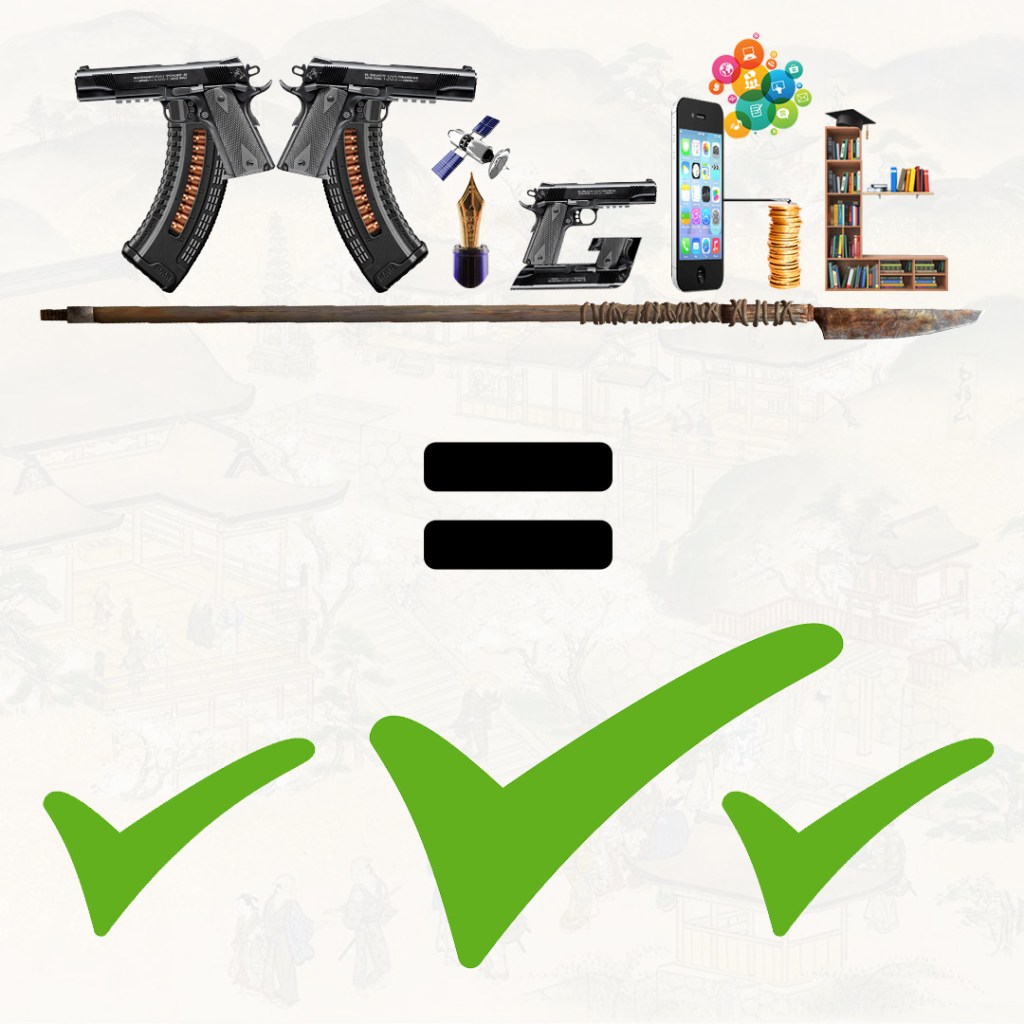
Image created by Adarsh Jadhav
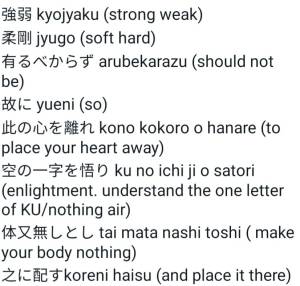
In the Bujinkan system of martial arts, one concept that we are taught every so often is “Kyojaku jyugo arubekarazu”. This roughly refers to how there is no hard or soft, and no strong or weak; in other words, it means that there is no duality to explicitly discern. This line is the first of a four line poem1. The entire poem explains how one should not focus on being hard or soft or strong or weak, but instead one should makes one’s body into nothing and replace one’s heart with air to understand enlightenment. This is in reference to a fight or a conflict in general and how one can respond to the same. It refers to the fact that one should not worry about classifying the situation or one’s response, but instead respond as required. In order to do this one should let go of one’s ego, as not doing the same might lead to motives and objectives taking centre stage and skewing what one NEEDS to do with what one HAS TO or WANTS TO do.
This is a wonderful concept. But it is also incredibly difficult to practice in life. There might be times when we all face situations where there are no good choices and hardship has to be endured, because there might be no other option. But is this not a good option by itself? Especially if it allows survival? When I say survival, I mean, not overcoming a challenge or winning over hardships being faced, but dealing with the problem by letting time solve the problem. It is impossible to agree or disagree with this and the answer depends on the actual situation one is facing.
This conundrum reminds one of the statement by the Greek historian Thucydides, “The strong do what they can and the weak suffer what they must”. This was supposedly in reference to a situation where the island of Melos suffered a massacre of all its men and the women and children were sold into slavery*. This was a case where the other option open to Melos was to surrender and agree to Athenian terms. Should they have taken it? Only the people making the decision at that time would know. The rest is all speculation with the advantage of hindsight.
When we refer to the strong and the weak in terms of nations, one aspect that is recognized is how geography is the key factor that determines the same. This concept was expounded in the book “Guns, Germs and Steel” by Jared Diamond published in 1998**. This concept has been expanded further by Ian Morris in his 2011 book “Why the west rules – For now”. There are YouTube videos with simpler explanations of both books, the links to which are seen below, where both authors explain their respective theories. In the video, Ian Morris explains how the geography that bestows an advantage to one nation or region changes over time with technological and social development. So, taken together, the might of a nation depends on the geography and the time period when the same is being considered, as that determines the technological and social level of a nation or civilization.
Once we consider technological prowess, it is obvious that it affects all conflict management in modern times. This includes both military/martial and non-military conflicts. Further, it does appear that “non-military” is itself difficult to define these days. We hear of how we live in the age of fourth generation warfare, where we never realize if a war has begun and if it has ended. It is supposedly a case where a state(s) are perpetually in a state of war, though not militarily, as understood in the conventional sense. This refers to information war that is waged to make a society weaken itself and lose without any need for actual military might being employed, or at least with minimal military effort being required.
This war is waged on multiple fronts, like trade and economic policies, disinformation and narrative warfare on social media and conventional media, social engineering and many others I am not qualified to expound on (there is a branch of economics called “Narrative Economics”!). This means that a new set of dualities is being created (technology, communication, economic ability), which must be recognized and somehow nullified, by doing what is needed (no duality remember! 😛 ).
The feeling from the above information made me consider how no real fight is ever fair. There is always a perpetual attempt to make any conflict as unfair as possible, so that one side gains the necessary advantage to move a conflict in one’s favour. This in turn leads to the aspect I am trying to explore further.
“Might is right”. This statement, many a time, is considered in a negative light. Like, “this is not how it should be! Even though it is”. But when we consider various aspects as we shall below, it is perhaps the ONLY bit of the human experience that is ETERNALLY TRUE.
What is “Might”? It is anything, an ability or technology that allows for superiority between any two objects that are being compared, mainly in the context of a conflict (a fight, for simplicity). When I say “ability” here, it could be physical, intellectual, emotional, financial, experiential (this could relate to both skill and physical ability due to experience or wisdom and knowledge due to experience) or spiritual. The objects we are comparing could be two humans, two groups of humans, multiple humans, multiple groups of humans, humans with any non-human lifeform (plant or animal), humans and technological replacements/alternatives for humans (automation enabling code or robots), two or more non-human lifeforms or two or more technologies. Also, we can comfortably, for the purposes of this article use the words “Might” and “Superiority” interchangeably.
From the list of abilities mentioned earlier, we can make a list of the different types of “Might” that can be discerned. Of course, this list can be expanded as necessary. A simplistic example accompanies each type of “Might” as seen below.
- Physical might – The ability to beat up (or injure in any way) someone or threaten someone with physical violence
- Intellectual might – The ability to prove someone wrong with a greater quantity or quality or knowledge or logic
- Emotional might – The ability to withstand hardship better than another based on one’s upbringing or cultural antecedents
- Financial might – The ability to achieve something better or faster than someone else by being able to pay others (human resource) or acquire technology (technological resource) to achieve said something
- The Might of Experience (Experiential might) – The ability to either do something better than someone else due to having greater experience in the field of that something, OR simply being able to browbeat someone else by claiming greater experience (including academic antecedents like diplomas and certificates)
- Spiritual Might – The ability to achieve a given goal by claiming or appearing to have greater spiritual achievements (like a guru with an initiate in a religious context)
- Ethical or Moral Might – The ability to get a march over someone by claiming the moral or ethical high ground (like in a comparison between secularism and fascism)
- Technological Might – The ability to be superior to someone by dint of having access to superior technology (like drones making the difference between Azerbaijan and Armenia)
- Educational Might – The ability to get a march over someone by having greater knowledge due to a better education or using educational credentials to push one’s ideas through without scrutiny
- Communication Might (oratory for example, or great writing ability) – The ability to communicate ideas and concepts with or without a twist so as to make them more appealing than the ideas of others
- Might of the Network or Might of Association – This is how one can get ahead by virtue of knowing the right people in the right places (or just consider a trading guild of old)
- Might of Numbers – The case where one side is superior simply because it has superior numbers compared to the other side
- The Might of any other Skills – This is a catchall phrase for anything I might have missed!
- A combination of any of the above types of “Might” – As an example, “technological might + communication might = might on social media” (I personally consider “Culture” in this category, as it is a combination of several factors)
Of course, there are a couple of points to consider when we look at the various kinds of “Might”.
- Some of these “Might” could influence another type or be very similar. For example Ethical Might, Intellectual Might and Educational Might are closely related and inform one another, as one’s education and intellectual abilities might affect one’s ethical outlook.
- There is the factor of LUCK that could override anyone of these “Might” and mitigate their use at a given time and space (and therefore all natural phenomena come into play as well).
Now that we have defined “Might” and its various manifestations (at least for now), let us consider how “Might” is applied.
Consider all the times that you went to a team mate with a problem at work because she/he very likely could help you solve a problem. The reason you went to your colleague is because she/he had the ability to help you solve the problem. She/he thus had a little more of the “Might” of knowledge (Intellectual Might) or experience (Experiential Might) as compared with you to solve the problem OR she/he added her/his ability (Might) to your own (Might of association or the Network) in order to resolve the problem.
Now consider all the times you went to a friend for help with anything, especially if you were new in a town where your friend was a long-time resident. Here you are using different kinds of “Might” of your friend which are greater than your own (Experience, Network, Intellect, maybe even Communication and Financial) to help yourself.
Lastly, consider how dependent a child is on the abilities of a parent, where the difference in all kinds of “Might” is too large to even consider.
In all the above cases, the ability or “Might” of one was used for the benefit of another. In almost all these cases, like in most cases in life, when we use the ability of others, it is with an implicit and unstated understanding that we will in future use our abilities to return the favour. Or it is possible that the favour, in other words the “loaning of ability (Might)” is a necessity simply to continue one’s association with the other. Either as part of a team or a family or a group of friends.
So, the key to all cases where we use each other’s abilities is, association with each other. By default if you are associated with a group of people you are not associated with some other groups. At best you are associated better with some groups and less well associated with some others.
This “association” with others is an essential trait of us humans. It is what we refer to when we routinely say, “Humans are a social creature/animal”. But since we associate more with some and less with others, we are not exactly “social creatures”. We are more “tribal creatures”. Humans are a “tribal animal” where we put some people, animals, plants, ideas, behaviours and technologies above certain others. This is how we form tribes or groups with whom we have “greater association” and by extension “greater affinity”.
Once tribes are extant, there is by default an “us and them”, just like with packs of wolves or prides of lions. Once there is an “us and them”, all the above abilities (Might) that were used for helping each other and furthering common goals for “us” will be also be used to cause trouble to and mitigate the goal achievement of the “them” or “Others”. Thus, enter CONFLICT.
Conflict is the main prism/lens through which we observe “Might”. “Conflict” as a term can be used to describe a whole host of situations. From a simple argument between two individuals to vast all-encompassing issues like man-animal conflict or wars – both military and for “hearts and minds” or to “preserve culture”. Whatever be the scale or scope of a conflict, it is decided by the “Might” of one of the participating parties overpowering the “Might” of the other.
This brings us to the crux of the hypothesis in this article, which is that “MIGHT IS ALWAYS RIGHT”. Put in other words, the mighty one is always right because that is how a conflict is decided. Also, one needs to keep in mind that “Might” is never applied fairly, like was mentioned earlier. And like (or “the same”) “Might” is not necessarily applied against the each other. For example, physical might could be met with physical might, but not necessarily. If fact, physical might is likely only met with physical might in a sport.
In almost all real world situations, it is a case of different types of “Might” applied against each other. For example in a military conflict, one side might choose to apply “Communication Might” with propaganda against the “Technological Might” of the other side(s). Hence the term “Asymmetric Warfare”, where the involved sides use different abilities to counter each other in a conflict. This is especially true when one of the sides in a conflict can bring to bear “disproportionate power” on the other side(s). This is when one side is vastly “Mightier” than the other in a specific “Might” (say conventional military strength or martial prowess).
Of course, conflicts are not always decided/resolved (they might eventually be), but for the most part they are managed; hence conflict management. A conflict might not be decided for years on end and in the interim they are only managed, where all parties involved in a conflict try to nudge it in a direction favourable to them. In this situation, “Might is Right” plays a key role, as we shall see further.
When one of the sides in a conflict (which could simply be a difference of opinion) chooses to use a said ability (Might) to nudge a conflict in a direction favourable to it, it almost always is done by ensuring that the ability it has a surplus of, is the factor that is used to further the conflict.
For example, consider a lot of the debates that happen on Television today. The conflict here is that one set of people speaks “for” a topic and the other set speaks “against” the same. The ability or “Might” that is supposed to be used by both sides is “Communication Might”, where the side that communicates its point of view better is supposed to be the winner. One cannot choose “Physical Might” against “Communication Might”. So one of the debaters cannot get irritated and beat up the other and thus win the debate as the other side is physically incapacitated to put forth a point of view.
So, by this setting of rules, it is clear that the side that carries the day is the one that can make its point of view seem correct or superior to that of the other side. Thus, even if the other side has better points or is actually correct, it loses the conflict simply because it could not communicate as effectively as the side that won. In other words, the “Communication Might” of the losing side was lower.
The example used here is of an artificial construct, much like an MMA bout, where no kicking the groin or gouging of the eyes is allowed (in a real street fight these rules do not hinder the fighters). Similarly, in the real world where people make up decisions on Government policies and performance, TV debates might not be last word, since the losing side there might be the one that gets accepted despite being low on “Communication Might”. It might get accepted because it was high on “Emotional Might” or “Might of Experience” wherein the audience connects better with the losing side at an emotional level or its experience might match more closely with the losing side as compared with the winning side. This is where the terms like “Silent Majority” and “Lack of connect” come from.
Consider debates on TV or even Social Media (Twitter, Facebook, YouTube, Instagram) on Government policies, secularism, democracy etc. The point of view that wins on the debate might be the one with “Intellectual Might”. But the one that wins in an election might be the one with greater “Emotional Might”.
Here a large majority of the population might simply not care about secularism, due to past experience (Might of Experience) or a lack of knowledge (lack of “Intellectual Might”). Individuals from this side might never be able to take a considered stand on any fora of debate and discussion for lack of communicative ability that the other side with greater intellect can comprehend. But this side knows that it has the numbers and does not need to convince the other side in a discussion, it does not even need to participate in a discussion! Thus, the side with “Communication Might” and “Intellectual Might” will end up losing against the side with “Emotional Might”, “Might of Experience” and “Might of Numbers”.
Based on this, it is important to understand that while use of a given ability to manage a conflict favourably is important, it is even more important to determine if the ability or ”Might” being used is the right one.
One side in a conflict might choose to ensure only the ability it has an abundance of is used, but it needs to recognize that if this move fails, it has an option to fall back on temporarily or develop the other abilities needed to manage the conflict in its favour.
Consider this. We usually find a lot of umbrage on various fora about the use of violence in various parts of our country (remember all the lynching and our outrage at the same?). This violence is an expression of “Physical Might” and “Might of numbers”. The outrage against this is an expression of “Emotional Might”, “Intellectual Might”, “Communication Might”, “Technological Might” (social media platforms are technology). These latter forms of Might are unable to vanquish or even mitigate the expression of the former for an extended period of time.
This is because there is an asymmetric expression of abilities here and one set of abilities comes out on top of the other set of abilities. This is despite the sides that use the respective abilities being disproportionately superior in those specific abilities, to the other side. The mobs that perpetrate the lynching can never hope to match the communication or technological ability that the ones displaying outrage can. At the same time the ones wanting an end to mob violence can never match the physical might and numerical superiority of the mobs. In the “Emotional Might” and “Intellectual Might” areas there is no telling which side is superior, both can believe the same, but the greater numbers on one side might tilt these two “Might” in their favour.
This asymmetry comes forth due to the state of our society and state. In a democratic state like ours, violence is supposed to a monopoly of the state (police, defence forces, paramilitary forces etc.). And all grievances any individuals or groups have against one another are supposed to be sorted out through dialogue, within or outside a defined legal system. This precludes “Physical Might”, and incentivizes “Communication Might”, “Intellectual Might” and “Financial Might”. But the abilities of institutions of law and order and the legal system might not be able ensure that these incentives work. This becomes exaggerated if other institutions within a democracy are not fair and robust. Thus, “Physical Might” and the “Might of Numbers” never get mitigated.
These are problems in most democracies with large and diverse populations. The law and order machinery and the legal system cannot ensure a proportionate distribution of “Might” in any conflict management. Thus, individuals and groups resort to using any “Might” that can get them ahead.
There is one aspect we must consider specifically while using examples from a civilian and societal context and not a military one. This is the issue of EGO in conflict management. Almost all of us believe we are in the right when we consider an action or argument when it comes to conflict resolution. This is obvious in any debate on TV or social media. The belief in correctness is usually associated with a belief in having “Moral or Ethical Might”. Simply put, we believe, we have the moral or ethical high ground and hence we are right.
The concern is that even though I have listed Moral or Ethical superiority separately, it is really a combination of emotional, intellectual and experiential abilities at least. It might involve technological and financial abilities as well. All of these aspects inform the information we gather and how we process it to arrive at a specific argument or action, that we consider correct and of a superior moral/ethical quality.
Unfortunately, there never need be any agreement on who is right due to moral or ethical aspects. It is not even necessary to agree on who is right in legal aspects. There only needs to be a belief in being right. This belief leads to using other forms of “Might” to ensure this belief is sustained, if the belief has any advantage attached. These advantages could be material like class/caste privilege, subsidies, reservations, or any other.
When an individual or a like-minded group is threatened in their position of correctness or moral high ground by another, they will do anything to not let that happen, so as not to lose the other benefits associated with the previously held position (even if it is just the ability to congregate in a certain way or practice a religion in a certain way). When their belief system is threatened, their EGO is threatened and in order to protect it “Moral or Ethical Might” is always either substituted or supplanted by any other form of Might. Perhaps, Moral or Ethical aspects are altogether irrelevant and only the other abilities are brought to the fore.
Based on the above observation, perhaps the best way to manage a conflict is to be perpetually adaptable. Never fall in love with your favourite “Might”. Always know when it is not working and has to be replaced with a different one. Accept that disproportionate use of any Might is the norm and the response almost always has to be asymmetric, with a different type of “Might”. In other words, like any martial system teaches, learn to overcome EGO. This brings us full circle, back to “Kyojaku jyugo arubekarazu” and the following lines in that poem. Do what it takes, and let go of ego.
One cannot afford to disparage the “Might” that the other side is using even if one feels it is wrong or despicable. That “Might” is being used because it works. See if you can use the same in a “purified” manner (for example do not sermonize the opposition in a debate, treat them as equals even if they do not do the same). And always be ready to change the ability you are using. This might help survive an onslaught or move the conflict in one’s favour.
Lastly, all this means, “MIGHT IS RIGHT, ALWAYS. ONLY THE KIND OF MIGHT USED CAN VARY”.
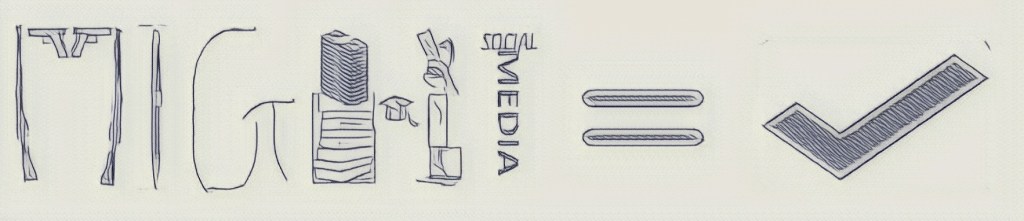
Notes:
Guns, Germs & Steel – Part 1
Guns, Germs & Steel – Part 2
Guns, Germs & Steel – Part 3
Why the West Rules – For Now
*I am using a common form of this statement. It is very possible that people might have an opinion that the actual Greek statement is not so simply translated and has some nuance to it. But I am using this statement as is for the purposes of this article.
**There are many who do not agree with this theory as is and have specific criticisms of this theory. I am using the theory as I understand it, as it is presented. The criticisms, as far as I can understand do not affect what I am trying to express here by much.
1The entire poem and its translation is seen in the image below. Translation is courtesy of my teacher Shiva Subramanian and my buyu Priyadarshini Mahalingashetty. They in turn translated it from a calligraphy by Nagato Sensei, one of the foremost teachers in the Bujikan system and I was told that it was translated for them by Masako Kawai. Thanks to all of them!
 Mundane Budo