Remember the event during the swayamvara of Draupadi in the Mahabharata, when Arjuna shoots an arrow through the eye of a model fish that is rotating above a pool of water, while looking at the reflection of the fish in the pool? It was an incredible feat of archery! A similarly incredible use of technology was seen in July 2022 when a variant of the Hellfire missile, the R-9X was used to assassinate the then leader of the Al Qaeda.
Watch between the 32 and 34 minute mark in the above video
This variant of the missile called “AGM-11R-9X” is supposedly called the “ninja missile”. It has no explosive warhead. 6 blades extend from the sides of the missile when it is striking the target that it destroys. The lack of explosives minimizes collateral damage. In effect, it is a modern-day arrow! The archer need not be Arjuna though, or even a human! The missile can be fired from a drone, from a considerable distance.
https://www.bbc.com/news/world-us-canada-62400923 – This article has an image of the missile being discussed (I could not find an image on Wikipedia or a duty free image)
Now consider this event from the Ramayana. When Rāvana shot an arrow at Vibheeshana, Lakshmana shot that arrow out of the sky. This is an impressive feat of archery as well, intercepting a fast-moving arrow with another one. And this feat is seen over and over in our modern world. One just needs to look at the news these days and all one sees are missiles being intercepted other missiles.
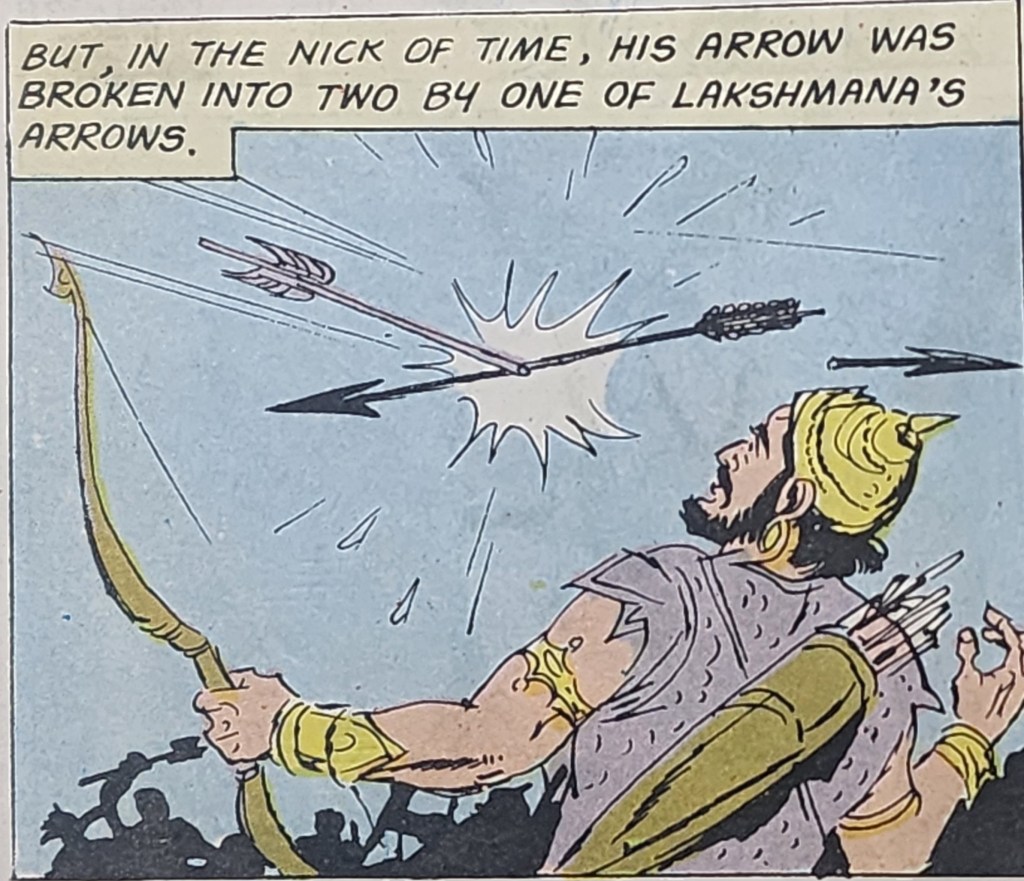
Lakshmana’s arrow intercepting Rāvana’s arrow. Image credit – “Ramayana”, published by Amar Chitra Katha.
The ability to intercept incoming missiles, whether they are ballistic missiles, cruise missile, drones or drone swarms seems key to surviving modern day warfare. One of the missiles that comes close to replicating Lakshmana’s feat is likely the Stunner missile that is used by Israel as part of its David Sling air defence system. This missile also carries no warhead.
It uses a “kinetic warhead” to destroy the incoming threat, be it a rocket or aircraft or drone or cruise missile. “Kinetic warhead” means that the missile physically strikes the target it is supposed to destroy. In this sense, it is exactly like an archer shooting down an arrow.
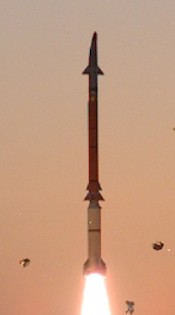
Image of Stunner missile. Observe the unusual “Dolphin Nose” on the missile. Image credit – Wikipiedia.
Now consider the use of the Narāyanāstra by Ashwatthama on the 15th day of the Kurukshetra War in the Mahabharata. The use of this celestial weapon causes weapons of all forms to rain down on the Pandava forces, including maces, chakras and flaming arrows. It is literally an inescapable rain of death from the sky. And this scary occurrence is something we see happening routinely in the wars being waged all around.
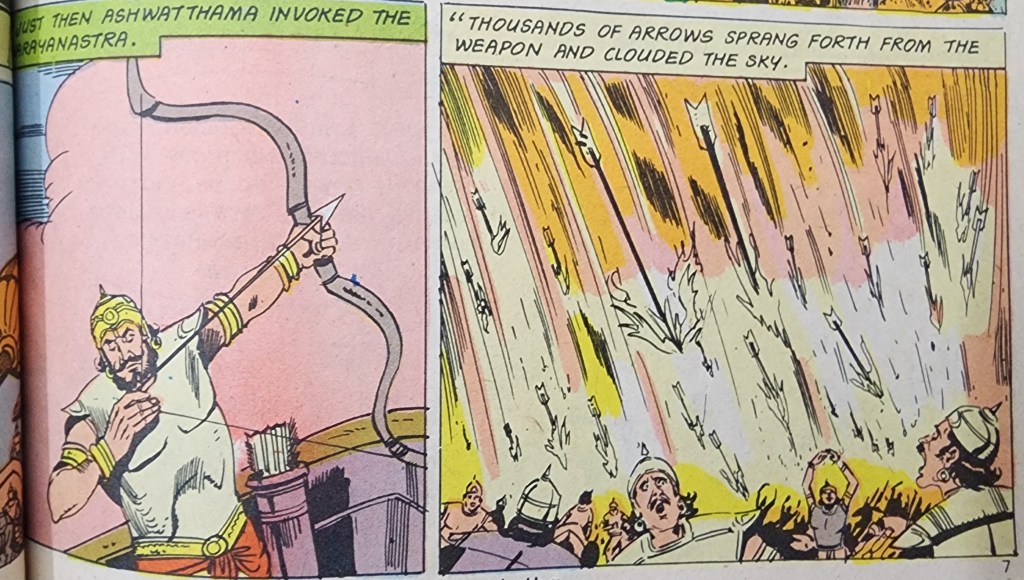
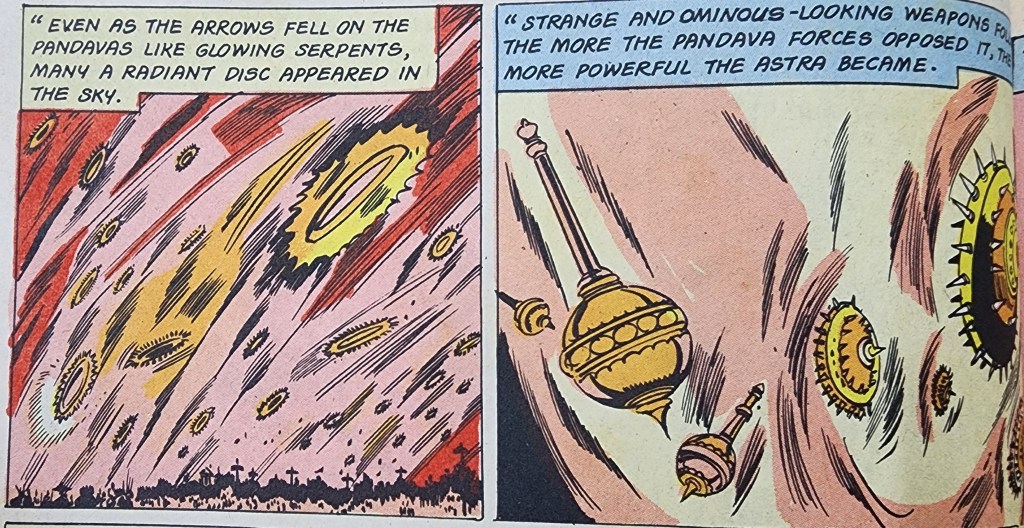
The above 2 images show the Nārayanāstra being invoked by Ashwatthama and the effects of the Astra. Credit for the images – “Mahabharata 37 – Karna in Command”, published by Amar Chitra Katha.
Ballistic missile these days have MIRV capability. MIRV stands for “Multiple Independent Re-entry Vehicle”. It means that each missile carries multiple warheads. This causes one missile to strike multiple targets! Again, a rain of destruction over a large area from the sky.
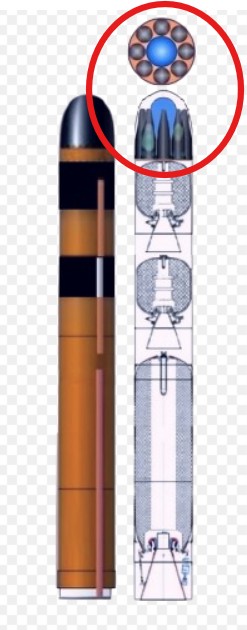
The above image shows the use of MIRV, where multiple warheads are present in the same missile. Image credit – Wikipedia.
Even at a much lower technology level, this has been happening for decades. Consider rocket artillery. A barrage of rockets is fired at targets several kilometres away, to flatten the target area. The Indian version of this weapon is called “Pinaka”. Pinaka is the bow wielded by Lord Shiva, a weapon that can wreck incredible destruction.
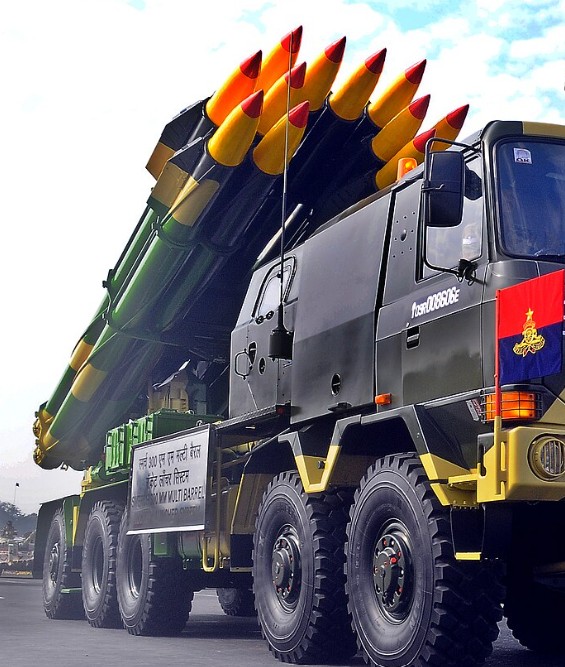
The above image shows the Indian version of the Smerch multi-barrel rocket launcher. This is similar to the Pinaka system. Image credit – Wikipedia.
Consider the attack by King Sālva against the city of Dwaraka, the city of Lord Krishna. Sālva obtains a chariot that can fly as a boon. He uses it to carry out aerial attacks on the city. The ability to launch attacks from the air gives him a great advantage. He is safe, far away from the reach of the defenders of the city. This situation from the Hindu epic seems to have come true in the times we live in.
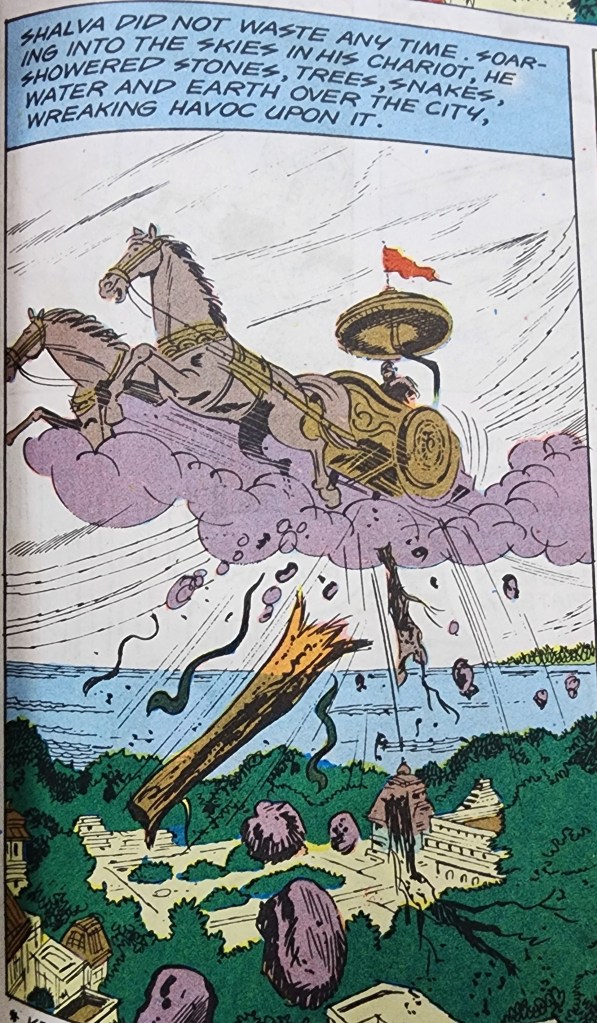
Sālva attacks Dwaraka with his flying chariot. Image credit – “Krishna and Rukmini”, published by Amar Chitra Katha.
While we know that archers shot arrows in the past, the platforms that carried the archers to the place where they launched the attack were vitally important. In the past, the platform was the horse and even before that, it was the chariot. And modern-day aircraft are the equivalent of chariots of the past.
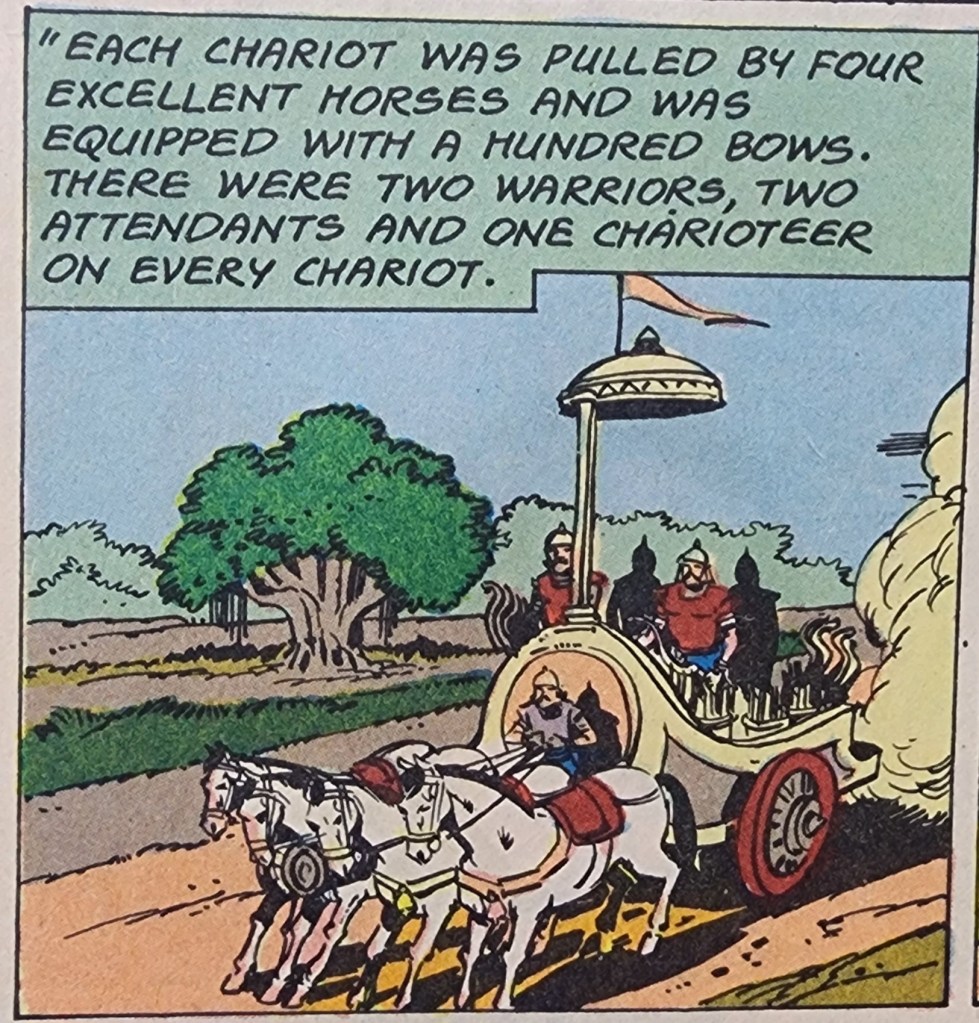
A chariot was a platform with a large store of weapons. Image credit – “Mahabharata 30 – The War Begins”, published by Amar Chitra Katha.
With the increasing range of beyond visual rage missiles and the development of stand-off range weapons, aircraft these days have become delivery platforms for weapons. They stay away from the target, away from any anti-aircraft defences the target might possess. And the range of missiles means that aircraft no longer need to get stuck in dogfights. So, the aircraft of today and perhaps of the near future will derive an advantage by being capable of having large payloads of weapons. Chariots of old carried a lot of weapons and in this aspect, modern aircraft are the concept of the chariot reach its current pinnacle.
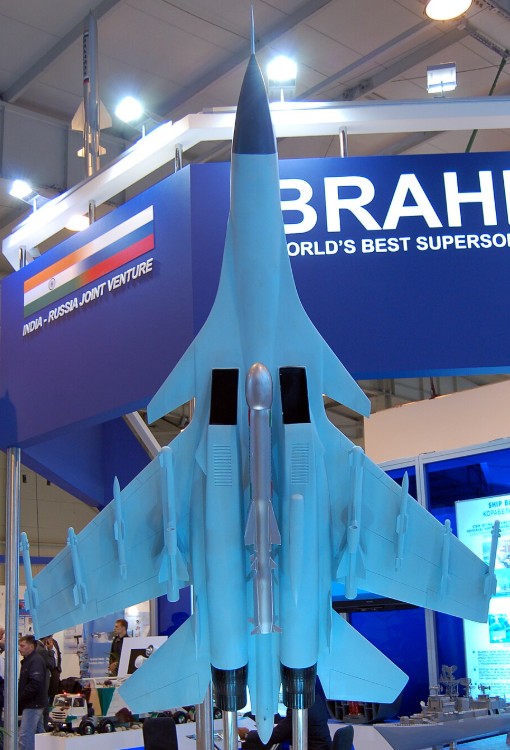
A modern Indian Su 30 MKI, with a large payload of weapons. Image credit – Wikipedia.
Let me return to the Stunner missile I mentioned earlier. Observe the tip of this missile. It does not have the usual tip that looks like a spear point, which is seen in many missiles. The Stunner missile has what is referred to as a “Dolphin Nose”. The nose of the missile has this unique design due to the sensors it supposedly uses to track and strike the incoming missiles it is targeting. Similarly observe the tip of the Brahmos missile developed by India & Russia. Its tip is different as well; due to the way its ramjet engine is utilized.
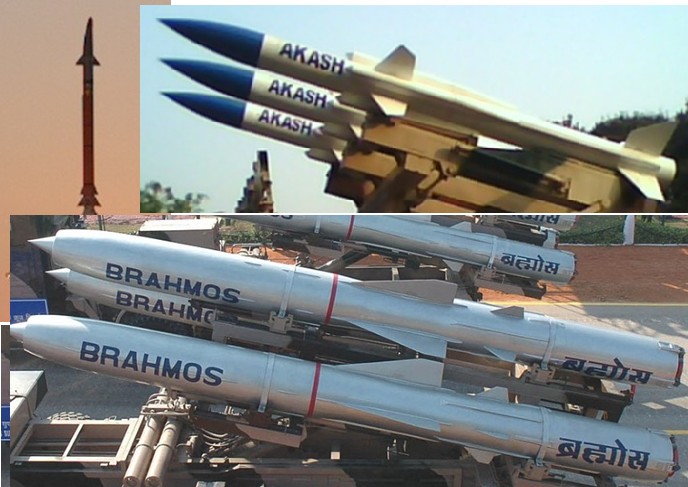
The above image shows the different types of nose cones of different missiles. Credit for all images – Wikipedia.
This is not unlike the past, where arrowheads of different types were used for different purposes. There were broad heads, bodkins, swallowtails, crescent shapes and these arrowhead types were used for different purposes. Bodkin heads were used for armour penetration, swallowtails for hunting and crescent shapes for hunting birds. If missiles are the gigantic arrows of the present, humankind is doing just what it did in the past.
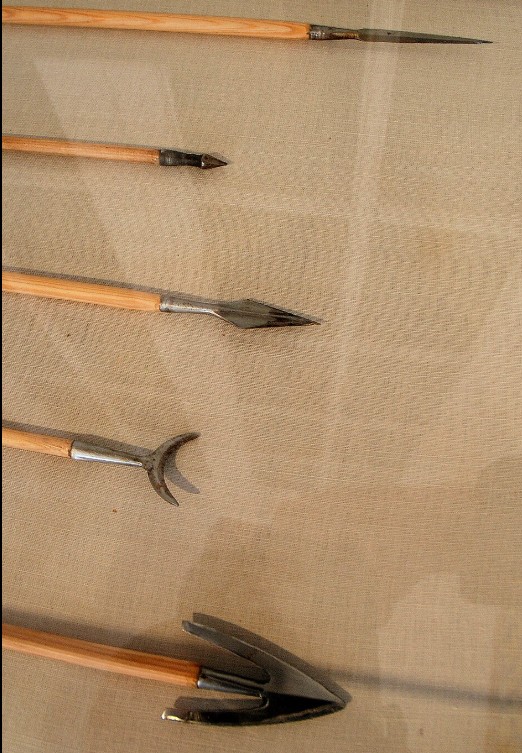
Different arrowheads – the one at the bottom is a swallowtail, the one at the top is a bodkin, the above the swallowtail is a crescent and the one in the middle is a broadhead. Image credit – Wikipedia.
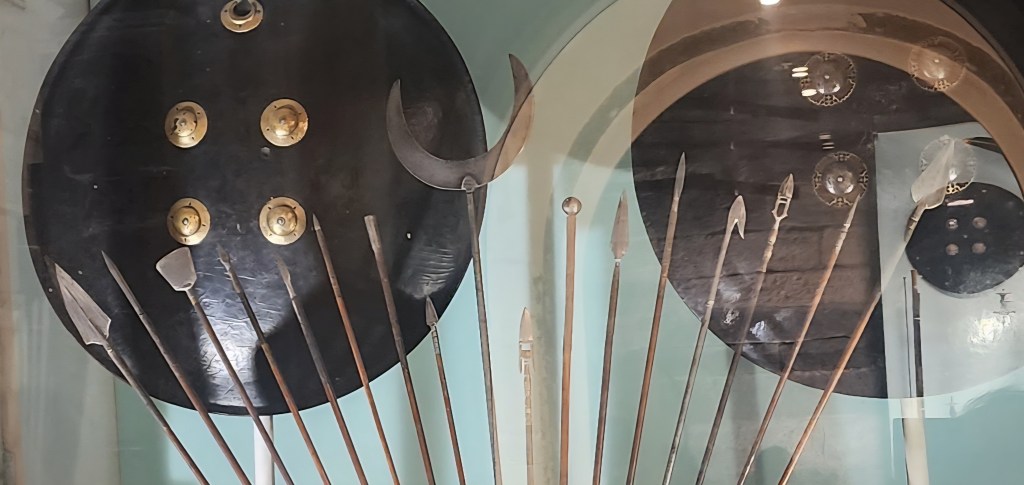
An assortment of arrowheads as used during the time Maharana Pratap, late 16th century CE. This is an image from the museum at the City Palace, Udaipur, Rajashtan.
Today’s missiles have a measure of accuracy called CEP (circular error probable), which is measured in mere metres. This is the measure of the radius within which 50% of the fired missiles will strike. If the target is the centre of the circle with the defined radius, the smaller the radius, the more accurate the missile. Cruise missiles tend to be more accurate compared to Ballistic missiles.
The accuracy of some missiles is such that they can strike individuals standing on a balcony to avoid collateral damage! This is what happened in the initial example I had shared, with the “Ninja Missile”. This also a culmination in modern times of a skillset always cherished by humanity, that of accuracy.
An example of this is again seen in the Kurukshetra War of the Mahabharata. Duryodhana dons an impenetrable armour given to him by Drona. So, Arjuna targets Duryodhana’s fingernails as they are not protected by the same armour! Imagine striking targets as small as an opponent’s fingernails from a moving chariot, who is also on a moving chariot! The skill of the archer would be a marvel to this day! And modern missiles can achieve something equivalent, that is an even greater wonder!
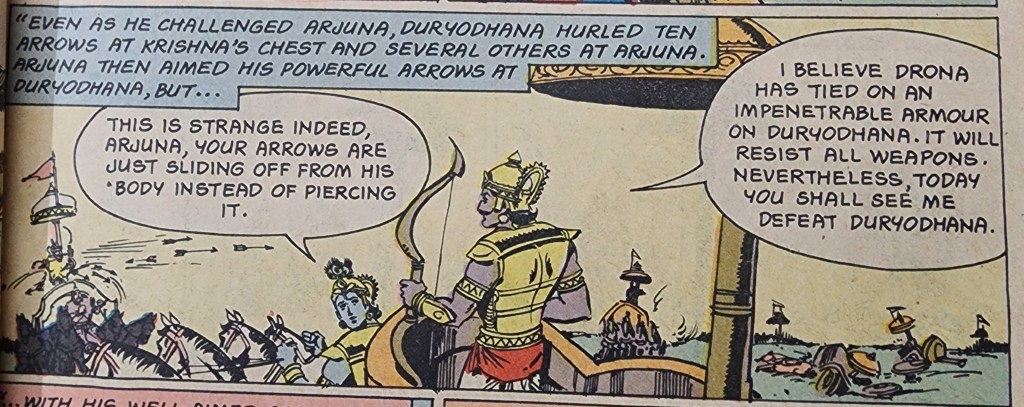
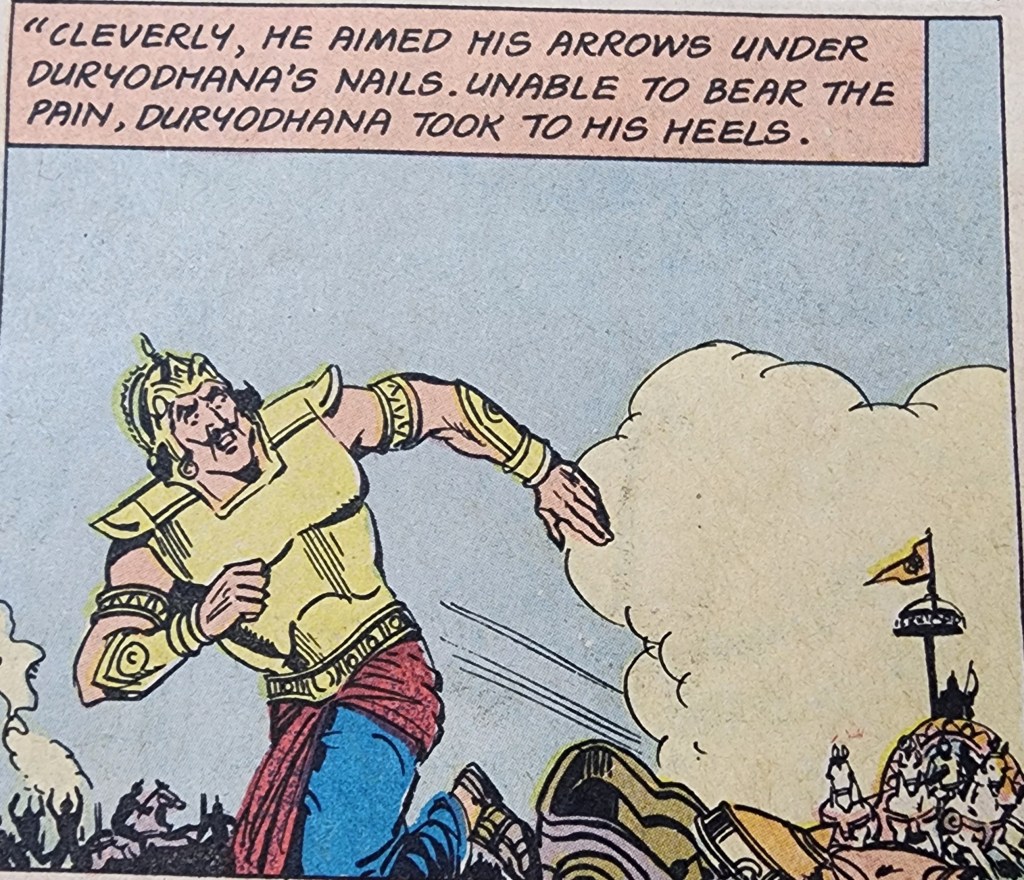
The above 2 images depict Arjuna targeting Duryodhana’s fingernails. Image credit – “Mahabharata 33 – Drona’s Vow”, published by Amar Chitra Katha.
For decades now, a lot of us Indians, born in the 20th century, have been used to a specific representation of archers fighting each other due to what was shown on TV and even on the big screen. In the mid-80s the Ramayana was telecast on Doordarshan (India’s state broadcaster) during prime time. It was supremely successful and defined fantasy combat using bows and arrows for multiple generations. The visual effects were very poor by today’s standards, but back then the joy it generated is indescribable.
In that serial and many others televising stories from Hindy culture, archery was always shown one on one. Almost all the time, these archers would use “Divyāstras”, which are celestial weapons. Sometimes these weapons, in the form of arrows, appear on the utterance of a mantra. At other times, an archer utters a mantra, which invokes the divine weapon onto the arrow that he or she is about to shoot.
Once the celestial weapon has been invoked and shot as an arrow, the opposing archer would invoke a counter astra, to overcome the effect of the astra coming at him or her. The two arrows fly through the air or space and face off against each other, when one arrow is defeated, signifying a loss for the archer who shot the same. This would continue until one archer was killed.
The above 2 videos are from the old Ramayana TV serial from the mid-80s. This clarifies what I was trying to describe in the previous paragraphs.
This was fantasy back in the day, but modern combat seems remarkably similar to what was depicted in old TV serials! Modern combat seems to be all about missiles and drones targeting locations on the ground while trying to survive other missiles or drones launched to destroy the same. It is missile vs missile, missile vs gunfire, drone vs missile, drone vs drone and drone vs gun.
Of course, there are other methods like electromagnetic pulses that are used to take down drones and drone swarms, which are called “soft kill” options. As I have been mentioning all along, drones and missiles are the arrows of today, and when they fight each other, it is exactly like the arrows facing off in old tele serials!
Examples of this are seen everyday on TV in the war currently being waged all over West Asia. Missiles and drones are being shot down everyday with other missiles, guns, lasers (!) and other methods. These defences are being overcome with the sheer number of drones in specific instances. In an Indian context, in May 2025, India defeated Pakistani attempts to attack India with missiles and swarms of drones during Operation Sindoor. India shot down a Fatah 2 missile with an MRSAM (medium range surface to air missile) and took down over a thousand drones over 3 nights with guns, missiles, jamming devices and other soft kill options.
On the 12th day of the Kurukshetra war, Abhimanyu, the son of Arjuna, is fighting Shalya, the king of Madra. During the fight, Abhimanyu catches an arrow shot at him by Shalya with his bare hands and then shoots the arrow back at Shalya, to great effect! This has still not happened. We do not have giant Mecha that can “catch a flying missile” and redirect it at the point of launch. But there is an interesting parallel to this situation in modern warfare.
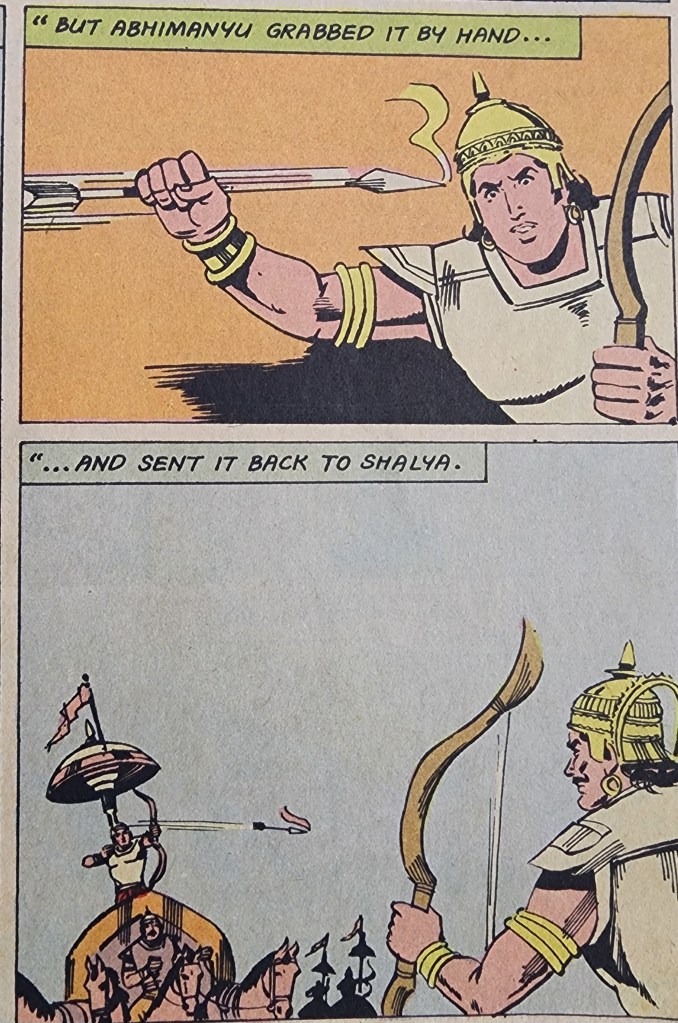
Abhimanyu captures Shalya’s missile and sends it back at him. Image credit – “Mahabharata 33 – Drona’s Vow”, published by Amar Chitra Katha.
During Operation Sindoor, Pakistan launched several PL15E missiles at Indian aircraft. Most or all of these were rendered useless by the defensive abilities of Indian aircraft, including electronic countermeasures. Some of these PL15E missiles were retrieved from the ground in a largely intact condition. This recovery meant that India could study these missiles and refine counter measures to the PL family if missiles used by China. The parameters of the missiles like the radar it used, its fuel, its electronics would be valuable data to use in a future conflict. I think the term many in the defence circles use is acquisition of electronic signatures and adding to threat libraries to counter future threats with the capture of these missiles.
I will add an aside here. India’s primary family of beyond visual range (BVR) air to air missiles is the “Astra” family of missiles. The Astra Mk1 is operational. Astra Mk2 is about a year away becoming operational. Astra Mk3 has been renamed Gandiva and is under development. The Gandiva is an Indian equivalent of the European Meteor, being a Solid Ducted Fuel Ramjet (SFDR) driven missile.
A few months ago, it was revealed that the range of both the Astra Mk1 and Mk2 have been improved significantly. After this revelation it was mentioned by some on social media that this range extension was due to the data gathered by studying the captured Chinese missile! Apparently, a fuel called CL20 was used in the PL15E, which was replicated by Indian defence research agencies and using this new fuel helped increase the range of the fuel.
Adi Achint, the host of this channel has quite astute observations on many aspects military and geopolitical. This seems like a rare misstep (in my personal opinion), where it is mentioned that the captured Chinese missile led to the improvement in the Indian missile.
The story was later mentioned as being flawed. The range improvement was indeed due to an improved fuel for the Astra missile, with a better Octane Rating. But this improvement was a completely indigenous achievement. It had nothing to do with the data from the downed Chinese missile.
This video explains that the improvement in the Indian missile was entirely due to the efforts of Indian Defence Research Agencies.
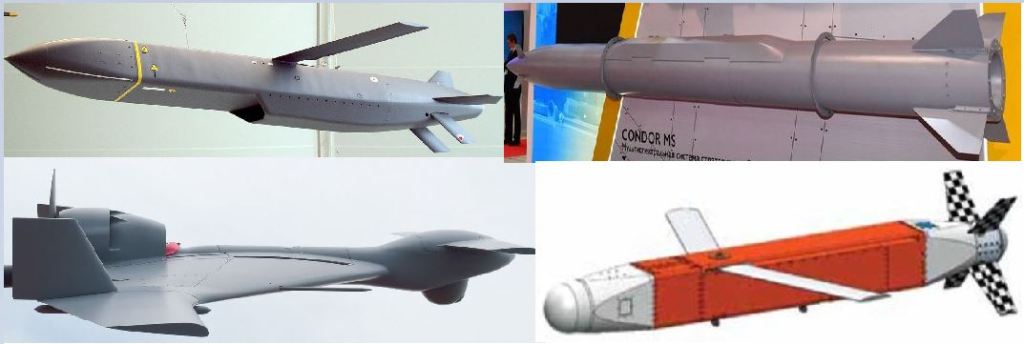
Another example of “capturing a missile and sending it back”, in my opinion, is with the Shahed 136 drone developed by Iran. The Shahed 136 drone is a low-cost attack (kamikaze) drone with a turbo prop engine developed by Iran. The low cost meant that it could be produced in very large numbers. Russia imported these drones for use in its war with Ukraine. Russia called this drone, “Geran”. Russia made its own improvements to the “Geran family” of drones, including adding a turbojet engine.
After the Iran-Israel conflict that occurred during Operation Rising Lion in July 2025, a few Shahed drones were acquired by the USA. The USA produced its own version of the Shahed design, called “Lucas”. Now, India has produced a drone with its own improvements, including swarming capability, based on the design of the Shahed. India’s version is called the “Sheshnaag 150”. This is a classic version of “capturing a missile and sending it back”. Everyone now seems to have a variant of the Shahed drone which they can use against each other!
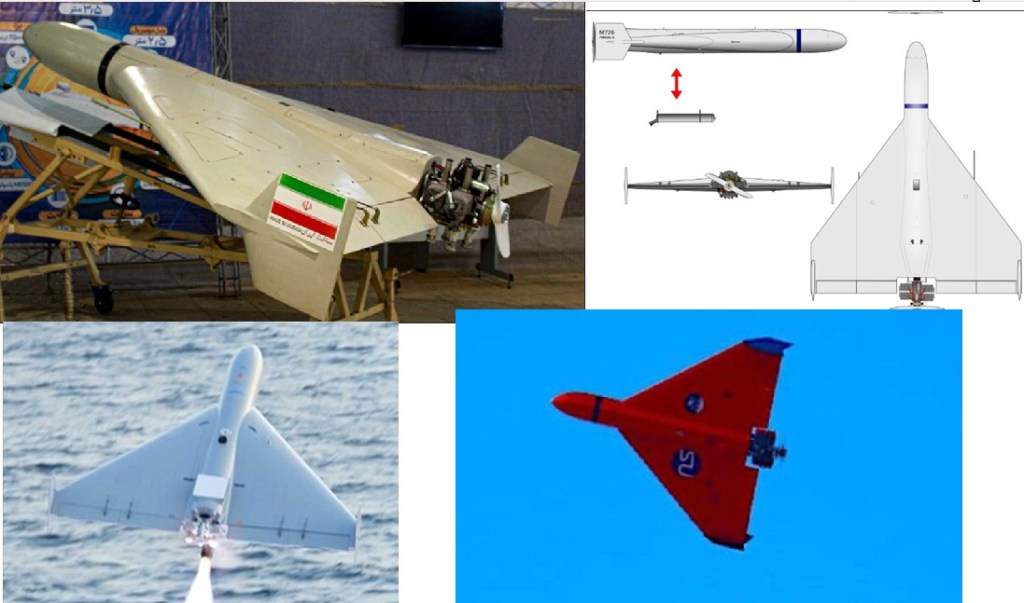
The above images shows the Iranian Shahed 136 (Top Left), The Russian Geran 2 (Top Right), the US LUCAS (Bottom Left) and the Indian Sheshnaag 150 (Bottom Right). Image credit for all images except that of the Sheeshnaag 150 – Wikipedia. Image credit for the Sheshnaag 150 image – NDTV.
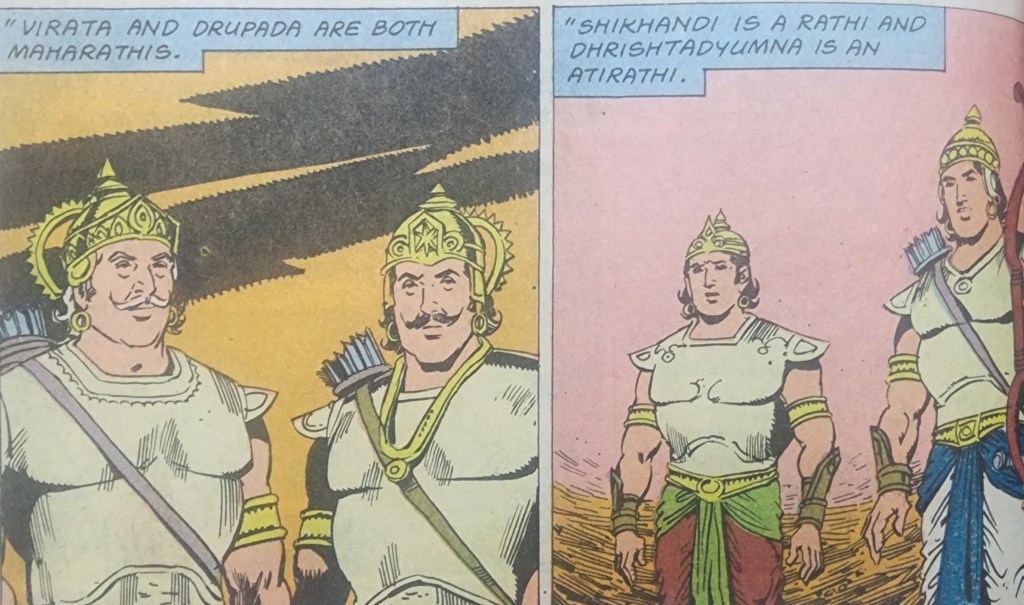
If one reads the graphic novel rendition of the Mahabharata published Amar Chitra Katha over 42 issues, it will be evident that the greatest warriors are the ones who fight mostly from chariots or sometimes from elephant back. Warriors who fight from chariots even had a classification system to determine how great a warrior was (Rathi, Atirathi and Maharathi). One of the most commonly used methods to disable these great warriors was to destroy their weapons or chariots.
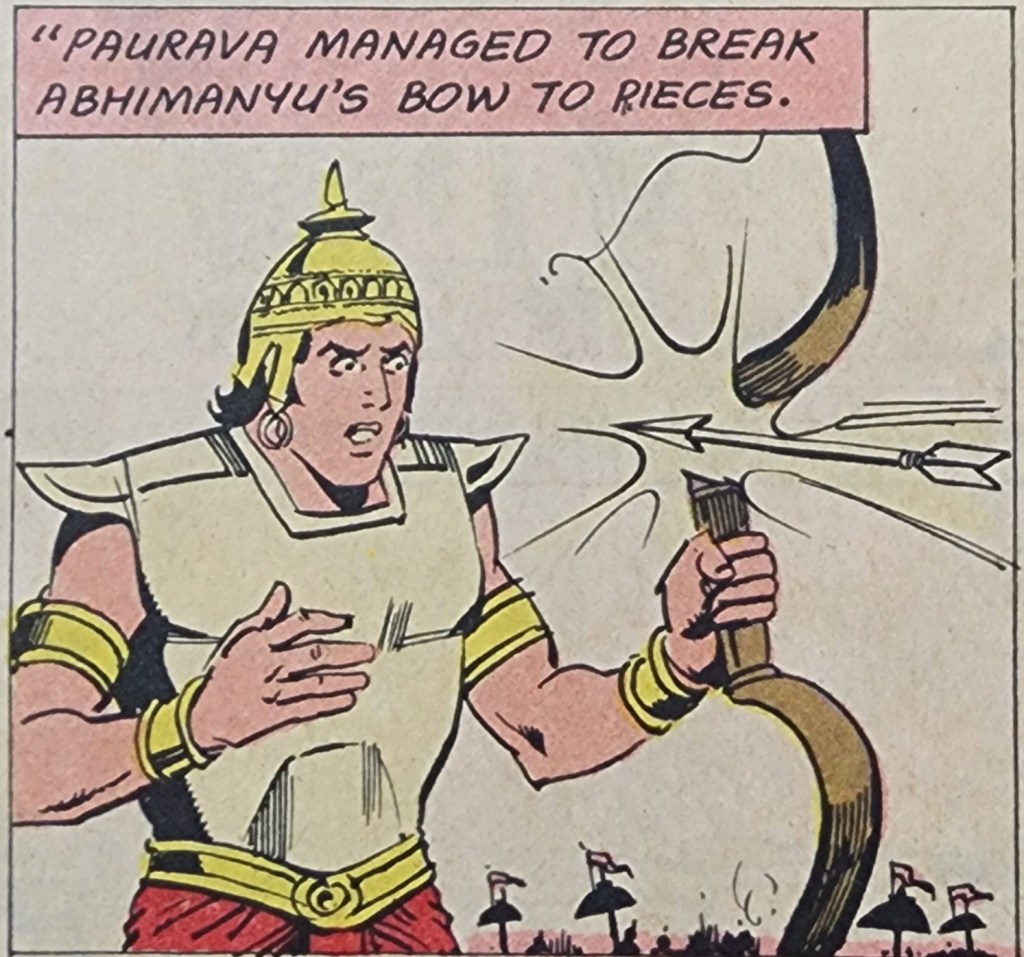
The bow of an opponent being targeted. Image credit – “Mahabharata 31 – Bheeshma in Command”, published by Amar Chitra Katha.
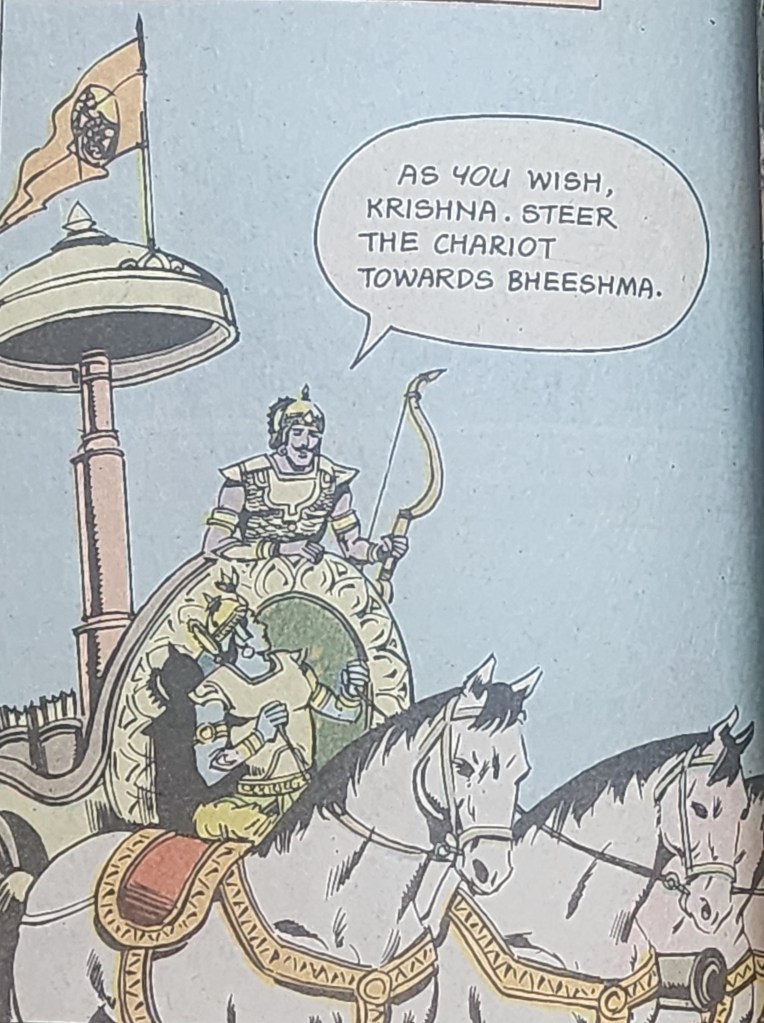
Perhaps it was difficult to defeat the warrior. So, their bows, shields and chariots were targeted. A warrior without a bow to shoot arrows from diminishes as a threat except in close quarters. In a chariot, the charioteer and horses were prime targets to disable the mobility of a warrior. Barring these 2, the wheels of a chariot were targets. All of this again, helps diminish the threat of a warrior by affecting his or her mobility.
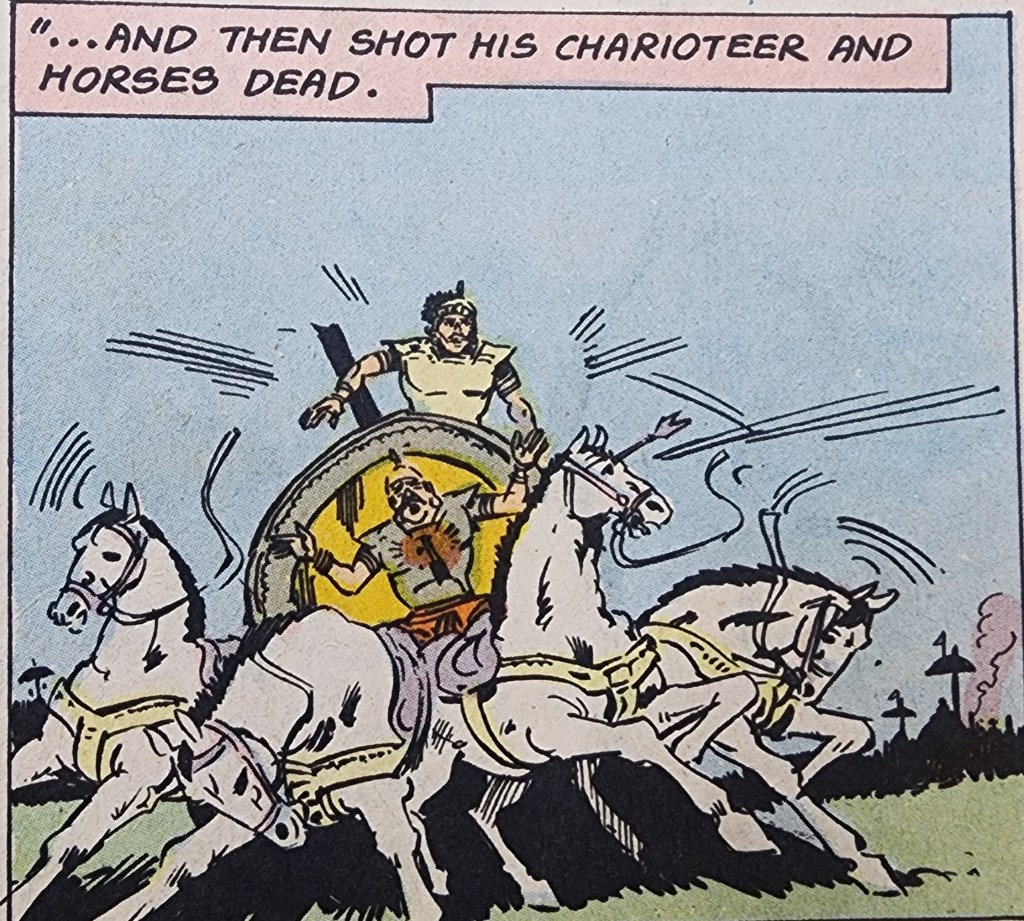
The chariot was a prime target. Image credit – “Mahabharata 31 – Bheeshma in Command”, published by Amar Chitra Katha.
This seems remarkably similar to targeting missile launchers and weapons stores to weaken enemy nations. Similarly, aircraft and runways are targeted to take air power off the board in a war. Further command centres are targeted to eliminate leadership and trained personnel who can coordinate a war. All of this significantly reduces the ability of a defence force to be a threat.
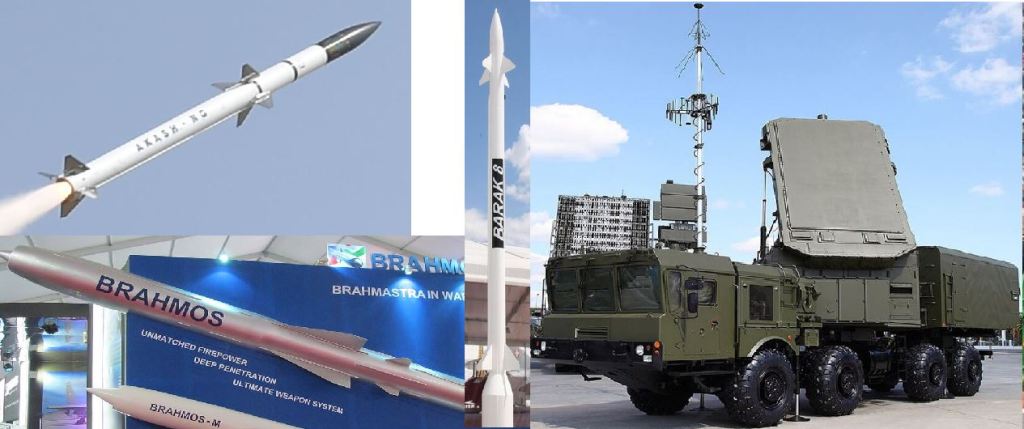
This is true for defensive system as well. An air defence system like the S-400 Triumf, Akash or the HQ16 consists of mobile units which shift their position after firing at enemy assets in the air. This is to survive any attack from other aircraft that might attack that position after the coordinates of the threat are identified and relayed back. This mobility is, if I am not wrong is called “shoot and scoot”.
The defensive formations possess multiple radars operating at different frequencies. These radar waves can be detected and hence reveal the location of the air defence units. Anti-radiation missiles that lock onto the source of the radar waves are used to target these radars.
Even loitering munitions that stay in the air just waiting for a radar to be turned on are used to target air defence units. The moment a radar comes on, the loitering munition, which is nothing but a suicide (kamikaze) drone attacks the radar and blinds the air defence system. It also creates a hole in the overall air defence web that can be exploited by enemies.
In a slightly twisted manner, there is something vaguely similar to a loitering munition in the Mahabharata. After Arjuna slays Jayadratha in the evening of the 14th day of the Kurukshetra war, he cannot allow the severed head of Jayadratha to fall on the ground. Jayadratha has a boon of protection from his father, due to which, anyone who causes the lifeless head of his son to fall on the ground will have his or her own head explode!
Jayadratha’s father is mediating far away from the battlefield. So, Arjuna has to keep shooting arrows into the head to make it travel all the way to where Jayadratha’s father is sitting in meditation and make the severed head fall into the lap of the father. When the shocked father stands up, the head falls onto the ground and his own head explodes! This is because the father was responsible for his own son’s lifeless head to fall to the ground, as it fell from his lap. So, with a lot of hand waving, the head could be a loitering munition, for it was in the air until it found its target, which was Jayadratha’s father!
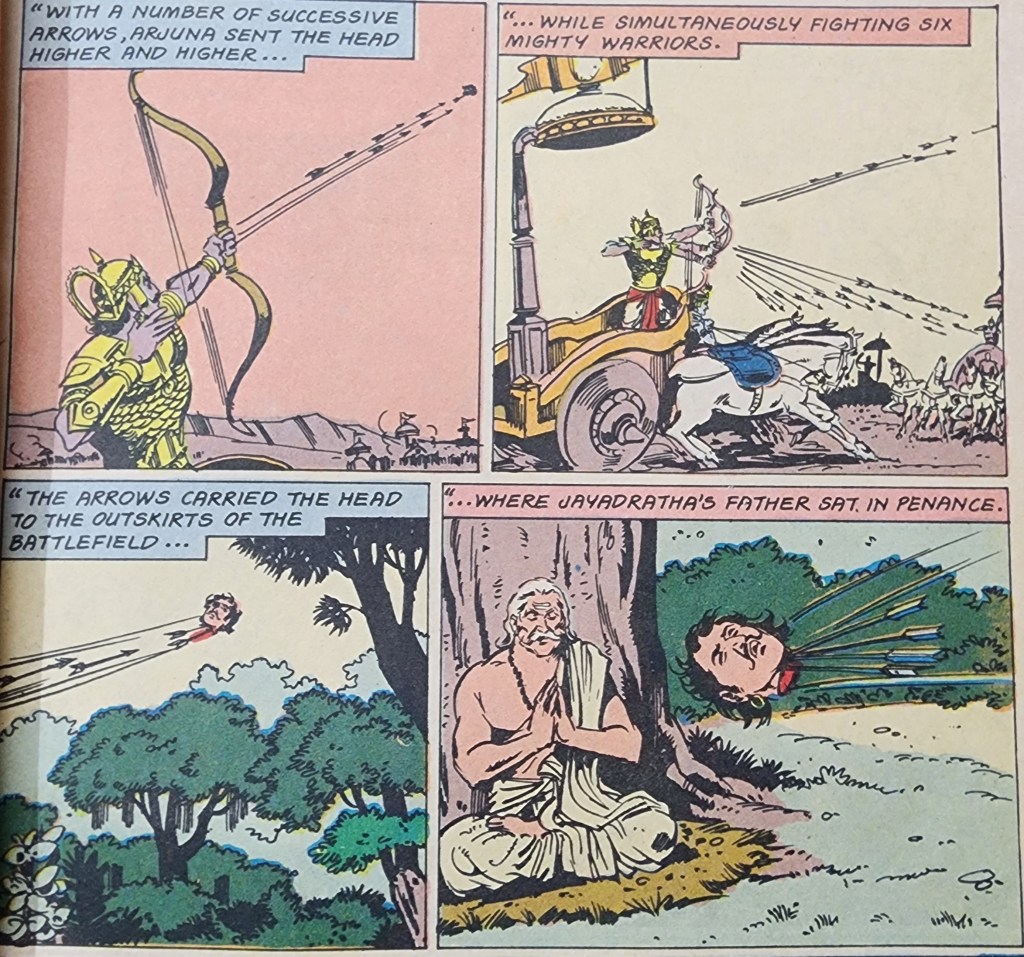
Arjuna ensures that Jayadratha’s head lands on the lap of his father, by keeping the head flying for a while. Image credit – “”Mahabharata 35 – Arjuna fulfills his vow”, published by Amar Chitra Katha.
One thing that loitering munitions and swarms of drones cannot destroy are assets and people protected in hardened shelters and buried in bunkers underground. To reach and destroy these assets, bunker buster bombs and missiles with penetrative tips are required. This again is not unlike developing arrows that can penetrate armour. Modern bunkers are like protective armour on steroids.
Armour penetration is the reason bodkin tipped arrows were developed, for normal broad heads could not penetrate many forms of armour used in the past. This was a problem that was confronted all through history. In medieval Indian history there is a popular example of the use of a javelin to great effect.
Amar Singh, the son of Maharana Pratap, hurled a javelin with such force that it went right through an armoured Sultan Khan and his horse! Sultan Khan was the leader of the Mughal forces during the battle of Dewair in 1582, which Maharana Pratap won and retook most of Mewar from the Mughals.
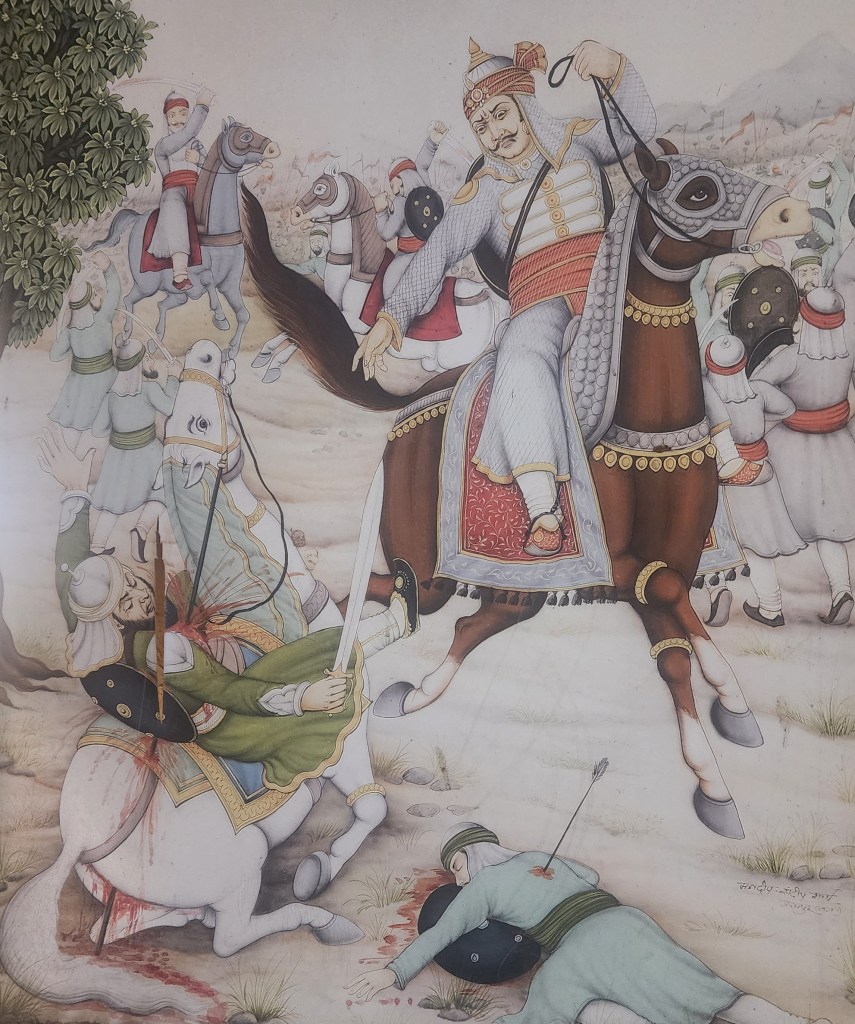
A painting depicting Sultan Khan being impaled by Amar Singh at the Battle of Dewair in 1582. Photo of the painting a the Pratap Vijay Memorial in Dewair, Rajasthan.
On the other hand, a drone swarm is like a rain of arrows. This was a technique used in history by many cultures. The English used massed archers to great effect against the French at the Battles of Crecy and Agincourt. Here, armoured knights were protected from the arrows, but their horses were not, and the volume of arrows caused severe problems in mobility on a sodden battlefield.
In Indian history, in 1192, during the 2nd Battle of Tarain, the armies of Prithviraj Chauhan could not contend with the “Parthian Shot” used by the cavalry of Mohammad of Ghor. The “Parthian Shot” is a circular formation used by Turkic armies to pepper enemy armies with arrows to prevent them from getting into close quarter combat.
The legionnaires of Rome used the turtle (testudo) formation to protect themselves from arrows of enemy archers as they closed the distance. The turtle formation involved soldiers building a protective enclosure for themselves using their own shields. So, a swarm of arrows or any projectile was always a known threat to armies and their assets. Modern armed forces use multiple innovations to protect themselves from modern rains of arrows, which are drone swarms.
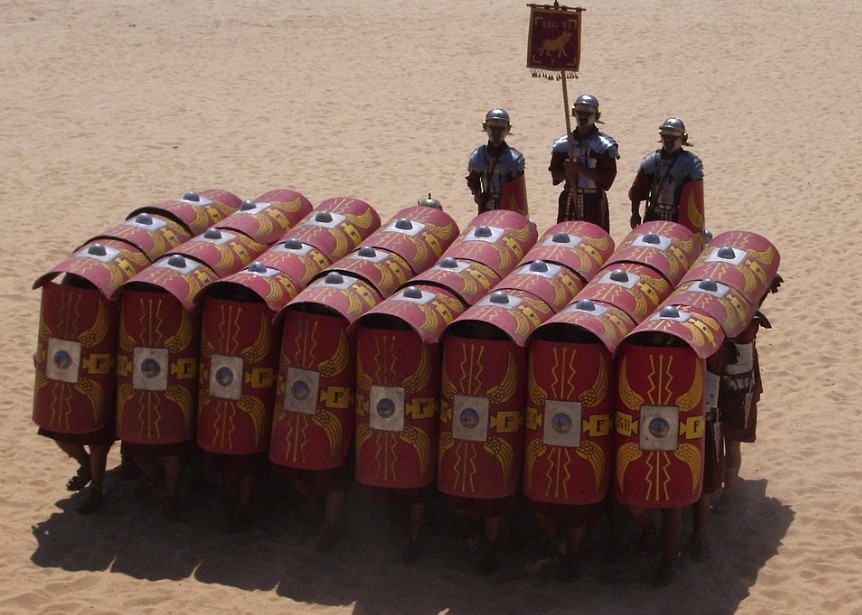
A reenactment of the Testudo formation. Image credit – Wikipedia.
Tanks have, since the Ukraine war started in early 2022, evolved to have “Cope Cages”. These are metal grills added on to the top of tanks. This innovation has come about because drones started attacking the top of tanks, where their armour is the weakest. This metal grill acts as a net to stop the drone or the ordinance it drops from impacting the tank directly.
Apart from this, defence against drones and drone swarms has evolved rapidly into many forms. There are the usual interceptor missiles. These days there are also lasers that take down drones and missiles as well. And then there are the soft kill options like jamming a drone or a swarm that knocks them all out of the sky. A fantastic example of jamming a drone swarm is by another drone!
The Raytheon Coyote Block 3 drone uses a High-Power Microwave emitter to jam drone swarms. It flies past a swarm and knocks them all to the ground! The short video linked below demonstrates the same. Interestingly one of the systems India will soon use against drone swarms is named after a person from Hindu tradition. The system is called the “Bhargavastra”.
This video shows the Raytheon Coyote Block 3 drone in action.
The Bhargavāstra is a celestial weapon deployed by Karna during the Kurukshetra War. It caused a lot of damage to the Pandava forces. It was a weapon created by Karna’s guru, Lord Parashurāma. Parashurāma is descended for Maharishi Bhrigu, which makes him a Bhārgava, hence the weapon he created was called the “Bhargavāstra”.
One of the multiple options that the modern Bhargavastra will use to take down drones is a set of “micro missiles”. These are supposedly missiles that will explode in close proximity to a drone swarm. This explosion will create a cloud/curtain of shrapnel perpendicular to the direction of flight of the missiles. The drone swarm will have to fly through this barrier of shrapnel, which will shred the drones! The micro missiles used here seem to use a proximity fuse which results in their exploding before close to the swarm.
The above video from the channel “Alpha Defense” describes the working of the Bhargavastra.
I must mention a pop-culture reference here, from the book and TV series, “The Expanse”. In the series, large spaceships fight each other. All of these ships possess several “Point Defence Cannons” (PDCs). These are gatling guns that fire tungsten bullets to take down incoming missiles. Most of these rounds do not strike any target and keep flying through space without slowing down, as there is no friction in the vast emptiness.
In book 6 of the series, “Babylon’s Ashes”, the main character Naomi Nagata carries out a fantastic maneuver. She fires off lots of PDC rounds into space. Then she makes an enemy ship fly into the swarm of tungsten bullets by some interesting tactics! It is fantastic to read this sequence. This entire solution seems very reminiscent of what the Bhargavastra will do to drone swarms.
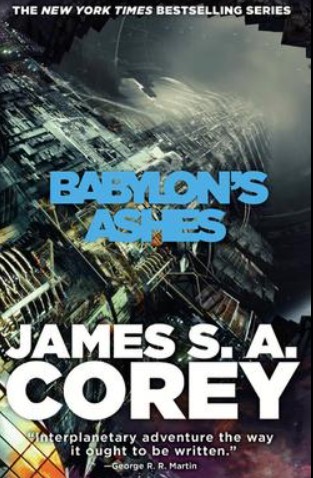
The cover of Book 6 of The Expanse novel series, titled “Babylon’s Ashes”. Image credit – Wikipedia.
Considering that drones are preferred these days due to their low cost and low technological input, there seems to be another parallel from history for this. Drones can affect all manner of assets and human lives, and can be manufactured in very large numbers by organizations that do not have large quantities of resources like money, manpower and technology. This makes them the weapon of choice in all manner of modern conflicts including asymmetric ones.
During the 2nd and 3rd centuries CE, the Chinese developed the repeating crossbow. This weapon was smaller and had a shorter ranger than conventional crossbows. But they made up for this deficiency with a larger rate of fire. A large number of small bolts could be fired even by a soldier without too much training. This weapon was supposedly used to defend specific points like gateways and ships. This is like a modern-day machine gun perhaps, but with arrows/bolts instead of bullets. These days drones are becoming bullets, with a focus on low cost, low manufacturing time and a requirement in very large numbers.
The one thing that has remained constant is the development of technology over many millennia. This continuous development has literally made the concepts in stories from Hindu culture come alive in current times. Projectile weapons went from sharpened sticks to sticks with flint points. The atlatl was invented to increase the range of the javelin.
The invention of bows and arrows increased range further. Archery technology never ceased to stop improving, from optimized wood to composite bows (which needs the right glue, right sinew etc.) to variation is arrowheads and fletching. Even channels (called nalika in India) to shoot arrows that shorter than the draw length of a bow were developed!
The above video is a fantastic exploration of historical Indian archery, from the channel “Sangam Talks”. The “nalika” is seen between the 31 and 32 minute mark.
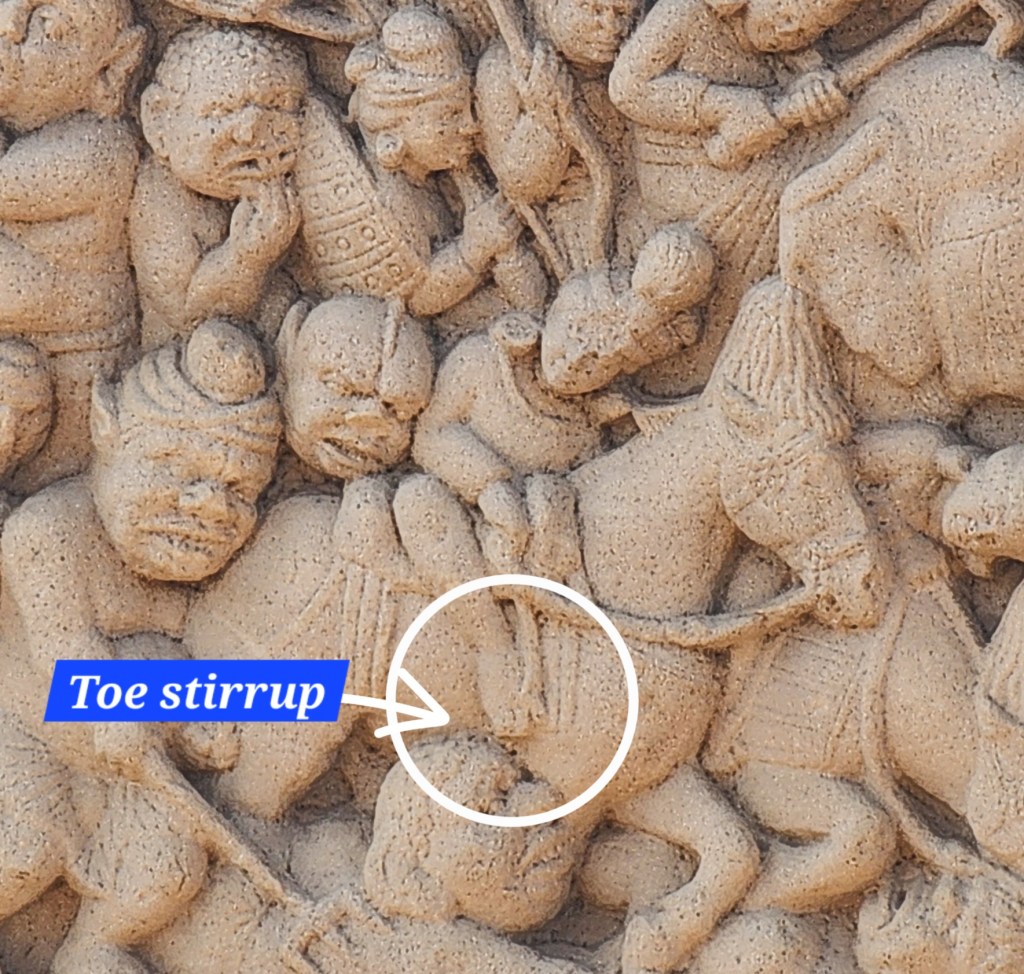
With the domestication of horses came chariots and these, over time, gave way to just cavalry, with the invention of the saddle and stirrup. Cavalry stayed a constant in warfare until the First World War! Projectiles became musket balls and then bullets and now we are back to the age of projectiles, just scaled up from the past exponentially!
The range and precision of the new missiles have been made possible by an increase in intelligence and communication technology! Network centric warfare and an ability of countries with low earth observing satellites added to electronic and human intelligence have made every missile as deadly as the Divyāstras from the tales!
The aircraft or launcher that fires the missile no longer needs to be guided from the point of launch. Other radars and satellites can guide them along to targets that move constantly! And drones can return to base to be reused if the target is not available! This is exactly like withdrawing an astra for later use! Like Arjuna did and Ashwatthama did not, at the very end of the Kurukshetra war!
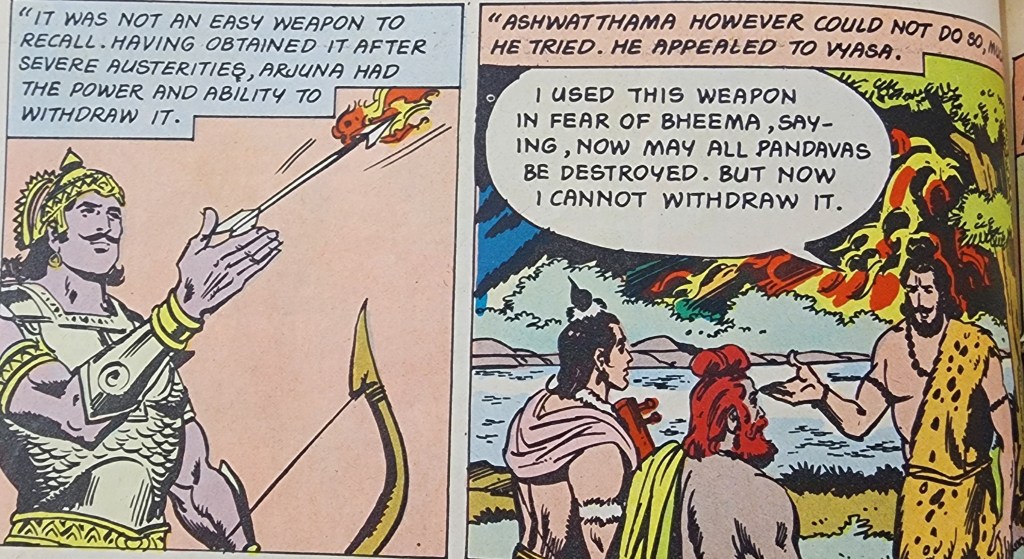
Arjuna can withdraw the weapon, but not Ashwatthama. Image credit – “Mahabharata 39 – After the war”, published by Amar Chitra Katha.
The ability to know everything that is happening on any given battlefield even allows today’s battle management systems which are laced with AI, to match the ideal weapon for a given target! This level of knowledge is reminiscent of Sanjay’s Divyadrishti during the Kurukshetra War! He could see and hear everything that happened on all parts of the battlefield while being far away, thanks of course to divine abilities. This ability lasted him only for the duration of the war and for purposes of narrating the happenings to Dhritarashtra, not to actually fight.
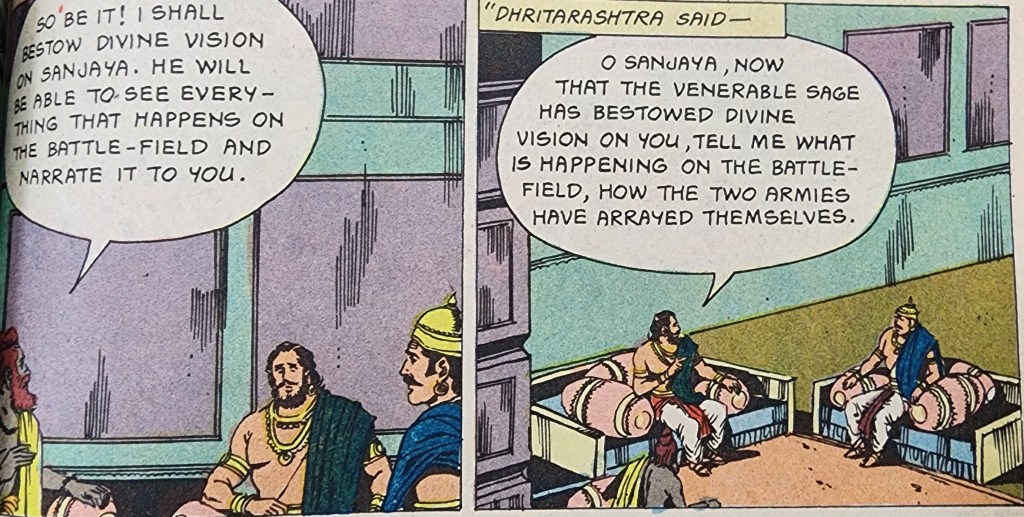
Sanjaya can see and hear everything happening far away, thanks to his temporary “Divyadrishti”! Image credit – “Mahabharata 30 – The War Begins”, published by Amar Chitra Katha.
In conclusion, we seem to have truly entered the age of Divyāstras! The celestial weapons and abilities described in the Mahabharata, Ramayana and other stories might be fictional, but certainly suggest that these weapons and abilities were aspirational for humans since times immemorial. We have always wanted to achieve the destruction these weapons are said to be capable of. And now, with human ingenuity, and centuries of technological development, these aspirations of destruction have become real.















 Mundane Budo