Maryāda Purushotham Rama and the Martial Arts – Control is the key

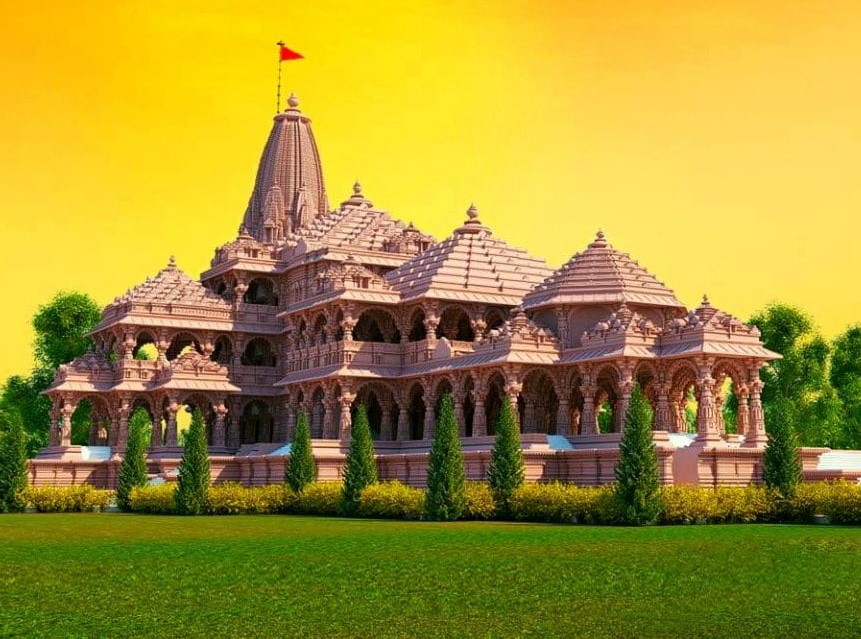
Above is a representational of the Ram temple at Ayodhya. Art created by Adarsh Jadhav.

The Prāna Pratishta (consecration) of the new Rama Mandir at Ayodhya will happen on 22nd January, 2023. This is 4 days from now, on the coming Monday. As everyone in India and anybody who is interested in India knows, this event is extremely important for a very large number of Indians. The importance is magnified for Hindus, whether or not they are devout. The importance is spiritual, social, cultural, religious, historical and most definitely, political. And for this reason, the very presence of this devālaya (mandir/temple) has its opponents, both in India and abroad. But whether they are celebrating this event or are disheartened by it, no one can ignore it or write down its significance for Modern India, or Bharat.

Lord Rama is one of the most revered Gods for Hindus. In my opinion, Rama’s character is of key significance to practitioners of the martial arts, especially the Bujinkan system of martial arts. This is revealed by one of the adjectives used for Lord Rama. Lord Rama is very often called “Maryāda Purushotham Rama”. The words “Maryāda Purushotham” are an adjective. But as far as I know, they are used ONLY for Lord Rama. Hence, they are almost an alternative name for Rama. In India if you say “Maryāda Purushotham”, no one will have any doubt regarding who you are referring to. This name/adjective of Lord Rama is where his significance for the martial arts stems from. This of course is my opinion. People are free to disagree or have other ideas.

The word “Purushotham” is formed by the sandhi (combination) of the words “Purusha” and “Uttama”. “Purusha” is “man” and Uttama is “the best”. Uttama can also be referred to as “the highest level”. Purusha is not necessarily only “man”, as in the male gender. It can also be “human”. There is another word, “Purushārtha”. This is formed by the words “Purusha” and “Artha”. The four “Purushārtha” are “Dharma”, “Artha”, “Kāma” and “Moksha”**. These are the aspects a human being pursues over the course of a lifetime. These are true for all humans, irrespective of whether they are male or female. Of course, these days, it can include any other gender one chooses to consider. Hence, “Purushothama” when used in reference to Lord Rama, means “the best human”, or “a human of the highest level/order”.

The word “Maryāda” has multiple meanings based on the context of its usage. “Maryada” is the pronunciation in Hindi. In Kannada, we say, “Maryāde”. Maryāda can mean honour or respect. In Kannada, we say, “Avarige maryāde kodu/torisu”. This means, “Show/give them respect”. We also say in Kannada, “Avaru maryādastharu”. This means “They are honourable or respected/respectable people”. So, in this context, “Maryāde” can mean honour or respect. It is generally used when referring to decent, good folk, based on one’s opinion. There is however, another meaning for the word “Maryāda”, which is more relevant to this article.

During the late 80s or early 90s, I remember hearing the following dialogue in a Hindi film; “Apni Maryāda mein raho”. Of course, it could have been “Apni Maryāda mat bhoolo” or something similar, I do not recall exactly. I suspect it was from one of the family-oriented films with actor Kader Khan in the cast, maybe “Ghar ho to aisa” or “Biwi ho to aisi”. I could be wrong, but my brain associated this dialogue with either one of these films or with a film of this genre. These were films that preached how the roles and behaviours of people in model Indian families should be.

This dialogue threw my original definition of “Maryāda” off kilter. The dialogue “Apni Maryāda mein raho” or “Apni Maryāda mat bholo” was used in a heated exchange between two characters, typically one espousing traditional values (an older individual) and another yearning for change due to the suffocation of traditions (obviously a younger individual). It was very clear while watching these movies, that these dialogues meant “Stay within your limits” or “Don’t forget your limits” respectively. So, how could “maryāda” mean “Stay within your respect/honour” or “Don’t forget your respect/honour” in the context being presented? 😀 It made no sense.

It was later that I realized that the word “Maryāda” also meant “Limit”. Apparently, this was the original meaning of the word! It was overtime also used to denote “Respect/Honour”. When maryāda can be used to be mean “limit”, it could also be to denote “boundaries, as used when we say, “do not cross boundaries”.

I suspect this could be because one deserves respect for knowing one’s limits or more appropriately not overstepping one’s limits. Of course, the limits are usually defined by social or age-based constraints. And because one has learnt to limit oneself, perhaps by being content with one’s lot, one deserves respect. So, by setting limits for oneself and following the same diligently, one earns respect. So, the same word came to be used for the two. This purely my speculation and I could be wrong about this.

So, when I was younger, when I heard “Maryāda Purushotham Rama”, I used to think “Rama, the most respected and best among humans”. But I have realized that this means “Rama, the best person who limits oneself”. It could also be, “Rama, the best person, who stays within his own boundaries”. It is as I understand it, “Rama limits himself and hence he is the greatest or first among humans”. This makes sense. Every aspect of the life Rama led can be considered exemplary. He strove to live up to his responsibilities, always keep his word and most importantly remembered that all the rules and laws that applied to his people also applied to himself. This last aspect was of paramount importance.

Rama was a king and hence above everyone else, at least in his own kingdom. So, he could have had a different set of rules for himself or exemptions to the same when compared with those for the citizenry. But he never allowed this. Further, and even more importantly, Rama was an avatāra of Lord Vishnu. This made him a God walking among mortals. So, he could have held himself above everyone else on Earth, even beyond his own kingdom. But he never let his Godliness or divine attributes show. He never used this to any advantage in the course of his life. So, Lord Rama restrained himself from using either his privileges as a king or his powers as a God to his benefit. He lived like any other mortal, going through all the trials and tribulations, if not more.

Thus, Rama LIMITED himself. He set limits on himself; from ever using his powers as king or God, except for the welfare of other people. He never succumbed to arrogance or pride. His self-imposed limits not only prevented his using his powers and abilities to his own advantage over his fellow humans, but also limited him from ever giving into extreme emotions, barring a few rare instances. Even these instances exemplify his being mortal and limiting his own abilities as either God or king. So, he is indeed the very personification of a person who has limited his own excessive use of abilities, because he decided that they would not suit the world he lived in. It was not the purpose of the avatāra either. Hence, Lord Rama is absolutely the one and only “Maryāda Purushotham”!

Above is a photo of Lord Rama from our pooja room. As far as I know, it is a framed copy of an original by Raja Ravi Verma. Many homes have this photo in their respective pooja rooms.

Rama was a God and had all the powers that earlier avatāras like Varāha, Narasimha, Vāmana or Parashurama or the later avatāra of Krishna wielded. But he did not resort to these abilities. How did Lord Rama achieve this? I opine that the answer is “Control”, and more specifically, “Self-Control”. Rama could control his emotions and his abilities. Since he could control his abilities, he could limit his use of the same. Similarly, since he could control his emotions, he could prevent extreme emotional situations that would result in his unleashing his powers. So, it was CONTROL through and through. Through SELF-CONTROL he remained just an ordinary human in his acts and this in turn led him to be able to perform extraordinary acts, demonstrating that he could also CONTROL solutions to issues facing him and those around him, at all times.

Rama lived in the forest, united a divided Vānara kingdom, gained the trust and support of Vānaras in looking for his wife Sita and later in attacking he powerful Asura Rāvana. He achieved the defeat of Rāvana, gained the support of Rāvana’a brother, caused no damage beyond necessary and eventually regained his throne. He suffered quite a bit after this as well. He was separated from his wife, never saw his twin sons in their early childhood and eventually when his children came back into his life, he lost his wife forever. So, his was a life of great achievements accompanied by extraordinary tragedy. Despite it all, he was successful in all his endeavours and remained a mere mortal. This is why he is perhaps the paragon of SELF-CONTROL and being able to find solutions to varied problems, however unsuitable they may be. This is being in CONTROL of the situation and given environments as best as a human can! It is this virtue of “CONTROL” and “SELF-CONTROL” that relates the example of Lord Rama to the Martial Arts.

Sensei Hatsumi Masaaki, the Soke of the Bujinkan focused on Muto Dori since around 2014-15 all the way till the global disruption in 2020. Muto Dori is defined with many variations by many senior practitioners. It is also interpreted with quite a few variations based on what the focus is on, in any given training session. But a common thread is that one should focus on oneself and have control of one’s own motivations and emotions in a combat situation, even while training in class.

The objective was that one should train like one is unarmed even when the opponent is armed. This is even if one has access to weapons. There could also be situations where there are multiple opponents. This is not to say that this training ensures survival in a real situation. But it demonstrates that one has no control over the initial actions of opponents, only on oneself. So, the focus is to control oneself in the best possible manner. This control hopefully allows one a modicum of control over the fight, which will allow one to survive the situation. The control over the conflict situation will vary over time as the opponent(s) are also continuously adapting.

This focus on control is exemplified by a statement that is made by my teacher every now and then, “focus on your breathing”. This statement is used to help a practitioner begin the process of self-control. One is encouraged to actively focus on, and think, of her or his breathing while in a fight, during training. This takes the mind off the other things in a fight. These include, what the opponent might do, what one can do to the opponent, what one’s objective in the fight is, how one wants it to end, what technique is working or not, worry about whether what one is doing is correct or effective, and the like. All of this is mitigated by turning inward. Hopefully, once this happens, the practitioner only moves to survive and makes the opponent do all the work.

In such a situation, if the opponent is not focusing on self-control, hopefully an opening or opportunity will present itself in due course. This opportunity can be used to end the fight. If the opponent is also exercising great self-control, the fight might just end as both (or more) are only trying to survive and not looking to fight at all. Thus, the situation is controlled either way.

A mentor of my teacher’s suggests that control is a vital aspect of the Bujinkan. He is a very large and strong individual (think WWE wrestler large) with several years of experience. He is someone who can use his strength and size to overcome most opponents. But he chooses not to, and this is enabled by his training and the skills developed to achieve control in a physical combat situation. He further emphasizes that this is NOT LIMITED to a physical fight, but to all aspects of life.

The objective is to achieve control of the situation, there need be no doubt regarding that. Control of the SELF is the starting point of the same. The result of this control is, favourable outcomes in every step and stage of life (what is needed but not what is desired). Control of the self leads to control of the situation and control of the situation has consequences which needs control of the self again. It is cyclical or maybe a spiral.

A student of a friend recently trained in Japan with this mentor. I am sharing the statement this student used to share his learning. It was a quote which I am repeating here. It is something Soke Hatsumi apparently mentioned in the past. It goes, “Nothing is supposed to work for you, the goal is control”. This statement encapsulates the importance of control. Control the self, control the situation, control everything.

I had written an article late in December 2022, describing the “Ashta Siddhi” or eight achievements mentioned in Hindu tradition. One of the last and highest of these Siddhi is “Vashitva”. This can be considered to be hypnosis. But in a more mundane situation, I consider this as “control of a situation” when performed by a highly experienced martial artist or maybe a warrior in a real fight. A link to this article is seen in the notes below*. Do refer this article for more exploration of control and its nuances.

When we say self-control, this is not a new idea. In the Arthashāstra by Kautilya (Chanakya), there is sutra which describes the root of happiness/a good life. It consists of four lines. These are seen below. The actual Sanskrit lines along with what they mean, as I understand them, are mentioned. Other cultures might have similar ideas. I am not aware of specific examples. If anyone any, please do share the same.

Sukhasya moolam dharmahaThe root of happiness/a good life is Dharma (the right actions/sustainable actions)

Dharmasya moolam arthahaThe root of Dharma is wealth/good economic condition

Arthasya moolam rājyamThe root of wealth/good economic condition is the State (well governed State)

Rājyasya moolam indriyānam vijayahaThe root of the well governed State are leaders who have conquered (have control over) their senses

Motivations and desires and emotional responses are triggered by the senses. Controlling one’s senses is what we call self-control. It is expected that a ruler or leader or administrator is one who has achieved the same. If and only if this has been achieved can a leader be expected to be able to control all the situations that affect a State. And this control of the situation is where good administration originates. It is thus the same thing as taught in the Bujinkan, even if the latter is more focused on the individual and not on the State or rulers/administrators of the same.

The path is the same; control the self, control the situation. Do this all the time to control every situation, end up with control over everything. This is the objective, not a guarantee. This brings us full circle to Lord Rama. Maryāda is “to limit/limit”, but “Control” is the key. There can be no Maryāda without control. And thus, with control our civilization got Purushothama! And “Control” is what we still strive to achieve.

JAI SHREE RAM!

Above is a photo of an interpretation of Rama by artist Varun Ram, made in 2008. I bought a copy of this artwork in the Bangalore Comic Con 2012 (the first one in Bangalore). It is not a traditional representation of Rama, but one that I greatly appreciate.

Notes:

* https://mundanebudo.com/2022/12/22/the-ashta-siddhi-and-budo/

** “Dharma”, “Artha”, “Kāma” and “Moksha” – “Right actions”, “Wealth”, “Desires”, “Liberation”

The “Mahabharata” to the “Sakki Test” to “The Wheel of Time” – Endure deep trouble to unlock great ability

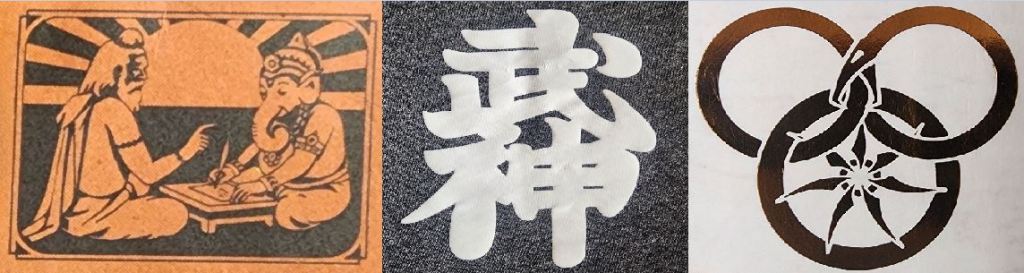
Credits for the images – (L) Many issues of Mahabharata published by Amar Chitra Katha, (C) Logo of the Bujinkan, (R) Symbol of “The Wheel of Time” written by Robert Jordan (Orbit Books), sold by Hachette India

I recently watched the second season of the web series “The Wheel of Time” on Amazon Prime. The second season is a massive improvement over the first and brought back some of the thrill and joy of the books, even though the stories are changed a lot in the series. Growing up, the books of “The Wheel of Time” series, by author Robert Jordan were one of my favourite reads. Robert Jordan is the pen name of James Oliver Rigney Jr. The author passed away before he could complete the massive series. Author Brandon Sanderson, with notes from the author and help from Jordan’s wife Harriet Mcdougal and his team completed the story with aplomb! The series ended in 2013 with 14 large books.

I loved the action sequences in the books, especially the ones with swords. There is also a lot of magic use in the action sequences. Initially, all the magic users are women who belong to an order called the Aes Sedai. As the series progresses, men start using magic too. The women of the Aes Sedai order, who I will refer to as Aes Sedai going forward, just like in the books, have one unique trait. The Aes Sedai swear three oaths that regulate, and limit, their abilities with the magic they use. These oaths are magically enforced and cannot be broken, on pain of death. So, once sworn, the oaths can never be broken. Loopholes are discovered as the series progresses, considering the disadvantages of the oaths, but that is not relevant for the purposes of this article. Most Aes Sedai stick to the oaths even at the end of the series.

One of oaths that is sworn is that the Aes Sedai will never use magic as a weapon, except in self-protection. Aes Sedai are not immune to stealth attacks and ranged weapons. So, most of them have one or more bodyguards called “Warders” to protect them from non-magical attacks. The oath allows them to use magic to protect themselves and their warders, even if it means using the magic as a weapon. I understand this as, the intention behind the use of magic as the key. If it is in self-protection, magic can be used as a weapon. If the use of magic is purely for offensive purposes, an Aes Sedai is prevented from doing the same by the oath.

The Aes Sedai swear this and the other two oaths to mitigate the lack of trust the normal/non-magical populace has towards their order. One consequence of this oath is that in any situation where the Aes Sedai has to protect anyone other than herself or her warder, she has to first actively put herself in danger to trigger the exception to the oath. There are several “forces of darkness” in the series of 14 novels, which can be defeated only by, or safely, only with the help of, or exclusively, with the use of magic.

Consider the following situation. An Aes Sedai is part of a troop of warriors fighting against the forces of darkness. An Aes Sedai has to protect civilians from the forces of darkness. An Aes Sedai is protecting civilians from mundane threats like bandits, highway men, enemy soldiers, mercenaries and the like. In all these situations, the Aes Sedai can only use magic to protect the civilians or soldiers IF AND ONLY IF she is also facing the same threat as they are, and her own life is in danger. In this case she can use magic as a weapon against the attackers, either human or the forces of darkness. If she is not in imminent danger and wants to protect other people, she cannot use magic as a weapon against the attackers. She can only use magic as a shield to protect the people. Alternatively, she can destroy the weapons used by the attackers to the extent possible.

The above limitation on MAGIC AS A WEAPON is also seen in Hindu culture. It is seen for the same reason. To prevent the misuse of the magic weapon and making the wielder of the magic weapon a tyrant, a consequence is always enforced against the user, in case of a blatant misuse of the weapon/magic. Also, the way around this misuse seems to be to actively put oneself in harm’s way. This need to protect oneself is usually the criterion that allows the use of the magic weapon.

This article is about exploring this idea. Of how putting oneself through a really tough time (if not active danger) allows the following.

  • Use magical weapons in the tales.
  • Human abilities that are not easy to measure or even to teach (ones that our logical minds sometimes might refuse to accept even if we instinctively know they exist, due to the lack of sufficient scientific explanation).

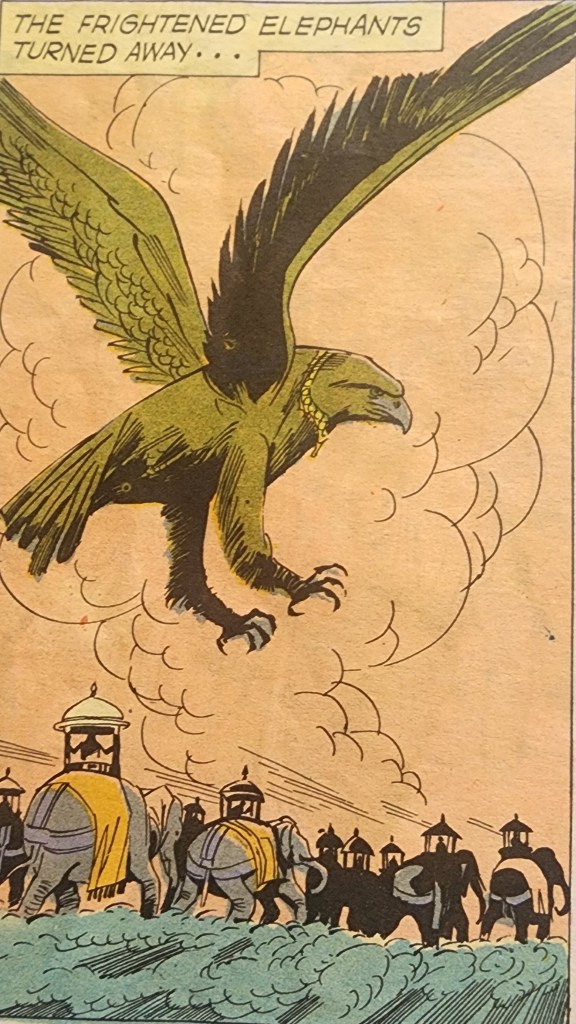
In the Mahabarata, during the 12 years when the Pandavās were living in the forest after losing the game of dice, Arjuna went on a quest to acquire celestial weapons. Celestial weapons are either weapons used by the Gods or weapons into which the powers of the Gods can be imbued. These are weapons with extraordinary powers and destructive capabilities. The destruction they cause in the ranks of any enemy is many magnitudes greater than those of mundane human weapons. The magic the Aes Sedai use, in the quanta of destruction, are similar to the celestial nature of these weapons in the Mahabharata and other Hindu scriptures.

The path to acquiring celestial weaponry is very hard. One has to perform specific activities and austerities, which might include meditative penance. These actions demonstrate to the God who can grant the use of the weapon that the potential wielder possesses the physical, emotional and moral capabilities to gain the use of the same. There might be instances when the wielder is only granted a “one time” use of the weapon, like in the case of Karna, who could use Indra’s Shakti (Indrāstra) only once. It could also be that one is not really desirous of a celestial/divine weapon, but due to the character of the person and the actions he or she performs, is granted the use of a celestial weapon as a boon (vara).

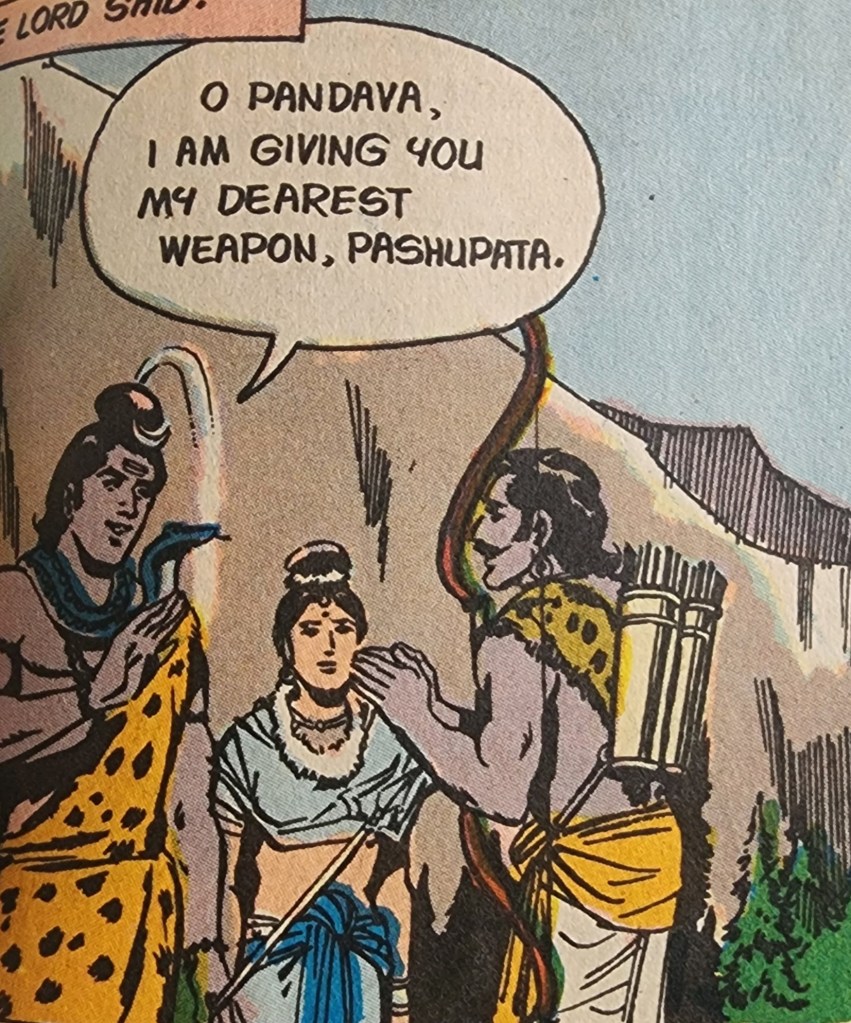
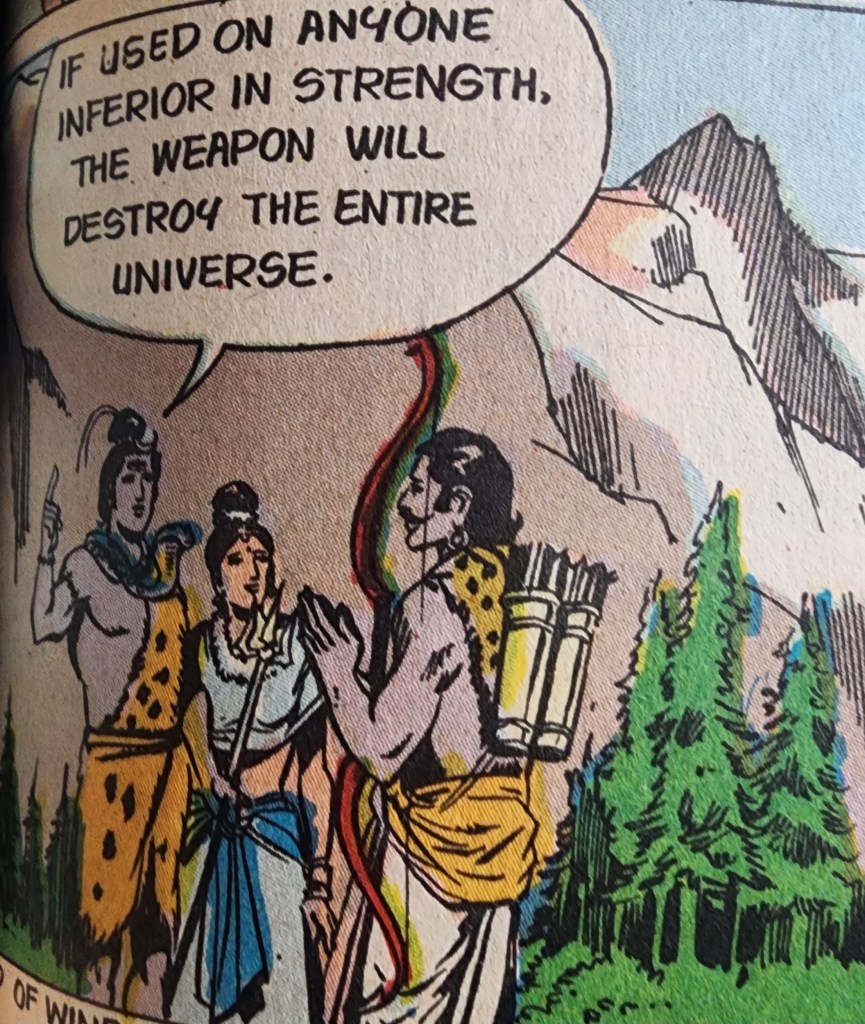
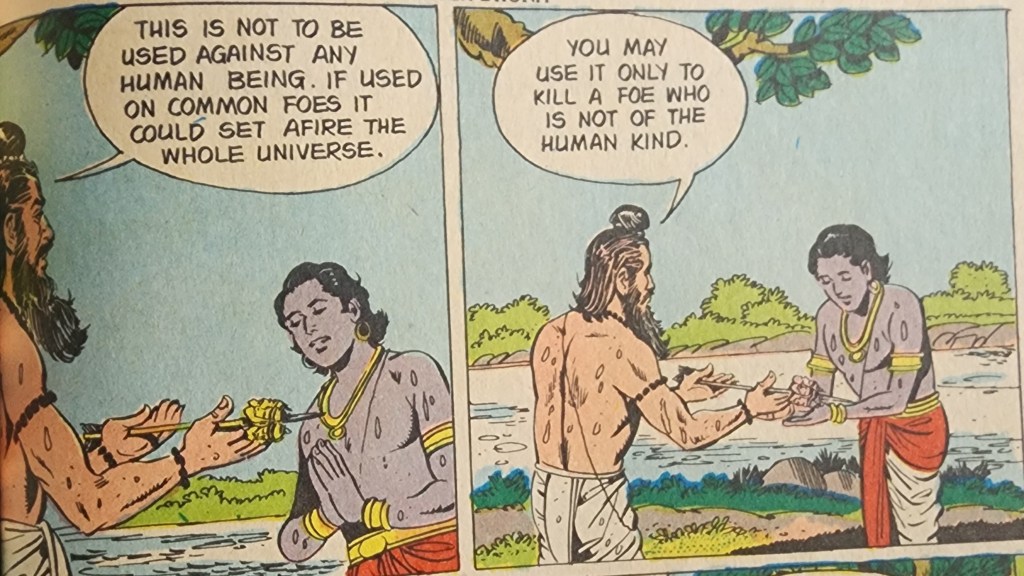
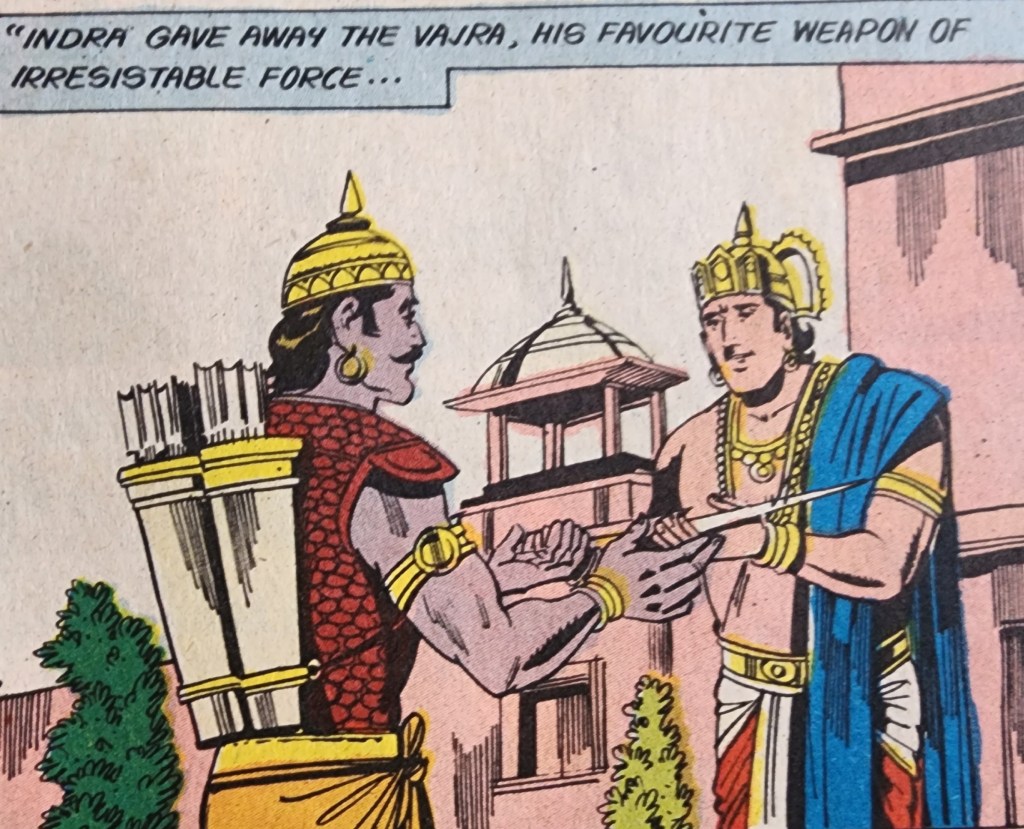
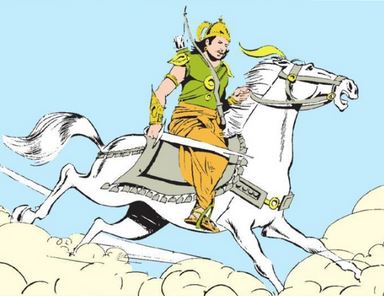
Arjuna can be used as an example of both the ways of acquiring the divine weaponry. Arjuna gained the use of the Pāshupatāstra by impressing Lord Shiva with this meditation and martial prowess (he had to fight Lord Shiva in the form of a Kirāta/hunter). He also gained the use of Indra’s Vajra through penance and meditation, after he proved his abilities by impressing Lord Shiva. This episode happened during the Vanavāsa of the Pandavas. But much earlier in his life Arjuna had gained the Brahmashiras from his guru, Drona. Arjuna had impressed Drona by being his best student. Towards the end of their education, Arjuna saved Drona from a crocodile. This act, along with the character he had demonstrated as a student, impressed Drona enough to make him give the Brahmashiras missile to Arjuna. The Brahmashiras is more powerful compared to the Brahmāstra. It is Brahmāstra to the power of 4, as far as I know.

Image credit – L & R, “Arjuna’s Quest for Weapons, Mahabharata – 20”, published by Amar Chitra Katha

Arjuna gained the use of several other divine weapons. But consider the three divine weapons mentioned above. They are all incredibly destructive. Indra’s Vajra is a great weapon, but pales in comparison against the Pāshupatāstra and the Brahmashiras. These two weapons are what we would call weapons of mass destruction in today’s parlance. Either of those, according to the tales, could end all of creation if misused. This leads to the crux of using these weapons.

Image credit – “Enter Drona, Mahabharata – 5”, published by Amar Chitra Katha

Image credit – “Enter Drona, Mahabharata – 5”, published by Amar Chitra Katha

Drona, when he granted the Brahmashiras to Arjuna told him that it was never to be used against normal foes. It was to be used only against non-human foes, essentially when under great duress. Similarly, when Lord Shiva granted the use of the Pāshupatāstra to Arjuna, he was told to remember to never use it against a foe that was inferior. In both cases, a violation of this rule meant that all of creation could be destroyed by the weapon.

Image credit – “Arjuna in Indraloka, Mahabharata – 21”, published by Amar Chitra Katha

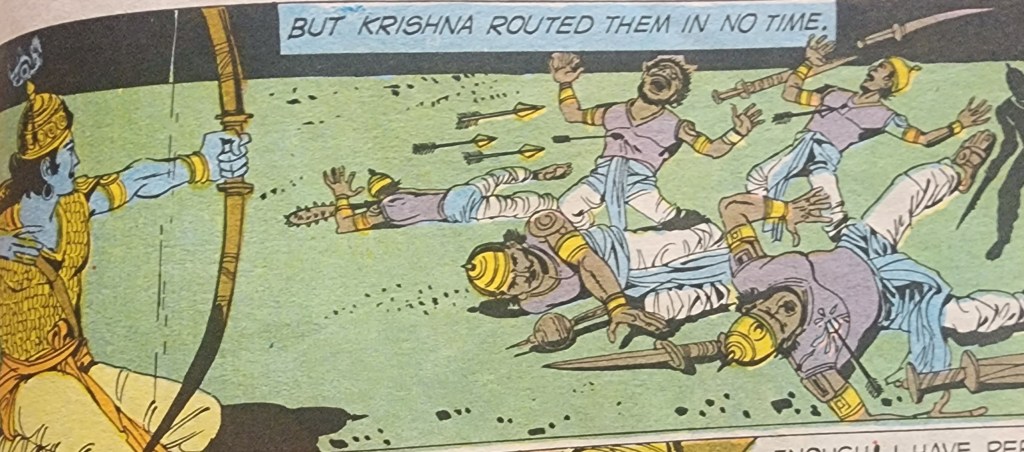
Arjuna had to single-handedly defeat the Nivātakavachas and Kālakeyas as a fee in return for the knowledge of the use of the several divine weapons. The Nivātakavachas and Kālakeyas were Dānava enemies of the Devas. They were protected by a boon due to which the Devas could not defeat them*. Only a mortal could defeat them as they were not protected against the same by the boon. Usually, many Dānavās did not claim protection against mortals when they requested boons as they were considered inferior and not a real threat. But they were vulnerable against mortals who were armed with the weapons the Devas could wield. This was the loophole in the boon that was being exploited here.

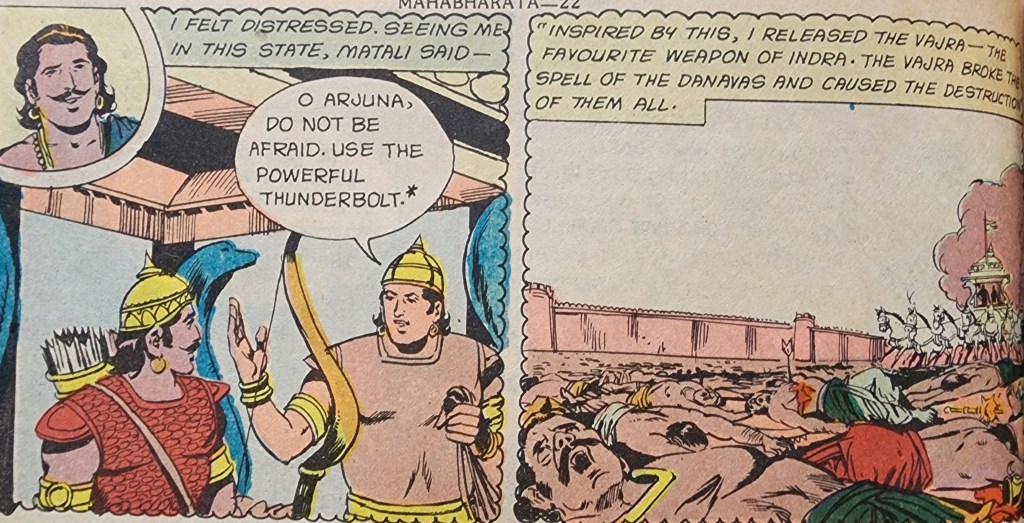
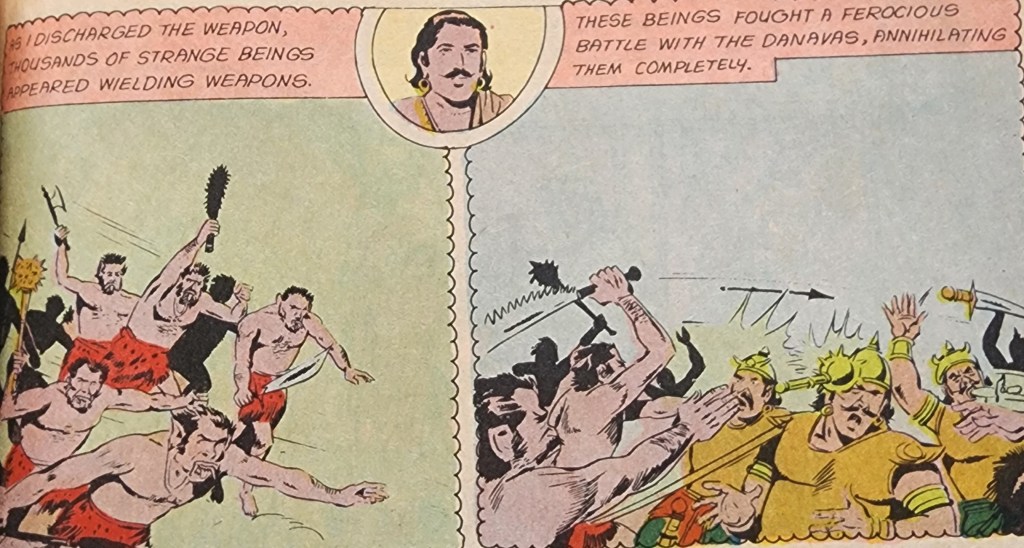
So, Arjuna set out to fight them. The Nivātakavachas were extremely powerful, and Arjuna was fighting alone. He only had Mātali as his charioteer during this fight. Mātali was Indra’s charioteer and Arjuna had been granted the use of Indra’s chariot. By now Arjuna had access to Indra’s Vajra. The Vajra was so incredibly powerful that he did not consider using it while fighting the Nivātakavachas. This was despite his being alone and vastly outnumbered. Mātali had to be remind him to use the Vajra at this time. Once reminded, Arjuna deployed the Vajra and vast numbers of the Nivātakavachas were destroyed. This episode demonstrates how Arjuna instinctively knew not to resort to a divine weapon in a cavalier manner, even when the odds were heavily against him. This ingrained training in Arjuna was so strong that he needed a reminder to use a divine weapon.

Image credit – “The Reunion, Mahabharata – 22”, published by Amar Chitra Katha

Once the Nivātakavachas were defeated, Arjuna set out to defeat the Kālakeyas. They had the ability to carry out aerial attacks as well. Again, Arjuna was alone except for Mātali, facing off against multitudes. The opposition was so incredible that Arjuna thought it safe to deploy the Pāshupatāstra. The deployment of Shiva’s weapon destroyed the Kālakeyas. This is the only use of the Pāshupatāstra that I am aware of. I have seen some say that the Pāshupatāstra was used when Arjuna slew Jayadhrata on the 14th day of the Kurukshetra war. But I am not sure of this and hence am not using this as an example here.

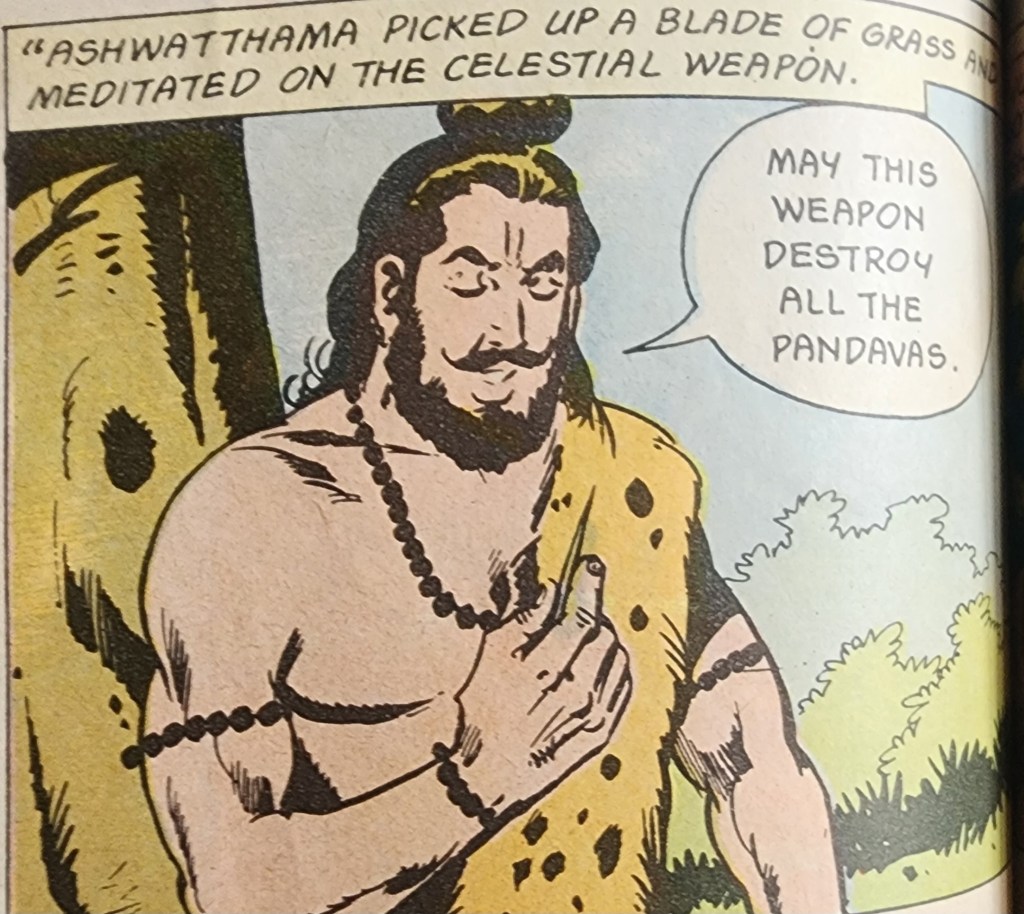
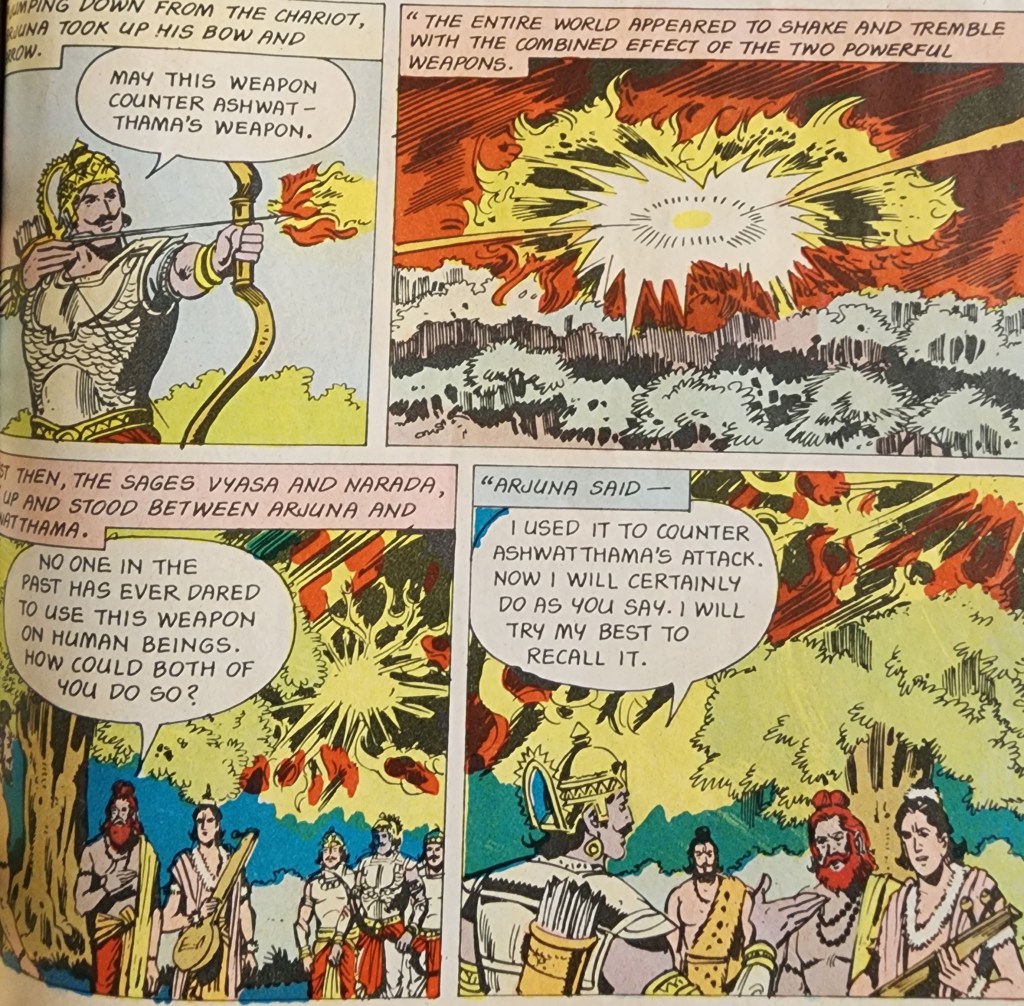
The Brahmashiras was a weapon that was also in the possession of Ashwatthāma, the son of Drona. Arjuna and Ashwatthāma fought on opposite sides in the great war of Kurukshetra. After the Kauravas, the side Ashwatthāma was on, had been defeated, he killed the remaining forces of the Pandavas at night while they were asleep. This enraged the Pandavas and Bheema went to attack Ashwatthāma. Krishna followed Bheema with Arjuna and Yudishtira realizing that Ashwatthāma might deploy the Brahmashiras despite the warnings against using this weapon against humans. As expected Ashwatthāma used the weapon and Arjuna deployed the same weapon to counter it. Eventually Maharishi Vyasa intervened, and Arjuna withdrew his weapon. Ashwatthāma did not know how to withdraw the weapon and caused misery in the future. For this crime he was cursed and forced to endure the consequences. This is the only time the Brahmashiras was used.

Image credit – L & R, “After the War, Mahabharata – 39”, published by Amar Chitra Katha

Consider the conditions under which the three celestial weapons under consideration were used. The Vajra was used when Arjuna was severely outnumbered and under relentless attack. The Pāshupatāstra was used under the exact same circumstances as earlier to which was added aerial attacks by superior foes. Lastly, the Brahmashiras was wrongly deployed against humans by Ashwatthāma. Arjuna deployed the same only to counter a misuse of the weapon. In all of these cases, the divine weapon was used when one’s life or all of creation was in imminent danger, against odds that were insurmountable. The celestial weapon was, for all practical purposes, the factor that balanced the situation and saved the life of user. The Aes Sedai putting themselves in danger to be able to use magic as a weapon, in my opinion, is the same as the conditions imposed on the use of certain celestial weapons in stories from Hindu culture.

Image credit – L & R, “The Reunion, Mahabharata – 22”, published by Amar Chitra Katha

The above examples are all from stories, either modern fantasy literature or from Hindu culture. So, is the act of putting oneself in danger or at least through the ringer useful in modern life? Is there anything good that comes out of putting ourselves though extreme training and fatigue? Can some ability of ours become clear or be unlocked by this kind of activity? I would opine that the answer is a yes.

To be clear, I am not saying that one’s life has to be in danger or even that the potential of physical injury or disability has to be exist. It is just that we do some activity, mainly physical, to exhaust ourselves to a great extent. This opens up a new vista for ourselves; this is what I mean. I will share one aspect, partially based on personal experience to suggest that this is possible even in modern day life.

In a previous article of mine I have described the Sakki test**. This is the test taken to achieve the 5th Dan in the Bujinkan system of martial arts. The link to this article is seen in the notes below. In brief, it requires the person taking the test to sit in Vajrāsana. A Shihān with a 15th Dan is standing behind the person taking the test. Both have their eyes closed. The 15th Dan strikes the head of the person in Vajrāsana with a padded sword (or stick). The person taking the test is expected to move out of the way of the strike by intuitively knowing when the strike happens. This ability to intuitive realize what is happening and survive, by moving spontaneously, is a demonstration of Sakkijutsu. Sakkijutsu refers to the ability to intuitively get a sense of things, and hopefully use this to one’s benefit, typically by moving (or doing anything necessary) without the need for logical thinking.

Sakkijutsu is not a one-time thing that works only during the test. It is something everyone is supposed to use, at all times in one’s life. All of us martial arts’ practitioners and even people with no martial experience use this ability. Everyone has intuitions and people use it unconsciously many a time in their lives. Typically, based on personal experience and the talking I have done about this with people who are not martial artists, this is how Sakkijutsu occurs. People are busy doing something or thinking of something, when out of the blue there is this strong feeling, and they act on it. This act in turn leads to something beneficial. The realization of the feeling is only in hindsight. An example of this can be while driving. One might feel like not overtaking another vehicle, when suddenly a third vehicle zooms past in the path that would have been taken for the overtaking. A potentially risky situation was avoided by the feeling. Another case might be when someone is busy at work, they look at their phone for no reason, and get a call from someone they know or a client.

This is not magic; it is just something most of us do without ever thinking about it. The Bujinkan emphasizes this as part of martial training. I suspect most martial artists use it, whether or not they actively think on it. In a physical conflict a fraction of a second might help avoid injury and this is the reason Sakkijutsu is held in great regard.

In my personal understanding, Sakkijutsu works as a combination of training and life experience. One trains the martial art diligently and lives life by learning as many things as possible. Living through life, we build a large repertoire of experiences. These include multiple physical spaces, times of the day, people, attitudes and feelings associated with all of these in a myriad of combinations. It is these experiences that make one move as one has trained. The trigger for the move is intuition, which is based on an unconscious trigger from the environment we are in, or the people we are around, at a given time, based on life experiences (these include the knowledge gained from various media and the knowledge of others as well). All of this is my own opinion. Others might have different ways of thinking of Sakkijutsu.

Sakkijutsu in daily life happens in far too many ways to be able to explain it easily. If I consider the examples I mentioned above, the intuition will be about something people are not actively thinking about. They might be doing something similar, but not the same. While driving, we do not think of specific vehicles, we consider the spaces on the road. But the intuition might be about a specific vehicle. While working, we might be busy thinking of something work related, but the intuition might be about specific individuals, either at work or among friends and family.

Based on the previous paragraphs, the mind is full of one aspect, but empty of others. The intuition would be about one of these aspects which was absent in the mind. This is the unconscious trigger for the intuition. In other words, when the mind is empty of something, that is likely the thing about which the intuition might occur. In daily life this is fairly easy, as we are all thinking of something or the other, all the time. So, the mind is full of something, but empty of everything thing except that one thing. And therefore, it is always open to intuition.

This is entirely reversed in the Sakki test I described earlier. Everyone, including me, who has passed the test, will say that the way to pass the Sakki test is to keep one’s mind clear or empty. The Sakki test has removed all other senses from the situation, as the eyes are closed, smell and taste are of no help, there is no tactile sense until one is hit on the head. Also, it is too late to move if one assumes one can move based on the sound the 15th Dan makes while striking. Further, there is the awareness that this is a test. So, one is not thinking of anything except the test at that point in time. This is because, as students, we are raised to focus on the test when taking one. It is also a case of focusing on the task at hand, and in this case it is the Sakki test.

So, external senses are of no use and the one thing that enables intuition, which is to fill the mind with something that is not the aspect that we need the intuition about is not possible! J If we could think of or keep our mind busy with something(s) other than the test, Sakkijutsu will work! But, this being a test, one is busy thinking only of the test! So, that is the one thing that there will NOT BE intuition about. 😀

This is why people say keep the mind empty. If the mind is empty of all things, the Sakki will be there when needed. Similarly, if one can be immersed completely in something other than the test, the intuition is likely to be there as well. But either of these are insanely hard at the time of the test!! But then, it cannot be that hard because everyone gets it in a matter of a few days at best. Once the test is passed, for the rest of one’s life, it is a continuous realization that Sakkijutsu works when one is not actively thinking or looking for it. It works when needed if one can just know that it works without second guessing the same or trying too hard with logical reasoning of trying to explain the same. It is an innate ability that all of us humans possess.

That said, to help each other pass the Sakki test, there is one thing that is done among my Buyu (fellow martial practitioners/martial family) in our dojo. There could be several things and ideas about this in other dojos, I am only referring to our way of thinking here. We usually get the person taking test to train really hard on the day of the test and maybe on the day or two before the same.

The person taking the test is encouraged to train only with her or his senpai (seniors). And the senpai train hard with the person. The intention in the attack is far stronger that it otherwise might be. And any attack is relentless. The person faces a really hard time, and no quarter is given in the training. Of course, there is no major injury in this as the senpai has good self-control. But the threat of one is ever present and minor knocks, chokes, throws etc. are present for sure. The idea is that the person taking the test should feel wrung out by the end of the session when he or she goes to take the Sakki test. Multiple senpai might train with this person to achieve the necessary fatigue.

The level of fatigue at the time of taking the test is such that he or she is too tired to even think at the time of test. In other words, the training has been so intense that the person is just happy to be sitting and not having to survive anymore. Hopefully, this level of fatigue makes the person tired enough to make her or his mind blank, i.e., too tired to think! Thus, the mind is blank and the test can be passed. Once this is done, the experience lasts a lifetime, and the person has the rest of her or his life to fine-tune and improve Sakkijutsu.

Thus, when a person goes up against an opponent who is far superior in experience, the ability to have intuition is unlocked or at least unblocked. This is very similar to putting oneself in danger to gain the ability to use magic, or to be able to use weapons that can nullify extraordinary foes. Of course, intuitive ability is not magic, or divine in nature. But it definitely feels so with hindsight, when one realizes the trouble avoided due to Sakkijutsu in real life. This is true irrespective of whether or one is in an active, recognized conflict.

Of course, I am not suggesting that the fatigue caused in a training session is in anyway equal to one facing certain death or major physical injury. Nor am I equating the situations faced by warriors in real battlefields to a dojo setting. There is no equivalence. But I am suggesting that the situations are similar, and the end results are beneficial. It is something that one can learn from stories and the experiences of real warriors to apply in life. Put oneself through an uncomfortable situation to gain something positive, even if it is just the realization of how lucky one was to get out of that situation. Perhaps the luck itself was Sakkijutsu at work.

I could be off or wrong in my understanding. If someone feels that way, I would gladly welcome alternate points of view. In conclusion, I suggest that this concept of hardship to unlock or reveal abilities has always been known. A reminder of this is what we see in the stories, both old and new.

Notes:

* This sounds like there was a treaty between the Nivātakavachas and Kālakeyas respectively with the Devas, which required mutual non-aggression. Indra could not violate the same. This treaty does not include mortals/Mānavās. So, Indra equipped Arjuna with celestial weaponry (the weapons the Devas would use) and got him to defeat the afore mentioned groups of Dānavas. This is just me speculating with my modern-day sensibilities. I do not have any evidence to support the same.

** Sakkijutsu article

https://mundanebudo.com/2023/08/31/shabdavedi-sakkijutsu-and-why-charioteers-are-awesome/

Dashāvatāra & Budo, Part 2 – Katsujiken & Satsujiken

The previous two articles I posted were related to the festival of Deepāvali and the stories of the Dashāvatāra respectively. The article related to Deepavali was related to the stories about Naraka Chaturdashi and Bali Pādyami. In both the articles I identified concepts from the martial arts in the stories related to the festivals and the Dashāvatāra, and expanded on those. This article is an addition to those two and perhaps the last in the series, where I will try and delve into the last few concepts originating from the first article. A link is seen in the notes below to the two previous articles*.

In the previous article the main concept that I explored was “Issho Khemi”. “Issho Khemi”, based on my experience, was translated as either, “do whatever is necessary” or “do just enough”. Further, I referred to the biography of sword master Yamaoka Tesshu and his way of training the sword, to understand this concept. The biography of Yamaoka Tesshu referred to was ““The Sword of No-Sword: Life of the Master Warrior Tesshu”. I remember the book saying that Tesshu encouraged his students to train hard but did not focus on specific techniques or forms. In other words, in my opinion, he preferred that his students train the sword to use “Issho Khemi”.

Considering that we are referring to swords and doing whatever needs to be done, we need to consider another concept that I have learnt as part of the Bujinkan system of martial arts. This is the concept of “Katsujiken and Satsujiken”. Katsujikan means “the life-taking sword” and Satsujiken means “the life-saving sword”. Simply put, if the sword can be used to do whatever is necessary, the necessity could be, as the situation calls for, to save a life or take a life – Issho Khemi.

There are many ways of understanding “Katsujiken and Satsujiken”. The context in which it is used in reference to a real fight is “if you are not ready to kill, do not draw the sword”. This notion is not unique to Japanese martial arts. I have heard it said with respect to guns as well, where it is said that one should not draw the gun if one is not willing (or ready) to pull the trigger. There is a similar saying with Kalari Payattu as well. Kalari Payattu is the martial art form originating in the state of Kerala.

In Kalari Payattu, there is a saying which goes, “Thodaade Thodaade, thottaal vidaade”. It translates to “do not touch, do not touch; if someone else touches, do not spare that person”. Of course, what is being said is, avoid physical contact in a conflict, but if it is initiated by someone else and there is no choice but to fight, do not spare the other person (opponent). I am sharing a link in the notes below where a Gurukkal (teacher), Dr. S Mahesh, teacher and practitioner of Kalari Payattu makes this statement and explains the same**.

In this context, avoiding the drawing of the blade is one saving the life of the opponent. The objective is to avoid any injury to anyone. So, the sword is not drawn, hoping the situation can be deescalated. To this end, there are forms and techniques that are trained in the Bujinkan system of martial arts where one defends oneself with the sheathed sword. This sometimes looks like forms trained with the hanbo (3 foot staff). This then goes on to forms where the opponent is controlled without drawing the blade completely. The blade is partially unsheathed when necessary to ensure that the opponent realizes that pressing the attack further is detrimental to her or his health and the defender is offering an opportunity to disengage and end the attack. The blade is also sheathed as soon as this message is complete to avoid any escalation. Thus, without drawing the blade (completely), the lives of the attacker(s) and defender are saved. Thus, Satsujiken, the life-saving sword, is achieved.

In case the situation is too far gone and there is no hope of surviving a physical conflict without incapacitating the opponent(s), Katsujiken has to be adhered to. Of course, it does not mean that anyone needs to lose their life. It means causing injury to the attacker(s) is acceptable to survive the physical conflict. Here, to save one’s own life, the life of another might have to be taken; at least physical harm may be caused to someone else. The imperative to cause injury to others might be more urgent when the safety or others is involved. If someone or something being attacked is dear to someone, that person might have to resort to the life-taking sword to save the others, especially if the individuals being attacked cannot escape or do not know how to survive without help.

When a situation calls for Katsujiken, one really needs to let go of thoughts of consequences of causing harm to others and focus on survival. This means being in the moment and doing whatever it takes to survive, with no motivations regarding the future. If one is lucky, this attitude might deescalate a situation and mitigate the need for Katsujiken (if the opponent is wise enough to sense the same).

Of course, it is never really clear when Katsujiken or Satsujiken have to be used. The choice might move from one to the other and depends entirely on the gut feel of the individual(s) involved in the situation at a given time and space. A change in the time, space or people will alter the consequences. Apart from this, hindsight might show what was possibly a better choice, but that is not much use except as experience for a future conflict.

Everyone hopes that Katsujiken is never needed. Satsujiken itself should be a last resort. This is possible with external factors like societal norms and behaviour. Another important aspect that prevents anyone from even considering Katsujiken is the efficiency and effectiveness of the legal and justice system of a place. The effort and negative consequences of having to deal with the legal system itself is huge motivator for people to avoid escalating a conflict to physical levels and then to a case where bodily harm is caused. The punishments one faces for physical harm to others are a deterrent to any life-taking of even injurious actions. This of course, is only possible if the individuals involved in the conflict cannot act with impunity, which means they are not afraid of the legal or other consequences of their violent actions.

Even though Katsujiken and Satsujiken have “ken” at the end which represents a sword, the concept is not restricted to swords. The life-saving and life-taking aspect is with relation to any weapon or even unarmed conflicts. It could perhaps even be expanded to violence which is emotional or intellectual (consider gaslighting, ragging/hazing, demeaning narratives, and the like).

In a previous article where I discussed the festival of Āyudha Pooja, I had mentioned that the word “Āyudha” means weapon. But based on the manner in which the festival is celebrated, “Āyudha” can be any tool. A link to the article where this is discussed in detail is seen in the notes below.+ Based on the previous paragraph and the Āyudha Pooja festival, where any tool can be considered a weapon and vice versa, the life-taking and life-saving nature can be attributed to any concept (idea or theory included) or tool applied as a solution in a conflict.

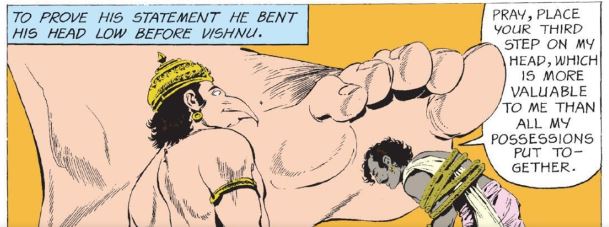
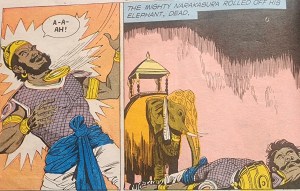
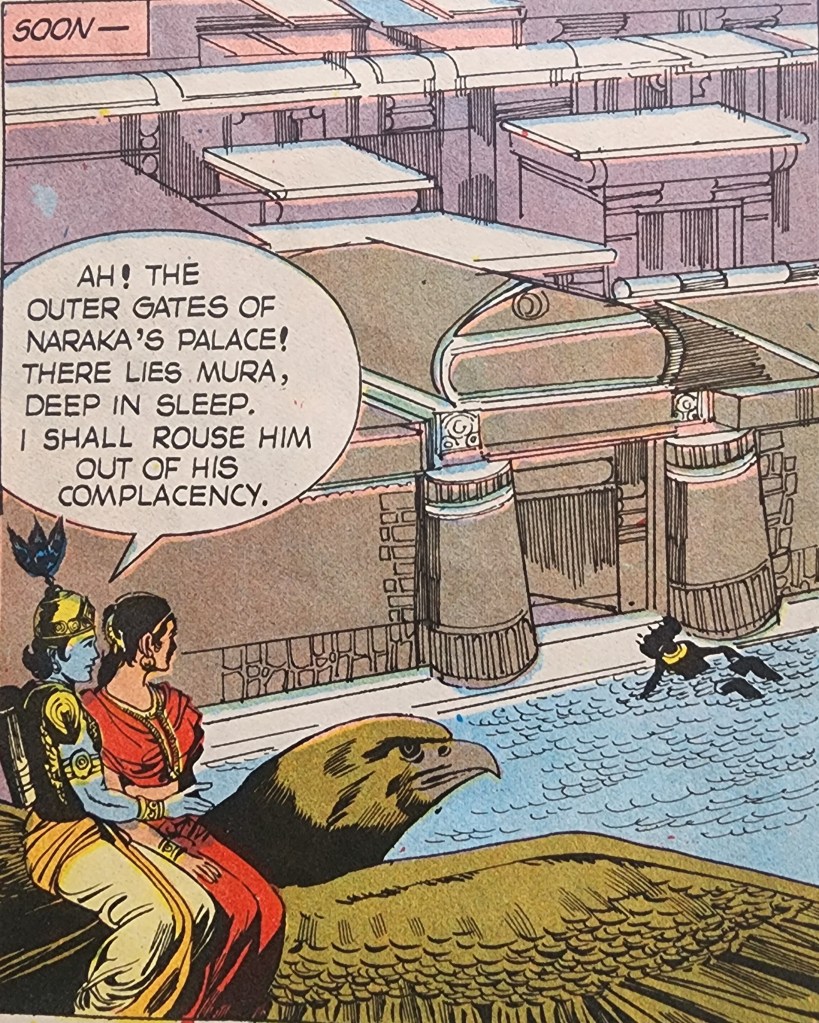
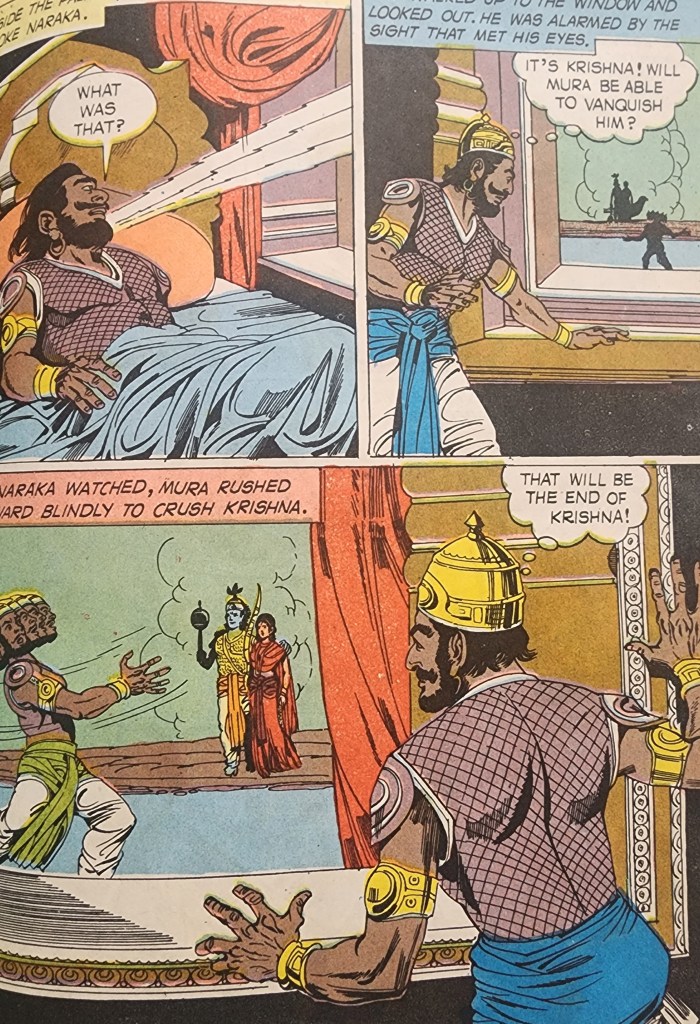
An example of this was seen in my previous article relating to the festival of Deepavali (link to the article in the notes below)*. In that article I had discussed how stealth and deception were the real weapons applied against both Narakāsura and Bali. In the case of Narakāsura the deception was to carry out an unexpected aerial attack against him at night and catching him by surprise. In the case of Bali, the deception was to get him to make a promise that he would not be able to keep and hence be defeated. Both actions were driven by knowledge of the opponents. Bali was honourable and righteous and would never break a promise, guaranteeing his defeat. Narakāsura would never back down from a fight and hence would be slain.

The outcome of the application of deception, however, was completely different in two cases. Bali was defeated without any violence while Narakāsura was killed and many of his troops lost their lives as well. Bali was defeated by the Vāmana avatāra of Vishnu and Narakāsura was killed by the Krishna avatāra. Further, Bali was rewarded by being named the next Indra while Naraka’s name is forever remembered as that of a tyrant. Based on this, the application of deception against Narakāsura is “Katsujiken” or life-taking sword, while it is “Satsujiken” or life-saving sword in the case of Bali. The “ken” or sword in both cases is the concept of deception.

Before the segue into the use of deception against Bali and Narakāsura, I had mentioned how only those involved in a conflict can identify when Katsujiken or Satsujiken is applicable in a given situation. Perhaps even they do not actively think of it in these terms. They “feel” the situation and while going with the flow of the conflict determine the necessary actions. In hindsight the action taken can be classified as either life-taking or life-saving.

So, how do those participating in the conflict identify what the preferred course of action or response is? I opine that the answer is to “listen” to the opponent and therefore the situation. This is not unlike being a good listener in daily life. We all try to be good listeners at work, with friends and with family. The idea is that this will help us identify the actual problem a client is facing and if the people near and dear to us are saying anything that is not explicit in the words being used. In the case of a conflict, specifically a physical one, even if it is a sport, the word “listen” means one should “feel” the fight.

“Feel the fight” or “feel the situation” does not mean just the tactile aspects. It means one should be aware of the opponent(s) and the time and space where the fight is taking place. The word “mindful” can be used instead of “aware” in the previous sentence. One needs “awareness” of a situation, or an individual needs to be “mindful” of a situation. The awareness here includes not only what is happening, but also the intent of the opponent(s) and even the abilities of the same.

In order to be mindful of a situation, during training sessions, it is suggested that one let go of all motivations except to survive. It is suggested that one not try to win, see if a technique works, focus on a given form, try to make the opponent feel bad or anything else. One should focus on Issho Khemi. I discussed this concept in my previous article*. Issho Khmei is to do whatever is necessary to survive.

An example of this, based on my personal understanding, is the is the use of the tachi. The tachi is the curved Japanese sword that was a precursor of the katana. It was worn differently and used very often by cavalry. The tachi also tended to be a bit longer and more curved compared to the later katana, though this is not a hard and fast rule. Also, it was a weapon that came up against Japanese armour (yoroi) often. I was taught by my mentor that since any sword, including the tachi cannot cut through armour, the tachi was not used as a sword.

The yoroi forced the tachi to be used as a hammer or an axe and also as a knife. Additionally, the tachi was used as a lever and a shield as well. The hammer or axe aspect comes as one strikes the opponent with the sword with no guarantee of achieving a cut. This strike allows the sword to be placed somewhere on the armour. Once this positioning is done, one tries to maneuver the tip of the blade into a gap in the armour where a stab can be achieved, fatal or at least debilitating to the opponent. I have been told by some folk with a lot of experience that the initial strike sometimes happened with the back (mune – blunt edge) of the tachi. Also, only the last few inches of this weapon was sharpened to aid in effective stabbing. The rest of it was not necessarily very sharp as it was more for striking and could not cut through armour anyway.

When two opponents in armour and swords go up against one another, they tend to end up grappling. This is because a cut is not possible and a stab in the gaps of the armour is the objective. One of the ways of getting a stab is to get the opponent down and then stab from a dominant position. Also, when the tachi is more a metal rod and less a sword against armour, it is effective as a lever to grapple with and take down an opponent. This is not unlike the way we are taught to use a hanbo in the Bujinkan. Of course, if the sword is a metal rod that can hit, it can also act as a shield to block the same. Thus, the tachi is a staff, axe, hammer and a knife, disguised as a sword.

This same way of using swords is also seen in European martial arts. When armour development improved greatly and full plate harness was used in Europe during the 14th, 15th and 16th centuries, swords also evolved to the new reality where a cut was useless against armour. Swords became more pointed to enable stabbing. A highly specialized stabbing sword called an “Estoc” was developed which had a square or rhomboid cross section, but a very sharp point. This meant that it was a metal rod with a point, so, no cutting at all, but great thrusting. This also enabled half-swording where one could hold the blade at any position with no risk of being cut.

Of course, even when swords were sharp half-swording is possible. The same is true with a tachi. It just depends on learning how to handle a sharp edge. Based on what I have seen of half-swording, they do seem similar to the ways of using a hanbo as well, just like a tachi. All of this can be simplified and explained by considering how we would use an unsheathed sword. In both European and Japanese martial arts, individuals carried a dagger or a tanto for stabbing once both opponents were down. This was more efficient as it was easier to control on the ground, unlike a longer sword. I am personally not aware of any manuals or specific forms from Indian martial arts where armour was considered and grappling was resorted to, to overcome the same. Please do let me know if anyone knows of the same.

The morphing of a sword into a hammer, knife and shield is an example of being aware of the opponent (wearing armour as a simplistic example in this case) and using a tool, sword in this case, however possible, to achieve survival. So, when the tachi is a shield, it is Satsujiken and when it is a hammer or a dagger, it is Katsujiken.

I started off with this example to show how one must be mindful of the situation in a conflict. But when we consider the development of arms and armour over centuries to counter one another, we realize that the duration of a conflict need not be a short one. It could short for individuals, based on how long they are a part of the same. But the conflict itself might go on for durations which last the lifetimes of multiple generations. In this situation, being aware of opponent(s) is something like the Government of a nation always needing to be aware of the threats to its citizens. Here the intelligence gathering arms of the state are the main enablers of being mindful of the world, beyond just the known enemies of state or opponents of government. This is “listening” or “being aware” in perpetuity.

Tales from Hindu culture are replete with the need to be mindful of the opponent(s) abilities. Several avatāras and forms of our Gods and Goddesses were specifically born in that form to counter the ability of a given threat to the world, the threat in most cases being an asura. In my previous article, I have described the purpose of each of the 10 avatāras of Lord Vishnu. The link to this article is seen in the notes below*. I will share specific examples here to elucidate how awareness of the opponent led to the form of God. I am leaving out Narakāsura and Bali as they have already been discussed in great detail above and in an earlier article* (link in the notes).

Lord Narsimha

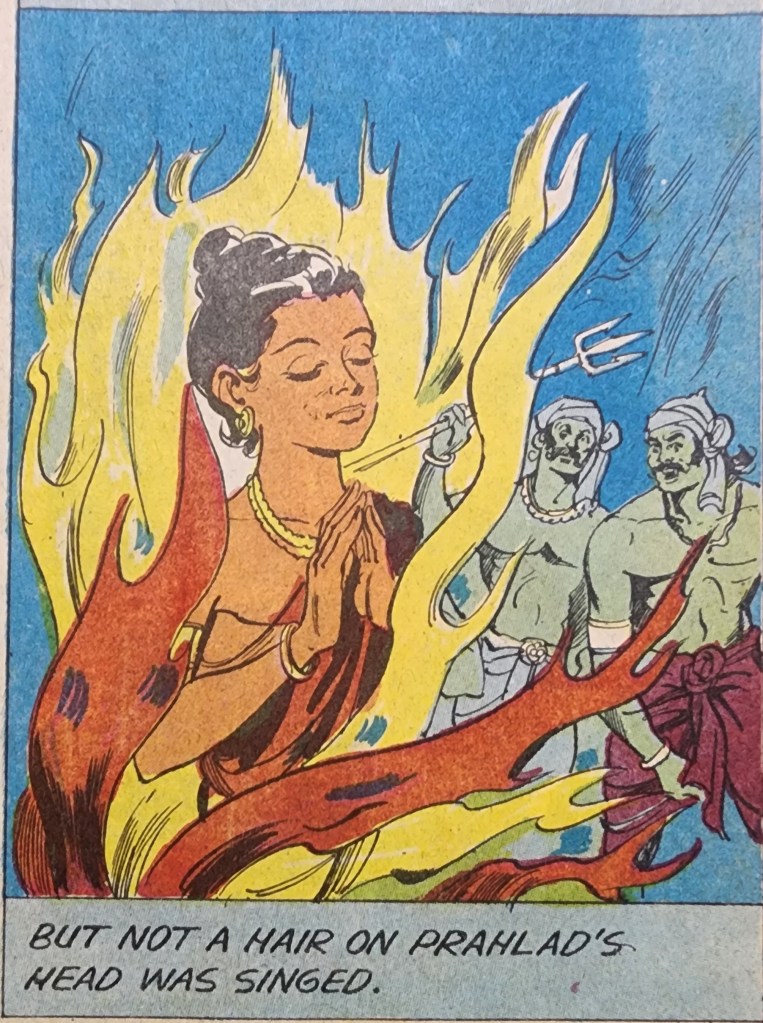
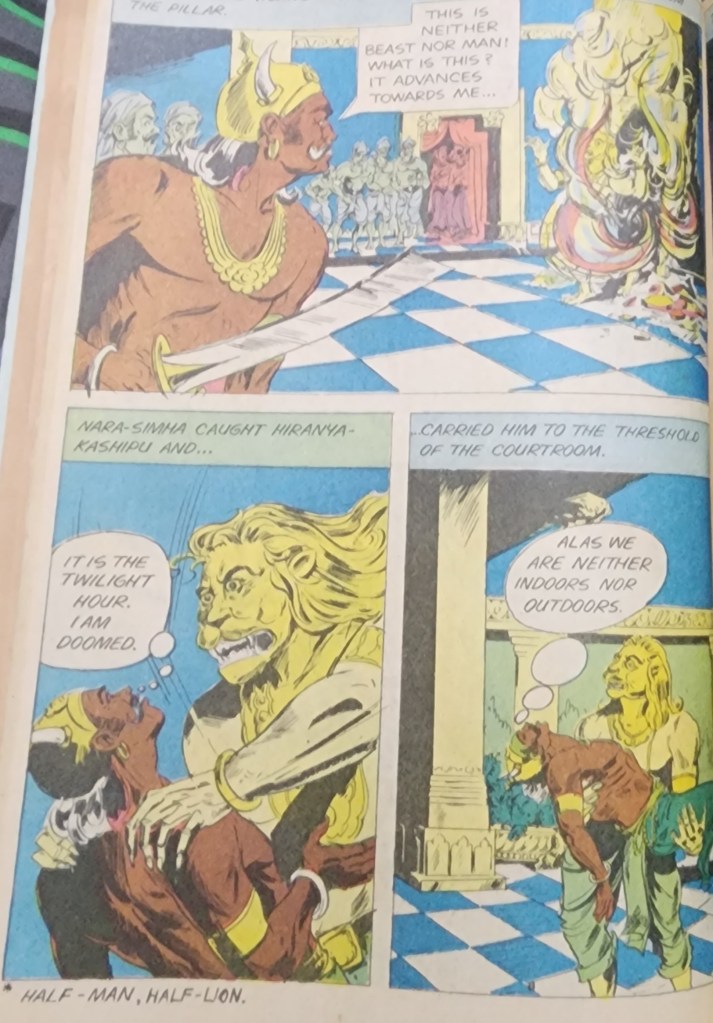
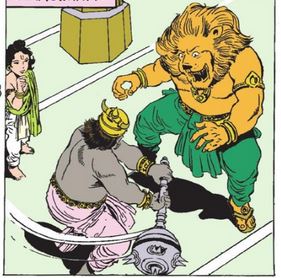
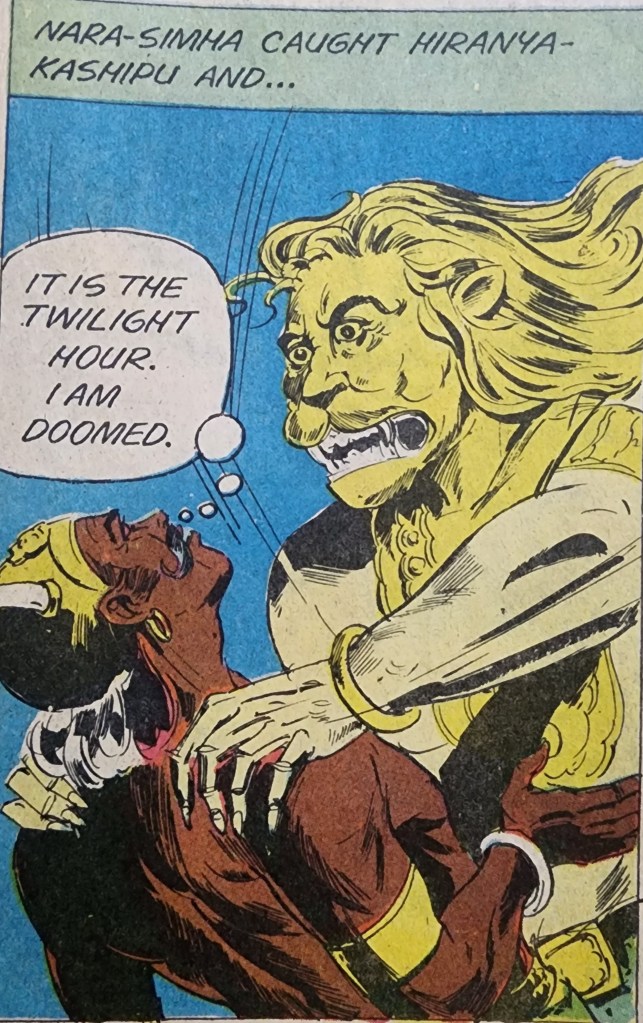
The Asura Hiranyakashipu had a boon (vara) due to which he could not be killed by any man or animal, inside or outside, during the day or during the night. Lord Vishnu took the form of Narasimha to specifically exploit the loopholes in the boon. The boon is the armour/ability in this case and the loophole in the boon is the gap in the armour that can be exploited. Narasimha was neither man not animal, he was both. He killed Hiranyakashipu on the threshold, which is neither inside nor outside, at twilight, which is neither day nor night.

Image credit – “Prahlad”, published by Amar Chitra Katha

Devi Durga

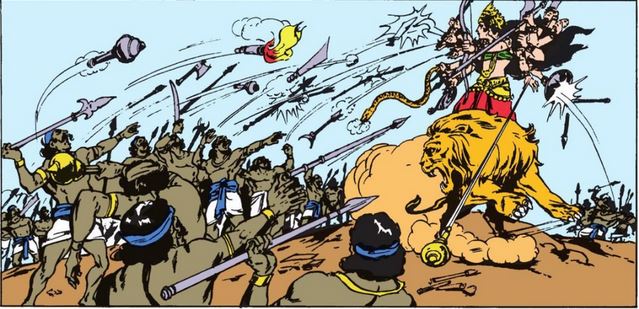
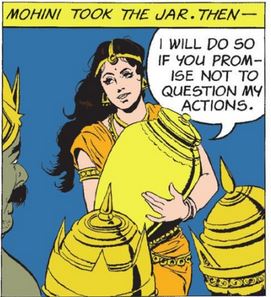
The Asura Mahishāsura had a boon which specifically protected him from all living beings except women. He believed no woman could harm him and hence did not ask for protection from them at the time of requesting the boon. Devi Durga is a form of Devi Parvati or Shakti who came into being to eliminate Mahishāsura. Durga received the weapons of all the Gods which made her the greatest warrior. Mashisha had no protection against Durga as she was a woman and with her martial abilities, she destroyed Mahishāsura.

Image credit – “Tales of Durga” (Kindle edition), published by Amar Chitra Katha

Lord Karttikeya

The Asura Tāraka had a boon due to which only a son of Lord Shiva could defeat him. Lord Shiva was in deep meditation and had no wife at the time the boon was granted. Hence, there was no one who could threaten Tāraka. Eventually Devi Parvati married Lord Shiva and Lord Karttikeya was born of them. He eliminated Tārakāsura. I am cutting the story really short here!

Image credit – “Karttikeya” (Kindle edition), published by Amar Chitra Katha

The above just a very small set of the examples from Hindu culture of being aware of the abilities of the opponent to be able to overcome the threat. I would strongly encourage everyone to read the stories in full. They are a very enriching experience. Hindu tradition is literally chock full of examples that are constant reminders of the need to be mindful of any given situation.

Since we are speaking of identifying a gap or an opening in the armour or ability of an opponent, and the notion in this article is originating from the Bujinkan, which is Japanese in origin, I must share the beautifully poetic words to express this concept. Tsuki, in Japanese, is to punch. Suki is the hole or opening that can be punched. So, many stories from Hindu tradition are all about “Suki to Tsuki”. Identify a Suki or opening to Tsuki, or punch. In other words, find an opening and attack it, exactly like the avatāras did.

Staying with Japanese culture, there are legends of the Muramasa and Masamune blades from medieval Japan. I am not aware of all the stories associated with these swords, but I am sharing a gist of what I know. Blades made by the swordsmith Masamune were supposed to be blades that saved lives. Swords made by the swordsmith Muramasa were supposed to be cursed. They always took lives and brought misfortune to the owners of the same. I have heard some opinions that Muramasa was an apprentice of Masamune’s.

One interesting story about these is about the comparison of which sword was sharper. A sword by both Masamune and Muramasa were left suspended in a stream to check which was a sharper blade. The Masamune blade did not harm any fish swimming past. The fish avoided the sword and never swam into the dangling blade. Vegetation that floated past was cut effortlessly. However, with the Muramasa blade, fish swam into the blade were cleaved effortlessly. But vegetation got tangled on the blade and was not cut. I could be wrong about the details of the story, but I hope the essence that one was a life-saving blade while the other was a life-taking blade is clear. Muramasa is Katsujiken, Masamune is Satsujiken.

There is a manga (Japanese comics) called “Crying Freeman”. In one volume of this manga, the protagonist gets possession of a Muramasa sword and is subject to misfortune++. His wife believes that the Muramasa sword brings misfortune because people try to get rid of it and not learn to use it. She feels that the blade needs its owner to learn to use it in the best manner possible. So, she takes up this responsibility and trains with the Muramasa blade. Send turns out to be right and the string of bad luck ceases. I think this is a wonderful take on learning to be mindful, even of inanimate objects!

Since we are referring to pop culture by discussing manga, I will share one beautiful description of the concept of “do not draw if you are not ready to kill”. In the second novel of the acclaimed science fiction series “The Expanse”, titled “Caliban’s War”, there is face off followed by a shoot-out. Two groups, one of the protagonists who are heavily armed with guns and another of a group of security personnel who are similarly armed are facing off against each other.

Neither wants to start shooting but both are extremely suspicious of the other and on a hair trigger response. One of the protagonists, who has no combat experience, based on his viewing of movies, thinks he can threaten the other group into withdrawal and cocks his gun. This immediately triggers a shoot out and all the security personnel have to be killed. Later one of the protagonists relieves the non-combatant of his weapon and explains that any one with real combat experience assumes that a cocked gun is a prelude to a definite firing of the same and will not wait to see what happens next, they will simply shoot. The person who did it had no idea of this and cost several lives in a tragic and inadvertent situation. I believe the character in the novel who starts the shoot out accidentally is Praxidike Meng.

One last point before we conclude this post. I mentioned earlier in this article that societal norms and a robust legal and justice system can be a deterrent to violence. In other words, there is a systemic incentivizing of Satsujiken over Katsujiken. There is a Sanskrit phase that says “Dharmo Rakshatih Rakshitaha”. It means “Dharma protects those that protect it”. Dharma can be “the right thing to do”. It can also be “that which sustains”&.

If there is a set of rules and practices put in place by a system and this system by efficient and effective performance mitigates violence in society, then that system could be a Dharma. Individuals who follow the system by not violating the rules are upholding the Dharma. In turn, the Dharma or system protects those that follow the rules, or laws. Individuals are protected as those that might consider violence against others are discouraged by the knowledge that they have to bear the brunt of the system if they violate the law (rules). This makes the violators ones that do not protect Dharma. Thus it is a symbiotic relationship; follow the rules to protect the Dharma, and the system, Dharma, protects you because when everyone follows the same, there can be no violation, and hence no violence.

Here, both definitions of Dharma hold good. If one considers Dharma to be “the right thing to do”, following the system/Dharma is the right thing for people to do. Similarly, the right thing for the Dharma/system to do is protect those that practice it. If one considers Dharma as “that which sustains”, the system/Dharma can only be sustained if people practice it. By practicing it, practitioners are letting the Dharma/system sustain them as it protects them from violence and hence get on with lives with less fear.

With that observation, I conclude this series of 3 articles starting with the one about Deepavali. The festival of Deepavali and the Dashāvatāra are indeed a treasure trove of concepts that lead to a plethora of learning from the martial arts.

Notes:

* Deepavali – Light on the Martial Arts

* Dashāvatāra & Budo, Part 1 – Issho Khemi

** Link to the video where the statement is made by Gurukkal, Dr. S Mahesh – watch between the 22nd and 25th minute mark

+ https://mundanebudo.com/2023/10/23/aayudha-pooja-vijayadashami-the-most-important-festivals-for-the-martial-arts/

& I am taking this definition of “Dharma” from the book “Mahabharata Unravelled” by Ami Ganatra. The link to the book is seen below

++ Link to “Crying Freeman Volume 3”

https://www.amazon.in/Crying-Freeman-3-Kazuo-Koike/dp/1593074891/ref=sr_1_1?crid=311ADMT6QJ85G&keywords=crying+freeman+vol+3&qid=1701959502&sprefix=crying+freeman+vol+3%2Caps%2C202&sr=8-1

Dashāvatāra & Budo, Part 1 – Issho Khemi

The Dashāvatāra – Balarāma is included instead of Buddha in the above image

In my previous article I attempted to explore martial art concepts that can be gleaned from the festival of Deepavali. This is a continuation of the same. Here, I will delve into the concepts that I could not consider in the earlier article as it was already very long. It might be useful to read the earlier article before getting into this one. But in case one does not, this article can be read as a standalone. The link to the previous article is seen in the notes below*.

A good starting point to delve into these concepts is the Dashāvatāra. The Dashāvatāra are the 10 incarnations (Dasha – 10, Avatāra – incarnation) of Lord Vishnu. This is not to say that there were only 10 avatāras of Lord Vishnu. The most popular list of incarnations of Vishnu is of 10 and this has been so for a few centuries based on the little that I know. If I am not wrong, there are also lists of avatāras that have 23 incarnations. The avatāras that are a part of the Dashāvatāra are not always the same.

Based on my understanding, the first 7 incarnations are the same in most lists. These are,

  • Matsya (1st), Kurma (2nd), Varāha (3rd), Narasimha (4th), Vāmana (5th), Parashurāma (6th) and Rāma (7th)

Of the remaining three, there are differences of who are considered the avatāras. I am sharing below a couple of the variations that I am aware of.

  • Balarāma (8th), Krishna (9th), Kalki (10th)
  • Krishna (8th), Buddha (9th), Kalki (10th)

The list with Buddha is the most common one that I am aware of. There are opinions where Lord Panduranga and Lord Jagannath are a part of the Dashāvatāra and not Buddha.

For the purposes of this article am going with the 10 incarnations where the Buddha is included and not Balarāma, simply because that is the one I was taught as a child and not because I am sure that that is the correct list. Also, I am sticking to only 10 avatāras and not considering the lists which have more than 10. Again, this is only because I do not have extensive knowledge about these.

Each incarnation had a specific purpose. I am adding a sentence or two about each avatāra and the purpose of the same in the notes below**. I am also adding a couple of examples from beyond the 10 incarnations where an incarnation or form of a God or Goddess eliminated a specific problem. I am going to be referring to these to make the points in the article, but the little detail is in the notes to try and keep the article to a “reasonable” length. 😊

The exact purpose of each of these avatāras is mentioned in the notes. But in general they fall into one of two categories, as far as I can tell.

  • Protect and save people from a tyrant.
  • Preserve the ecosystem, which includes the guardians of the same, which is why the Devas, who are the Lokapālas or guardians (of natural phenomena), are saved every time. If the Lokapālas are affected, the ecosystem is affected, and hence the people.

Considering the above, the objective of every avatāra has very high stakes. If the stakes are very high, how are the problems resolved? Yes, violence is one solution. But violence is neither the only solution nor the preferred one. Let us consider the other solutions that were employed by the avatāras.

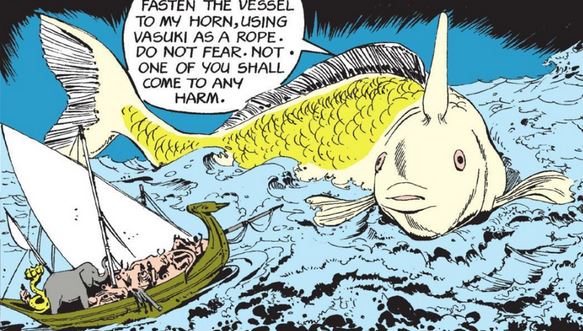
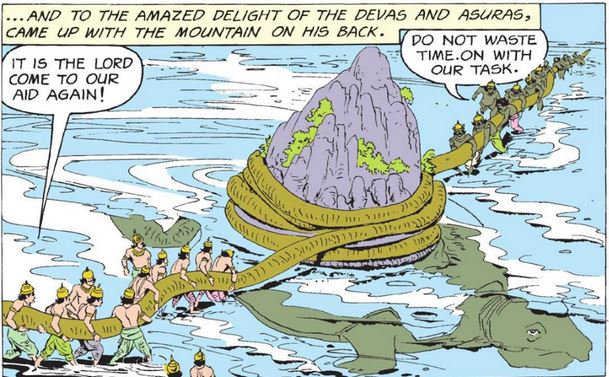
  • The solution by the Matsya and Kurma incarnations were two-fold. One involved identifying leaders who could bring people together for specific enterprising activities. The second was providing support to an engineering project of epic scale against enormous environmental adversities. So, they were perhaps Management solutions in modern day terms.

Matsya (L), Kurma (R)
Credit for the images – “Dasha Avatar”, published by Amar Chitra Katha, Kindle edition
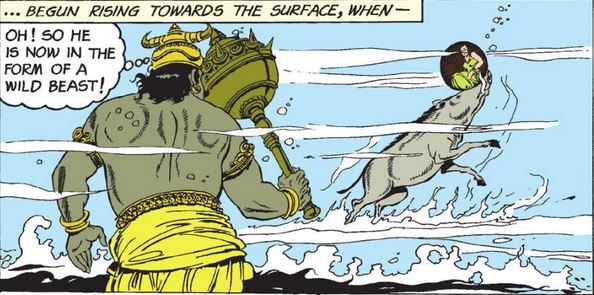
  • The Varāha, Narasimha and Parashurāma avatāras were warriors who used violence to solve problems. Varāha & Narasimha were protective warriors. Lord Parashurāma went on to spread the knowledge of the martial arts after his task as an avatar was complete.

Narasimha (L), Varāha (Top R), Parashurāma (Bottom R)
Credit for the images – “Dasha Avatar”, published by Amar Chitra Katha, Kindle edition

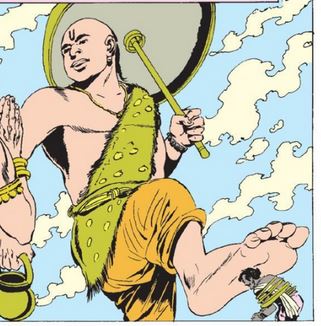
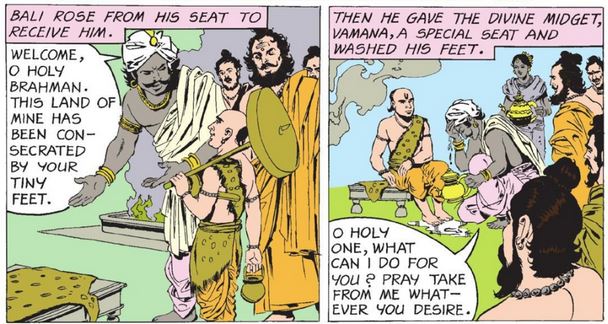
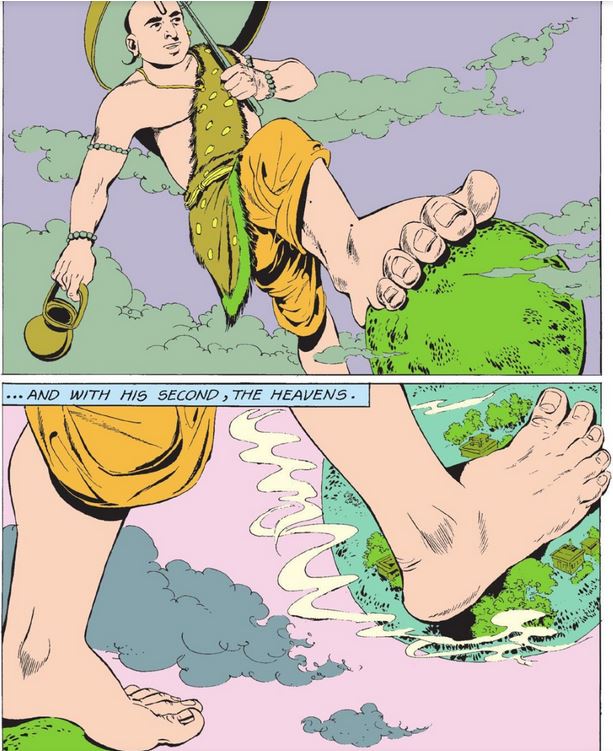
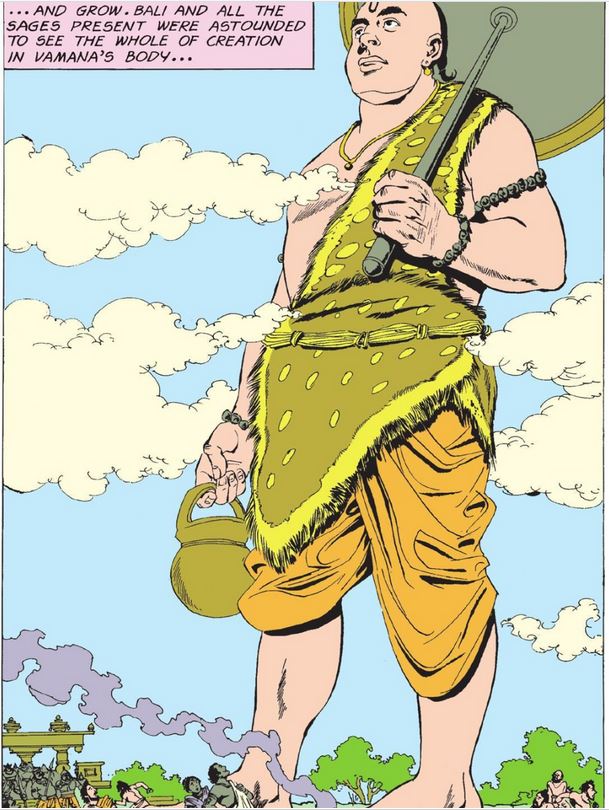
  • The Vāmana incarnation was about deception and negotiation. It specifically abhorred violence. It was, by modern day standards, the signing of an inter state agreement (peace treaty in other words).

Vāmana
Credit for the images – “Dasha Avatar”, published by Amar Chitra Katha, Kindle edition

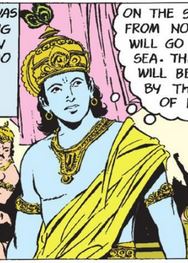
  • The Rāma, Krishna and Buddha incarnations of Lord Vishnu lived a life that could serve as a case study. These incarnations served many purposes and hence used many solutions. During their lifetimes, they used administration, violence and negotiation to solve problems. It is almost like these incarnations combined all that was used by earlier avatāras. Their lives served as examples when they were no longer present in their mortal form. So, storytelling, entertainment and case studies were also a part of the plethora of solution types that they used. Considering that these options need documentation, add that to the list as well, as these are potential solutions that can be used by populations for centuries to come. The documents include, the Ramayana, Mahabharata (including the Bhagavad Gita) and the teachings of the Buddha.

Rama (L), Krishna (Top R), Buddha (Bottom R)
Credit for the images – “Dasha Avatar”, published by Amar Chitra Katha, Kindle edition

The above also apply to the other examples I have mentioned in the notes, which are not incarnations of Lord Vishnu. That said, the information regarding all the avatāras have also reached us through stories. And we can identify that the solution used in the stories fits into any of the categories mentioned because we still use the same in daily life. Of course, the violence in daily life refers to displays of anger and disappointment, which could constitute emotion or intellectual violence. This is a lot more common in our lives, compared to the use of physical violence.

So, if we say we use management and administrative solutions (processes), violence (non-physical), engineering and storytelling (documentation, presentations and meetings) on a daily basis, another aspect becomes clear. We use all of these without specifically thinking of the same. We use them in any combination as required, according to the situation. We do not actively classify what we do into the silos I mentioned. The classification is only in hindsight. This means that we do “whatever we need to”, “however we can” as the situation demands.

“Whatever we need to” and “However we can” are key aspects of the martial arts. This means exactly what it sounds like in the context of a physical conflict, with or without weapons being involved. One does whatever one has to, to survive however one can. All the training and experience comes down to be being able to use all the learning, intuition, learning, techniques and forms in a short duration to come out of the situation alive and with as little physical injury as possible.

There is no conception of what technique is being used in a real situation. The body reacts thanks to all the training, and does whatever it can instinctively, even if it means to escape from the place. Escaping only means that all the experience paid off in being able to identify that a fight was simply not worth it. This is especially true if one has around, people or things very dear to oneself when the fight begins. Seldom can one protect oneself and others, especially if weapons or multiple opponents, or both(!) are involved. Before the escape happens, what is done instinctively based on one’s training is never a specific technique or form, it is a variation or combination of what was learnt over the years of training.

This is true even in the case of combat sports, just that one does not need to escape. There are rules, weight categories and time limits to prevent life threatening injuries. The competitors still use variations of what they have trained. They “feel” the fight and flow with whatever can be done to win the fight.

Most martial art practitioners realize this pretty early on, if they are training regularly. My teacher and couple of my mentors repeat this incessantly in class, in case one does forget. One hears, “do whatever is necessary” and “however you can” time and time again. They in turn heard this from their teacher, all the way back to Soke Hatsumi Masaaki, who drilled in this idea for most practitioners in the Bujinkan system of martial arts.

This notion can be expanded further. I have heard this said from the same people mentioned above, “Don’t depend on the waza in a real situation. Kata will get you killed.” A simple way to put it, in my opinion, would be, “Learn the form to gain the concept. Use the concept to adapt. Adapt to do whatever is necessary. Do whatever is necessary, however it can be done. Do it however you can, to survive.”

Another statement with a similar meaning is “Don’t depend on the book. The book will not fight for you (or the book will not save you)”. The book being referred to here is the book with the details of all the waza (technique) or kata (form/set of forms) and how to perform the same. “The books” might protect you, like how Shaastra or Bun (knowledge) might protect you. It is more like saying “The library of knowledge” will save you. But one book of techniques will not! So, don’t fall in love with waza or kata, because they can’t save you. Fall in love with waza and kata as doorways or pathways to experience, awareness, knowledge; all of which enhance the probability of survival in a physically threatening situation. An extension of this is to not think any martial art or style is “the best” or to think one must support it no matter what, simply because it is the style one trains.

One Japanese phrase that I have heard from my teacher and some senpai during training is “Issho Khemi”. I have heard two translations for this phrase. The first is “do just enough” and the second is “do whatever is necessary”. The second translation is literally what we discussed earlier. When the first translation is implied, in my experience, it is used in the context of reminding one to not get bogged down in trying to use a fixed technique or movement.

In any conflict, whether physical or otherwise, the opposing sides do various things. It is extremely rare for any one side to be able to predict, read and plan for all the actions of the other side. And if this is possible by some extraordinary fluke, executing the “perfect plan” exactly as intended is as difficult and rare as the making of the same is. This is easy to see in a one-on-one fight. A given technique might work on an individual. But the same might not work on another person and the same might not work on the same individual at another time, maybe not even in the very next instant. This is true even while training that specific form, let alone in sparring or a real situation.

So, a given technique needs to be modified (applied as required) from person to person and every time it is executed. This means that if a given technique does not work, one should move on to something else and keep repeating this iterative process until something works. This means two things. First, identify when something is not working. This in turn means not expending too much effort on trying a single way of doing a specific technique. Secondly, it means that when a technique works, it usually does not require too much effort. The identification of the effective technique might be harder than getting said technique to work.

These two notions mean that one should do just enough to verify if a given technique will work, and if that is not sufficient maybe it is time to try something else that might require just sufficient effort. In either case, it is not useful to develop tunnel vision in making the execution of a technique the objective. The real motive is always to survive by doing what is necessary, however that can be done, not to determine the effectiveness of a given technique.

I remember that a few years ago Soke Masaaki Hatsumi had displayed in the dojo, calligraphy by Yamaoka Tesshu. These were acquisitions of his and he had used the writings as an inspiration for that particular class. Yamaoka Tesshu lived in the second half of the 19th century and was an advisor and teacher to the then Japanese emperor (I think it was the Meiji emperor). He was also a sword master who taught at his own dojo.

There is a book by author John Stevens, which is a biography of Yamaoka Tesshu. The book is titled “The Sword of No-Sword: Life of the Master Warrior Tesshu” (link to this book is seen in the notes below)***. In this book, as I recall, there is a very interesting observation made by the author. He says that when Tesshu was teaching his students, he always exhorted them to train harder. But he never taught or focused too much on specific techniques and forms. In other words, Tesshu wanted his students to focus on training as a whole, not consider mastering individual forms or techniques one after the other and use them as stepping stones. This idea along with the tile of the book makes me think that the focus was on the situation and what one could do in that time and space. This is the same as “Issho Khemi” and doing “whatever is necessary”, “however one can”.

So, we see that the Dashāvatāra from Hindu tradition and the martial arts have concepts that are the same. The concepts relate to problem solving and surviving a situation. Is this seen in modern life as well? I would say yes. I will share an example and my observation regarding international diplomacy and then get back to life in general.

In modern day diplomacy we hear the words, “based on shared values”. Considering that all nations only work in self-interest, the words should ideally be “based on shared interests”. But there are constituents and groups, especially in democracies, that put a great premium on “values” and expect that the leaders of their nations keep these at the forefront even when they are working towards national (self) interest, while working with other nations. If these nations do not share the value, like when democracies deal with dictators, these constituents are upset. So, realpolitik requires that the words be “values” instead of “interests”, even if it is a lie or a half-truth at best. The deal will be the same, irrespective of the words, but choosing specific words pacifies some sections of the society. So, why not use a lie to get the job done in the self-interest of a nation? After all, that is the purpose of a government, not the “promotion of values”. Has anyone ever seen the manifesto of any political party anywhere in the word state that they will work towards and allocate national resources to ensure that institutional democracy takes root successfully in a country not their own? I think not. If anyone knows otherwise, do let me know. This play of words is a case of “Issho Khemi” in statecraft.

Similarly, all of us do this in life and at work as well. How often do we vaguely agree with a client just to end a call, so that you can get back later with objections after further analysis? How often do we give a non-committal smile and a nod with close relatives when our minds are preoccupied, to get them to let us off at that moment? I would say often enough for us all to recall the last time we did it. Is this any different from the example of diplomacy, where sugar coated words that are not really meant are used to get on with real business? And is this any different from training forms only to do whatever is necessary, however one can? I would say they are the same. We are all getting on with our mundane lives, in the best way that we can. If this is something we can deduce starting with the Dashāvatāra, it adds to the notion that martial concepts are embedded in the cases studies that are the stores from Hindu tradition, apart from the life lessons that are expounded upon in many books.

Notes:

*Link to Deepavali article –

***Link to the biography of Yamaoka Tesshu –

https://www.amazon.in/Sword-No-Sword-Master-Warrior-Tesshu-ebook/dp/B00GXE93CS?ref_=ast_author_dp

**The Dashāvatāra

Sl. No.AvatāraObjectiveActivity
1MatsyaProtect people from the floodSurvive The Flood – only a divine fish could get the ship of refugees to safety
2Kurma“Support” a joint enterprise (Samudra Manthana)Support Mount Mandāra – only a divine being with attributes of an a
powerful aquatic animal could support the mountain, hence Kurma, the tortoise
2aMohiniProtect the nectar from Asuras to protect the ecosystemDeceive the Asuras – only an individual who was non-threatening and convincing could prevent the Aruras from starting a fight to steal the Amrita
3VarāhaProtect the planet from the flood & people from an AsuraEliminate Hiranyāksha – only a being that had attributes of a God, and an animal that could function in marshy areas and dig through the earth could kill him, hence Varāha (boar). I am going with the common assumption that since a boar digs through the earth, it can lift Boomi from the flood (of the cosmic ocean of milk)
4NarasimhaProtect people from an Asura and establish peaceEliminate Hiranykashipu – only a being that was neither man not animal could kill him (among other conditions), hence Narasimha (Man & Lion)
5VāmanaProtect the guardians of the ecosystem by negotiating a peaceThwart Mahabali – only a being of divine intellect who was non-threatening could get
Mahabali to negotiate and avoid violence, hence a small built brahmana, Vāmana
6ParashurāmaProtect people from arrogant rulers, and establish the idea of
 violence as punishment and protection
Eliminate the arrogant Kshatriyas – only a divine Brahmana with the attributes of a warrior could single-handedly defeat the Kshatriyas
7RāmaEstablish a benchmark for administration, personal conduct and protect people from an Asura (a lifetime’s effort)Eliminate Rāvana – only a mortal could kill him, hence Rāma
8?BalarāmaSupport KrishnaI am not sure
8 or 9KrishnaEstablish the idea of Dharma as the foundation of administration and personal conduct, supplanting reputation (and supplementing personal conduct) – another lifetime’s worth of effortEliminate Jarāsandha – only a duel would result in his being eliminated without a devastating war
Eliminate Narakāsura – only an aerial attack would result in his being eliminated without a devastating war
Defeat Kaurava army – only a divine being could possess the abilities to guide the Pāndavas to victory
All of the above were possible through a divine being not worried about honour and inclined to the objective of Dharma.
9?BuddhaInitiate the idea of a limitation of ritual, a limitation of connections, limitation of violence and
an abundance of personal reflection – a look at aspects internal, which is an addition to a look at all external aspects from the previous avatāras
Minimize ritual and attachments – hence an individual who had it all and
renounced the same – Siddartha Gautama, the Buddha
10KalkiNot sure, as this is in the future. Supposed to be to protect people from bad rulers and hordes
 of bad people. More like a reminder of the avatārās before Buddha, for they might be forgotten in the time that has elapsed. The earlier incarnations are a perpetual activity, and they lead to conditions that allow reflections, which might lead to more Buddhas.
Yet to happen

Mohini (L), Kalki (R)
Credit for the images – “Dasha Avatar”, published by Amar Chitra Katha, Kindle edition

A few other cases where specific solutions were achieved through divine births and incarnations are mentioned below.

  • Lord Ayyappa – He was the son of Shiva and Vishnu (in his form as Mohini), born to end the terror of Mahishi, the sister of Mashishāsura.
  • Lord Karttikeya – He was the son of Lord Shiva and Devi Parvati, who was born to end the terror of Tarakāsura.
  • Devi Durga – She was a form of Devi Parvati (Shakti) who was created and armed specifically to defeat Mahishāsura
  • Devi Kāli – She was a form of Devi Parvati (Shakti) who was created specifically to defeat Raktabeeja

The Goddesses mentioned above killed Asuras other the ones I have mentioned, as did Lord Karttikeya. I would highly recommend everyone to go and read the original stories. They are wonderful; not just entertaining, but also have a lot of symbolic value if one goes into the detail and serve as case studies as well.

Deepavali – Light on the Martial Arts

Credits for the images – (L) “Dashavatar” published by Amar Chitra Katha (Kindle edition), (R) “Krishna and Narakasura” published by Amar Chitra Katha

Deepavali or Diwali as it is mostly called, is light personified. It is a five or three or one day festival, depending on one’s culture, traditions, community, geography and upbringing, or any combination of the above. One of these days, is celebrated as “Naraka Chaturdashi” (usually the first for my community) and another is celebrated as “Bali Padyami” (the third day for my community). The festival “Bali Pādyami” is celebrated for the same reason that Onam is celebrated in the state of Kerala.

“Naraka Chaturdashi” is observed to celebrate the victory of Lord Krishna over the Asura Naraka (hence Narakāsura). Bali Padyami is observed to celebrate the yearly visit of the Asura King Bali (sometimes referred to as Mahabali) to the land of the mortals. King Bali is otherwise the ruler of one of the seven nether worlds. Narakaasura was defeated by the eighth avatar of Lord Vishnu, namely Lord Krishna. Narakaasura was killed when he was defeated. Bali was defeated the fifth avatar of Lord Vishnu, namely Lord Vaamana. But when Bali was defeated, he was not killed, or even physically injured. The defeat of Bali, in my opinion, was more like a negotiated settlement, with both the Devas and the Asuras gaining greatly. The contrasting means of these two conflicts, with Naraka and Bali, and the outcomes of the two, which lead to the two festivals mentioned earlier, is the focus of this article.

Narakāsura was the ruler of a kingdom the capital of which was Pragjyotisha. In current times, Pragjyotishpura is in Guwahati, in the state of Assam. Pragjyotishpura was the capital of the ancient kingdom of Kāmarupa. Based on my knowledge, Kāmarupa was the ancient name of roughly the region that is the modern-day state of Assam. But I have seen it mentioned that ancient Pragjyotisha was in modern day Uttarakhand or Himachal Pradesh1. This is where the great warrior king Bhagadatta came from with his armies to fight on the side of the Kauravas in the great war of Kurukshetra. Bhagadatta was the son of Naraka. The ancient Varman dynasty, which was a contemporary of the imperial Guptas, ruled the region of Kāmarupa and claimed descent from Narakāsura. Apparently, this is how Prahjyotishpura moved to the east from the north. This little detail is not relevant to this article, but an interesting one nevertheless.

From the stories that I have heard, Narakāsura was the son of Bhoomi Devi and Lord Varāha (the boar incarnation of Lord Vishnu). Due to his parentage, he was a formidable warrior and a great ruler. But arrogance got the better of him and he became a terror not just to the Devas but also to other denizens of the lands he controlled, conquered, or raided.

Narakāsura was far too powerful to be defeated by any of his contemporaries, be they kings or warriors. He was a contemporary of the people and events of the Mahabharata. It might just be that the geopolitics of the time simply did not allow anyone the leeway to focus on the threat that he posed. Hence, it fell to Lord Krishna to nullify the havoc he was causing. Naraka had imprisoned sixteen thousand one hundred women++, as war booty from his raids and conquests. This atrocity alone required that he be eliminated.

Credits for the images – “Krishna and Narakasura” published by Amar Chitra Katha

Krishna, along with the Yādavas was living in Dwaraka at this time. This means that the kingdoms of Krishna and Naraka were on extreme sides of the subcontinent. Perhaps this meant that an attack on Naraka’s kingdom was difficult logistically, considering the other mighty kingdoms that lay between them, some of which were not friendly with Dwaraka. If Naraka’s kingdom is considered to be in the east, Magadha, ruled by Jarasandha lay in the way; and Jarasandha was no friend to either Krishna or the Yādavas. If Pragjyotisha is considered to be in the far north, the kingdom of Sālva lay in the way, and he was an enemy of Dwaraka as well.

So, Krishna carried out an aerial attack on Narakāsura, with the objective of not defeating the military of Pragjyotisha, but of only killing Naraka. Narakāsura was the problem, not his kingdom. Krishna flew to Pragjyotisha on Garuda, the mount of Lord Vishnu and killed Narakāsura. The presence of Garuda, one of the mightiest beings in Hindu culture, not only allowed Krishna to go over the walls of the city and palace of Naraka, but also gave him the advantage of height, not to mention the skills, abilities and sheer power of Garuda in protecting him.

Credits for the images – “Krishna and Narakasura” published by Amar Chitra Katha

The story I have read also mentions that Krishna took his wife Satyabhama along with him during this assault. I am not aware of the exact role that she played during this episode, based on my limited reading. Her role varies from actively fighting alongside Krishna to being a passenger during the attack, who was taken along as she was not happy that Krishna could not spend time with her. The latter essentially glorifies Krishna by showing him to be multitasking, spending quality time with his wife while taking on several dangerous foes! Yes, this rendition does not make everyone happy, with our modern-day value systems. But this aspect is not relevant to this article.

Krishna, in what is essentially a special forces raid on the palace of Narakāsura, killed the man responsible for several crimes. The day on which Krishna defeated Narakāsura is celebrated as the festival of “Naraka Chaturdashi”, which falls on one of the days of Deepavali. Krishna later handed over the reins of the kingdom to Naraka’s son Bhagadatta, who, along with his grandmother Bhoomi Devi, ruled the kingdom well. This is the same Bhagadatta who fought in the Kurukshetra war on the side of the Kauravas.

Bhagadatta commanded the greatest elephant army at that time and his personal war elephant, Supratika, was supposed to be a very large animal and extremely effective in battle. He was also a devout bhakta (ardent/devotee) of Lord Vishnu, due to which he possessed the Vaishnavāstra. This was a weapon he used against Arjuna during their fight. Krishna had to intervene to save Arjuna, by letting the missile strike him instead of the intended target. This is an incident I have described in my previous article discussing Sakkijutsu and Charioteers2. In the end, Bhagadatta, like almost all the warriors who fought at Kurukshetra, died during the war.

King Bali, or Mahabali as he is sometimes referred to, was the grandson of Parhlad, who was the son of Hiranyakashipu. Hiranyakashipu was the Asura king who was slain by Lord Narasimha (the fourth incarnation or avatar of Lord Vishnu, according to the Dashāvatara (10 avataras)). Bali, like his grandfather was also a wise, righteous, and great ruler. He was also great bhakta of Lord Vishnu, like his grandfather. His father Virochana was originally a friend of Indra’s (Indra, the king of the Devas). But Virochana was eventually killed by Indra through deceit. There are multiple variations regarding the death of Virochana and the role played by Indra in the same. I am not going into the details of these. But the fact that Indra had a part to play in the death of Bali’s father is relevant, as it gives Bali a motive to work against Indra.

Bali went on to perform several Yajnas. He performed the Vishwajit Yajna, which gave him armour and equipment which was impossible to overcome. With this protection, Bali defeated the Devas and conquered Amarāvati, Indra’s capital. Later, he was on the verge of performing his 100th Ashwamedha Yajna. The successful completion of this Yajna would consecrate him as the new Indra and he could unseat the current holder of the title (son of Aditi, Indra, after whom the title itself is named). By achieving this Bali would have overthrown his father’s killer, but without having to resort to any further violence against the Devas. Bali was a rarity in this aspect; many of his kin had used the varas (boons) they had received from Lord Brahma as an advantage to then use violence against the Devas to unseat them. In Bali’s case, when he had taken over Amarāvati, the Devas ran away, leaving him the city and there was hardly any fighting.

Credits for the image – “Dashavatar” published by Amar Chitra Katha (Kindle edition)

Though Bali would have defeated Indra without violence and Indra was deserving of punishment, this act would mess with the natural order of things, as Indra and the other Devas were also Lokapālas, the guardians of the directions. Their overthrow would mean messing with natural phenomena and lead to a collapse of the ecosystem. Hence, Bali had to be stopped. Moreover, Indra had been punished for his transgressions and been severely weakened as an individual, and had lost the respect he had commanded as the king of the Devas.

In order to stop Bali from completing the Yajna, Lord Vishnu visited the Yajna in his avatar as Vāmana, the short statured Brahmana. He used his knowledge of Bali to get him to stop the yajna. He also did not use any violence against either Bali or any of his fellow Asuras. Vāmana got Bali to promise him land equivalent to three paces of his. Bali readily agreed, despite the warning of his Guru Shukracharya against this. Shukracharya had supposedly identified Vāmana as being more than he small Brahmana, perhaps Lord Vishnu himself. But Bali supposedly was overconfident and did not expect any threat or danger to the yajna.

Credits for the image – “Dashavatar” published by Amar Chitra Katha (Kindle edition)

Once Bali agreed to the request, Vāmana grew in size and two steps of his could occupy all of the heavens and the entire Earth. So, there was no space left to take the third step. So, Bali requested Vāmana to place his foot on his own head, as a promise given by a good king should not be broken. This meant that Bali was defeated by Vāmana and could no longer complete the yajna. In this way, Indra’s position was saved. But Bali had done no wrong and was loved by his own people. So, Vāmana blessed Bali with being the one to hold the position of Indra in the next Yuga cycle, after the term of the current Indra was complete. Until then, he would live and rule over the nether world of Pātāla^.

Credits for the image – “Dashavatar” published by Amar Chitra Katha (Kindle edition)

So, while Bali was thwarted in his goal, he was not harmed in any way. His goal would also be met, despite it being deferred to the future. Indra, was punished after a fashion as mentioned earlier. Also, Indra diminished in importance after this episode, adding to the retribution for his misdeeds. The cosmic order was also preserved. In addition to all this, Bali would be visiting his citizens on Earth once every year, as his citizens would miss him greatly. The occasion on which Bali visits his citizens above ground is celebrated as “Bali Padyami”&, on one of the days of Deepavali. The same festival is celebrated approximately a month before Deepavali as the festival “Onam” in Kerala.

If we use modern terminology here, a treaty was signed between Bali and Vāmana, which stated the points mentioned above. Vāmana used deceit to get Bali to negotiate, but that was the only option available, as Bali was too powerful and held all the cards, to need to consider a negotiation. Yes, an avatar of Vishnu could have just killed Bali, like had happened with Hiranyakashipu and his brother Hiranyaksha, and much later with Naraka. But violence against a wronged man (murdered father) who has done nothing wrong (punished the murderer and abstained from violence) is not acceptable. Hence, violence was never an option here. The only way was a means to begin a negotiation.

The manner in which Naraka and Bali before him were defeated, or at least had their objectives thwarted, are completely in contrast to each other. It was a violent conflict in the case of Naraka, while it was a conversation with a mechanism to resolve all issues in the case of Bali. It was literally a case of the sword against Naraka and the pen against Bali. This difference in the manner of approaching the conflict in the two cases, in my opinion, is a reflection of the concept of “Kannin dokuson”.

I have mentioned in earlier articles that in the Bujinkan system of martial arts, Soke Hatsumi Masaaki used to introduce a “theme of the year”. This concept was something that would be integrated into the training during that year, so as to enhance the learning and experience of practitioners. The theme for the year 2017 was “Kannin Dokuson”. This phrase, in Japanese, refers to “mutual respect” or to “always develop respect towards everything”. My teacher, Daishihan Shiva Subramanian, put it thus in one of our classes, “respect for yourself, respect for the opponent, respect for the space in-between”. In my opinion, it means that one should always show respect to everything in one’s surrounding, including opponent(s) and also to oneself. Of course, this conversation is more important in the context of a conflict, even if it is not physical. Chances of kannin dokuson needing a reinforcement in a non-conflict scenario is definitely lower.

The concept sounds prosaic, but really is very simple and is practiced by most of us in our daily lives, even in conflict situations. The idea when introduced with a name from a language that is foreign to most of us, just ensures that we appreciate it better and reduces the chances that we might, in rare instances, forget the same. Consider a situation where one has a disagreement with a client, or a colleague or a close relative. Consider further that the same disagreement is present with two different people. The manner in which one will handle this conflict with the two people need not be the same. In fact, we will definitely change the way we handle the two situations.

Depending on the other person, her or his age, gender, attitude, body language, tone of voice, life experience, access to money and other resources, family background, societal and professional networks, past experience with that person, and maybe many other factors affect the manner in which we handle the disagreement with that person. Of course, one’s own life and experiences, including the parameters mentioned above will also have a bearing on the management of the conflict. The tone of voice, the subtle signs of aggression, body language, choice of words – these and much more will vary across different people, even if the disagreement/conflict is the same.

To expound on this further, imagine a parent has to express displeasure with a child and with a sibling of similar age. If the child is young, the parent can choose to be strongly assertive with the child (assuming it is not a teenager who will be angered). This is because the child is dependent on the parent completely and cannot do anything to retaliate. This is commonly termed as “taking someone for granted”, the child in this case. However, the same level of assertiveness cannot be used with the sibling, who is an adult, as the potential for negative consequences are much larger due to the sibling’s abilities. Assertiveness might not be possible at all, irrespective of how one feels about the situation. The negative consequences here range from a disruption of the existing relationship, emotional pain and in the rare and unfortunate case, physical violence.

Based on the above observations, one needs to know the context of the conflict being managed. To know the context, one needs to be aware of a lot of things, from the individuals involved and their stakes, details about the individuals like were mentioned above, the antecedents of the issue at hand and the stakes for all those involved. All of this can also be paraphrased as “mindfulness” as well, instead of the simpler term “awareness”. This again is not rocket-science. All if us do this to varying extents in daily life with various people.

Being aware or mindful of the context of a conflict leads us to be respectful of the situation as a whole. This includes respect for the opponent(s), the self and for the surroundings (space included). “Respect” here does not mean placing the situation or the other person on a pedestal; it does not even mean that the other person(s) should be treated as betters or even equals. It just means that our awareness/mindfulness informs us of the best course of action to take, or at least to consider, in a given situation. The best course of action could be, being nice in the negotiation, running away or delaying the handling of the situation or putting off the negotiation with any reasons possible. It could even mean being ready for and doing violence as required. One doles out the “respect” that is deserved, as the situation requires.$

Once we accept that the same situation in two different contexts call for different approaches to the solution, even if the end result expected is the same, the stories become clearer. Consider the cases with Bali and Narakāsura we looked at above. In both cases, Indra had been driven out of Amaravati (Indra’s capital). In both cases, the aggressor were Asuras. In both cases, the desired result is to get the Asuras to vacate Amaravati and reinstall Indra there, so that the ecosystem is not affected. So, the problem and the required outcome are the same in both cases.

The nuances, or the “context” in both cases is vastly different. Bali is a wise and righteous ruler. Perhaps he is also justified in his need to punish Indra, who was responsible for the death of his father. Bali was loved by his citizens and was not prone to violence against anyone unless necessary. He was not a tyrant and a bhakta of Lord Vishnu.

Narakāsura on the other hand, was an absolute tyrant. He reveled in violence, and everyone lived in dread of his raids. He had captured women as war booty. He stole the resources of others and had no inclination to stop his disruptive ways. He was not righteous despite his parentage, and affected the livelihoods of everyone.

Considering the difference as seen above, Bali, owing to his character and likely motivations, deserves respect in the conventional manner we understand today. Negotiation deserves a chance in the resolution of the conflict with him, for he is a reasonable man. However, Naraka deserves the respect of being treated as a warrior who should be responded to with violence. Thus, in both cases, the Asura leaders are treated with respect, it is just that the respect they deserve is different.

There is one other obvious similarity between the defeat of both Bali and Narakāsura, apart from showing them both the respect they deserve. This is the use of “deception” against the two Asurās. With Bali, deception was used to get the opportunity to initiate a negotiation. With Naraka deception was used to enable an attack against his palace without the need of an army.

Bali was too powerful and had no need to discuss anything with Vāmana. Bali was a monarch bound by rules of conduct towards Brahmanas. Hence, when one came with a request during the performance of a yajna, he could not deny him an audience. Also, Bali was too proud and righteous to go back on his word once it was given, irrespective of the outcome. The deception used here was the true scale and abilities of Vāmana. The small built Brahmana took advantage of his small stature to make Bali think that his request of land was a small one. When he changed his stature to that of a vast being, Bali had no choice but to capitulate. The deception was the invisibility of the true scale of Vāmana.

Credits for the image – “Dashavatar” published by Amar Chitra Katha (Kindle edition)

If Lord Vishnu had not been in the guise of a Brahmana, he would not have been granted an audience with Bali in the first place. And if the promise by Bali had not been elicited before the true scale of Vāmana was revealed, the likelihood of violence to achieve the final outcome was very high. Bali’s warriors wanted to attack Vāmana, but Bali held them back, as he was beholden to his promise. So, Indra was restored to his position without any violence. And Bali, for this impeccable conduct was rewarded as well. This whole episode is perhaps the perfect outcome of the use of deception, which is, many a time, to limit damage.

Narakāsura was incredibly powerful, and his army was feared as they had caused havoc against several opponents. So, getting past his army was a challenge and would take time, effort and resources. It would also definitely result in considerable loss of life and resources. To eliminate all of these, Krishna would attack Naraka by himself. He would also bypass the army and target Naraka directly. Of course, Krishna would have to go past Narakāsura’s personal guards and household troops when his palace was attacked, and this is what happened. In order to bypass the army and minimize the forces Krishna would have to get past to kill Naraka, he chose to take the aerial route3. He attacked with Garuda. This was the deception used. Krishna took a fast aerial route, surprised Naraka and defeated the enemy at night. This is perhaps a special forces operation by modern day standards.

Credits for the images – “Krishna and Narakasura” published by Amar Chitra Katha

This notion is using deception in a conflict is very important in the Bujinkan system as well. The theme of the year, for the year 2006 was “Menkyo Kaiden”. The term Menkyo Kaiden is commonly used to denote “a license to further develop or teach” a specific art form or system. This could specifically refer to a license to, “using the concepts of martial arts for healing”, “the ways of the tachi” and many others. This license is in addition to the usual dan ranks and title in the Bujinkan. It is given out to individuals who have achieved a lot of learning and gained experience in a specific aspect of the martial art form.

But the term “Menkyo Kaiden” when it was used as the theme of the year, as far as I have understood, does not refer to this commonly used connotation. It is closer in usage to the phrase, “Kyokitsu Tenkan Ho”. Both of these refer to the use of deception. Both of these of course, are phrases from Japanese. Based on my discussion with my teacher and buyu, these phrases mean the following.

“Menkyo Kaiden” refers to “transmission of information to cause the mind to perceive falsehoods”. This means that we use martial ability and movement to make the opponent(s) not perceive the real intent of the movement, but to be confused into thinking something else might be done. This mistake of perception will hopefully lead to an opening or lapse on the part of the opponent that can be exploited. The initial movement is the transmission of information in this case. It is not unlike a punch which is a feint, but leads to a kick or any other attack. It can also be a cut with a sword that is short of the target and leads to a thrust, while the opponent was busy blocking the cut that was never there.

“Kyojitsu tankan ho” refers to “the way of alternating between truth and falsehoods like the swiveling of a door”. This is about combining feints and attacks in a way that leaves the opponent(s) bewildered, because they are never sure if an attack is real or not and if they should defend against it or not. This confusion is hopefully exploited to their detriment. Maybe this concept is something that extends to fake armies (like the Third Army in WW2) or a feigned retreat in the warfare of the past (used a lot by the cavalries of the Turkic peoples).

Based on the above two paragraphs, the two phrases mean roughly the same thing. They both emphasize the importance of deception. And this is the concept highlighted by two of the festivals during Deepavali as well!

Deception is venerated to a point that a mentor of mine in the Bujinkan says this. One needs to move in a manner where he or she is not sure of what will be done next. In a situation where the opponent is also experienced and can get a sense of what one is going to do next, he or she can move or change accordingly. However, if one is unsure of what to do, how can an opponent predict the same? And if the opponent senses the lack of decision, will that awareness lead to confusion by itself? This situation is perhaps the epitome of deception, but very hard to pull off, especially as a team.

The outcome of deception in the two cases we are considering are vastly different. In one case, lives were taken and in the other, lives were saved. So, deception is as much a weapon as any other. In the Bujinkan system, this is a practiced as the “Katsujiken” (life taking sword) and “Satsujiken” (life giving sword). Here we can consider any weapon instead of a sword. In this case, “deception” fills that role. When we consider the use of weapons, we can consider weapons as tools applied as a means to an end. The tool and how to use the same leads to other interesting concepts, one of which in my opinion relates to how the sword-master Yamaoka Tesshu from the late 19th century devised his school. Yamaoka Tesshu was a teacher and advisor to the then Emperor of Japan. The school he created and developed is called “The way of no sword”. I will delve into these concepts in a future article, which in my opinion relate very strongly with the Dashāvatāra.

Considering that we are discussing Indian and Japanese concepts and that I have shared stories from Hindu culture that have many layers of knowledge and meaning, I will share a couple of apocryphal stories from Japanese history. This is related to the two great Daimyo (Lord) from the Sengoku Jidai (warring states period). These stories are from the middle of the 16th century, roughly between 1525 and 1575.

Takeda Shingen and Uesugi Kenshin were two great Daimyo of this era. They were both great warriors and great strategists. They were both masters of warfare and very difficult to defeat. They fought against each other and there was no conclusive victor. Their tactics are the stuff of legend. The conflict between the two is shown in the movie Japanese movie “Ten Chi” (Heaven and Earth). They both also fought other Daimyo, considering that a lot of battles were being fought during this era, when a unification of Japan was being attempted.

The death of both these Daimyo is also the stuff of legend and these are the stories I am referring to. Takeda Shingen, along with his forces had besieged the castle of a rival. During the nights of the siege someone in the castle played a flute melodiously. Shingen liked music and came forward to listen and see if the person playing could be identified. When he came forward, a shot rang out and a musket ball killed Shingen. This shot was supposedly fired by a random cook who was serving food to the defenders on the castle ramparts. While a soldier was eating, the cook picked up his gun and randomly fired in the direction of the enemy and got lucky by hitting the Daimyo on the other side!

The story goes that Takeda Shingen had created body doubles to counter assassins. These doubles were “Kage Musha” or shadow warriors. One of these doubles took the place of Shingen after he was killed and continued the war, but he was not as effective, and the Takeda clan eventually lost. This is the story of the Japanese movie of the same name, “Kage Musha”.

Another story suggests that the music was deliberately played, knowing that Shingen liked music and would come forward in the dark. It goes on that the cook who took the shot was a trained ninja who was masquerading as a cook, looking for an opportunity to kill Shingen. And we are back to the concepts of respect and deception in this story. Shingen could not be defeated and the fact that deception was used is the respect he is being shown as a master strategist. He had to be tricked into exposing himself and he was killed from a distance by a sniper, one who was not even supposedly a soldier!

Uesugi Kenshin is accepted to have died of illness. But the story goes that an assassin was hiding in the pit under the toilet and killed Kenshin when he went to use the same. The weapon used is supposed to be a short sword or a short spear. This assassin is also supposed to have been a ninja. Additionally, the assassin is supposed to have been a dwarf or just a very short individual who could hide in the cesspit under the toilet and wait for the victim to arrive.

Here again, we see the concepts of respect and deception in the story. Kenshin was a master at warfare and was forming an alliance against Oda Nobunaga (the first of the 3 unifiers of Japan). He would be very had to beat on the field and hence deception was used. This is him being shown respect as someone who is almost unbeatable. The deception of course is to use a small individual who would kill from hiding.

This last point is perhaps just me reading too much into stories. But I see a parallel in the stories. A small individual killed Uesugi Kenshin in the legend, while Vāmana who defeated Bali was also a person of a short or small stature. Narakāsura was killed by an attack from a height (an aerial attack) and so was Shingen Takeda, who was shot from a height (a castle wall).

With those tales and similarities, I will conclude my observations relating to Deepavali and the martial arts. It is indeed a joy to have the light of the festival illumine the concepts of the martial arts. The tales that we heard and loved as kids continue to hold new learning as adults. 😀

Wish you all a joyous Deepavali! Let there be light..and sound and sparkles and food and celebration.

Notes:

1From the book “Mahabharata Unravelled” by Ami Ganatra. Pragjyotisha is see shown on a contemporary map of India in page 54 of the Kindle edition of the book. The location is based on the description of the geography of Bhārata in the Mahabharata, which occurs as a part of the description of Yudishtira’s Rājasooya Yajna. A link to the book is seen below.

++These sixteen thousand one hundred women after they were rescued were considered the wives of Lord Krishna. Due to their imprisonment, they saw a bleak future even after their rescue. Hence, to ensure that all of them had a good status in society, which is perhaps a good starting point to start a new life, Krishna mentioned that they are to be considered his wives and be shown the same respect. This is how Kirshna came to have 16,108 wives. He had 8 wives he had married. The other 16,100 were the women he rescued from Narakāsura and not women he actually married.

2 https://mundanebudo.com/2023/08/31/shabdavedi-sakkijutsu-and-why-charioteers-are-awesome/
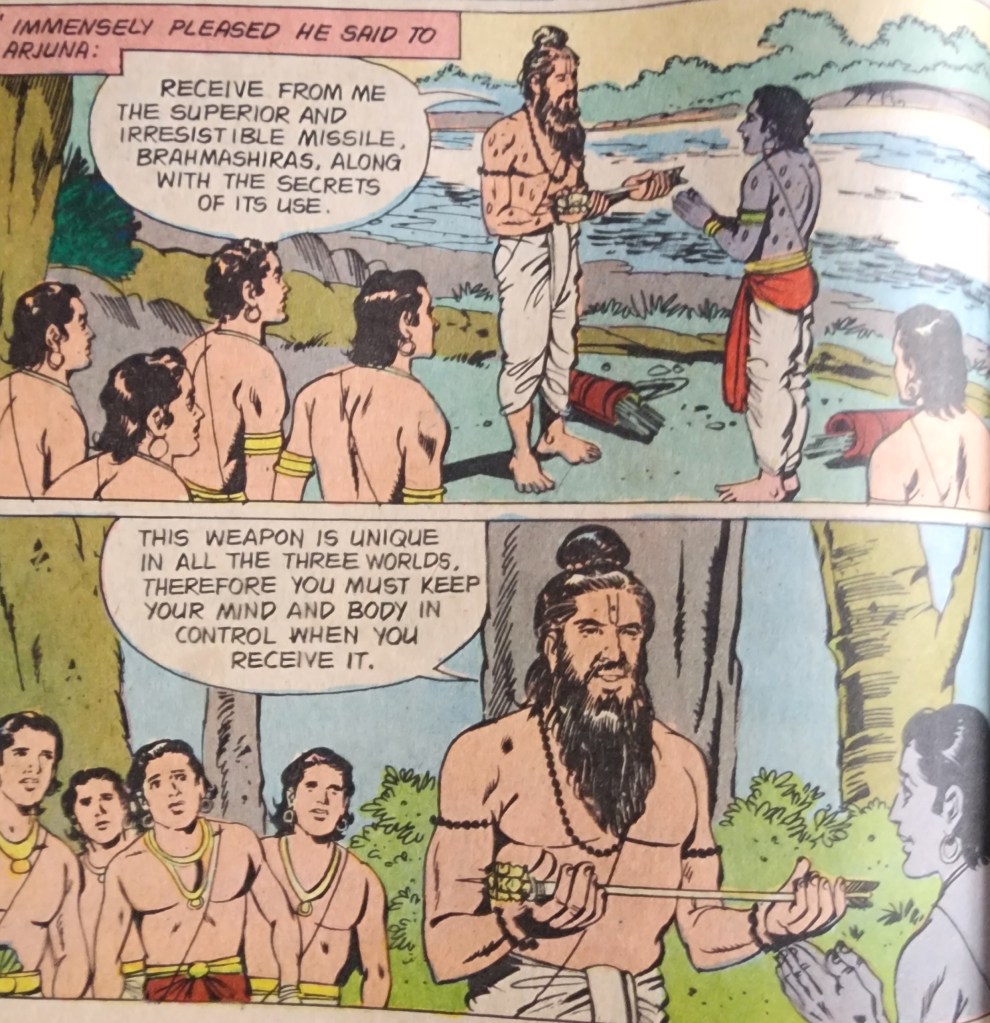
^Different stories have Bali ruling over a different netherworld. There are 7 nether worlds, according to Hindu tradition. These are, from top to bottom, Atala, Vitala, Sutala, Talātala, Mahātala, Rasātala and Pātāla.

&Naraka Chaturdashi – Chaturdashi means fourteen (chatur – 4, dashi – 10, four and ten). It is the 14th day of one of the two fortnights of a lunar month.

&Bali Padyami – Padyami can also be called Prathamā, or “the first”. It is the first day of one of the two fortnights of a lunar month.

&The dates for both these festivals and Deepavali itself is determined based on the Lunar calendar.

$There is a story in the Mahabharata where a wise man named Kanika explains this concept to Dritharashtra through a story. I will explore this in more detail in a future article.

3Narakāsura had captured several of Indra’s elephants when he had sacked Amarāvati, Indra’s capital. These elephants were the descendants of Airavata, Indra’s elephant. Airavata was a magical being; a white elephant with 4 tusks, larger and more powerful than ordinary elephants. Airavata was also supposedly capable of flight. Yes, this is fantasy 😊. But the story of Krishna using Garuda to attack Naraka makes even more sense with this little detail. If any of Airavata’s elephant descendants were also capable of flight, the only way to counter this advantage of Naraka’s was to use Garuda, who was the master of all things flight/aerial.

Aayudha Pooja, Vijayadashami – The most important festivals for the martial arts

Image credit: Original art by Vishnu Mohan (Goobe Art) , above rendition by Chirag Hasyagar (Goobe Art), art concept by Vikram M R

Today is Aayudha Pooja and tomorrow is Vijayadashami. Aayudha Pooja is celebrated on the ninth day (Navami) of the Dasara festival and Vijayadashami on the tenth (Dashami – it is built into the name) and last day of Dasara. Dasara is pronounced Dussehra by many. I use “Dasara” instead of “Dussehra”, thanks to my heritage in Karnataka. In some parts of our country the festival of Dasara has a lot of association with the Ramayana, while in others it is associated with Mahishasura Mardhini. Culturally of course, it is simply awesome; with festive fervour, great food and school holidays. If one is an adult and not in school, at least one of the two days are off, if not both. Many people go on leave on the day that is not off.

Aayudha Pooja is the day when tools and implements that either allow us to earn a livelihood or allow us to lead a comfortable life are shown the gratitude and the respect they are due. Vijayadashami is simultaneously a celebration of the victory of Lord Rama over Ravana in Lanka and of Devi Durga over Mahishasura.

The Goddess Durga had access to the weapons of all the other Gods and Devatas. She used all of these in the fight against the Asura Mahisha. The weapons include the Trishoola of Lord Shiva, Sudarshana Chakra of Lord Vishnu, the Vajra of Indra and a whole host of others. It was these weapons that aided in Durga defeating Mahishasura. Hence, the occasion when Durga’s victory is celebrated is used as an opportunity to offer prayers, gratitude and respect to the “weapons” that we use in our daily lives, which are the tools of our trade. These include our vehicles, laptops, pumps, electrical equipment, the practice weapons we use as martial artists and just about anything we think are important to us. The choice of the “Aayudha” selected for Pooja is a personal one.

Aayuda is generally used to denote “weapon”. But it also refers to tools as mentioned above, which we might not consider weapons. A “Shastra” or an “Astra” specifically denotes a weapon, where a “Shastra is a handheld weapon and an “Astra” is a weapon that is discharged. With that said, as martial artists, everything we use to train becomes an aayudha, like the training mats, punching bags, weights, practice weapons, protective apparel, the very space we train in (dojo/Kalari/akhada/gym) is something that is deserving of obeisance on the day of Aayudha Pooja.

None of this of course, is special or specific to practitioners of the martial arts. A look at any plant in the manufacturing sector or anyone in the transportation sector shows how important a festival Aayudha Pooja is. The shop floor and all machines are cleaned. The same goes for vehicles and mechanic shops as well. The cleaning might happen a day or two before the Pooja itself. Vehicles of course are decked up in the day of Aayudha Pooja.

Aayudha Pooja as a whole is a very grounded and simple act. Use the opportunity provided by the victory of Goddess Durga to appreciate and offer gratitude and respect to the inanimate objects that make our lives and livelihoods possible. If one is a martial artist, the analogy is exponentially greater, for the closeness to weaponry and their knowledge are that much greater, and the opportunity to explicitly remember/observe this fact is what the festival is all about.

Vijayadashami is an out and out celebration of victory, whether it is of Devi Durga over Mahishasura or of Lord Rama over Ravana. However, there are other aspects associated with this festival that make it all the more important. In Karnataka, a concept called “Seemollanghana” is associated with Vijayadashami. And this concept is the reason everyone is always encouraged to start something new or anything that is long pending/challenging on the day of Vijayadashami. “Seemollanghana” means “violate the border”. “Seema” is “border” or “boundary” and “Ullanghana” means to “vilolate”. This is all in a very positive sense, and just because the word “violate” is used, it is not anything negative.

From what little I know, historically, the campaign season (war campaign that is) started after the Dasara festival. It is the time when the monsoon season is tapering off. So, movement of troops becomes easier, and the winter is not far away. In southern India, at least in most parts of it, the winter is not harsh, and the weather is better for a military campaign. Summers are scorching hot, and the monsoons are muddy and wet, both of which are less conducive for supply chain management and fighting. So, the post monsoon season and the winter are better suited to military action. I am not aware if the same pattern was followed in northern India, as the weather patterns there are a little different. Either way, as part of the campaign season, geographical and political borders were crossed or violated. So, there is a literal “Seemollanghana” taking place, after the festival of Vijayadashami.

But the historical precedent is not what any of us is raised with, when the word “Seemollanghana” is used. It refers to something far more personal, not necessarily just symbolic, and definitely relates to us violating our own boundaries. We were encouraged to start something new on the day of Vijayadashami. Even if it is something we have stopped for quite a while, it would be a good time to restart the same. If there is something that we have been putting off, due to uncertainty, lack of confidence or just due to procrastination, starting that activity, even if in a small way, on the occasion of Vijayadashami is the thing to do. The general belief is that a start on this special day leads to a favourable outcome. Again, the celebration of a victory against all odds from tradition, along with historical precedent, gives an opportunity to start something new, just as Aayudha Pooja created an opportunity to give a respectful thought towards all the tools we use.

Starting something new is the same as breaking a boundary. One has to go past the jitters or second thoughts or plain old nerves. Each of these qualifies as a boundary and violating them leads to a start, which will hopefully lead to a good outcome in the future. This is why the violation of a boundary is a positive thing when considered with the festival of Vijayadashami+.

In my opinion, Vijayadashami is a constant reminder of “Shin Ken Gata”. “Shin Ken Gata” is a test some Bujinkan dojos have their students go through. This test happens at any of the kyu levels as the dojos decide. In my dojo, it was at the 6th kyu (kyu are levels before one achieves a black belt, and dan are levels after achieving the same). Shin Ken Gata in Japanese means, “form where your spirit/will is the only weapon”. This test involves performing various set techniques multiple times against multiple opponents. In all, this comes to about 15 minutes of moving, fighting and staying alive and pushing oneself, with no breaks, while incessant attacks come from multiple opponents who are all around the one taking the test. It is incredibly tiring and scary. Shin Ken Gata leaves an exhilarating feeling of having survived, after the test is done.

One great learning from the test is that, when one has to keep going continuously against multiple opponents, even if they attack one at a time, the chances of survival are zero, if it was a real situation. One realizes that one keeps going despite this becoming clear, hoping one comes out alive at the end of it. This is the will or spirit of the person driving her or him. This is why the spirit or the will to live is the only weapon; hence the name Shin Ken Gata.

When one takes the Shin Ken Gata test, one has to go past the fatigue, self-doubt, giddiness, exhilaration, rage, fear of the opponents, fear of failure and a whole host of limiting factors. Each of these is a boundary violated as the test progresses. And this is reason why “Shin Ken Gata” is a wonderful exhibition of “Seemollanghana” in real life.

I will make a pop culture reference here. I stated earlier that Shin Ken Gata makes one realize that in a real fight there is a good chance that one might not survive. Yet one strives to achieve that goal no matter what, until the very end. This is very close to the “Kobayashi Maru” test in the Star Trek franchise. The Kobayashi Maru is a test that cadets in the Star Fleet Academy have to go through. It is a test which has no success or passing. It is designed such that one will always fail. It is meant to teach cadets that despite the realization that there is no success or victory and the certainty of defeat, even death, one has to keep going and do one’s best as a leader and to save as many crew mates as possible. This objective and its realization make the Kobayashi Maru test almost identical to the experience of the Shin Ken Gata; only one of these if real though. 😊

The Shin Ken Gata test reveals two other concepts. One is Ganbatte and the other is Gaman; both are Japanese words. Ganbatte is used to mean “keep going”, “keep fighting”, “good luck”, “all the best” or “do your best”. It is used to cheer someone on in any activity of theirs. I have also heard the term “Ganbatte Kudasai”. My friend Santosh*, who knows Japanese, tells me that this is used while addressing someone senior (Senpai). So, it is a slightly more formal usage of the word. It is used to mean, “keep your spirits up”, again a form of cheering someone on.

Gaman, as I have heard it, means, “take the pain” or “endure the pain”. Santosh tell me this is used to mean “endure your suffering with patience”. Also, “gaman” is supposedly used more as a term with spiritual significance.

So, the two words signify endurance, or forging ahead however one can in the face of adversities, irrespective of whether they are internal or external. This, in my understanding, is very close to the third of the five gojo1, “Shizen no niniku”, which is “forbearance of nature”. It suggests that one should forbear troubles like nature itself does, with no complaints. This in turn leads into the term “Ninjutsu” itself, where “nin” refers to perseverance (jutsu being “art of” leads to Ninjutsu to being the “art of perseverance” or “art of persevering”)**.

Back when I was a beginner, I was advised by my teacher to consider injuries as an opportunity to learn and hence try to attend classes while nursing or recovering from injuries, irrespective of whether they were sustained while training in the dojo or outside, while going about one’s daily life. This was because, being conscious of an injury forces the body to adapt; to protect the injured part of the body and to stay safe, to avoid further aggravation of the injury or the possibility of a new one. This also inspires the body to move more efficiently, which has many revelations that can hopefully be used when one returns to normalcy. This entire exercise is nothing but violating the boundaries set by worry, fear and pain, either due to our own preconceptions or those we have imbibed from others around us.

Enduring hardships and hindrances is nothing but breaking boundaries of concern and fear and moving ahead, both of which dissuade one from doing or starting something one either needs or wishes to. In this sense, the festival of Vijayadashami addresses the very heart of what the Bujinkan represents, to keep going, enduring and achieving flow in the face of adversity. This makes Vijayadashami perhaps the most important festival for practitioners of the martial arts, as it is a reminder of all things this art stands for.

Thus, Aayudha Pooja is a reminder to be grateful to our surroundings (dojo, implements) and Vijayadashami is a reminder to respect our own selves, by going past limitations and constantly expanding our abilities.

Notes:

*I would like to thank my buyu (martial sibling) and friend, Shihan Santosh Nagasamy, for sharing his knowledge of the Japanese language with me.

**My teacher and mentors used to change the forms we used often. My teacher said that this is to enable neuroplasticity. I am no expert on this topic and hence am adding this point in the notes. When one trains the same forms multiple times, changing it and exploring it differently after a duration of time leads to new learning and fine-tuning of the same forms, with each iteration of training the same. Also, moving differently in response to the same initial attack also leads to different outcomes and the form being practiced leads to interesting revelations. This continuous change helps overcome any reliance on form and technique, while also mitigating a worry of what could happen against an unfamiliar attack or in a real situation. In other words, it helps one accept that in the real world, one needs to adapt to what is faced and not believe in the techniques as a textbook. It is fine to rely on the basics and concepts, but not to trust the forms as a religion.

+The story of Durga defeating Mahishasura itself is seen in a symbolic manner by some. Mahishasura is seen as an embodiment of animalistic tendencies (Mahisha means buffalo) in humans, like ignorance, a focus on desire and the like. So, these are boundaries that are holding back the progress of individuals as humans. And the breaking of the barriers present due to these tendencies is seen as the victory of Durga (the divine mother) over Mahishasura.

1https://mundanebudo.com/2023/03/16/the-gojo-a-personal-understanding/

Missile – long range weapon :: Narrative – “Long time” weapon

“Kirik” in colloquial Kannada means, “deliberate mischief”, maybe with malicious intent

Training of any traditional martial art system involves learning to use weapons. Generally, practitioners learn the use of weapons based on the reach of the weapon. The range a weapon can affect is based on its reach. A simple classification of weapons based on their reach is,

  1. Unarmed combat – the human body is the weapon
  2. Short range – weapons like knives/daggers, Vajra/yawara stick, bagh nakh, loh mushti/knuckle dusters
  3. Medium range – weapons like batons, hanbo, jo, gada/mace , swords
  4. Long range weapons – bo, quarterstaff, spears, all other pole weapons
  5. Discharged weapons – weapons with a range greater than those mentioned above, including all missile weapons, like bows and arrows, javelin, slings, chakra, shuriken, and all modern weaponry

The weapons in short, medium and long range, as far as Indians are concerned, are classified as Shastra, weapons that are hand held. Discharged weapons are Astra, weapons that are discharged with either the hand (javelin, chakra) or through a device that is handheld (arrows through bows, stones through slings).

The reach of a weapon is the distance at which it can affect an intended opponent/target. The range of a weapon is the area that can be influenced by a weapon. Reach is two dimensional, whereas range is three dimensional. For example, the reach of a sword would be the length of its blade if the wielder of the same does not extend her or his arms and legs. The range of the sword would be a sphere, whose radius is the length of the blade. The sphere is generated when the sword’s wielder turns around and moves the weapon over the head and below the waist.

When we consider modern weaponry like missiles, bombs and the like, the range will be the area around the point of impact where the destruction occurs, while the reach is the distance the missile can travel. Of course, in common parlance we refer to this as the range of a missile and the area of impact or blast radius as the range of the warhead the missile was carrying. There could be even more technical terms used which I am not aware of.

In the Bujinkan system of martial arts, Soke Hatsumi Masaaki had designated as the “theme of the year” for the years 2002 and 2003 respectively, the concepts of “Sanjigen no sekai” and “Yugen no sekai”. These concepts were the point of focus in the training of practitioners for those years respectively. The result of this training would be improving the movement of budoka with the addition of these concepts to their existing abilities and experience. “Sanjigen no Sekai” is “the world of three dimensions” and “Yugen no Sekai” is “the world of elegance”.

In simpler terms, Sanjigen no sekai reminded budoka (practitioners of budo, one of the systems of which, is the Bujinkan) to remember to also use the third dimension in their movement. As beginners, we tend to focus on angles and distance to learn the basics. This is facilitated by the dojo being a flat indoor space. Over time, one needs to learn to use one’s legs better to lower one’s centre of gravity to achieve better stability and power by the use of potential energy. It also gives extra space to protect oneself when there are attacks (a diagonal requires an attacker to traverse a greater distance). An additional aspect that my mentor explained while training this concept was that a real fight need not be on a level ground. It could be on uneven terrain or even a slope (think stairs). This changes the distances and needs adaptation in one’s movement and the use of weapons. In other words, the reach and range vary with the terrain.

Yugen no sekai by its name is very poetic. But in reality, it is a lot simpler, based on my understanding. The application of sakkijutsu over Sanjigen no sekai should lead to a realization of Yugen no sekai. Sakkijutsu refers to using intuitive abilities as a guide to move, instead of only relying on the other sensory cues from opponents. It is using one’s gut feel to move in a conflict situation. So, if one can move when the intent to attack is felt and also move in 3 dimensions, perhaps then, one has experienced the concept of Yugen no sekai in the movement.

Sakkijustsu*, as described in previous articles of mine, is generally expected to help gain a fraction of time in facing an attack and this tiny bit of extra time hopefully saves one’s life or mitigates injury. Thus, Yugen no sekai introduced the element, or dimension of time into movement during a fight. This is perhaps logical as Sanjigen no sekai was all about space (three dimensions and their efficient use). Maybe if one used Sakkijustsu, the movement would appear effortless and hence seem elegant, as a consequence of being in harmony with the opponent and the surroundings, leading into the translation of Yugen no sekai in the first place. Of course, harmonizing with the opponent by nullifying one’s own motivations in a fight is a key to practicing Sakkijutsu. So, it is a virtuous cycle (when I read “The Final Empire” by Brandon Sanderson, and the main characters are fighting by using the abilities bestowed by the fictional metal “Atium”, Sakkijutsu was what I always saw+).

Now that we have brought time as a dimension in a fight, it leads us to another concept. Just as there are “long range” weapons, can there be “long time” weapons? A “long range” weapon is with respect to space; a weapon which can strike a target at a distance and maybe also one that has a destructive impact on a much larger area. These might be weapons like today’s stand-off range missiles and bombs. A “long time” weapon is with respect to time; it would be one that has an effect over a long duration of time, irrespective of the physical space where its effect is felt. It could also be a weapon that takes a longer duration to show its effect. The term “long time weapon” is something that I am using here, it is not a real, established word. The concept is relevant and any term can be applied to it.

So, what could constitute “long time” weaponry? One thing that comes to mind immediately is “narrative”. This is a term used very often in all forms of media today. There is discussion of having national narratives where a populace feels pride in its nationality and civilizational history and how this drives confidence in citizens to take risks without fear of failure. There is also talk of “foreign interference” through media to set a narrative inimical to the progress or achievements of a society by highlighting only its negative aspects.

Before exploring this further, one thing has to be said. Long range weapons have an impact over varying durations of time and “long time” weapons have impacts over varying regions of space. If a region of a city is destroyed with bombs that region is lost for the citizens until the reconstruction takes place. How long this takes depends on the duration of the conflict that caused the destruction and the nature of the weapon used for the same. So, apart from the space destroyed, there is a duration for which the effect of the destruction persists (effects of nuclear weapons being the extreme). Similarly, if a specific narrative is set, irrespective of the intentions behind the same and the correctness of it, the effect of that narrative can shape societies for many generations, lasting decades or perhaps centuries. This narrative, can spread to different regions through various means and have an effect to varying degrees. So, even “long time” weapons have a spatial impact. That said, let us return to exploring the idea of “narrative” as weaponry.

In his book, “Japanese Sword Fighting, Secrets of the Samurai” Soke Hatsumi Masaaki, states that one should “aspire to the arts of both the pen and the sword”. This is mentioned early in the book, in the preface. He is making a point about sword saints (kensai) and this is one of 5 aspects related to them. But it is not a concept intended to be relegated for use only by the sword saints of old.

This concept of “the pen and the sword” is referred to as “Bun and Bu” in Japanese, as I have heard from my teachers. The “bun” here refers to the pen or the literary arts in general. It also extends to learning and acquisition of knowledge. The “bu” refers to war and the martial arts which is represented by the sword. This concept is mirrored in Hindu culture by the phrase “Shastra and Shaastra”. Shastra as described above are handheld weapons, which represent the fighting arts. Shaastra is a collection of knowledge which leads to and is generated from wisdom through experience.

So, the idea of knowledge beyond just the martial arts has always been recognized as a necessity for survival and conflict management, which is life in general. It is also recognized that the pen and sword go hand in hand and complement each other. An additional point is that the transmission of both “bun and bu” is couched in tradition. In Hindu culture, this would be “Sampradaaya” which is tradition being the container used to transmit knowledge** (this is beautifully put by Dr. Aarati V B in the video which is linked below).

There is another concept called “Kyojaku jyugo arubekarazu” which is practiced as part of the Bujinkan system of martial arts. It states that there is no hard or soft and no strong or weak. It means that there are no dualities. This is used to remove certain misconceptions that practitioners might have after the basics are trained. One of the ways an individual receives an attack (Ukemi) is to absorb the same. This is saying that the defender moves to a position where the force of the attack is low or has been expended. Thus, that particular attack is nullified. So, a hard attack was received and mitigated by a soft response. It is also the same as keeping the joints loose while falling. This allows the impact to be absorbed and distributed instead of keeping them stiff and causing damage to the joints. After this learning, it is possible that practitioners might think of specific soft options against an attack, as against a hard option which could be a block or counter to the attack. This concept is meant to dismiss the artificial distinction. In a real situation, one does what is necessary, absorb, block or counter as the situation demands. There is no distinction or even the need to consider the same.

If we apply this concept to the pen and the sword, knowing that they can complement each other, it is also clear that they can be applied to oppose each other. This aspect of using the pen and the sword against each other and the concept of “kyojaku jyugo arubekarazu” is explored further in my earlier article titled “Might is Right, always”. The link to this is seen in the notes below1.

Thus, if knowledge or “bun” or “shaastra” and their medium of transmission, traditions, can be applied as weapons, will an attack on the traditions and knowledge systems not be a valid counter to the weapons? Is this not exactly like attacking the supply lines of an enemy to diminish their fighting ability over time? Just as denying food and ammunition to troops to get them to stop fighting is a long known tactic, diminishing a society by messing with its culture, identity and traditions is also a long used strategy. Culture and identity are deeply influenced by “bun” or shaastra, and affect the application of bu or shastra in defence of the same. If these can be defeated, maybe the source of the conflict can be eliminated. And the origin of the ability to use the shastra can also be defeated at the same time. In any case, knowledge and traditions are legitimate targets in a conflict and also valid and useful weapons.

Narratives are the tools of “bun” and “the pen” in the modern world we currently live in. They are vastly more acceptable, and more importantly, cheaper than actual weapons that cause physical harm. It is acceptable to attack culture and civilization as it not harming an individual’s person physically, at least in the near term. It is however unacceptable to cause physical harm in the world we live in, at least in the countries that have functioning democracies. This is true even though an attack on culture and identity might be equally devastating with effects lasting over a long time. Of course, the effect of the narrative also takes a longer time to reveal itself. And there we have it, weapons of “long time”. This is clearly visible in the points in the previous paragraph. Attacking the knowledge, traditions and identity of a society with a series of narratives, yields results only after a consistent attack of years and perhaps even decades, and might only be evident after a century. Thus, it is a weapon that shows its effects after a long time. Similarly, the effects of this weapon will last a long time, as a counter narrative has to be designed and applied to nullify it. Even realizing that an insidious narrative was at work might take time and any counter comes about only after this. So, the weapon causes damage unopposed and unmitigated for a long time before it is countered.

I have to share a point about “shastra” here. Narratives and “the pen” are tools, which can be used to cause damage. If a tool can cause damage, it becomes a weapon and can be called a “shastra” or an “astra”. There is another term we use in India, called “Aayudha”. An “aayudha” in the Kannada or “aayudh” in Hindi, is a commonly used term for “weapon” in India. But, “aayudha” can also be used to refer to “tools”, as in, “tools of the trade”. We have a festival called “Aayudha Pooja” in India. “Aayudha Pooja” is the festival celebrated on the ninth day (Navami) of the Dasara (Dussehra) festival. On this day, everyone pays their respects to the tools that allow them to earn a livelihood. All of us clean and perform rituals where out tools are considered Gods. We all clean our vehicles, engineering equipment, laptops, pumps, machines, switchboards and of course, weapons and training equipment. We then offer our gratitude to these object for their part in supporting our livelihoods. I am not going into the story about the origins of this festival here.

This shows that an “aayudha” is a tool first and a weapon, if necessary. An aayudha becomes a shastra or astra based on the objective of its use. Based on this observation, a narrative is an “aayudha” more than a “weapon”. It is a tool first; the application of the narrative to specific objectives determines if it becomes a weapon or not.

Earlier, I mentioned that using a narrative as a weapon is not entirely different from attacking the supply lines of an enemy. Achieving this could involve subversion, guerrilla warfare, militia and the like, if not conventional military means. This is classified as “unconventional warfare”. Another example of using unconventional warfare would be misinformation campaigns of various hues. One example of this is the use of the fake army by the allies to make the German troops not be sure if the invasion would begin in Pas de Calais and not Normandy. A similar method is supposedly suggested by Chanakya where one should use the bodies of dead soldiers on battlements to make the troop numbers seem larger than what they really are. Apparently Russia is currently using inflatable tanks to fool Ukranian drones.

Also falling under unconventional warfare is the use of psychological warfare. Examples of this include dropping pamphlets to make soldiers and civilians think their army or country is losing a war and break the morale of the society. If I recall right, US forces during the First Gulf War used audio recordings of artillery and tanks to make Iraqi troops abandon their positions and retreat. This allowed a faster and bloodless capture of territory.

Using narratives as weapons would fall under this category of unconventional warfare. It can be used for all of the above – misinformation, psychological assaults, subversion, misleading populations etc. An example of this that is quoted often in India these days, is how the idea devised by Thomas Babington Macaulay was used to destroy India’s traditional education system in the 19th century, first during the Company Raj and later during the British Raj. Traditional education systems being replaced by a British one with elements of it aggrandizing Western Christian culture caused the populace to gradually accept British superiority and lose pride in its own. This is a problem to this day in India and narratives are bring changed after nearly 200 years of the speech by Macaulay in 1835 in the British Parliament where this attack started. Macaulay apparently wrote in a letter in 1837 that Hindus who receive an English education rarely have reverence towards their own religion.

People who toe a line that looks down upon Indian culture as a whole (nobody says it was all hunky dory in the past or that current Indian society is perfect) are derisively called “Macaulay putras” (sons or more appropriately, Children of Macaulay) in today’s India.

Coming to contemporary times, we are currently in election season in India. Everything is political and everyone is an intense political animal whether or not they openly share their opinions. And this means an intense “war” of narratives is on in our country on all forms of media. And this media conflict includes both domestic (includes Indian media with foreign investment) and foreign media (media originating outside India).

Currently India has what many call a pro-Hindu or a “Right-wing” government. Many others say it is a “Left-wing” government with a veneer of being right-wing. Many a time, it is also called a “Hindutvawadi” or “Pro-Hindutva” government. Both sides (maybe many more than two if we consider the minutiae and nuances of the data used) are convinced they are right.

One major achievement of the current government as seen in all surveys time after time, is that it has made Indians a lot more proud of themselves, their country, their history and their culture. This also means that any doubts that Indians might have had about the positives and glory of their identity and past are diminished if not gone. Further, Indians no longer consider western culture as superior even if the quality of life as seen by various indices of human development are better for the western nations. This aspect is visible in the assertiveness of Indians in various walks of life, governance and foreign policy. Of course, all of this is built on continuous economic development.

As a counter, the outfits opposing the government say that India is not doing great. And the main aspect where India is supposedly not doing great is in “democracy”, “human rights” and “equality”. There are umpteen articles that refer to “India backsliding” in the area of democracy. It is claimed that democratic principles and institutions are under attack in India by the government and that press freedom is reducing as well.

One of the evidences quoted routinely to prove the above are the reports and ratings from Freedom House, V-Dem and the World Press Freedom Index (by Reporters without (Sans) Frontiers – RSF). It is interesting to note that the World Press Freedom Index ranks Afghanistan above India. 😛 As is to be expected, stories and articles using these three sources are considered part of a narrative with the reports being components of the same.

Considering what was just said about Indians being more assertive and confident, there is pushback to the above narrative. And the counter is not just to the articles specifically, but against Freedom House, V-Dem and RSF. The methods used by these organizations is questioned and their motives are under scrutiny. This treatment is true for all the western universities and their statements perceived as “anti-India” as well, especially those emanating from the social sciences and humanities departments (history departments receive special attention). When I say western universities, think Oxford, Harvard, Princeton and the like. Indians rarely take these reports at face value or ascribe much importance to them.

That said, the awareness of narratives and other tools of “the bun” and their potential to affect the progress of a nation is considerably higher these days in India. I am linking a few videos and an article below that exemplify this much better2. These are interviews with Mr. Sanjeev Sanyal, who is a member of the Economic Advisory Council to the Government of India. The article is also co-authored by him. He is a very respected thought leader in the country these days, not just in economics but also in aspects of history. In the video he speaks of how he does not accept the reports mentioned earlier and also how he is trying, unsuccessfully so far, to counter their methodology.

Mr. Sanyal also explains why Indians need to learn to counter the “bun” from the west as it could have an adverse impact on our economic progress. He picks out how a new narrative is being built by western think tanks to ensure that their ideas of democracy and human rights are imposed on the world. He specifically mentions the Open Society Foundation, Ford Foundation and USAid as three organizations funding efforts to impose their ways of thinking on the world. He further mentions how the notion of ESG (Environmental, Social and Governance) is one such concept they are pushing to control the direction which the world intellectual and economic progress is taking.

How exactly can think tanks influence how people think and how economic progress happens? I will quote an example from my personal experience for this. 20 years ago, I was working in the automotive industry. While there, my colleagues and I were working towards achieving the certification “TS 16949”. I am not sure if this certification is still relevant or used anymore. One of the requirements to achieve this certification was that all our suppliers (vendors) had to adhere to and achieve the certification ISO 9001. In case they were not already certified, we needed to get a confirmation from them that they would do so in a defined time.

So, not only were we as an organization committing to practice certain processes defined by an organization that is not our own, we are also ensuring that our suppliers follow certain practices defined by a certifying organization. This was all supposed to be in favour of having uniform practices that improves the industry as whole. The idea is great as a concept. But there is a hitch.

This certification process forces certain behaviours on organizations. And once an organization commits to it, its employees need to too. And to facilitate this, there are training programs that are put in place. And training is like education, it changes the behaviour and way of thinking of those who undergo the same; it makes them CONFORM. There is no guarantee that this adherence to a process does not limit progress in ways that might have happened if left unfettered.

Also, there is the question of who devised the processes defined by the certifying organizations and what their motivations were. They might have all been good and altruistic, but that is not necessary. Ulterior motivations might have existed, or not, but do we know that ulterior motives might have existed that even the ones who had those did not realize? This is the crux of how think tanks can come to control knowledge, its generation and behaviour.

Consider a think tank with massive resources. They can design processes and behaviours and get governments to subscribe to the same. They can do this with pressure through educational institutions and other “intelligentsia”. Governments can get business houses to follow these new norms. These norms can force businesses to only invest in other countries with “specific rankings” in “select reports” generated by “reputed organizations”. Also, they can mandate that businesses only partner with other businesses overseas who also adhere to these norms. And how does one know if the norms “as desired/expected” are followed? Device certifications to ensure the same. And thus, control is achieved as described in the earlier paragraph. When business do not get certified, they lose out on the potential opportunities and over time the economies of nations get affected unless they and through them their businesses fall in line. Once businesses and the economy falls in line, so does the society, if a little later.

This entire process is all about devising and delivering weapons of “the bun” or Shaastra. Once this is achieved, the tools are in place to build new narratives and deliver opinions that are more judgements, which those at the receiving end might never have asked for. Of course, the new narratives use existing ones to build and further themselves. No one has opposition to ideas like ESG. But once the process to achieving them is revealed, the weapon takes shape. Once the weapon exists, a counter to it comes into being by default.

The previous paragraphs represent the “waza” and “kata” (techniques and forms) of narrative weaponry. Before the above few paragraphs, we discussed how there is a counter in India to the narratives using the reports on Indian democracy coming from abroad. This growth of the counter is also understood by the ones peddling it. A great example of this is seen in the video linked below3. It is a video showing a well-known journalist and columnist in India, Mr. Vir Sanghvi. Mr. Sanghvi states that people on the “liberal” side should avoid making statements that provide “ammunition” to the side that espouses “Hindutva”. And there we have it again. He actually calls statements “ammunition”. Of course, he is saying this in the context of a war of narratives, with “Hindutva” on one side and “Liberalism” on the other. Do we need any further evidence that narratives are weapons and have time based outcomes, considering he wants the ammunition to not be provided while we are in election season?

I am sharing the link to two articles below that could add to the narrative of negativity towards the current government. One article speaks of how ethics in the art scene in India is troubled due to the current government and the other one speaks of why nationalism is a bad thing (based on the writer’s personal life experience). My opinion on both articles is irrelevant, these are just used as examples4 5. The links are seen in the notes below.

Coming back now to actual physical conflict, like tense standoffs and wars between nations, I will quote some examples of how narratives and in general “bun” or “shaastra” are used are weapons. Journalist Pravin Sahwney recently wrote an article on the news portal, “The Wire”. Mr. Sawhney is a well-known journalist and domain expert who writes on matters of defence and national security, specifically from an Indian perspective. He recently published a book titled “The Last War: How AI will shape India’s final showdown with China”. I have not read this book6 (link to the book is seen in the notes below). I have read and seen reviews of the book on other news portals and their respective YouTube channels. In the book, Mr. Sawhney supposedly explains how China is far ahead in terms of technology compared to India in matters of defence and will have a massive advantage in the very near future.

Mr. Sawhney, in his article on “The Wire”, was responding to an article by General Naravane on another news portal, “The Print”. General Naravana is a former Chief of the Indian Army. There is a video on the YouTube channel of “The Print” where Genral Naravane details his article7. A link is seen in the notes to this video. A link is also seen in the notes to the article8 written by Mr. Sawhney. In the article, Mr. Sawhney says that apart from the three conventional arms of the armed forces, the Army, the Navy and the Air Force, China also focuses on 3 others areas, namely, cyber, electromagnetic spectrum and outer space. He further states that in case hostilities breakout between China and India, China will severely affect data in cyberspace, to the extent that it can bring civilian life to a halt and cause extreme confusion in the political decision making sphere. This is by making everyone unsure of what data to believe, misinformation in other words. It will supposedly be impossible to trust any data online. I personally understand his observations as an exponential increase in China’s information and propaganda war.

Based on my understanding, the effect on the government and civilians will happen in a short time and the attacks on data will also happen very quickly. So, this is still using “bun” as a weapon, but it is now not necessarily a “long time” weapon. Maybe this is an evolution of narrative weaponry where it can also double up a quick use conventional weapon.

On the YouTube channel of the news portal “The Print”, the chief editor of the same, Mr. Shekhar Gupta, another very well-known journalist of India, had carried out an analysis of the report by the Special Competitive Studies Project’s (SCPI) on future war and how to confront China. The link to this video is seen in the notes below9. In this video, Mr, Gupta explains, from the report of course, that currently persistent conflicts exist below the level of armed clashes. The report essentially states that information and data warfare is constantly on in the world we live in. Perhaps then, even if the weapons Mr. Sawhney mentions are not necessarily “long time”, if they are to be applied and defended against incessantly, they do constitute a “long time” weapon, because, it is operational for a long duration, which is literally always! A link to the actual report is also seen in the notes below10. This report is truly fascinating and I would recommend that everyone, specifically martial artists, read it.

Another term that keeps coming up when looking at the use of information and data warfare is “intelligentized warfare”. It is used to refer to the use of AI and other latest information technology, which affects the understanding abilities of adversaries. This again goes back to “bun” or “shaastra” or knowledge, which evolves into technology and eventually to intelligentized warfare.

A simple example of this from Hindu tradition is when Lord Krishna used a solar eclipse during the Kurukshetra War in the Mahabharata. Arjuna was supposed to kill Jayadratha before sundown or give up his life. When the eclipse occurred, Jayadratha came out from behind the layers of warriors protecting him assuming the sun had set. But alas, it was an eclipse and not the sunset. Arjuna killed him before the actual sunset. This use of the solar eclipse is also seen in the old Tintin graphic novel, “Prisoners of the Sun”, but is a lot more condescending and racist manner. It is this use of information and a narrative that leads to the weaponization of data. In the case of the Mahabharata, the narrative was that Arjuna was doomed as he had failed, since the sun had set, and the precursor to this was spreading the information that Arjuna had taken a vow to kill Jayadratha before sunset.

In the Bujinkan, there are two concepts that are taught. One is “Kasumi no ho” or “the way of fog”. The other is “Kyojitsu tenkan ho” or “switching between truth and falsehoods like either side of a pivoting door”. Kasumi no ho was the theme of the year in the year 2004, the year after “Yugen no sekai” was the theme. Both these concepts refer to causing confusion, doubt and a lack of trust in one’s own ability to achieve an objective (like a hit or a cut or any other attack). I will not delve into these concepts in detail here. But the negative objective of narratives or “long time” weaponry is essentially the same as that seen with these two concepts.

The above examples refer to the use of “bun” or “shaastra” as weapons against “bu” or “shastra”. In other words using narratives to counter conventional war fighting or just fighting ability. This is as simple as laws (read constitution) being a deterrent against physical violence in societies. But there can be cases where “bu” or “shastra” can be applied to counter “bun” or “shaastra”. Physical violence can be used as weapons against narratives. This is especially true when physical violence can be used against individuals or groups that generate or perpetuate ideas, knowledge and narratives.

Consider that the author Salman Rushdie had to face threats of violence for several years. Also, some years ago, there was a spate of murders in Bangladesh, of bloggers. These bloggers were supposedly rationalists and promoting ideas against the dominant religion. In India a few years ago, there were murders of individuals who were considered by many to be rationalists and atheists. These individuals were promoting views against traditions by what many considered belittling the same. This hurt many who had faith. Also, these individuals were widely known to have leftist associations. In all these instances, ideas of a certain kind, which could morph into narratives were stopped or at least slowed down by applying “bu” against “bun”. For details about the example from India I mentioned, I would suggest a book titled “The Rationalist Murders” by Amit Thadani. Again, I have not read the book, but seen a discussion about the same between the author and a popular podcaster. It was a fascinating listen and I hope to get to this book soon. A link to this book is seen in the notes below11.

I have discussed the application of an ability that is different from the one possessed or used by an opponent in my previous article titled, “Might is Right, Always”. A link to this article is seen in the notes below. It could serve as a precursor to this article.

In conclusion, I opine that a narrative is an aayuda, which is “bun” in nature with characteristics from “yugen no sekai”. We humans being tribal creatures, are always looking to achieve superiority or power over the other, whether it is as and over an individual or a group. The reasons may be myriad, but usually involve personal gain or satisfaction or both. In trying to achieve superiority, I would think that the application of violence is the primal expression of us humans. So it is perhaps the very first of the arts, considering even hunting is the use of violence. This violence changed over time, starting with physical violence to being emotional violence and now, intellectual violence, which is what narratives (“bun” and “shaastra”) are fine tuning in our times. Perhaps, this will lead to spiritual violence when “intelligentized conflicts” make us doubt who we are.

Personal note: I post on alternate Thursdays. But I am posting this on a Sunday instead of a Thursday, so it coincides with the start of the Dasara (Dussehra) festival. The next couple of posts are also likely to not follow the usual Thursday pattern, as I would like them to coincide with the end of the Dasara festival and to be during the Deepavali (Diwali) festival.

Notes:

*https://mundanebudo.com/2023/07/20/connect-control-part-2-boons-blessings-curses-the-sakki-test/

**Watch between the 12 and 14 minute mark

+In the Mistborn trilogy written by Brandon Sanderson, “The Final Empire” is the first book. In the series, some characters use a magical ability called “Ferromancy”, which allows the use users to ingest different metals and this act, depending on the metal manifests differing magical abilities. The fictional metal “Atium” when used, allows the “Ferromancer” to literally see the next move an opponent makes. This makes the fight seem one-sided and also like the Atium user is dancing effortlessly and elegantly around the opponent(s). A link to the first book is seen below.

1https://mundanebudo.com/2023/05/11/might-is-right-always/

2Watch between the 30 and 38 minute mark

2Watch between the 08 and 13 minute mark

2Watch between the 1:10 and 1:18 minute mark

2This is the report that explains his stance

3Watch between the 10 and 11 minute mark

4https://artreview.com/what-is-the-future-of-indias-contemporary-art-scene-jana-shakti-modi-national-gallery-modern-art/?utm_source=pocket-newtab-en-intl

5https://www.sapiens.org/culture/india-pakistan-partition-border-ceremony/?utm_source=pocket-newtab-en-intl

6https://www.amazon.in/Last-War-Shape-Indias-Showdown/dp/9391047181/ref=sr_1_1?crid=1YMZRJ0WWC97J&keywords=pravin+sawhney&qid=1697009227&sprefix=pravin+saw%2Caps%2C236&sr=8-1

7 Full video is relevant

8https://thewire.in/security/general-naravane-is-mistaken-strategic-depth-has-no-relevance-against-china-or-pakistan

9 Full video is relevant

10https://www.scsp.ai/wp-content/uploads/2022/10/Defense-Panel-IPR-Final.pdf?utm_source=substack&utm_medium=email

11https://www.amazon.in/RATIONALIST-MURDERS-Diary-Ruined-Investigation/dp/817062357X/ref=sr_1_1?crid=3RE40KV8FW5VM&keywords=the+rationalist+murders&qid=1697048449&sprefix=the+rational%2Caps%2C251&sr=8-1

Kaitatsu Gairouku and Tapasya – How to get help with influencing the Gods

Kaitatsu Gairoku means “do it indirectly”. This is just a phrase from the Japanese language. But it is also a concept that is trained in the Bujinkan system of martial arts. It is understood and applied differently based on the depth and duration of experience of a practitioner in the Bujinkan. Further, this concept is not specific to the Bujinkan. Many martial arts would have this concept with differing descriptions and nomenclature.

As a very simplistic example, consider this. One wants to punch another person in the face. If one has fists raised, the other person does the same, simply to protect one’s own face. In this situation, hitting the other person in the face is difficult, especially if the other person is purely defensive and has no intention of fighting. In case one does throw a punch, the hit might end up on the hands at best, and not on the face.

If however, in this situation, one kicks the other person in the groin, the he or she might double over and also lose focus on the defence of the face. In this situation, the person who threw the kick, might not really need to throw a punch at the face, he or she just needs to keep the fist in the right place, and the other person in the act of doubling over, smashes his or her face against the fist in space. In a way, the person punched himself or herself; it could even be that the person hit the fist with his or her face (obviously, this might never be an excuse with the law! 😛 ). In short, to punch the face, one kicked the groin – the objective was achieved indirectly, by not really attacking the face at all.

Of course, if the person defending moves out of range of the kick, the situation changes. Also, one could punch the hand of the defender and that in turn hits the defender’s face. But the example above was meant to be overly simple and not an exploration of an exact situation.

If we consider this in a more generic manner with training, beginners are taught to move their entire body to effect any movement against an opponent. This is natural where there are no weight categories or rules to control a training encounter, except one’s own awareness to avoid injuring her or his training partner. It is also important as one might be training against a larger, taller, heavier individual. Each situation is unique and requires application of learnings specifically to that encounter.

In such a training scenario, in order to affect the attacker (uke), one should strive to apply minimal strength, and use body movement to cause her or him to be at a disadvantage. This is training to ensure reliance is not only on one’s strength or speed. This is also Kaitatsu Gairoku in a roundabout way. The obvious manner to disadvantage the attacker is to counter attack with strength if necessary, but one uses movement as a substitute. This therefore is doing it indirectly, even if this seems counterintuitive at that instant. Of course, in a real situation where one is in danger, this training is hopefully useful in protecting the person with the training. Also, there is no restriction against using strength or any direct action to save or protect oneself when in real danger. It serves as an added advantage.

When an experienced practitioner is training, other aspects like kyojutsu or distraction techniques, or feints could be considered. Concepts like using timing to “cut the space” to mitigate an attack can also be used. It could even extend after many years of practice to “put something in space”. This refers to doing something, but not specifically to the opponent, it is just done in space, to see if an opening can be revealed that can be exploited. This concept of Kaitatsu Gairoku for experienced practitioners goes hand in hand with concepts like, “do not try to do a technique”, “do not finish the movement”, “keep the connection” (En no kirinai*) and others.

It is essentially a reminder that one needs to stay in the moment and do what is necessary to stay protected and nullify the attack. It is also a reminder to not fall in love with one’s own abilities and knowledge and not try anything actively. This is because an experienced attacker need not leave obvious openings, and worse, he or she might do that to set a trap! It is to remind a practitioner that there is no necessary difference between attack and defence and that one should not label things with past experiences. One only does things indirectly and incompletely at this level with staying alive being the only objective. This realization becomes exaggerated when there is more than one opponent and if weapons are involved (mainly traditional weapons that are not discharged in training, but of course firearms might be involved in real situations).

This realization leads to an iterative understanding that one needs to learn to trust one’s gut feel (Sakkijutsu+), move as necessary (Taihenjutsu) without pride or ego and assimilate the idea that there is no victory or defeat, only survival, so just stay protected (Goshinjutsu). This is doing it indirectly because, now there is no fight or opponent, just a situation to avoid at best or survive at worst. One survives by not being in a fight! This is the epitome of doing it indirectly as one survived a fight by ensuring that the fight did not happen! Not by being there and doing things to survive. Of course, this is a beautiful concept which is incredibly difficult to apply in daily life, not just in training. But it is also intuitively understood by most of us, even without martial arts experience (it also reveals that luck is important in life 😀 ).

So then, how does Kaitatsu Gairoku help with influencing the Gods? In my recent articles**, I have mentioned and discussed how stories from Hindu culture show individuals performing meditation, penances, yajnas and other activities to obtain boons, mainly from Lord Brahma. This boon (vara) grants great abilities to the individual on whom it is bestowed and also protection from various life-threatening people, weapons and situations. These “Blessed” individuals many a time give in to their egos and cause havoc on the planet. Lord Vishnu manifests on Earth in one of his avataras to exploit the “opening” or “loophole” in the Vara and puts an end to the adharmic (I feel it is simplistic to use the word ”evil” instead of adharmic or non-dharmic) activities of the individual.

The path to gaining a boon is very long, hard and even torturous at times. I have gone into this in earlier articles and will not repeat the same here. Anyone who has even a faint idea of stories from Hindu culture would be aware of this. However, there is one aspect of the whole process of Tapas performed by an individual that is not considered in my earlier articles, which I will delve into here.

Many a time, when a determined individual performs severe tapasya (can also be called tapas) for a long period of time, the stories tell us that their efforts cause extreme weather events. Two examples of this would be the tapasya of Hiranyakashipu, father of Prahlad and that of Arjuna, the third Pandava. After Hiranyakashipu had performed tapas for a long time, the whole world started experiencing extreme heat. This caused the Devas, his mortal enemies, to request Lord Brahma to put an end to the tapasya by granting him an audience and hence the boon he desired. Lord Brahma acquiesced and granted Hiranyakashipu an audience and the boon he desired.

Image credit – “Prahlad”, published by Amar Chitra Katha

Image credit – “Prahlad”, published by Amar Chitra Katha

When Arjuna was meditating on Lord Shiva in his quest to attain the Paashupatastra, his meditation caused the areas around his place of tapas to become perpetually covered in clouds. This caused the Rishis who lived in the region to request Lord Shiva to end Arjuna’s tapasya by granting him an audience. Lord Shiva relented and stopped Arjuna’s penance with a physical test. The passing of the test led to Arjuna gaining access to the use of the Paashupatastra.

Image credit – “Mahabharata 20 – Arjuna’s quest for weapons”, published by Amar Chitra Katha

Image credit – “Mahabharata 20 – Arjuna’s quest for weapons”, published by Amar Chitra Katha

In both these cases, the Gods might not have been ready to appear before the individual performing the tapasya. But the effect their tapasya had on the weather caused those who were affected by the extreme weather to beg the Gods to get the tapasya to end. In other words, both Hiranyakashipu and Arjuna worked to affect the weather and thus got the Gods to grant them an audience. They even ensured that those who had regular access to the Gods to further their cause by requesting them to not test the person performing tapasya anymore. So, the tapasya, whose objective was to please the Gods, did so, by causing climate change which affected those who had access to the Gods. These individuals or groups either ratified or provided credibility to the tapasya with their own requests. Did this make the tapasya easy? Definitely not. But did it reduce the duration of the tapasya? And thus the duration of enduring great hardship? Perhaps yes, by a little bit at least. Either way, the demonstration of Kaitatsu Gairoku is clear. To impress the Gods, affect something else (weather) which will affect those with regular access to the Gods and get the tapasya fast tracked. 😀

A few additional points need to be considered regarding the examples mentioned above. The first is that the people who requested the Gods to stop the tapasya of the individuals in essence added their own tapasya to that of the person in question. Is this ability to gain the support of others without meaning to (indirectly 🙂 ) a criterion that the Gods would have considered? I have no idea. The second point is that the effect caused is on the weather, and this is one phenomenon that impacts all life on Earth. So, there is no way the Gods can ignore it and in their concern are given to acquiesce to the requests of the many and the tapasya of the one. This in itself could be a huge relief, as some individuals sacrificed their own body parts as part of the tapasya! &

Was the causing of extreme weather events a deliberate ploy in getting the Gods give the one desiring a Vara an audience? Was this a strategy to decrease the duration one spends in activities that allow one to be in the presence of the God one is trying to please? I have not seen or heard of any explanation that it was. But then, I might be overthinking this. So, I do not suggest that it was a deliberate ploy, nor can I assume that affecting the weather was a required demonstration of the powers of one’s tapas. It is just something that happened. But that does not take away from the fact that, there was a means to indirectly influence the Gods. 🙂

Now we must address the elephant in the room. An individual through human actions plays truant with the weather. This is not in any way possible for normal humans either today or in the past. So, it is possible to dismiss everything in the stories as pure fantasy. But all stories in Hindu culture, apart from the obvious entertainment and explicit transfer of knowledge, also serve as case studies, meant for discussion and assimilation of ideas generated from the same. This identification of Kaitatsu Gairoku in the stories is a case of such a realization, at least for me.

To expand further, this is not unlike the strategies in manuals of war and statecraft. Ideas of opening up a new front to cause the enemy to reduce strength in any theatre of war or waiting out the enemy for winter to damage them, and the use of allies or embedded sleeper agents to weaken enemies, are all known from history. All of these are about affecting an opponent(s) in ways other than a direct attack. So, the notion of Kaitatsu Gairoku is not just a part of stories. I have alluded to all asymmetric strengths in a previous article of mine called “Might is right, always”2.

A non-military or non-martial example of Kaitatsu Gairoku from recent Indian history would be the growth of ISKCON. This example is based on the video, the link to which is given in the notes below3. The video is from the YouTube channel “The Carvaka Podcast”, where the host Kushal Mehra has a conversation with author Hindol Sengupta about ISKCON. The conversation is about the book written by Mr. Sengupta called, “Sing Dance and Pray”1. The book is about the life of the founder of ISKCON, Shrila Prabhupada. According to the discussion, the founder of ISKCON Shri Shrila Prabupada was given a task by his Guru to take the word of Lord Krishna to the whole world. While Shri Prabhupada set about the objective, he apparently had little success in India. Later, he moved to the USA in 1966 and founded the ISKCON as we know it today. It found great success in the US and later this success replicated itself in India. The author and the host on the video agree that the success of ISKCON in India would not have occurred without the same in the USA.

In this scenario, ISKCON had to spread the word of Lord Krishna in the US for the same to happen successfully in India, which is the land of origin of the message sought to be spread and of Lord Krishna himself! This is counterintuitive, as one would expect the otherwise. The general thinking for this is that India at that time at least, sought (and maybe still seeks) Western validation and the USA was the epitome of all things Western. Of course, the USA was and still is a cultural powerhouse and wields enormous soft power the world over. So, ISKCON being embraced by the Americans was validation for Indian culture and hence was embraced here as well. This is perhaps the greatest instance of Kaitatsu Garoku I have come across. In simpler terms, Shri Prabhupada had to conquer foreign lands to conquer (for his ideas of course) his own! Plant a home grown idea far away from home, for the idea to take root at home!!

Of course, this extrapolation of mine relating to Kaitatsu Gairoku is not specific to Hindu tradition alone. I notice and expand more on it, with respect to India, is all. One of my current favourite examples about this concept is that mosquitoes evolved and became the human nemeses that they are, because of a change in the tilt of the Earth’s axis! This is beautifully explained in the short video seen in the link in the notes below++. It is a video from the Youtube channel “PBS Eons”.

The other one is from the movie “Django Unchained”. The character played by Christoph Waltz explains to Django (played by Jamie Foxx) how they cannot go to the slave owner played by Leonardo Dicaprio and say that they want to buy his wife’s freedom. He says that if one wants to buy a horse from a farmer, that might not be keen on selling the same, one does not go asking to buy a horse. For if the farmer refuses, all one can do is walk away. One needs to approach the farmer for something else and in the course of the transaction see if the horse can also be bought, maybe as transport for the individual or the commodity being bought. Buy the horse, but do it indirectly. Eventually they go the dastardly slave owner looking to buy a fighter and try to create a situation which would result in their “accidentally” buying his wife. Thus, buy something else to buy the lady in question, indirectly! (buying and selling people is horrifying even when used as an analogy!) Yes, I am using a fictional example from pop culture. This is just to illustrate that the concept of Kaitatsu Gairoku is considered the world over and in multiple walks of life.

Two personal notes –

With this post, I am completing a year of posting on this blog. I sincerely thank everyone who has read the posts, just visited, helped me with feedback & technical suggestions and just been a part of my life in general and budo practice in specific for making this possible. THANK YOU ALL! I hope I have several opportunities to express my gratitude related to this blog (and otherwise) in for a long time to come! 😀

This post will be go online close to my birthday, and I am someone that loves and appreciates gifts. So, while writing this article, I was wondering how I can indirectly (without actually discussing it) get people to give me gifts 😛 . As it happened, I got a gift I needed and a gift I wanted. A close relative of mine gifted me with an investment opportunity and a buyu identified a source to procure some training equipment I wanted. In both cases, the gifts just happened, with no active planning of the same. It was not magic, but in hindsight, a consequence of research, effort and communication on my part with the individuals concerned, though not with this outcome in mind. Guess the training, effort and luck really do pay off, indirectly. 🙂

Notes:

*https://mundanebudo.com/2023/07/06/connect-control-part-1-connect-control-shatrubodha-in-flow/

+, **https://mundanebudo.com/2023/07/20/connect-control-part-2-boons-blessings-curses-the-sakki-test/

+https://mundanebudo.com/2023/08/31/shabdavedi-sakkijutsu-and-why-charioteers-are-awesome/

&https://mundanebudo.com/2023/03/30/jibun-no-kesu-an-exploration/

2https://mundanebudo.com/2023/05/11/might-is-right-always/

3Video link – watch between the 15 and 18 minute mark.

1Amazon link to the book “Sing, Dance and Pray” by Hindol Sengupta

https://www.amazon.in/Sing-Dance-Pray-Inspirational-Founder-Acharya/dp/0670096733/ref=sr_1_1?keywords=sing+dance+and+pray&qid=1693629007&sprefix=sing+dance%2Caps%2C227&sr=8-1

++Video regarding mosquito evolution

Shabdavedi, Sakkijutsu and Why Charioteers are Awesome!

Anyone who has read stories from Hindu culture or watched TV series based on the same, would have heard of the ability called “Shabdavedi”. This is the ability of an archer (either a hunter or a warrior) to accurately strike a target purely based on the sound it makes, with no visual input at all. It is a highly revered skill and individuals who could accomplish this were considered great archers. I am not aware of how rare this skill was. It essentially means that an archer, even when blindfolded, hears a sound made by a target and shoots an arrow, which unfailingly strikes the target. This is something archers with this ability can always do, and it is not a fluke or a one off.

I am aware of three examples from stories which demonstrate this ability. Two of them are from the Epic Itihasa poems of India, one each from the Ramayana and the Mahabharata. The third is from the historical Epic poem, “Prithviraj Raso”. Interestingly, the use of Shabdavedi in all three examples is related to tragedy; in two of the examples, success with Shabdavedi leads to great tragedy in the future and in the third, it is used in an extremely tragic situation.

In the Ramayana, King Dasharatha (father of Lord Rama) is out hunting at night. He hears a sound that seems like an animal is drinking at a waterhole. As it is dark, he cannot see the animal. So, he shoots an arrow at the animal using his Shabdavedi ability. He successfully strikes the target, but then, tragedy strikes. The target he has hit is a boy named Shravana Kumara. Both of his parents are blind, and in their old age cannot move about on their own. So, being a dutiful son, he carries his parents from one place to another, like a water-carrier, where his parents are seated in two baskets tied to the ends of a pole, which Shravana Kumara carries on his shoulders.

On that day, the parents are thirsty, and the son is filling a vessel at the waterhole to quench the same. Dasharatha’s arrow kills the boy. He begs the distraught parents for forgiveness. But they curse him, stating that just as they would die pining for their son, so would Dasharatha; he would die wishing his son was with him. This curse sets up the events of the Ramayana, where Rama is exiled to the forest and Dasharataha dies unable to bear the separation and his role in all the hardships his two sons and daughter-in-law have to endure for years in the forest. The exile in the forest also leads to the several tragedies that occur in the Ramayana.

In the Mahabharatha, King Pandu is out hunting. He hears what sounds like a deer. He cannot see the animal though. But he uses his Shabdavedi skill and shoots an arrow at his target. The arrow strikes its mark, but then, so does tragedy. Pandu realizes that he has struck not one, but two deer which were in the act of mating. But it turns out that it was a sage and his wife who were being physically intimate in the form of deer. So, Pandu has mortally wounded the sage and his wife. Pandu begs for forgiveness, but the sage curses him. The curse is that if Pandu ever tries to be physically intimate with either of his wives or if he even has thoughts of the same, he will immediately lose his life.

Image credit – “Mahabharata 3 – Advent of the Kuru Princes”, published by Amar Chitra Katha

In repentance of his act, Pandu relinquishes his throne in favour of his blind older brother Dritharashtra and retires to the forest with his wives. Later, he succumbs to the curse in a moment of weakness. This act of Pandu’s sets in motion a whole chain of events, which along with the actions of his grandfather Shantanu lead to the great war of Kurukshetra which resulted in the loss of life and suffering on an unimaginable scale.

In the Prithviraj Raso, after Prithviraj has been defeated at the battle of Tarain, he is imprisoned, blinded, and taken as a prisoner to Ghazni, by Mohammad of Ghor. Prithviraj is humiliated, his armies destroyed and his kingdom is reduced to being a vassal state and has suffered great losses. While in prison in Ghazni, Prithviraj’s close friend, court poet and minister, Chand Baradai, finds him and they hatch a plot to avenge their defeat by killing Mohammad Ghori. Chand Bardai extolls Prithviraj’s ability with Shabdavedi. So, Ghori wants to see a demonstration of the same. An arena is set up and a goat is let into the arena. Prithviraj is also brought in and handed a bow and arrow. The goat is made to bleat, thus providing a target for the arrow. Prithviraj says he will only shoot the arrow on a command from Ghori. Ghori does so and this allows Prithviraj to shoot Ghori instead of the goat as his location is now revealed. Then Chand Bardai and Prithivraj both commit suicide. Thus, they have avenged their defeat despite being severely weakened by circumstances. Of course, this story is not actual history, but epic poetry.

The circumstances of all three examples above might be tragic, but the ability of Shabdavedi was coveted and deeply respected. This is obvious, because any ability to shoot targets without the use of sight is indeed extraordinary and takes a lot of practice to achieve. It is mastery despite the absence of the most vital of human senses, sight, required for archery.

In the Bujinkan system of martial arts, there is a concept called “Sakkijutsu”. This refers to “intuitive ability”. This is among the most important precepts of the Bujinkan. It is referred to most often when practitioners of the art with a lot of experience practice or teach. Sakkijutsu relates to responding to the intention of the opponent(s) and not the action of the opponent(s). Intention occurs before action and hence, responding to the intention gives an extra fraction of time to the defender, which might be vital in saving oneself (or anyone else).

There is no scientific measure that I am aware of to measure the “Sakki” or intuition. The use of intuition is also not something that is taught. It is described and demonstrated, and this allows the ability to be learnt. The ability is learnt and refined over years of training. It is purely experiential learning and requires training physically with fellow practitioners, mentors, teachers and students. But the centrality of this concept in the Bujinkan never changes, even when one is not yet able to express Sakkijutsu.

Since Sakkijutsu relates to intuition, the experience of getting a feel of the situation where the conflict (physical or otherwise) is occurring in, is very important. This includes, the context, individuals, groups of individuals and the overall atmosphere of the place (time & space). All of this adds to the abilities, past experiences, life experiences beyond the martial arts and general wisdom of the individual. These aspects inform one’s intuition, which could also be referred to as “gut feel”. This is very important as one should also realize what cannot be done in managing a conflict and should avoid acts that lead to injury (including psychological, emotional and spiritual ones) and death.

I have referred to intuitive ability and Sakkijutsu in multiple other articles as well. The test to achieve the 5th Dan in the Bujinkan is called the “Sakki test”. It involves one demonstrating intuitive ability and at the same time realizing for oneself that he or she has the ability, and it should be applied in all situations in life. I have described this test in the article related to “Boons, Blessings and Curses” *. The link to this article is seen in the notes below.

The concept of Shabdavedi is offensive in nature, as it is used by the attacker to target a hidden opponent (or quarry). I suggest that the counter to this ability is Sakkijutsu. Sakkijutsu is protective in nature, as it allows the target of the person using Shabdavedi to survive the attack, irrespective of whether it is a human or an animal. If the target can sense the malicious intent of the person shooting the arrow, at the moment when the person decides to shoot as he or she has got a target lock due to Shabdavedi, the target can move in that small instant of time. As the time between the decision to shoot and the release of the arrow is small, if the target is no longer in the same space which is targeted, it is almost impossible for the archer to track and change the targeted space, thus allowing the quarry to survive. Of course, for this to work, the target should also move only when the decision to shoot is made. If it is too early, the archer can sense the movement through Shabdavedi and change his or her target. If the movement is late, well, it doesn’t matter anymore. So, Sakkijutsu is no magic survival card. It is just one extra opportunity to survive, which can hopefully be exploited successfully.

I am not aware of the right word to use in either Sanskrit or other Indian vernacular languages (mainly Kannada in my case) for Sakkijutsu. Antahprajne, Saakshaatkaara (could also mean epiphany), Aparokshajnana, Asaamanya Prajne, Ola Arivu and one I like best, Antarbhoda are the words I found online as a translation for “intuition” in Kannada. The word I found online most often, from Sanskrit, as a translation for intuition, is “Pratibha” (apparently according to the 5th century Sanskrit scholar Bhartrihari). But this also means ability or skill in some cases. So, I will say “Antarbodha” is a counter for “Shabdavedi”, just to square off words from the same language. 😛 But I will use the word Sakkijutsu itself in the rest of the article simple because I am neither satisfied nor convinced with the other words I have found.

A couple of additional points about Sakkijutsu here. Firstly, Sakkijutsu is NOT magic. It is a natural ability which we all possess. The key in its practice is to build trust in one’s own intuition and not second guess its drive. Imagine walking alone in a dark place with no people around. We feel our senses are heightened and are very aware of our surroundings, as threat perception is high and we are in self-protection mode. Similarly, when we are driving through heavy traffic, we get the feel that we need to change speed, change gears, or avoid moving into an empty space on the road. We involuntarily slow down more at some blind turns than at others. Similarly, if there are two roads that can be taken to the same destination, we take one without analysis based on the “gut feel” in that moment. All of these are examples of us using our Sakkijutsu, even if our life is not on the line in many of these cases. There are also cases when we know of a call coming through just before the phone rings. This also happens at work when we realize that someone is looking for us or looking at us just before the person arrives. It is this ability that we apply, train, and refine. I have described this in slightly greater detail in a previous article of mine**, the link to which is seen in the notes below.

The examples of Shabdavedi with which I am juxtaposing Sakkijutsu are from the past. But the practice of Sakkijutsu and instances to elucidate the same I am using are from the present. The second point is relating to this discrepancy. In current times, while Shabdavedi still exists, the levels of technology and the availability of the same make the need for the Shabdavedi fairly unnecessary. So, if we consider an exact situation from the modern day, snipers and their modern rifles can target individuals at ranges greater than ever before. Add to this the use of drones and this range increases even further+. The drone operators need not even be on the same continent. Does Sakkijutsu work in such cases? I do not know. I have heard it said by some practitioners of the Bujinkan who are also veterans of the armed forces that in the case involving snipers, it might. This is because the weapon and its human operator are just like an archer. But I cannot vouch for this information as I have no experience regarding this.

When it comes to drones, the person with the intent to kill is nowhere near the drone. So, is there an opportunity for the quarry to sense the intention of the attacker/hunter? Again, I have no idea. Since there are so many layers of technology, is it the drone or any other form of technology doing the targeting? If yes, as it is not sentient in the same way as a human or any other animal, can it have the same intention? If not, how can Sakkijutsu work, as there is no malicious intent to sense? After all, Sakkijutsu is our ability from when we were prey animals and it is just like a herbivore at a watering hole which is skittish and ready to bolt based on Sakkijutsu, when it gets a sense of danger based on the intentions it feels, and not just based on any of the other senses. If Sakkijutsu is not of much use against drones, is the next step to train and heighten the five conventional senses? Or just start applying other principles of the Bujinkan and other martial arts with drones as the weapons (drones vs drones with martial concepts as the differentiator)? I do not have answers to these questions and would be grateful for any light thrown on the same.

But then, there are a couple of examples that come to mind from ancient times, of Sakkijutsu being applied. These again are from the Mahabharata, and both involve Krishna when he was the charioteer for Arjuna during the Kurukshetra war. Krishna had agreed to be Arjuna’s charioteer and a guide to the Pandava side. But he had sworn that he would not raise any weapon or get involved in the fighting himself.

On the 12th day of the war, the king Bhagadatta, mounted on his elephant (the most fearsome beast in the war) fought Arjuna, who was on his chariot, with Lord Krishna as his charioteer. During the fight, Bhagadatta invoked the Vaishnavaastra. This was a celestial weapon originating from Lord Vishnu. There was no way Arjuna, despite all his abilities and the assortment of astras at his disposal, could counter this weapon, let alone survive its onslaught. But Krishna realized this when the astra was released by Bhagadatta and instinctively stood up in the chariot, letting the astra strike him, thus protecting Arjuna. Of course, Krishna, being an incarnation (avatar/avataara) of Vishnu, could bear the attack of the Vaishnavaastra unlike other mortals. Thus, Krishna, while not breaking his vow of not being involved in the fighting, still saved Arjuna while not raising a weapon. He did this by putting himself in harm’s way.

Image credit – “Mahabharata 33 – Dorna’s Vow”, published by Amar Chitra Katha

I opine that this is an example of applying Sakkijutsu. Sakkijutsu is intuitively doing what needs to be done in a given situation to prevent injury or harm to oneself or anyone else. In this example, in the very short time between the astra being discharged and it striking Arjuna, Krishna intuitively realized a lot of this and acted on the same. He realized that it was the Vaishnavaastra that was invoked, and that Arjuna was helpless against the same. He also instinctively knew what he needed to do as a charioteer, to protect his warrior. He stood up and put himself in harm’s way. It would all have happened in the blink of an eye, and so, it is an instance of Sakkijutsu.

On the 17th day of the war, Karna used the Nagaastra against Arjuna. This astra was infallible and would always strike its intended target, no matter how it was countered. So, Arjuna was in great danger. In this instance, Krishna maneuvered the chariot such that the horses buckled, and the chariot was pushed down by a few finger-widths/inches. This was done at the very last instant. The astra was discharged with Arjuna’s neck as the target. When the chariot was lowered, the astra struck the base of Arjuna’s crown/helmet and knocked it off. The astra did not miss, it struck the space where it was supposed to, only that the space which was occupied by Arjuna’s neck was now replaced by his crown. Thanks to Krishna’s action, Arjuna was saved again.

Image credit – “Mahabharata 37 – Karna in Command”, published by Amar Chitra Katha

Here also, Krishna knew intuitively that he needed to intervene to save Arjuna, and the action that needed to be taken, in a an extremely small duration of time, thus making it a demonstration of Sakkijutsu. Of course, it can be said that Krishna is a God and hence his divine abilities allowed him to do what he did. Add to this, the magical aspects of the weapons involved, and the examples can be considered fantasy. But then, the nature of the actions taken by Krishna in the spur of the moment was instinctive. Plus, the same could be done with none of the magical aspects of the astra by any charioteer to protect the warrior for any number of reasons, thus making them intuitive and not divine intervention. The explanation for the actions were also given after the act, and it was not planned. These aspects make the actions of Krishna in both cases, examples of Sakkijutsu.

Speaking of Lord Krishna as a charioteer and his actions while being one, is a good segue to have a look at charioteers and their abilities during the days of the Mahabharata and maybe in general in India during ancient times. We know the names of famous charioteers and some famous individuals who excelled at charioteering, other than Krishna himself. Some famous charioteers we know of are, Sanjaya, charioteer of Dritarashtra, Daruka, charioteer of Krishna and Maatali, Indra’s charioteer. Other than Krishna, Yudishtira was a great charioteer and so was King Shalya. Shalya was the king of Madra and an uncle of the Pandavas (specifically only Nakula and Sahadeva) as he was the brother of Maadri, wife of Pandu. He was one of the greatest mace fighters of his time, on par with Bhima, Duryodhana, Jarasandha and Keechaka. His excellence as a charioteer is attested by the fact that he was requested to be Karna’s charioteer on the 17th day of the Kurukshetra war. This was when Karna was commander-in-chief of the Kaurava armies and needed a charioteer who could match the abilities of Krishna when Arjuna and Karna faced off. This shows how incredibly important charioteers were and the great regard in which they were held.

Image credit (L) – “Mahabharata 37 – Karna in Command”, published by Amar Chitra Katha

Image credit (R)- “Mahabharata 35 – Arjuna fulfils his Vow”, published by Amar Chitra Katha

When Arjuna fought against the Nivaatakavachas and Kaalakeyas, as repayment for receiving celestial weaponry (and the knowledge for their use) from the Devas, much before the Kurukshetra war, he was granted use of Indra’s chariot, with Maatali as the charioteer. Maatali served as both guide and friend to Arjuna during this time. Daruka, Krishna’s charioteer was tasked with keeping his chariot ready for war in case Arjuna failed to fulfil his vow on the 15th day of the war. And lastly, Sanjaya, apart from being Dritarashtra’s charioteer, was a trusted confidante and advisor to the king. This is why he, of all people, was granted divine vision by Maharishi Veda Vyasa, so that Sanjaya could narrate the events of the war to the blind Dritharashtra. All of these extend the idea that charioteers were respected individuals and important members of the social circles of famous individuals.

Image credit – “Mahabharata 22 – The Reunion”, published by Amar Chitra Katha

Image credit – “Mahabharata 30 – The War Begins”, published by Amar Chitra Katha

I suggest that the reason for this deep respect that charioteers commanded in the society of the Mahabharata was their importance in warfare. I also opine that Sakkijutsu was vitally important for charioteers, or as they are called in the vernacular, Sarathis (Sarathi for singular)++.

A Charioteer and the warrior in the chariot would have been a team, not unlike a doubles team in badminton, tennis, table tennis or any other similar sport. They would need to understand each other and act in tandem, backing each other in case of a mistake by the other and allowing the other to express what he or she is best at. In a war, one of the chariot’s important advantages is its mobility. And when a chariot faces other chariots or cavalry (either horses or elephants) it faces off against other mobile enemies. Therefore, the warrior in the chariot has to strike opponents that are mobile and continuously moving. This is why the wheels of chariots, the horses and indeed the charioteers themselves were always valid targets.

While the warrior focuses on finding, tracking and attacking enemies with arrows, javelins or spears, it would fall to the charioteer to do everything else. In this sense, the warrior is like the weapons officer in a two-seater fighter aircraft. But the charioteer is more than a passive pilot or worse, a driver. He or she (Kaikeyi, Lord Rama’s step-mother, was a famous Sarathi and played the role when Dasharatha fought in battles) did not just take a chariot to a given place as commanded and park the vehicle while the warriors engaged in fighting.

Image credit – “Ramayana”, published by Amar Chitra Katha

Charioteers would need to have a sense of all the following.

  • the surroundings on the battlefield
  • the enemies targeting the chariot or the warrior in it or both
  • the condition of the structure of the chariot
  • the condition of the horses drawing the chariot
  • the targets that are feasible and the total set of available targets (like a radar on a fighter aircraft)
  • the targets the warrior is focusing on and the weapons he is using to carry out the attack

With all the above in mind, he or she has to pilot the chariot in a way that allows the most efficient attack against a specific opponent, while the risk to the warrior and the chariot itself is minimised. It is an act of continuous and dynamic optimization, while one’s own life is on the line. The charioteer needs to move the chariot to avoid an arrow or javelin from striking the warrior if he or she is targeted while the same individual is busy attacking another target on an ever-changing battlefield.

The charioteer also needs to put the chariot in the best place possible, from where a specific opponent can be targeted and attacked. This has to happen while being aware of the ground and if it is conducive to take the weight of the chariot and horses, for they should not get stuck or mired in the mud. The charioteer must also be aware of possible paths to take to either advance or retreat on the battlefield. He or she must also communicate effectively to the warrior all necessary information so he or she can do the job as effectively as possible. The charioteer must also know which targets the warrior can take out while the chariot is moving and when the chariot needs to be stopped to allow for the same. And then there will be idiosyncrasies and pride of the warrior to take into account, the communication of which cannot be allowed to impact their working together in the best possible way.

So, in a way, a charioteer of old is not unlike the smart mission system and electronics of modern-day weapon system (of course, it is OBVIOUSLY NOT an exact comparison). They have great battlefield awareness, inform about radar locks, approach of missiles and dispense flares or chaff or other defensive weapons. They allow electronic counter measures, electronic counter-counter measures and communicate when the firing solution is ready so that the weapons officer can choose to discharge the same. No wonder, a charioteer was revered in the ancient world, they were as important as, if not more important than, the warriors themselves. Imagine an adrenaline pumping chase and fight sequence in a Mission Impossible movie action sequence in the ancient world with chariots facing off to get a sense of the awe the situation can inspire.

In ancient India, there was a community called “Suta”. These days it might be considered an occupation-based caste. Sutas are born of Brahmin mothers and Kshatriya fathers. Several individuals of the Suta community excelled as charioteers. So much so that sometimes it is said that a Suta is a charioteer, even though that is not correct. Some famous Sutas include Keechaka, the great commander of the armies of King Virata of the Matsya kingdom, where the Pandavas hid during their 13th year in exile. He was a warrior on par with Bhima and others as already mentioned. His sister Sudeshna was the queen. This makes her the maternal grandmother of the future king of Hastinapura, Pareekshit, who is also a grandson of Arjuna on the paternal side.

Another revered Suta is Ugrashrava Lomarshana Sauti. He is a deeply respected bard/storyteller. His recitation of the story of Pandavas and Kauravas to Rishi Shaunaka and his students in the Naimishaaranya forest is what is today considered the Mahabharata00. Sutas also excelled as story tellers/bards and warriors as seen from the above examples.

Thus, a Suta (which can also be written Soota to be closer to the vernacular pronunciation) was a very respected and multi-skilled community of the past. But most of us associate the word with the word Sutaputra used in the televised versions of the Mahabharata. Karna, is adopted by the charioteer named Adiratha, who is a Suta. So, Karna is called a Sutaputra as he is the son of a Suta. This term is used by the Pandavas in a derogatory manner towards Karna a lot of the time in the Mahabharata TV series. I am not sure if this is a correct reflection of the original written by Veda Vyasa, in the number of times this term is used in a derogatory manner towards Karna. Considering that Karna is also made a more sympathetic character on TV than he was in the original epic, it is a possibility. This in turn makes one wonder if the Sutas not being as respected on the TV series as they were in the past, is more a result of virtue signalling in the modern-day.

It is indeed a joy to be able to move from Shabdavedi to Sakkijutsu to realizing how important this skill might have been to charioteers and to realize how virtue signalling might keep us from discovering the same.

Notes:

* https://mundanebudo.com/2023/07/20/connect-control-part-2-boons-blessings-curses-the-sakki-test/

** https://mundanebudo.com/2023/06/22/when-there-are-no-solutions/

+There are missiles today that have no explosive warheads, but blades that open out, making mincemeat of the target. This is essentially a very high-tech arrow!

++One of the many names of Lord Krishna is “Parthasarathi”. Here “Partha” is Arjuna as he is the son of Kunti, whose birth name was Pritha (son of Pritha is Partha – pronounced Paartha). “Sarathi” means charioteer. So, as Krishna is a charioteer of Arjuna’s, he is “Parthasarathi”. Also, Sarathi is pronounced “Saarathi”.

00The Mahabharata is three narrations nested one inside the other. The “Jaya” was composed by Maharishi Veda Vyasa and this contained a conversation between Dritharashtra and Sanjaya about all the events that led upto the war, while the latter is narrating the happenings on the field of battle, thanks to his divine vision, which was also granted by Veda Vyasa. The “Jaya” was narrated in a conversation, by Vaishampayana, a disciple of Vyasa’s to King Janamejaya, during the Sarpa Satra conducted by the latter. Janamejaya is the grandson of Abhimanyu, son of Arjuna. Ugrashrava Lomarshana Sauti was present at the Sarpa Satra and witness to this narration. He in turn narrated the narration that he had heard, to Rishi Shaunaka and his pupils at their ashrama in the forest, Naimishaaranya. This is what has come down to us as the Mahabharata.

Swaraj and the Lizard (and Ninjas?!)

Today is “World Lizard Day” (August 14th). Tomorrow is the Independence Day in India (August 15th). So, the two were connected (in my head) with a nice little legend from Indian history and I felt like sharing the same. This is unlike my usual posts where I explore the intersections between Hindu/Indian culture and the martial arts (mainly the Bujinkan system of martial arts). I had no idea that there was a day to celebrate lizards! I was told that today was Word Lizard Day by Windows and this new learning triggered this article. There is no specific link between this article and the Bujinkan or any other martial art. But I will definitely make a stretch and try to connect this legend with the martial arts. 😛

In India we share space with a species of monitor lizard called the “Common Indian Monitor”, also called the “Bengal Monitor” (Varanus Bengalensis). It is seen in almost all parts of the country. Along the east coast of India there is another larger species called the Asian Water Monitor (Varanus Salvator). The Common Monitor lizard grows to be between 5 and 7 kg and grows to a length of around 4 feet or a little more. The Water Monitor is almost one and a half times larger in size.

Image credit – someone from my family

The Common Monitor eats small birds, mammals, reptiles, amphibians and eggs of all of these. It is in turn eaten by many species including humans, especially when it is young or in its juvenile years. Young monitors have spots while adults are more a uniform grey. It is not a threat to humans. The largest extant monitor lizard is the Komodo Dragon that inhabits a few islands of Indonesia. The largest ever monitor to have existed, as known today is the Megalania, which once inhabited Australia, but is long extinct (early humans who entered Australia are likely to have encountered this monster).

The Indian Independence Day is celebrated to mark the occasion when the British left our country after nearly two centuries. But the notion of Independence is older as I have learnt it, as India has been invaded by outsiders several times over the last 2,500 years. Most of the invaders assimilated into the existing society and culture after capturing parts of the geography. But some over the last thousand years did not and tried to impose external culture, ideas and ways of life on the existing society. And there has always been an attempt to restore self-rule or uproot the invading powers.

During the time when the Maratha empire was being established, as modern history and popular consciousness teaches us, there was a notion of Swaraj or Swarajya, (I have heard it sometimes referred to as Hindavi Swarajya) which means self-rule or more appropriately as I understand it, “our own rule or our own kingdom”. This notion was to ensure that the lands where the Maratha lived were free from the rule of the Mughal empire and some of the Deccan sultanates. Both the Mughals (Turco-Mongol Timurids) and the Deccan sultanates were of foreign origin and Islamic in nature. The Deccan sultanates were far less foreign, but were defeated and supplanted by the Mughals and the Nizam of Hyderabad (a vassal of the Mughals, who later became independent).

The Marathas fought all these powers over several decades and emerged victorious, supplanting or at least subduing all of them. They were the pre-eminent power in India when the British East India Company started having ambitions of power and grandeur. The idea of Swaraj that the Marathas aspired to is the one I am referring to in the title of this article.

One of the great generals of the Marathas was Tanhaji Malusare, about whom a popular and successful Hindi movie was produced in 2020. He, along with his troops captured the fortress of Kondhana, but Tanhaji lost his life in this battle. The fortress is called Sinhagad today in honour of Tanhaji (he was a lion, which is a Sinh and hence Sinhgad, fortress of the lion). This battle was very hard and the Marathas scaled the sheer walls at night, an act of great daring, before defeating the garrison to take fortress.

There is a legend that Tanhaji and his troops used a monitor lizard to scale fortress walls. I am not sure if this legend is specific to the battle of Sinhgad or if they are supposed to have done so in general, in other campaigns. A monitor lizard has very powerful claws and are good climbers. This is a known fact. So, the Marathas are supposed to have tied a rope to a pet monitor (monitors are kept as pets even to this day in many parts of the world), which then scaled the fortress wall and with its strong claws held on as some soldiers scaled the walls and then helped the rest of the troops do the same. The monitor was, in essence, used as a living, trained grappling hook.

Of course, this is a legend and not real history. I have even seen a name that the pet monitor is supposed to have had! A monitor lizard is called a “Ghorpad” in Marathi. Ghorpade is also a last name used in Maharashtra to this day, and obviously it is used in other parts of India as well with migration over the last few centuries. So, from what I have learnt, it is likely that there was a group of people from the Ghorpade community, who were expert rock climbers/boulderers. This team of climbers scaled the fortress first and led the rest up. The climbers were so good that either they were compared to a monitor, or vice versa. This is an explanation for the legend. Considering that the Marathas were successful in achieving Swaraj, the legend of the monitor lizard is inextricably linked to the creation of the same 🙂 . This is the connection between “Swaraj and the lizard”.

The martial arts of the Bujinkan system are sometimes referred to as “Ninjutsu”. “Nin” refers to “perseverance”. So Ninjutsu is “the art of perseverance (or persevering)”. The Marathas, all through their existence as a power centre in India, from being a small one in the mid-17th century all the way till their fall in the early 19th century, fought in different terrain and against all odds. They mastered guerrilla warfare apart from fighting pitched battles and fighting in the forests and mountains. They also developed a very effective navy.

During the time when Mughal emperor Aurangzeb fought them for twenty six years, most of which he spent in the south, the Marathas fought a running war. Many of their commanders were examples of “living in the saddle”. To fight a numerically superior force, they were extremely mobile and fought as light cavalry, leaving behind their artillery. The Marathas eventually wore down and defeated the Mughal invasion.

There is a wonderful book called “Battles of the Maratha Empire” by Aneesh Gokhale*. In the appendix of this book, Mr. Gokhale lists the battles fought against Aurangzeb. The battles fought were from central India all the way to Tamil Nadu. The Maratha troops literally rode across peninsular India to fight battles. They did this week after week, all their lives, for multiple generations. This is the very DEFINITION of perseverance. Add to this their ability to fight in different terrain and different foes, from the Deccan sultans to the British, each in a different manner, and across two centuries, they are the very picture of the “art of persevering”. So, purely as the definition goes, they were true practitioners of Ninjutsu. Of course, this is only with the benefit of hindsight, but the concept holds as far I am concerned.

Now, I have one last point, on a lighter note. The popular image of the Ninja is that of a black clad warrior who is doing secretive activities like a spy or Special Forces operatives. The ninja is seen in a solitary manner or in small groups. One tool that is fairly often associated with the ninja is the “kagi nawa”. The kagi nawa is a rope with a hook, a grappling hook, used to scale castle walls in Japan (or elsewhere in modern movies). This tool also doubles up as a weapon if the situation demands.

Considering that this article is about a grappling hook (!) albeit a legendary live one in the form of a lizard and an oft represented ninja tool/weapon is the grappling hook (kagi nawa) as well, just revisiting a legend of how a lizard aided in the formation of Swaraj, turns the Marathas into Ninjas! 🙂 Of course, as already stated, this last bit is in a lighter vein and should only be considered inasmuch that it brings one to smile.

I usually post on alternate Thursdays. But considering the Independence Day tomorrow, I am making an exception and posting on a Tuesday, two days before schedule. I will revert to the usual Thursday posts from 31st August.

Notes:

*Link to the book mentioned above is seen below.https://www.amazon.in/Battles-Maratha-Empire-Aneesh-Gokhale/dp/8194509920/ref=sr_1_3?keywords=battles+of+the+maratha+empire&qid=1692008465&sprefix=battles+of+the+%2Caps%2C515&sr=8-3

Some absurdity – If I had to stretch the connections above further, I would link the monitor lizards to martial arts as well. Monitor lizards are found in most of Africa, West Asia, the Indian Subcontinent, South East Asia, East Asia and in Australia as well. Many Monitor species, when they need to establish a pecking order or fight over mating rights, wrestle each other. They grapple while standing on their hind legs with support from their tails. Across almost all the territories they inhabit, humans also have strong traditions of the martial arts, if not specifically unarmed wrestling itself! So, the lizards are as martial as the humans. 😀