3rd May was International Leopard Day! Learning this was a pleasant surprise, for it gives me an opportunity to share a few observations about the martial arts that relate to leopards. 😊
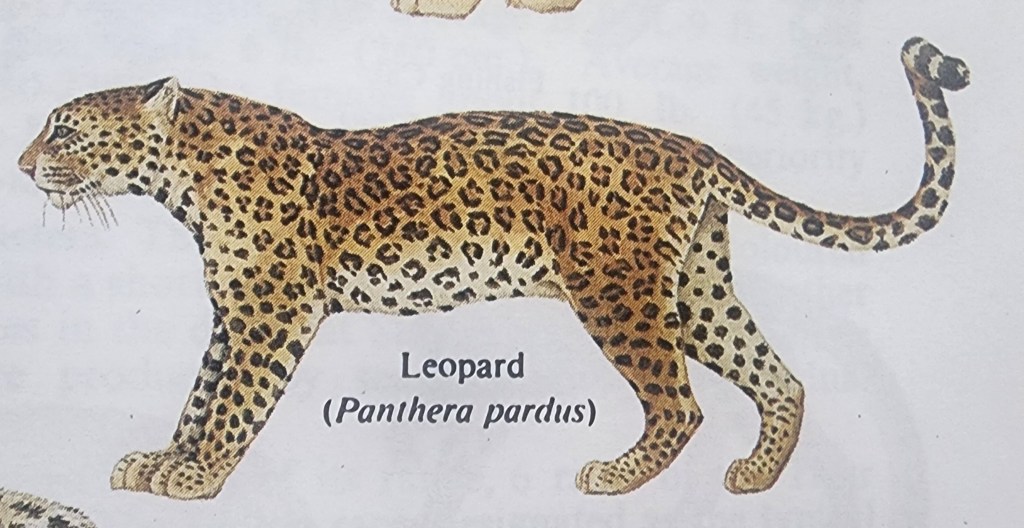
Image credit – “The Book of Indian Animals” by S H Prater, published by the Bombay Natural History Society
In Chinese Martial Arts, there is the “Leopard Fist”, just as there is a “Tiger Fist”. The Tiger Fist seems larger, for it uses an open palm with the fingers bent at an angle, imitating the claws of a tiger. The Leopard Fist is smaller in comparison. This fist has the fingers bent at the first joint from the base. This is in contrast to a regular fist where the fingers are best at the base.
In the Bujinkan system of martial arts, practitioners learn the basics called the “Ten Chi Jin Ryaku no Maki”. In this set of basics, there is a segment called the “Hiken Juroppo”. This section teaches students 16 (Juroppo) ways of using their fists, fingers, elbows, knees and feet to strike opponents. One of these 16 is called the “Shikan Ken”. It roughly translates to “secret spear”. The way a fist is made for the Shikan Ken is identical to the Leopard Fist.
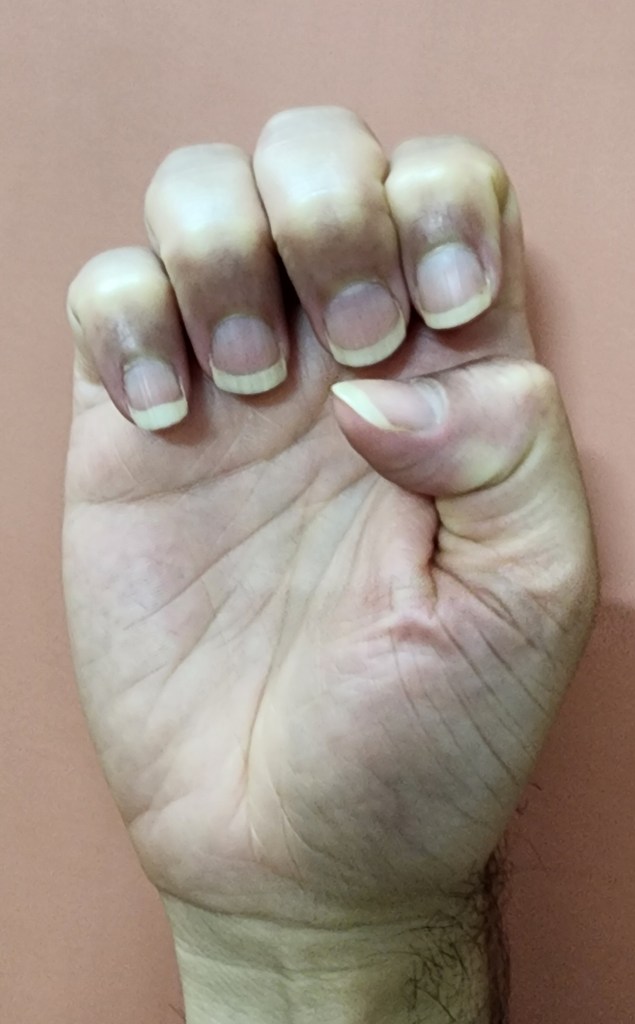
Shikan Ken, front view
I remember being told that the Shikan Ken was used to strike narrow gaps while fighting armoured opponents. The Bujinkan has a heritage of systems that were developed to fight while wearing and against opponents wearing the Yoroi (Japanese armour). Armour has certain gaps that could potentially be exploited. The Shikan Ken is narrower than the regular fist (Fudo Ken) and this made it better suited against the small gaps that exist between plates and pieces of the Yoroi. It is also extremely effective in striking the neck of unarmoured opponents.
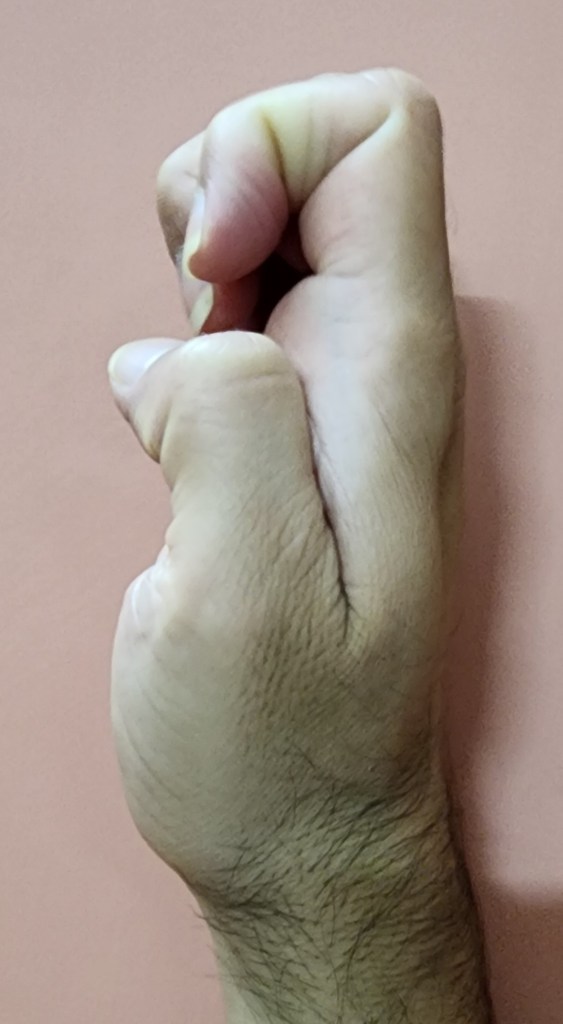
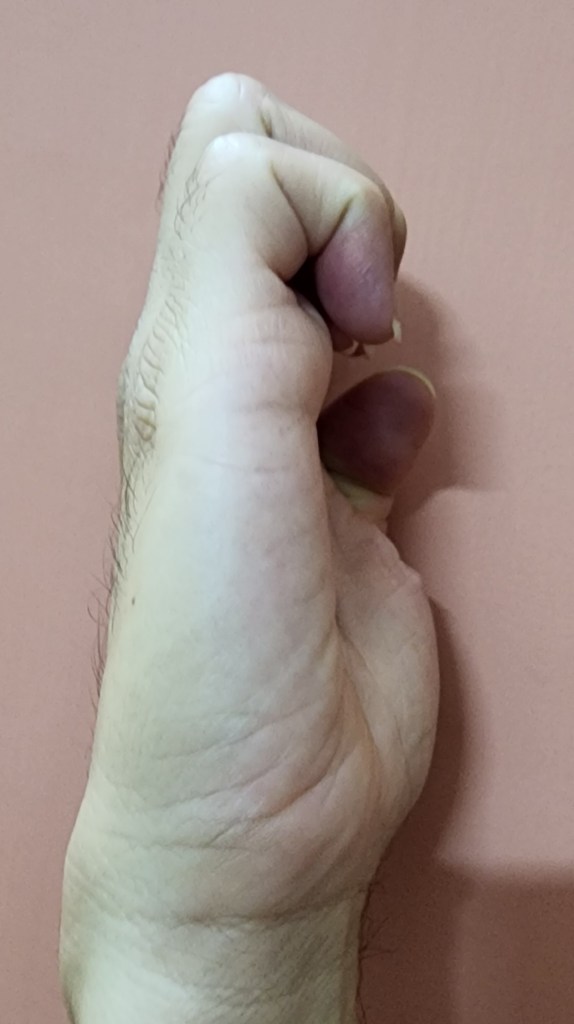
Shikan ken, profile views
The relative “smallness” of the Shikan Ken or the Leopard Fist, in a roundabout way circles back to the success of the Leopard itself. The Leopard (Panthera Pardus) belongs to the “Panthera” group, wild cats which are called the “Big Cats”. Big Cats, unlike all the other wild cats, can roar. There are 5 big cats, the tiger, the lion, the jaguar, the leopard and the snow leopard. Of these 5, the leopard is only larger than the snow leopard. Even pumas, which are not classified as big cats, could outweigh leopard. So, the leopard is on the smaller side when it comes to the big cats.
But this “smallness” seems to have served in its success as a species. The Leopard is the big cat with the largest distribution. From all ecosystems in Africa, to the arid regions of West Asia, to the frigid forests of Siberia to most of India and Sri Lanka, leopards inhabit a very large range and consist of some 11 sub-species.
My Uncle who was a naturalist by profession, used to tell me a statement he had heard, “a leopard can hide its body where a tiger can hide its head”! This elucidates how much larger a tiger is, when compared with a leopard. This “smallness” allows a leopard to survive on smaller prey, with a smaller territorial range. The smaller size also allows a leopard to hide in places a tiger could never hope to fit in.
Leopards, due to this advantage, have expanded to sub-urban regions around many large cities in India. In these environments, they survive on dogs, pigs and smaller livestock. Leopards have started entering apartment complexes at night to prey on pets. This has led to greater conflict with humans, but India has always been tolerant of wildlife. This is an evolving situation and how leopards adapt in the coming decades is yet to be seen.
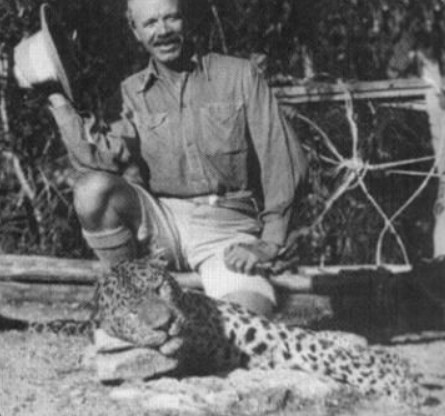
Man-eating Leopard of Rudraprayag. Image credit – Wikipedia.
But the fact that leopards have remained resilient and highly adaptable as a species is beyond question. This fact along with the afore mentioned smaller size led to the unfortunate success of leopards as man-eaters in the past. Man-eating leopards are exceedingly rare these days. But in the past there have been many documented individuals that did prey on humans.
The deadliest man-eater in history is the Tigress of Champawat, who is considered to be responsible for 436 human deaths in India and Nepal in the first decade of the 20th century. But a close second is the Leopard of Panar, who is considered responsible for the death of 400 humans! An even more infamous man-eater is the Leopard of Rudraprayag, which preyed on humans between 1918 and 1926. The number of victims of this man-eater is supposed to be 125 with other undocumented cases. All these man-eaters were shot by Jim Corbett.
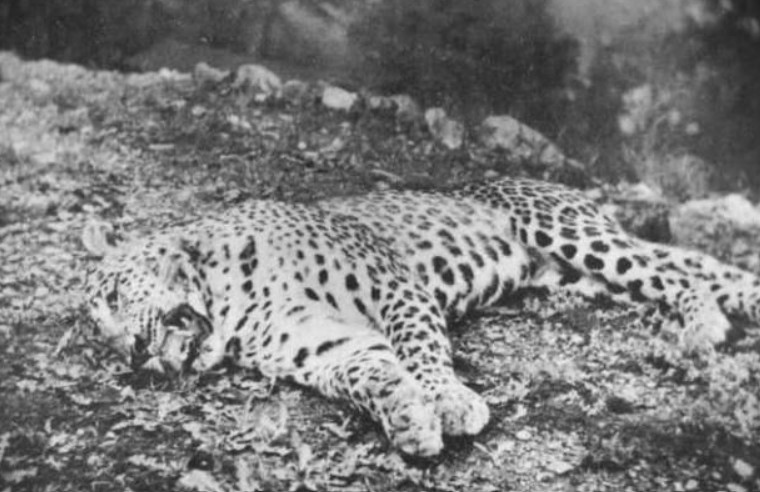
Man-eating Leopard of Panar. Image credit – Wikipedia.
Returning to the “smallness” and the exploitation of gaps in armour, there is one weapon which, in my opinion, exemplifies the “Leopard Fist”. This is the famous Katar, a punch dagger with its origins in India. This dagger is not held in either the ice pick or sabre grips. It is held in a manner where the dagger seems to extend from the fist. The grip is either the traditional fist or the Leopard Fist. Looking at it from the perspective of the Bujinkan, the Katar would be held with a Fudo Ken or a Shikan Ken.
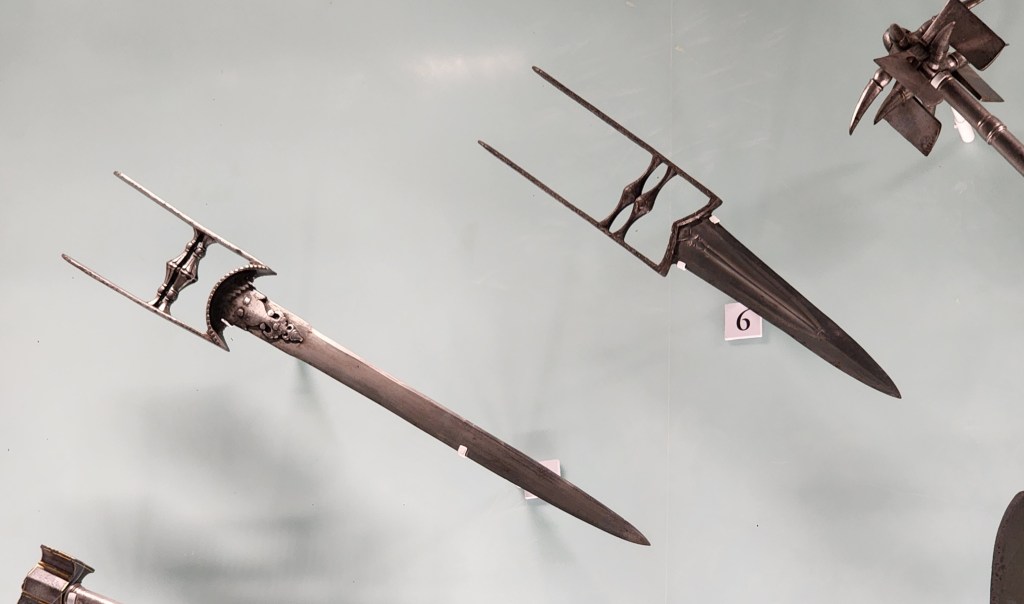
2 Katar displayed in the City Palace Museum, Udaipur, Rajasthan. Observe the Katar on the left, the blade is pretty long, but the 2 prongs of the “H” shaped handle are not long, they are of normal length. On the Katar on the right, the 2 prongs of the handle are much longer, to protect the hands of the wielder. The blade on the Katar on the right is of normal length.
The Shikan Ken is useful against narrow spaces. Given the manner in which the kater is held, it is an extension of the fingers in the Shikan Ken. The blade of the katar becomes an extended, sharper, pointed version of the Shikan Ken. This makes its effective against the same gaps in armour.
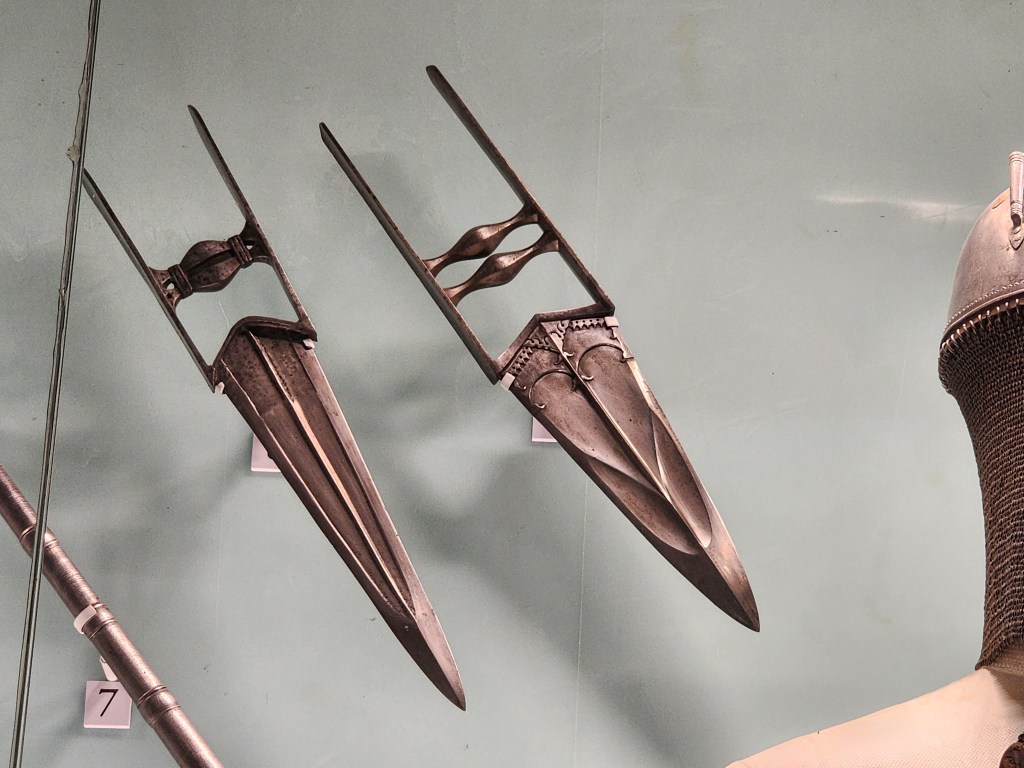
2 more Katar displayed in the City Palace Museum, Udaipur, Rajasthan. Observe the one on the right, it has a reinforced point for piercing chain mail.
In the Indian historical context, chain mail was prevalent a lot longer than in the west. So, many katar had reinforced points to pierce through the rings of chain mail. The blade of the katar in some cases was considerably longer, in which case it was more a chopping weapon than a punching/piercing weapon. The two prongs on the sides of the hand guard of a guard were longer in some examples, to protect the hand better.
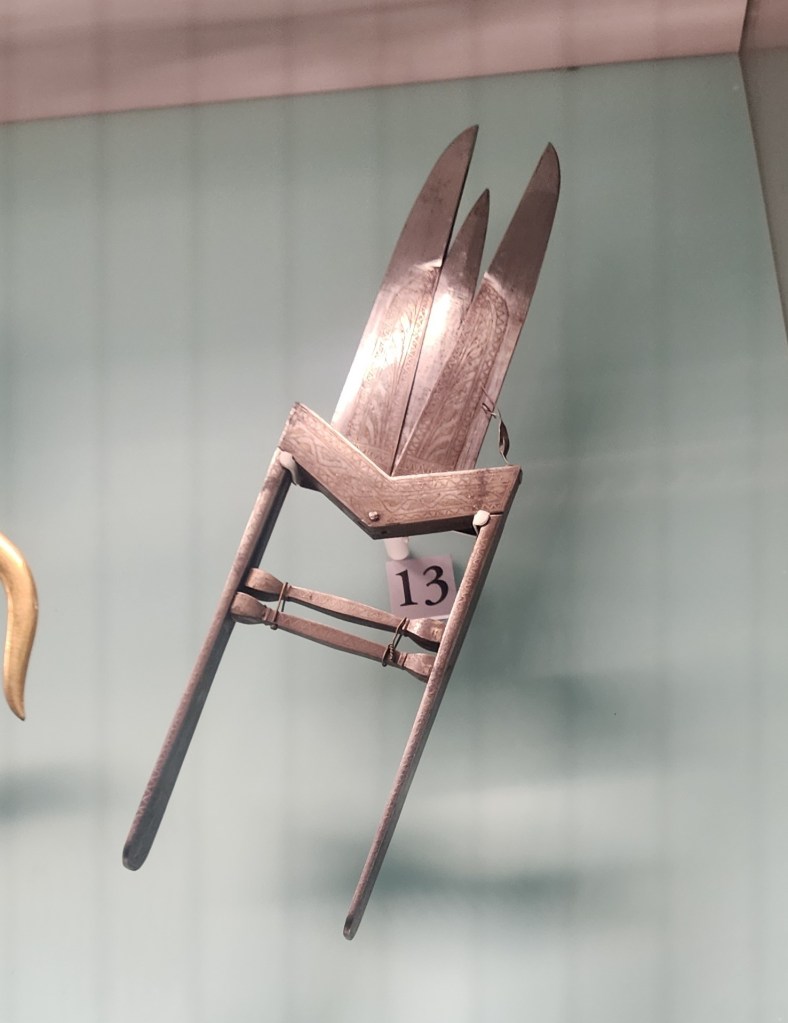
A Katar displayed in the City Palace Museum, Udaipur, Rajasthan. This is a Katar that has the sheath and blade combined. The two cross bars on the handle can be pressed to open the sheath and reveal the blade. It is wonderful engineering which is supposed to be why these examples were prestige pieces.
Beyond the core functional aspects, the Katar was also a part of regal attire and used as a prestige piece for power projection. In this avatar of the weapon, it had beautiful ornate hilts and blades. There were a lot of examples where the blade had a sheath that would separate to the sides to reveal the blade inside!
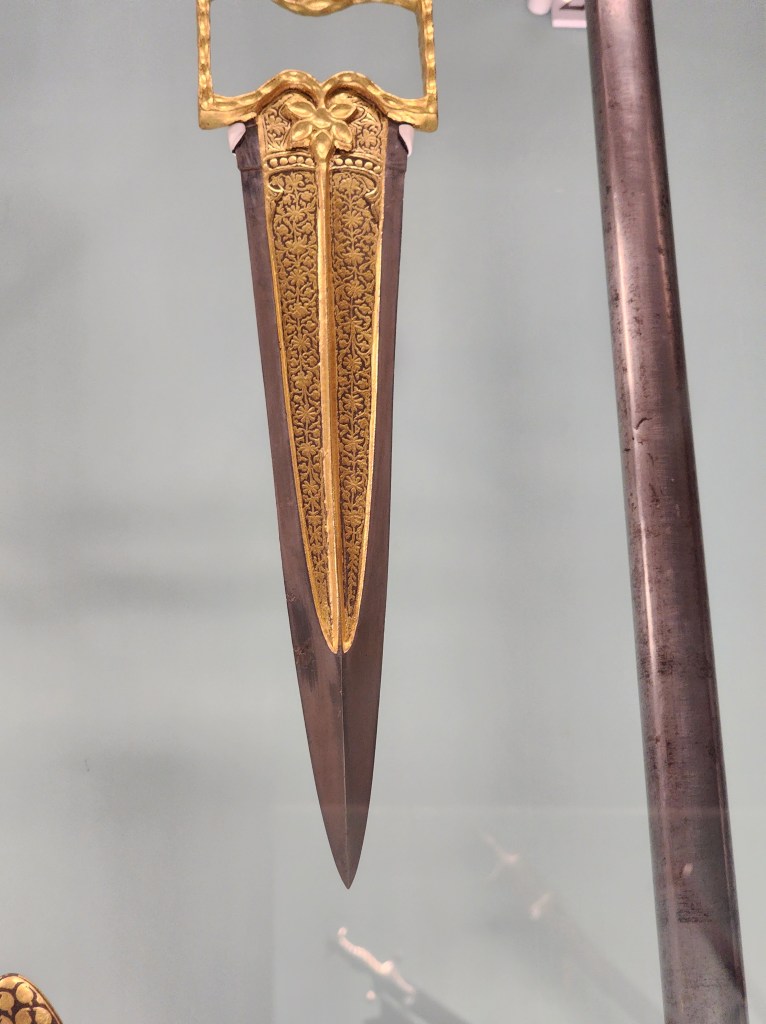
Another Katar displayed in the City Palace Museum, Udaipur, Rajasthan. Look at the beauty of the blade! Imagine the prestige this would add to royal attire!
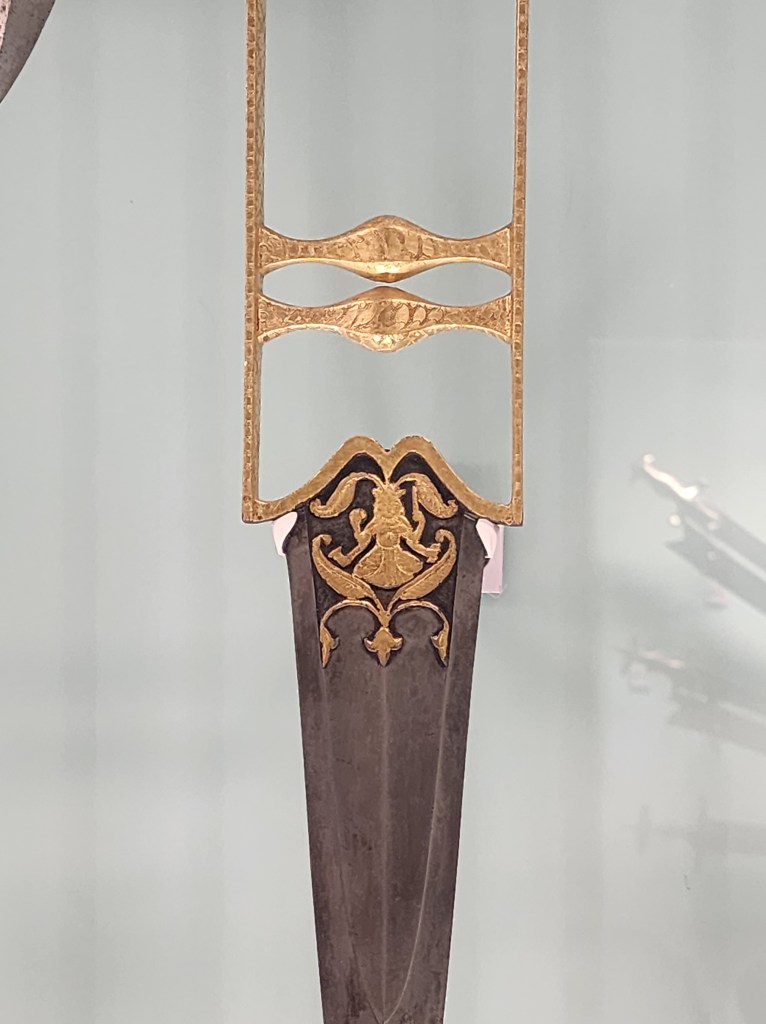
Yet another Katar displayed in the City Palace Museum, Udaipur, Rajasthan. The Devi herself resides on this blade!
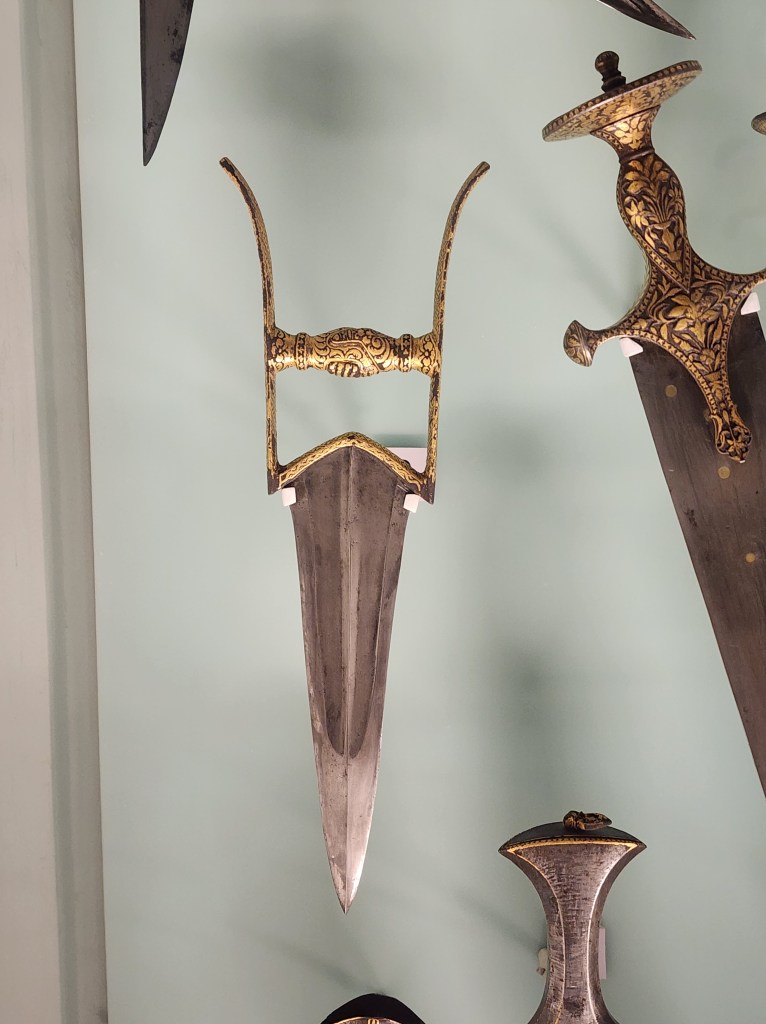
Yet another Katar displayed in the City Palace Museum, Udaipur, Rajasthan. Look at the handle of this specimen! Two Golden Hands are clasping each other. :-)
There are also instances of the Katar being a combination weapon. Flintlock pistols were incorporated into the hilt of the Katar, which would presumably fired off before the blade would be deployed. The Katar has many other forms I cannot go into here, including the “Hooded Katar”, which some consider to be an older form. In this version there is a protective shell for the knuckles of the wielder. Perhaps there will be an opportunity to explore the katar in greater detail sometime.
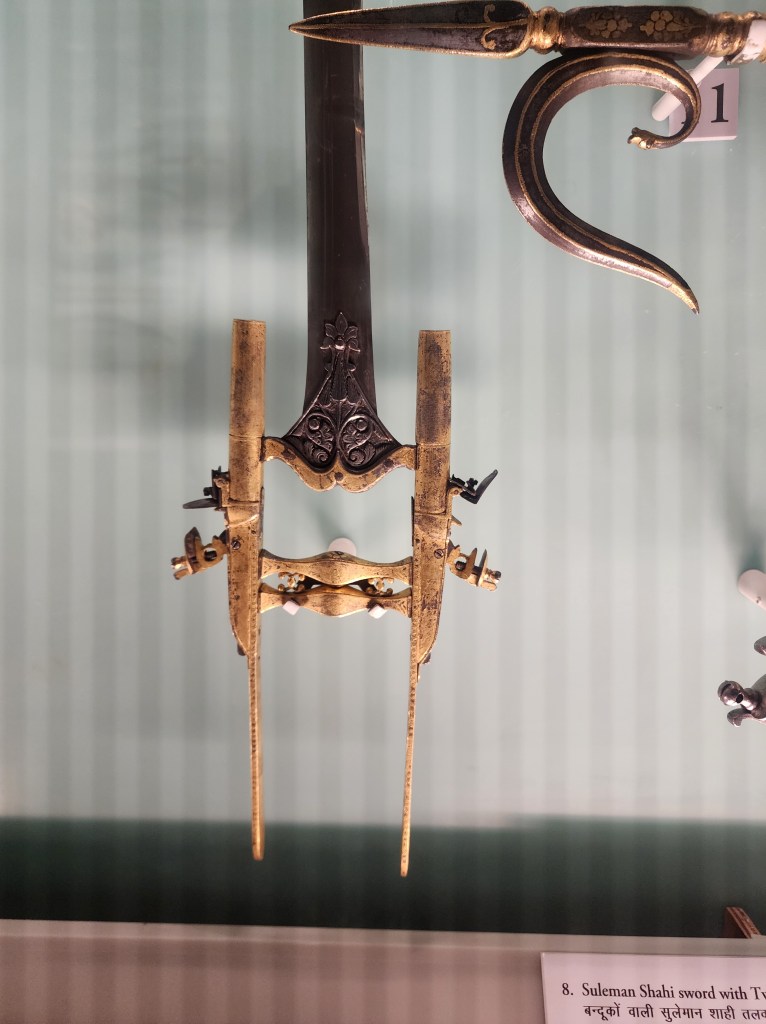
A Katar displayed in the City Palace Museum, Udaipur, Rajasthan. In this example, the two prongs of the handle have flintlock pistols built into them! They are fired by a mechanism similar to the one that opens the sheath from the earlier example.
The pictures of the Katar used in this article are mostly from Rajasthan. This seems apt as I conclude this post, for the Jawai hills are in Rajasthan, and the rocky scrublands of Jawai are one of the best places to spot and appreciate leopards in India.
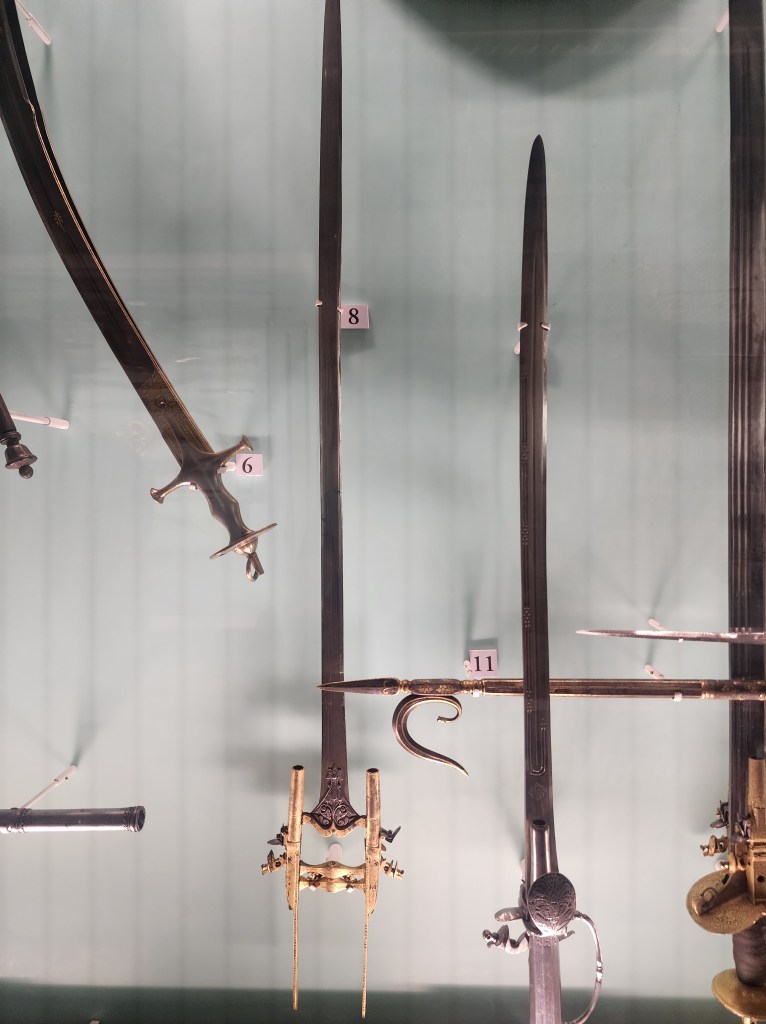
This is a zoomed-out view of the Katar handle from the previous image. This Katar handle had a full-length sword blade attached to it! :-D

