17th June is Maharana Pratap Jayanti, a holiday in Rajasthan. This day commemorates the birth of one of Indian history’s greatest warrior heroes. This is a good opportunity to discuss and celebrate what was supposedly his favourite weapon, the spear. The spear used by the Rajputs is unique in certain ways. Let’s explore these facets.
Observe the statue seen in the image below. This is a statue of Maharana Pratap.
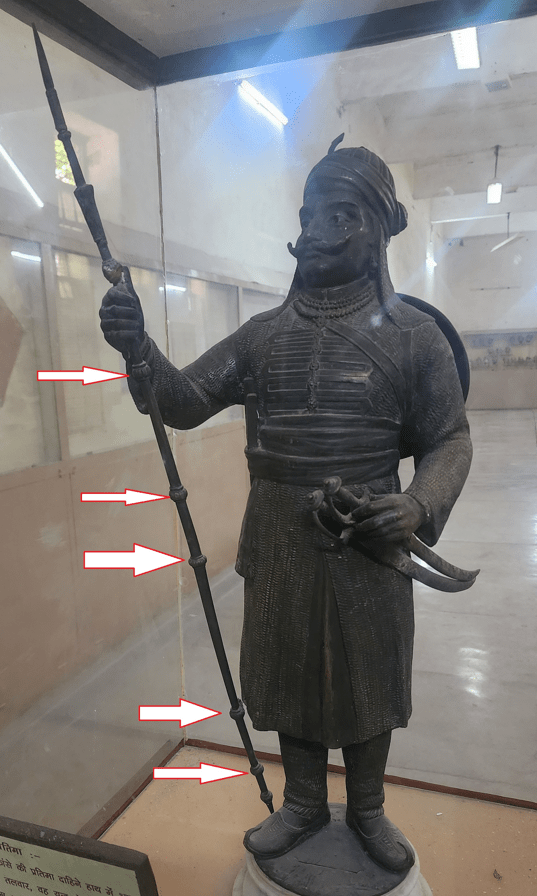
Image 1 – Statue of Maharana Pratap at the Govt. Museum, City Palace, Udaipur, Rajasthan
There are 2 swords worn by the warrior in the statue seen above. Maharana Pratap is almost always depicted wearing 2 swords. But this article is about the spear he is shown wielding. Observe the spear where the arrows in the image are pointing.
One will see that there are rings or bands at different points along the length of the spear. These rings or bands segregate the shaft of the spear into segments with nodes, almost like bamboo. This observation brings up the following questions for me. This article is me pondering the answers to these questions.
- Why do these rings or bands exist?
- How do they help in the use of the spear?
- Do they show us how the weapon might have been wielded historically?
But first we need to show that these rings are not shown due to artistic license or imagination. We will do this with the image seen below.
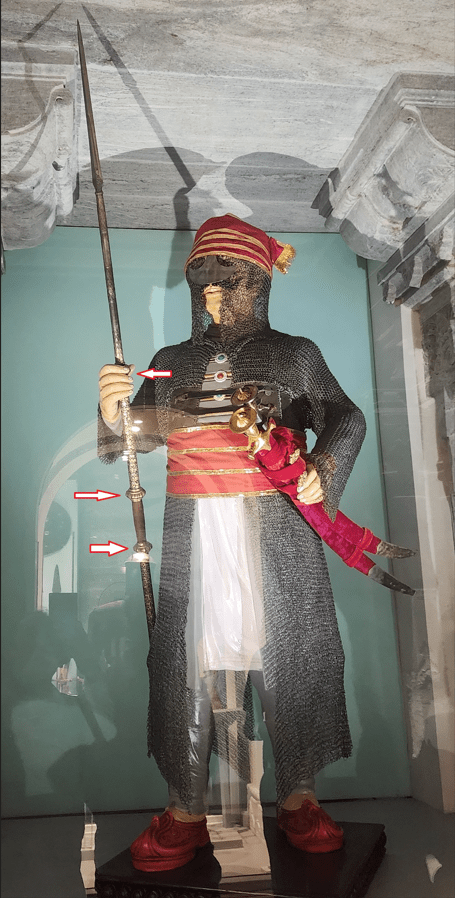
Image 2 – Display of the arms and armour used by Maharana Pratap, at the City Palace Museum, Udaipur, Rajasthan
The above image shows the armour worn by Maharana Pratap and some weapons he wielded. Seen prominently in the image is the actual spear supposedly used by Maharana Pratap himself. The arrows in the image point to the rings or bands on this spear. There is one more ring on the lower part of the spear which is not visible in the image. Considering that this is a real historical spear attributed to the Maharana, the presence of the rings is confirmed as historical fact. The paintings and statues of Maharana Pratap show an actual spear he wielded during his lifetime.
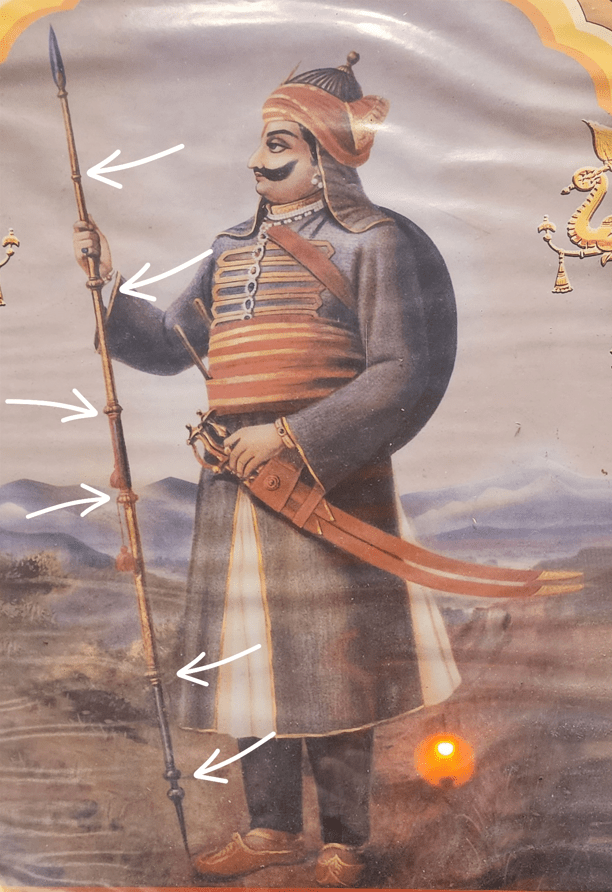
Image 3 – Portrait of Maharana Pratap displayed at the Pratap Smarak, Moti Magri, Udaipur, Rajasthan
Now observe the image seen above. It is a portrait of Maharana Pratap, in which his spear is clearly visible unlike the original in the museum display. The rings or bands along the length of the spear are being pointed to by white arrows in the image. This shows that the size of the rings also varies along the length of the spear.
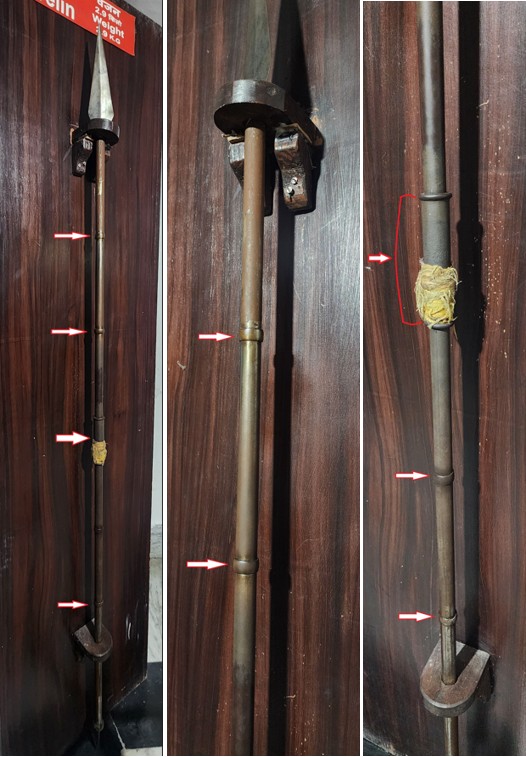
Images (L to R) 4, 5 & 6 – A Rajput Spear on display at the Pratap Smarak, Moti Magri, Udaipur, Rajasthan
Now observe the 3 images seen above. They show another historic spear on display at a museum in Rajasthan. This is a Rajput spear, though not necessarily one that was wielded by Maharana Pratap. This weapon also has the bands or rings along its length. These are distributed at more even distances to result in fairly even segments of the spear.
Image 4, on the far left shows the entire spear with arrows pointing at the rings. The 2 images to its right, show close-ups of the shaft of the spear, which show the rings better. Now observe image 6 on the far right. There is a part of the spear that is bracketed in red and pointed to by an arrow. In my personal opinion, this seems like the place where the wielder would hold the weapon if the spear would be used as a javelin, if this spear was going to be thrown at an opponent.

Image 7 – Modern day javelin used in the Olympic sport of “Javelin Throw”. Image credit – Wikipedia.
The above image shows 2 modern day javelins used in the Olympic sport of Javelin Throw. In the image, a part of both javelins is highlighted in yellow. This is where the throwers hold the javelin during the runup and the actual act of throwing.
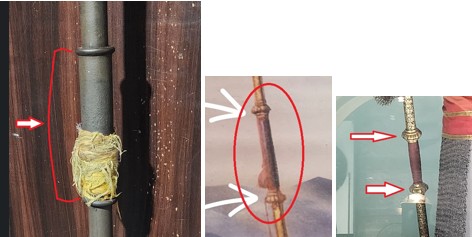
Images (L to R) 8, 9 & 10 – These are close-ups of the spears seen in images 2, 3 & 6, showing just the “grip” of the javelin, if the spear was used as one.
Now observe the 3 images above. They are zoomed in sections of the spears seen in the images 2, 3 and 6 above. In all 3 images, the part of the spear seen, to my eyes at least, seem to serve the same purpose as the “handle” of the modern javelin, seen in image 7.
So, a part of the reason for having AT LEAST 2 rings on the spear shaft seems to be to indicate to the wielder, the best place to hold on the spear shaft if one was to hurl the spear like a javelin. This observation of mine is further strengthened by the following image.
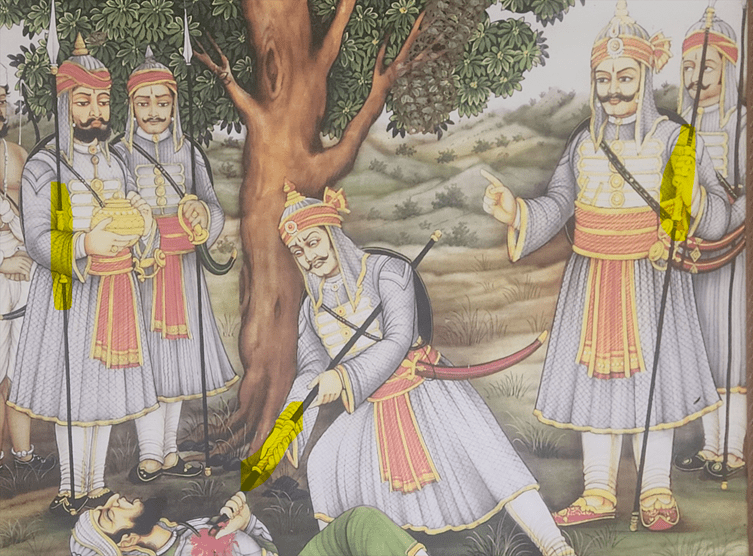
Image 11 – A painting depicting an event from the life of Maharana Pratap, on display at the Pratap Vijay Memorial, Dewair, Rajasthan. In 1582, Maharana Pratap decisively defeated the Mughal army commanded by Sultan Khan and recaptured most of Mewar. During this battle, Amar Singh, the son of Pratap, fatally injured Sultan Khan with a thrown javelin. After the javelin impaled Sultan Khan, he was suffering in pain and was shown mercy by Maharana Pratap. He allowed him a quick death by removing the spear impaling him. This image depicts the javelin being removed.
Observe the spears seen in image 11 above. Focus on the parts of the spear highlighted in yellow. These seem to be the “handles” of the spears used as javelins as mentioned previously. What is interesting is that there are no rings on these spears apart from the ones delineating the handle of the spear!
Of course, this is a modern painting and perhaps the other rings on the spear were just left out by the artist as the story being conveyed in the painting is more important that the historical accuracy of the weapons. But could it be that such spears were indeed used by the Rajputs? Specifically, if these were intended to be used only as javelins and not as spears? I do not have an answer, but it seems likely to me.
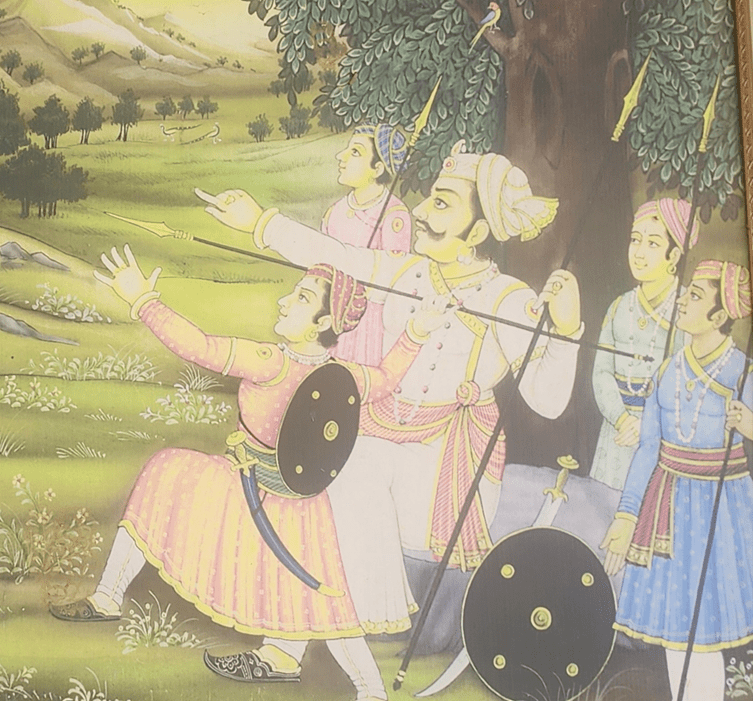
Image 12 – A painting depicting an event from the life of Maharana Pratap, on display at the Pratap Vijay Memorial, Dewair, Rajasthan.
Now observe the image seen above. On the spears shown in this painting, there are no rings anywhere on the shaft! These are like most of the shafts seen on spears all over the world. Also, the scene depicted clearly shows the spear being deployed as a javelin.
So, is this a case of artist interpretation or were there spears and javelins used by Rajput warriors that did not have any rings or bands on them? I guess both are equally possible. There are historical spears displayed in the City Palace Museum in Udaipur that have no rings on them. But it is not mentioned if the shafts are the original ones on which the spearheads were originally mounted. For more details on such example, refer to my series of 3 articles on spears, spearheads and spearpoints from history.

Image 13 – A historical all-metal spear displayed at the Kumarakon Heritage Museum in Vembanad, Kerala
The image above shows a spear which has rings along the shaft. These bands/rings are shown with arrows. But this is not a Rajput Spear or even one displayed in Rajasthan. I saw this weapon in a museum in Vembanad, Kerala. So, the design of spear shafts incorporating rings or bands along the shaft was not exclusive to the Rajputs. Perhaps we are not aware of this design from other parts of India as historical warriors from these regions are shown more often with swords than with spears.
All the historical spears that I have shared images of, in images 2, 4 and 13 have shafts made of metal. Is this a specific design detail? I am not sure if a shaft has to be made of metal, to have the bands or rings along its length.
Were shafts made of wood incapable of taking the rings? And were shafts made of bamboo already having the natural nodes along its length to not need these artificial additions? These are also questions I have no answers to. Is this why the spear/javelin shown in image 12 has a smooth shaft? Because it is made of wood? I have no answers to these either.
These questions lead to more questions like the ones seen below.
- How were these spears with rings or bands along the length of their shafts made? I have not seen any show or documentary go into this detail.
- How was the weight distribution maintained along the length of the shaft? If this mattered, was there any personalization regarding the placements of the rings or bands to suit specific warriors?
- Did the size and fighting styles of specific warriors matter in the design? And were there other considerations?
I have no answers to any of these questions. If any of you has any idea, I request you to share your knowledge with me.
Coming back to the spear seen in image 13, observe that there is no central portion of this weapon that is designed to allow it to be held like a javelin. This brings us back to the 3 questions I started this article, all of which boil down to identifying the purpose of these rings or bands along the shaft of the spear.

Image 14 – The lower weapon in the above image is the Japanese Yari (spear). It is similar to the same weapon used in almost all parts of the world. The other weapon in the above image is the Naginata, another polearm from Japan, similar to a glaive from other parts of the world. It is essentially a staff with a short sword on top.
As a practitioner of the Bujinkan system of martial arts, I have trained the Japanese Yari. Yari is the Japanese word for spear. In almost all the forms we train with the spear in the Bujinkan, the weapon is held with two hands. There is some sliding of the hands along the shaft of the spear while stabbing and while moving around. The moving around and sliding of the hands along the shaft is needed to parry the weapons of opponents and to strike (as opposed to stabbing) with the spearhead.
Due to this background of mine, I always think of the spear as a TWO-HANDED WEAPON. But this, I have come to realize, is not necessarily true. The javelin, which is a spear specialized for throwing is definitely a one-handed weapon. Beyond this, even as a ranged weapon that is not discharged, a spear could be a WEAPON WIELDED IN ONE HAND. This is likely when the spear is used in conjunction with a shield or when it is used by cavalry (in which case the spear would likely be called a lance).
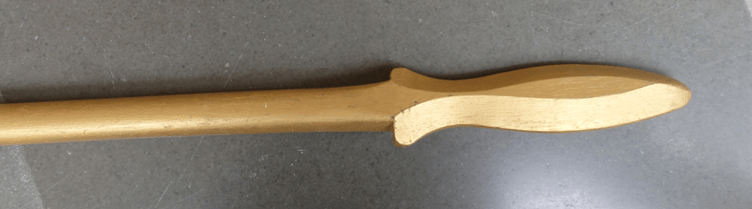
Image 15 – A close-up of the spearhead of the weapon seen in image 14. This is a tool for practice made of wood.
It is likely that the spear could be used from horseback in conjunction with a shield. If a foot soldier used a spear with a shield, one hand would be used to wield the shield. Of course, there are ways to hold the shield and still use both hands to wield the spear, but there is a chance that the spear would have to be used in just one hand when the other holds a shield. While on horseback, one hand could be occupied with the reins, or a shield, or both.
Now consider wielding a spear one handed on a battlefield, like the Rajputs did. They would likely be wearing chainmail with armour plates on the arms and torso. Even in winter, a warrior would sweat while fighting in Rajasthan or the plains of northern and central India. The opponents of the Rajputs and their horses would also likely be using similar armour.
In such conditions, if one were to thrust with a spear, sweaty palms could weaken the grip on the spear shaft and result in a less effective thrust, due to relative motion between the palm and spear shaft. In simple terms the sweat could result in a slippery grip that could result in a less effective stab with the spear.
If a thrust came up against a hard surface like armour, it is likely that the palms would slide along the shaft, resulting in the next thrust being less effective. If the palms shifted forward along the shaft, then the next thrust would have a shorter shaft length! Similarly, while pulling the spear back for the next thrust, if the palms slip on the shaft, the spear could become unwieldy altogether.
The above video shows the practice of some Yari (spear) forms from the Bujinkan system of martial arts. As can be seen, there is sliding of the palms along the shaft of the spear. Also, pretty much all of these forms use both hands on the Yari.
All of these problems are mitigated if the spear has the rings we have been seeing! A spear wielder could choose to hold the spear between any two rings on the shaft. This allows the thrust to be more effective! When the palms slide along the shaft due to the spear point striking a hard surface or simply due to sweaty palms, the next ring will arrest the slide! This enables the wielder to push through more effectively due to the obstacle (the ring on the shaft!) that helps multiply the force of the thrust.
If the wielder needs to retract the spear for the next thrust, the ring encountered on the way back helps keep the weapon in line and in balance. The small span between 2 rings on the shaft prevents any further sliding due to slippery palms.
If the spear were used as a lance by cavalry, could the rings on the shaft allow the weapon to be more comfortably couched between the arm and the body? I do not have an answer. Cavalry in Europe, when they used heavy lances, had their armour designed specifically to couch the long unwieldy weapon. This allowed for effective thrusts against enemy formations when the cavalry unit charged.
Did the Rajputs have similar tactics and did the rings on the spear shaft serve a similar purpose? If anyone knows, please do share this knowledge with me. None of the guides I spoke to in different museums knew the reason for the presence of the rings. They all said it was forgotten knowledge. I am not aware of any specific martial art school or style practicing Rajput spear forms, specifically with rings on the spear shaft.
Interestingly, there are couple of paintings I saw in Udaipur that inadvertently support my hypothesis on the reason behind the presence of the rings on the shafts of some Rajput spears.
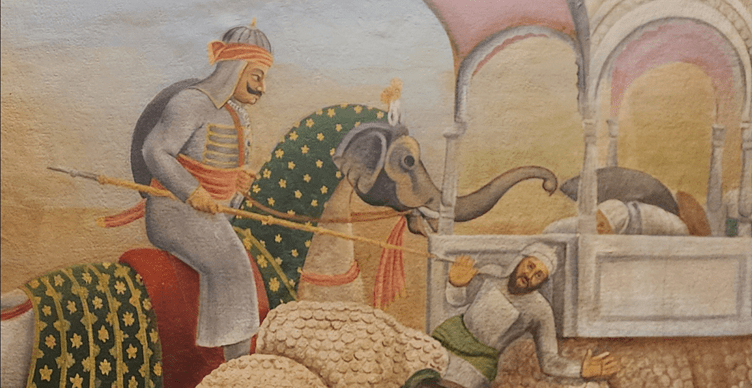
Image 16 – An event from the Battle of Haldighati depicted as a painting at the Pratap Smarak, Moti Magri, Udaipur, Rajasthan.
The above image is a representation of an event that occurred during the Battle of Haldighati in 1576. In this battle the forces of Mewar led by Maharana Pratap fought against Mughal forces led by Man Singh, the ruler of Amer. The image shows Maharana Pratap attacking the mahout of Man Singh’s elephant. Man Singh survived, but the mahout was killed.
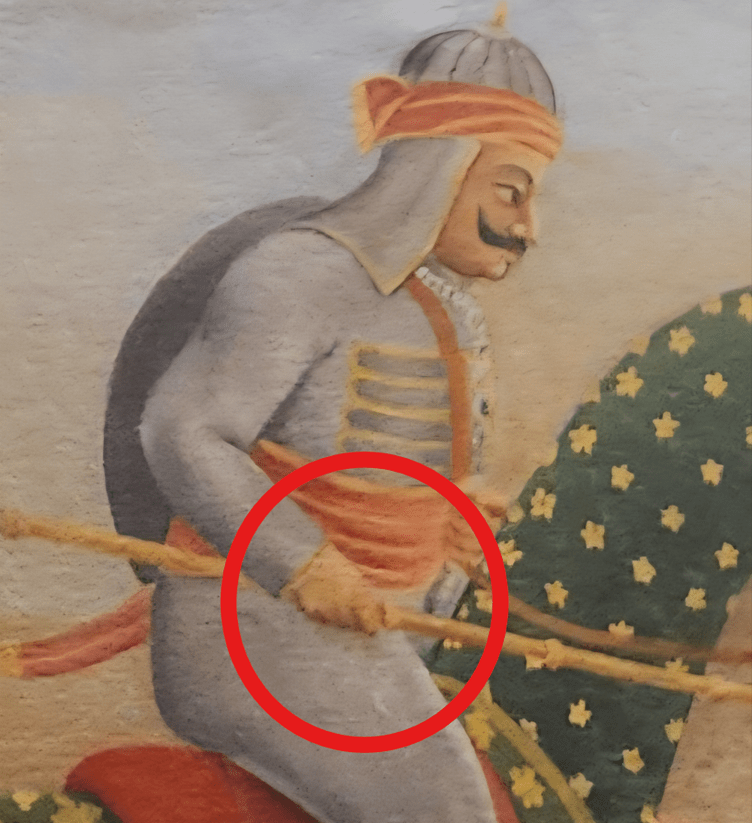
Image 17 – A close-up of the image 16. Focus on the grip of Maharana Pratap on the shaft of his spear.
Seen above is a close up of the previous image. Observe the part encircled in red in the close up. Maharana Pratap is wielding the spear in ONE HAND. His hand is butted up against one of the rings of the spear! This would indeed increase his thrusting ability. So, it is likely that the rings were indeed useful while wielding a spear one handed! I am not sure if the artist who created this painting had this in mind when she or he created the artwork.
Another aspect comes to mind based the armour seen in image 2 above. If a warrior was wearing a helmet with face protection, visibility would reduce. Also, the ability to bend one’s neck to check where one’s swords were or where on the spear one’s grip was would also diminish. In such a situation, did the presence of the rings on the shaft allow the wielder of the spear to KNOW BY TOUCH which part of the spear he or she was holding? Was this important in the confusion of a battle? I would say this was a purpose of the rings, but I have no evidence to support this hypothesis of mine.
If a warrior had a personalized spear he or she would immediately be able to recognize the pattern of the rings with sufficient experience with the same design of spear. Is this why the size of the rings varied? To enable the wielder to identify the current grip instantly and know where his or her hands needed to move for the next desired grip? This is also likely in conjunction with the personalized positioning of the rings along the shaft.
To conclude, I am sharing a video of the Rajput spear seen in the images 4, 5 and 6 earlier in this article. It shows the weapon in detail and contains the commentary I gave while making the video explains my hypothesis for the presence of the rings.
A video showing the spear from image 4 in detail. My commentary in the background explains my hypothesis for the presence of the rings on the shaft. 😊


[…] The Rajput Spear – What are the rings for? […]
LikeLike