Balarama Jayanti – The Plough as a Weapon

Lord Balarama is the elder brother of Lord Krishna. 27th Aug 2026 is supposed to be Balarama Jayanthi, which commemorates the birth of Balarama. Balarama is considered an incarnation of Ādi Shesha, the Naga on whom Lord Vishnu reclines. But he is also sometimes considered an avatāra of Lord Vishnu, and a part of the Dashāvatāra. He is the 8th avatāra, after Lord Rama and before Lord Krishna in this chronology, as far as I am aware.
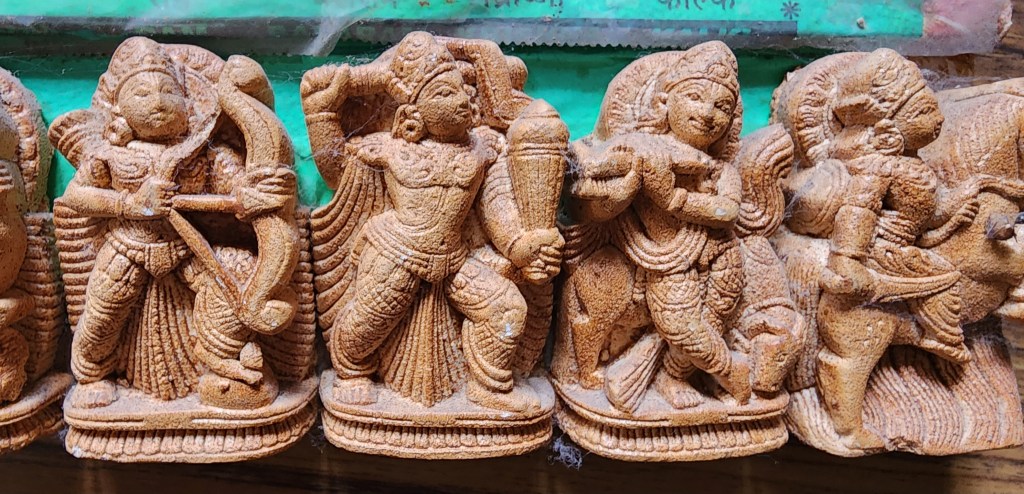
Balarama depicted as the 8th Avatāra in the Dashāvatāra. The above image shows, from left to right, Rama, Balarama, Krishna & Kalki.

Balarama is associated with 2 weapons, the plough and the gada (mace). The plough is the most iconic weapon associated with him, and this is shown in depictions of Balarama for almost 2 millennia now. The internet claims that the plough is associated with him because he evolved from originally being an agricultural God.

Balarama was the greatest exponent of the gada or mace of his age. He was the mentor for both Bhima & Duryodhana in the art of mace fighting. Observe the image of Balarama in the image seen below. Here he is depicted with the plough and a large staff, which is a pestle, called Musala in many Indian languages. The pestle or Musala could be considered a club or a bludgeoning weapon. A gada or a mace is an evolution of the club. So, Lord Balarama is associated with bludgeoning weapons.
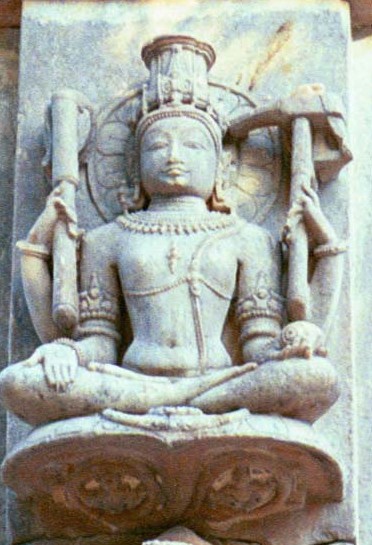
Balarama depicted with the Musala/Onake/Pestle in his left hand and the Plough in his right hand. This carving is from the Sasbahu temple in Nagda, Rajasthan. Image credit – Wikimedia Commons (Michael Gunther).

Balarama’s association with the plough and to a lesser extent the mace or large staff is what inspired this article. The occasion of Balarama Jayanthi gives us an opportunity to explore the various plough-like weapons in various cultures. It also gives us an opportunity to discover the use of the Musala as a weapon in recent Indian history!

The plough is a tool used to break the earth or turn over the soil in preparation for sowing. It is an ancient tool that has been in use for several thousand years. It is iconic in its shape. It consists of a wooden shaft with another piece of wood, called a ploughshare, attached at an angle to one end of the shaft. The shaft is pulled by a beast of burden, horses or oxen for example, while the angled piece of wood is drawn through the ground to turn the soil. The tip of the ploughshare could have a piece of metal attached to it, to increase its efficiency.
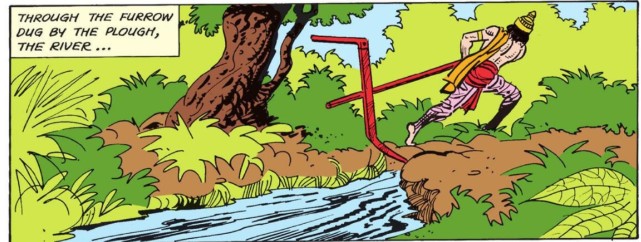
Balarama singlehandedly creating a channel for the Yamuna, using a traditional large plough. Image credit – “Tales of Balarama”, published by Amar Chitra Katha”.

The plough, sometimes spelled “plow” could be of varying sizes. Some could be large and pulled by animals while, smaller ones existed for use by humans. Of course, these days, mechanized ploughs can be much larger. Seen below are examples of a large are small ploughs.
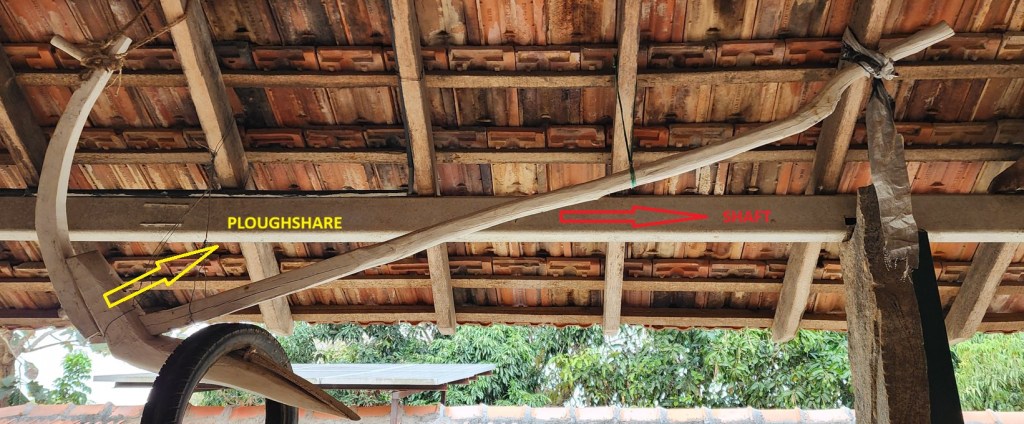
A big traditional plough. The shaft is mentioned in red, while the ploughshare is mentioned in yellow.
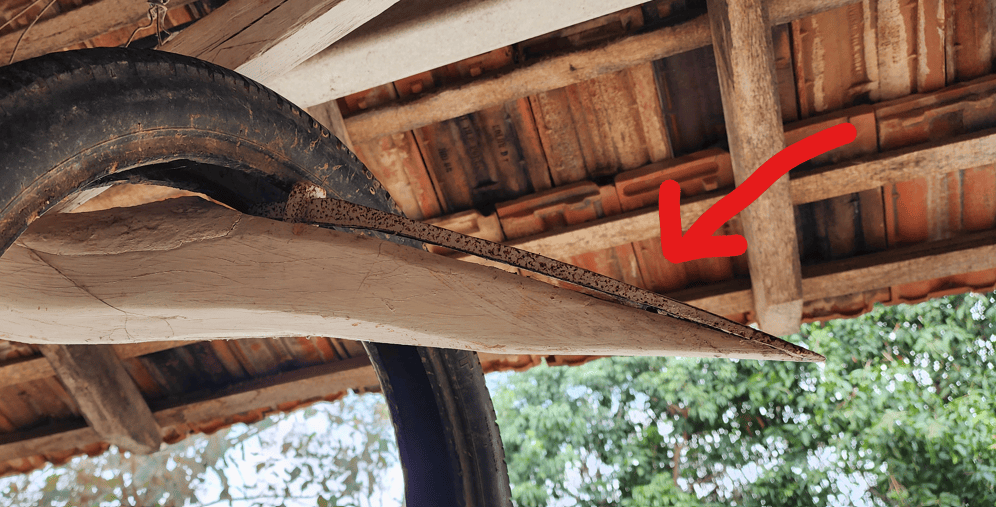
A closeup of the plough seen in the previous image. The metal plate affixed to the ploughshare is seen clearly in this image. It is pointed to by the red arrow.
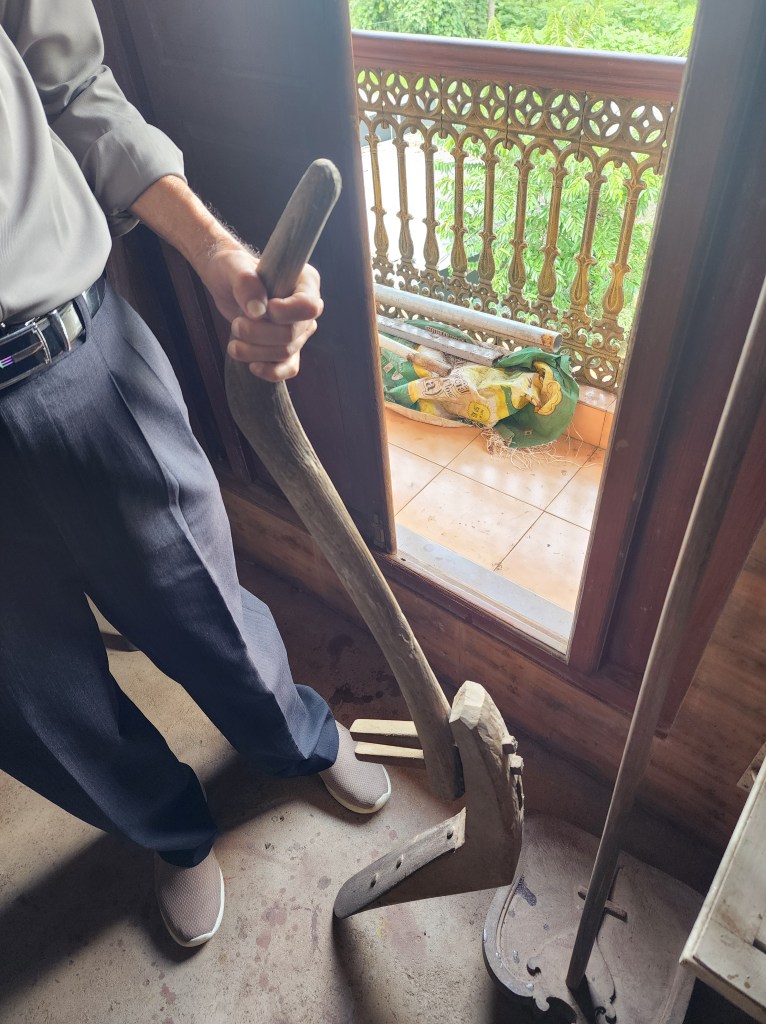
A small traditional plough on display at the Kumarakon Heritage Museum, Vembanad, Kerala.

Balarama wielding a plough is seen in multiple interpretations. The oldest is perhaps a coin issued by Agathocles, an Indo-Greek king from northwestern India in the 2nd century BCE. An image of Balarama, also called Sankarshana is seen in the image below.
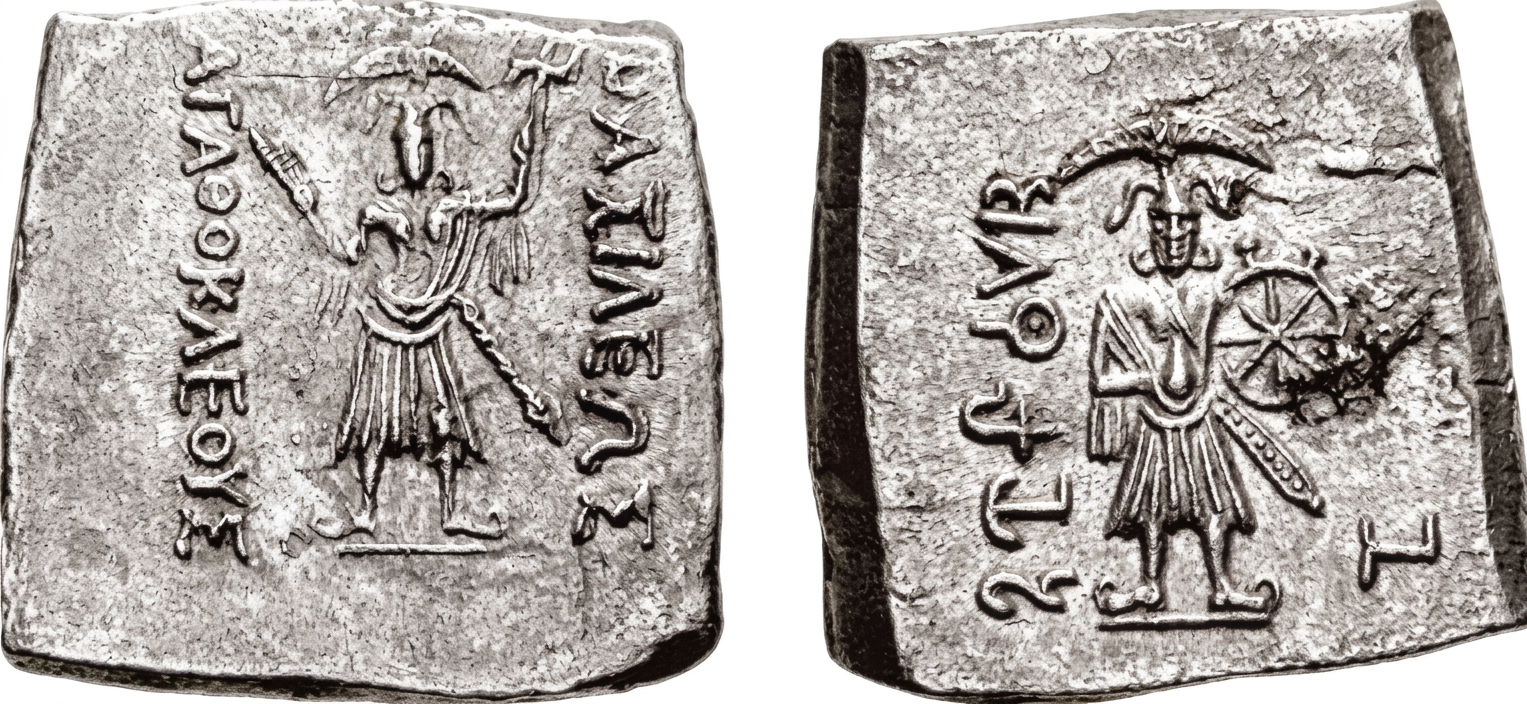
A coin from around 190 BCE, issued by Agathokles of the Indo-Greek Kingdom. The image on the left shows Balarama or Sankarshana. In his right hand, Balarama is holding aloft the plough. The image on the right depicts Lord Krishna. There two images are on two sides of the same coin. Image credit – Wikipedia.

Here, the plough is held in Balarama’s right hand. It is not a large weapon. It is not dissimilar in size from a modern-day hammer that exists in tool kits in many homes to this day. But modern interpretations show the plough being a large weapon. One such interpretation is from the Mahabharata published by Amar Chitra Katha in the 1980s. This interpretation is seen in the image below.
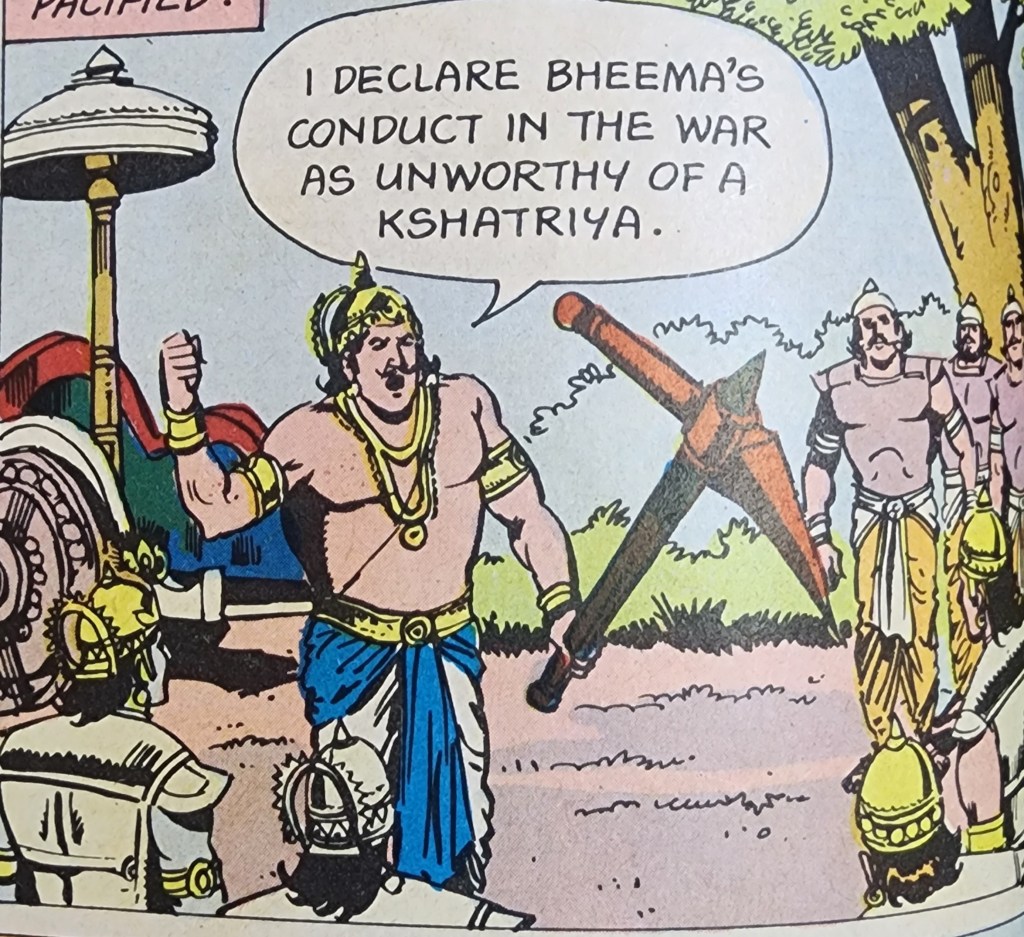
Balarama shown wielding a large plough as a weapon. Image credit – “Mahabharata 39 – After the War”, published by Amar Chitra Katha.

In the depiction of Balarama from the Sasbahu temple in Nagda, Rajasthan seen earlier, both the plough and the musala are seen as either short or medium sized weapons at best. The musala is called the “onake” or “vonake” in Kannada. It is a large pestle that was used to grind grains into flour.

These came in multiple sizes, from about 2 to 4 feet in length. The diameter is between 2 and 3 inches. This would correspond with a Jo or an Ojo in Bujinkan parlance. The Jo and Ojo are both staffs that are about 4 feet in length, with the Jo having a diameter of about an inch and the Ojo being larger, 2 inches or more.

The musala or onake could taper from the grinding end to the end handled by the user. With this design feature, the staff starts to resemble a club. And the mace is an evolution of the club. So, Balarama being depicted with a musala and being an ace wielder of the mace could be considered the same or at least an evolution of the depiction of the same martial skill set.

Can the depiction of Balarama with a plough and a musala be a representation of his creation (agriculture through the plough) and destruction (destruction with the mace) being two sides of the same coin? I have no idea.

I had written an article last year, detailing the extraordinary action of “Onake Obavva”. Obavva is a hero for the people of Karnataka. She used an onake/musala/pestle and fought off the army of Hyder Ali until help arrived during the late. She lost her life in the process. This event is from the 18th century. I had also shared videos with the article depicting modern day women wielding a jo and ojo. A link to this article is seen below. Do refer to the same for more information about the pestle as a weapon. Now we return to Lord Balarama.

Balarama was a great warrior. He, in conjunction with his brother Krishna was responsible for holding off the armies of Jarasandha 18 times, when Mathura was invaded repeatedly. Even as a child, he killed the Asuras Dhenuka and Pralamba. He killed the mighty wrestlers Mushtika and Koota in Kamsa’s arena as a young man.
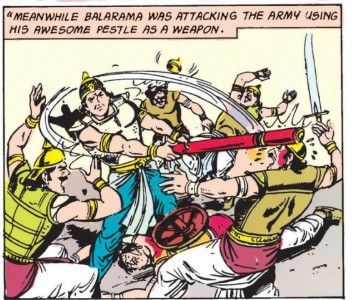
Balarama depicted using the Musala/Pestle against Jarasandha’s forces. Image credit – “The Bhagavata, Special Edition” (Kindle version), published by Amar Chitra Katha.

Later in his life he is said to have killed the mighty Vānara Dwivida. Dwivida was supposedly a part of the Vānara army that fought at Lanka during the Ramayana and a friend of Narakāsura, who was killed by Lord Krishna. Balarama is also supposed to have killed Rukmi, the King of Vidarbha, who was Krishna’s brother-in-law.
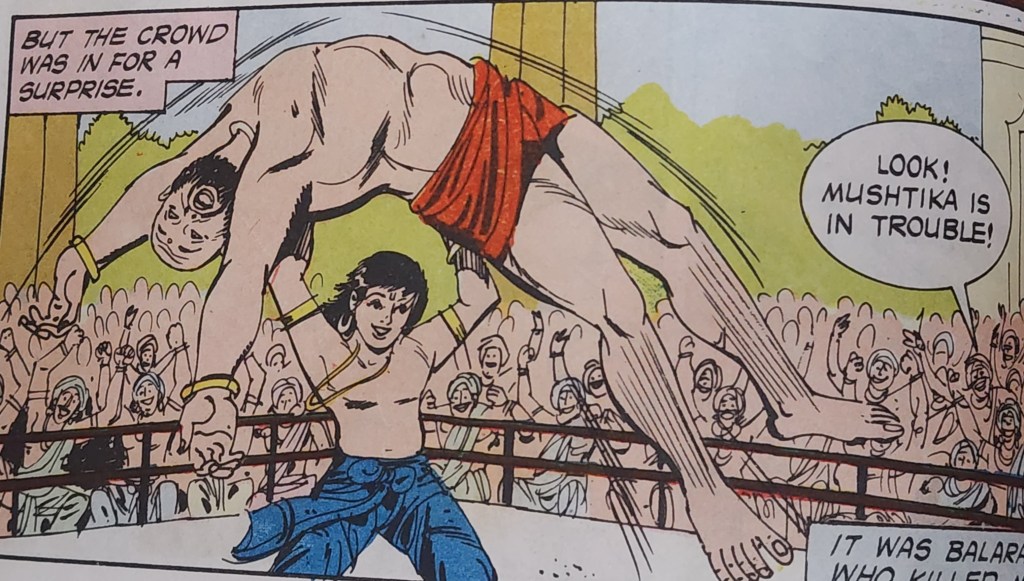
Balarama depicted defeating Mushtika. Image credit – “Tales of Krishna”, published by Amar Chitra Katha.

Balarama, from most depictions was a large and powerful individual. This in turn lends credence to his being an ace wrestler. Balarama killed Pralamba while being carried on the latter’s back. This could be imagined to be Balarama applying a lock on the upper body of Pralamba while choking him to death. Also, Mushtika was a dreaded wrestler who was killed in the ring in a fight with wrestling rules! Strikes were allowed in these wrestling matches; they were not purely restricted to grappling.
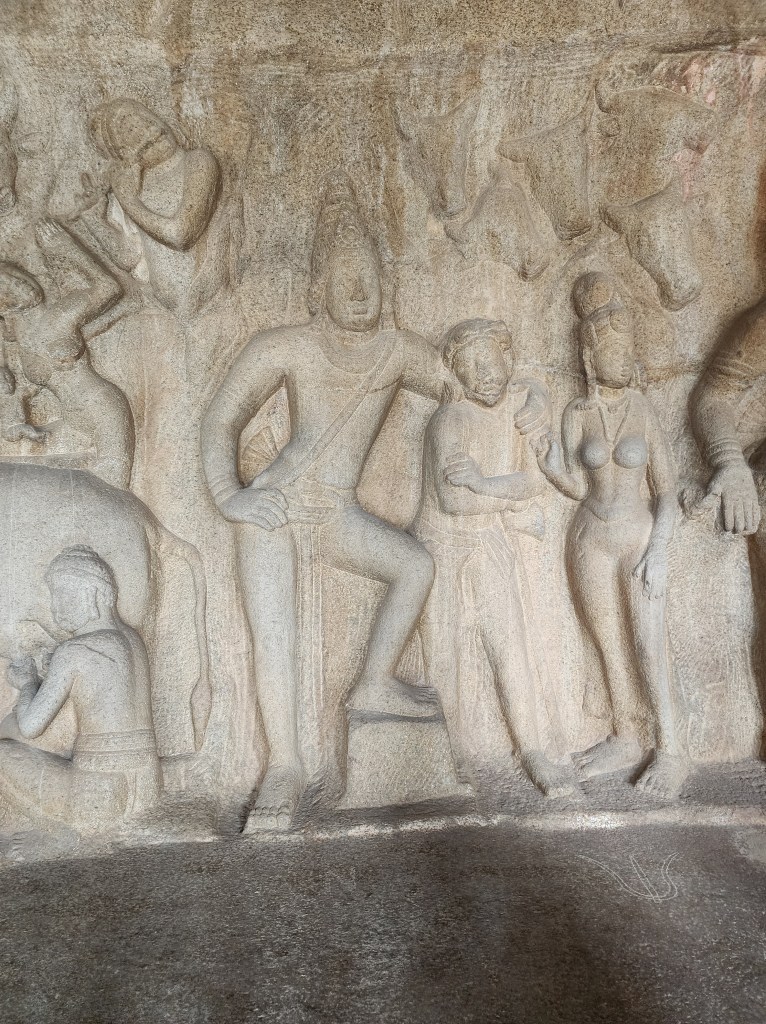
Balarma shown with a village chieftain in the Krishna Mandapam, Mahabalipuram, Tamil Nadu. Obser how Balarama is depicted as a much larger individual compared to those around him. Also, the person on whose shoulders Balarama has put his arm is depicted as being humbled at the casual gesture from the great man.

The image above shows how much larger than the regular citizens Balarama is shown to be. Of course, it could be that the size difference is showing the huge difference in the social standing of the individuals or the divine aspect of Balarama. The greater size could imply greater importance or divinity the individual. But considering the other known aspects of Balarama’s life, the size could be attributed to his strength and chosen warrior skills.

I would suspect Balarama was a great hunter as well. The Asura Dhenuka was killed while he was in the form of a donkey. Balarama was also supposed to have helped Krishna kill an elephant by the name of Kuvalayapeeda.
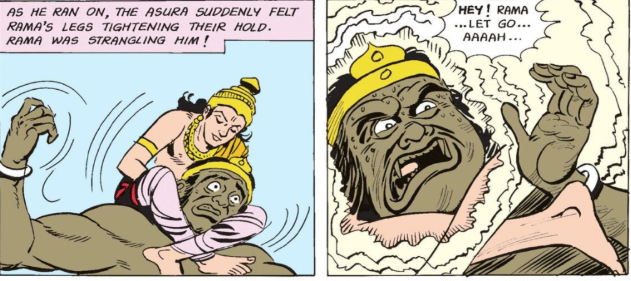
Balarama defeats the Asura Pralamba. Image credit – “The Bhagavata, Special Edition” (Kindle version), published by Amar Chitra Katha.

While fighting the armies of Jarasandha, Balarama used all the weapons a warrior of his class used in that era. He was proficient with the use of the bow and arrows as well. But his weapon of choice on the battlefield and his specialization was with the gada, or mace.
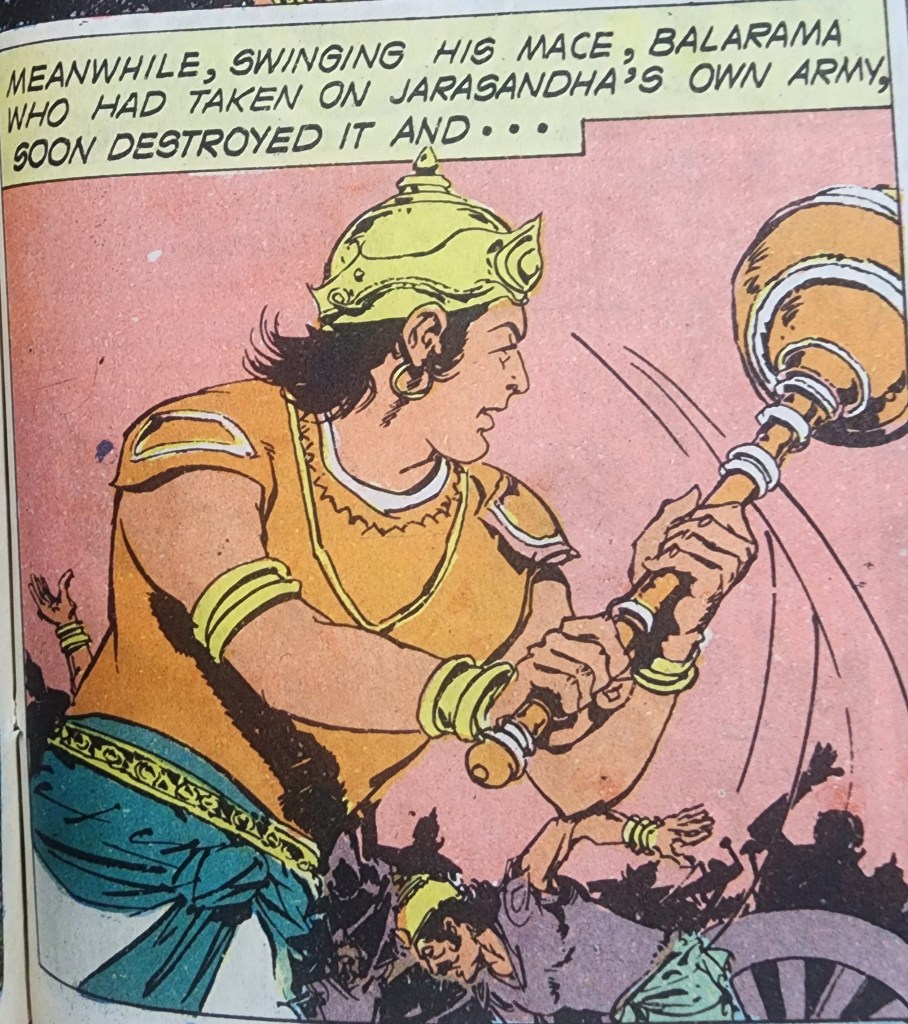
Balarama depicted using the Gada/Mace against Jarasandha’s forces. Image credit – “Krishna and Jarasandha”, published by Amar Chitra Katha.

As mentioned earlier, he was a mentor to both Bheema and Duryodhana in the art of mace fighting. The fact that his students were on opposite sides of the Kurukshetra War and that Krishna was not using weapons, were what resulted in his abstaining from the fighting in the great war.
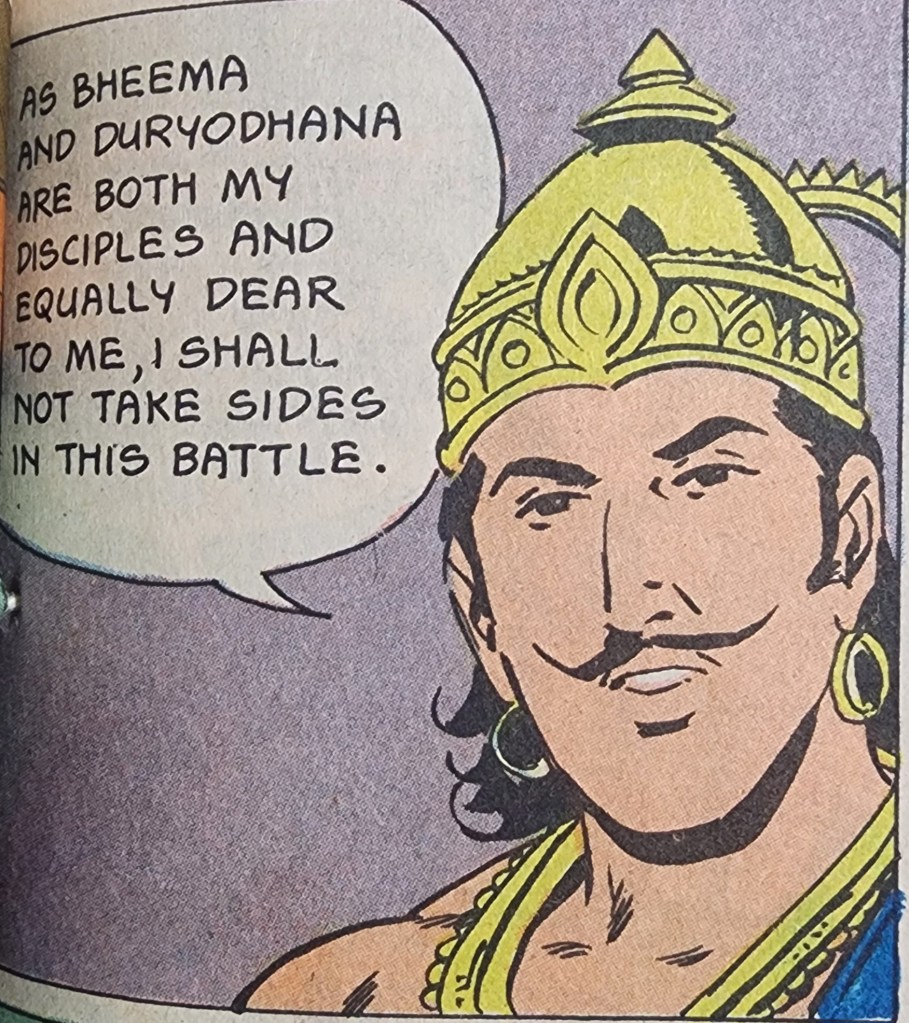
Balarama chooses to not participate in the Kurukshetra War. Image credit – “Mahabharata 27 – Sanjaya’s Mission”, published by Amar Chitra Katha.

This brings us to the plough being associated with Balarama. I have not heard of any description of how he used the plough in a fight, in any of the many conflicts he was involved with. So, I will use article to explore how the plough could have been a weapon or at least modified into one.

The plough is a tool that has a “head”, the ploughshare, that is at an angle of between 45 and 90 (or a little more) degrees to the shaft. To repeat myself, if one observes the plough depicted on the Agathocles coin and on the carving from Nagda, it is not a large weapon. It is either a short or medium sized weapon, that can be used in one hand.

One weapon from Japanese history that comes close to the form factor of a plough, is an agricultural implement that doubled as a weapon which was used in one hand, is the Kama. It is a sickle that was used as a weapon in the past.
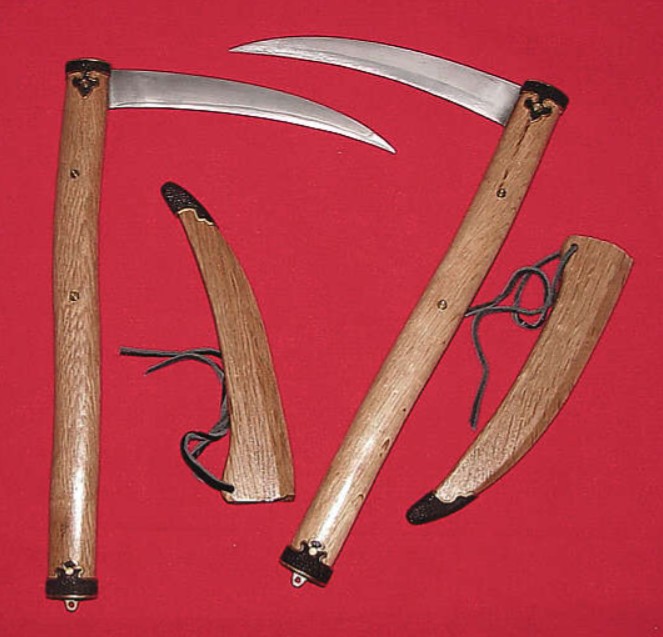
A pair of Kama. Image credit – Wikipedia.
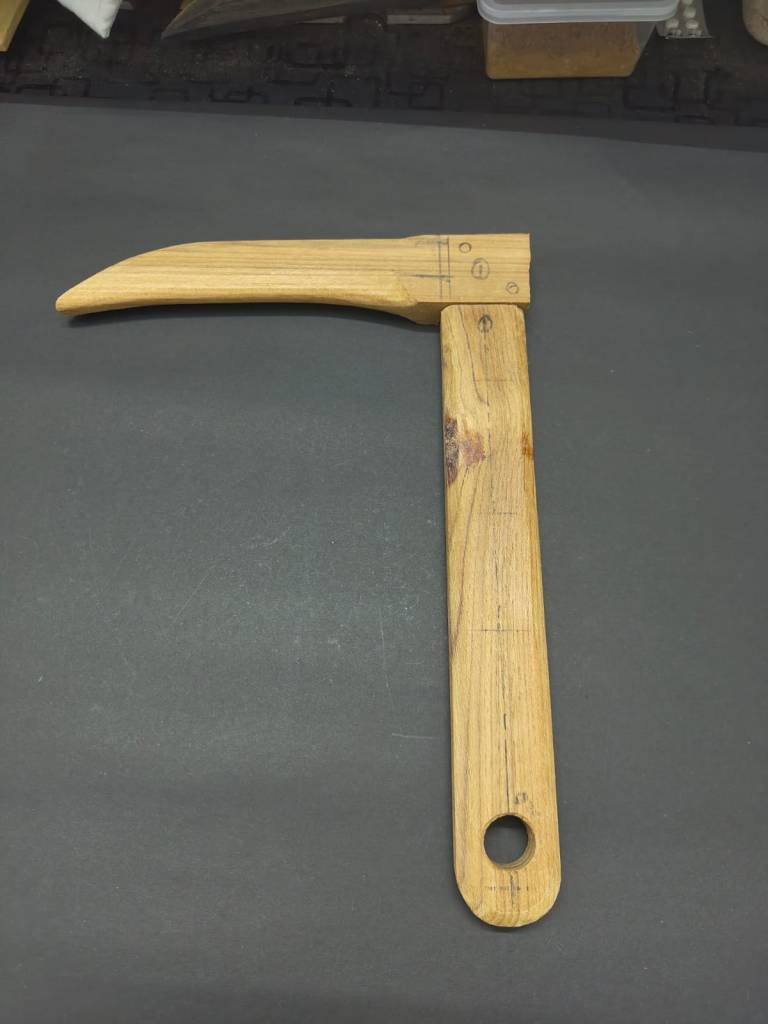
A training version of the Kama. This trainer was made and photographed by Siddharth Sahu.

The Kama was combined with a chain and a weight at the end of said chain. This combination of weapons was called the Kusarigama (Kusari – chain, Kama – sickle). The chain and weight were used for ranged attacks and also to distract or deter opponents. The Kama came into action at close quarters while the chain could also be used to immobilize opponents if the opportunity presented itself.
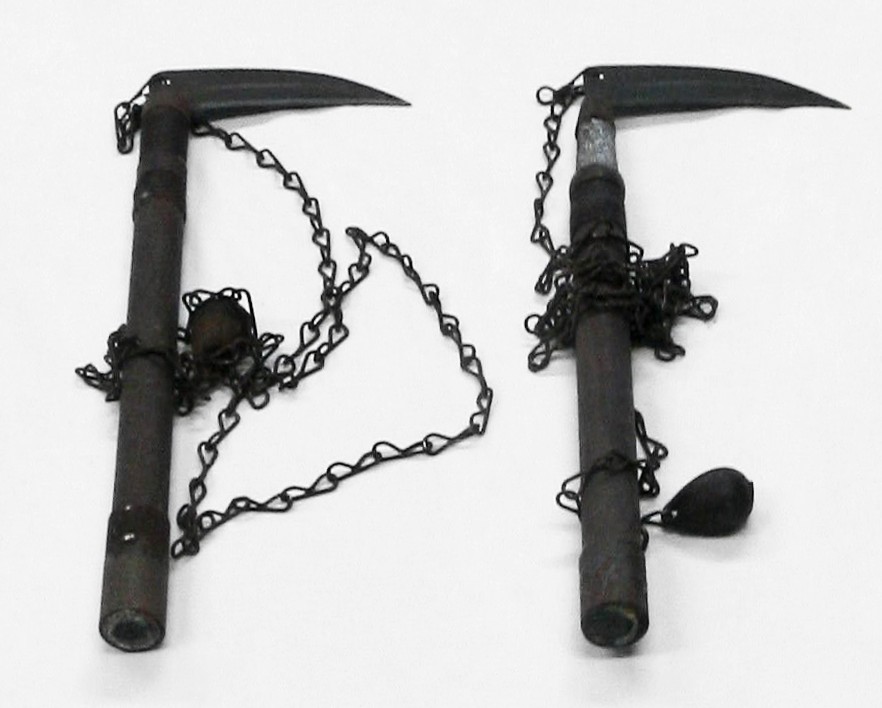
A pair of Kusarigama. Observe the chain (kusari) and bulbous weight (fundo) attached to the Kama. Image credit – Wikipedia.

Observe all the versions of the Kama from the 3 images seen above. The blade is roughly at a right angle to the shaft, similar to the plough. Now observe the artistic depiction of the plough in the image below. The plough depicted is very large, but the form is very similar to that of the Kama.
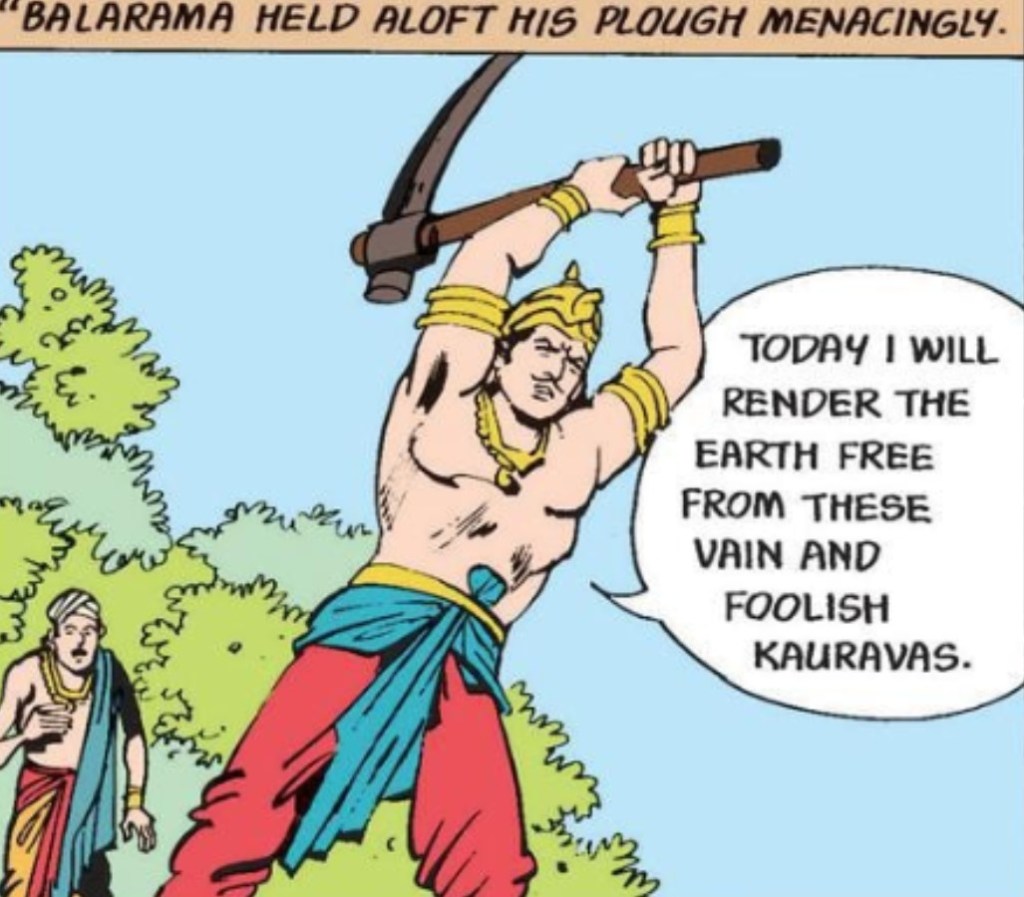
Balarama depicted using a plough that looks like a very large Kama! Image credit – “The Bhagavata, Special Edition” (Kindle version), published by Amar Chitra Katha.

A weapon used across India, Persia and Europe is the past, that was similar in shape to the Kama and therefore the plough is the Crow’s Beak axe. This of course, was always a weapon and never an agricultural tool. The Crow’s Beak was useful against chainmail armour and to a limited extend against plate armour.
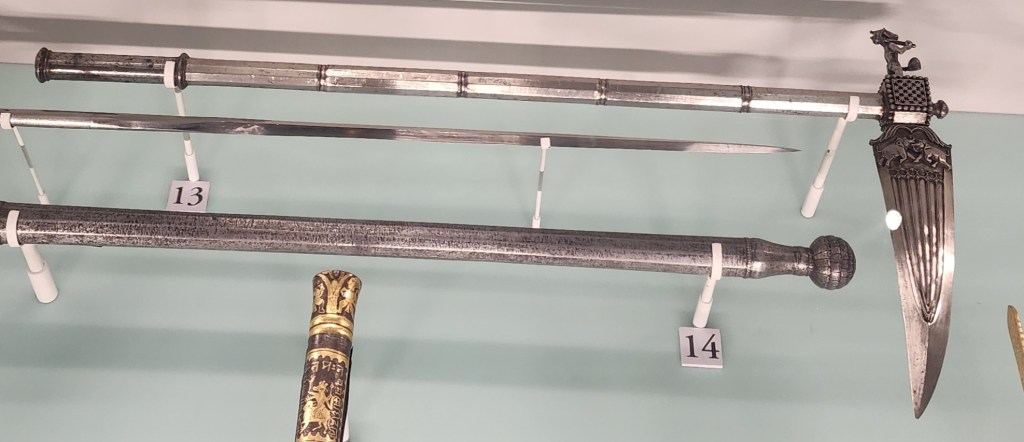
A Crow’s Beak axe, on display at the City Palace Museum, Udaipur, Rajasthan. Observe the incredible artistry on this weapon. Two elephats are depicted fighting at the base of the blade and Lord Hanuman himself is seen standing on the back!
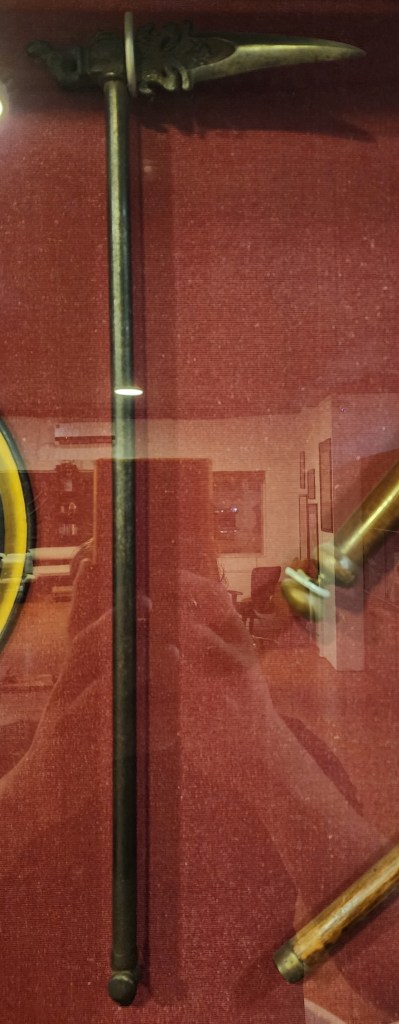
A Crow’s Beak axe on display at a dojo.
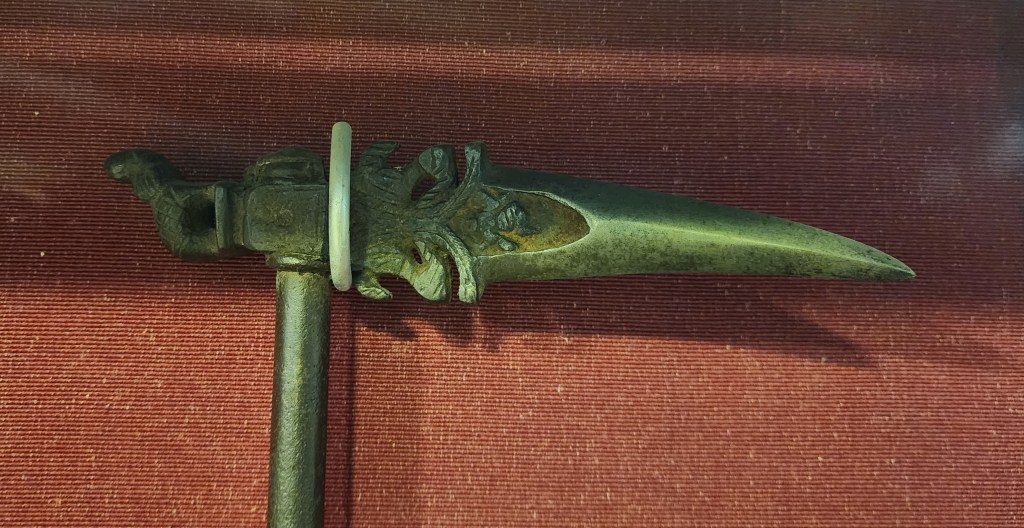
This is a closeup of the head of the Crow’s Beak from the previous image.

Now observe the image seen below. It is a closeup of the first image in this article. It is a modern-day depiction of Balaram in the style of ancient carvings. Here, Balarama wields the plough behind his head in his right hand and the club in his left hand. The plough is held like one would hold a Crow’s Beak axe while striking an opponent. The plough is indicated by the white arrow for clarity.
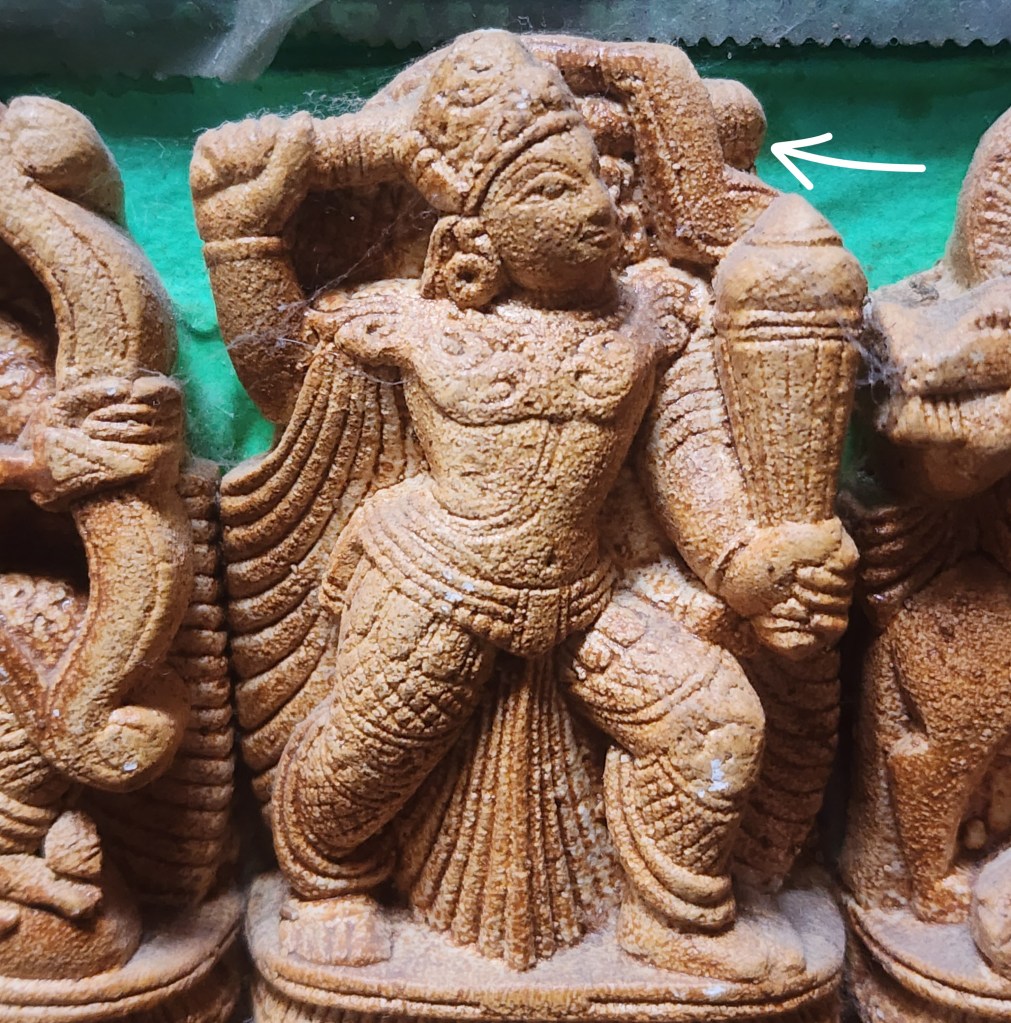
Balarama seen wielding the plough like an axe, in his right hand, while he holds a club in his left hand. The plough is indicated with the white arrow.

Considering this similarity to an axe, it must be noted that the depictions of the plough resemble two modern day tools. One is the modern-day Ice Axe, which resembles a plough due to the axe resembling the ploughshare in its angle to the shaft and the adze resembling the other part of the ploughshare, that farmers use to guide the plough in the right direction.
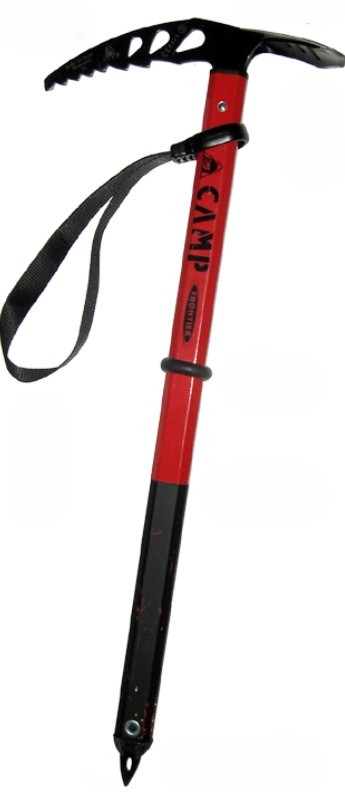
An Ice Axe. Image credit – Wikipedia.

The other modern-day tool is the Geologist’s Hammer. This tool has a point or an adze on one side and the other side of the hammerhead is a regular hammer. Observe the image below and the similarity in the form factor will be obvious.
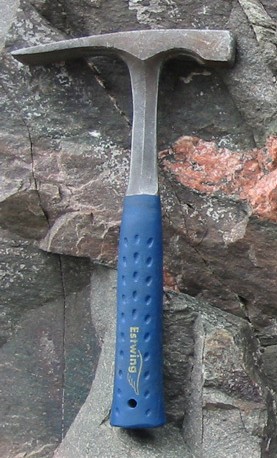
A Geologist’s Hammer. Image credit – Wikipedia.

Now observe the historical tool or weapon seen in the image below. It is a one handed two headed axe which resembles both the Ice Axe and the Geologist’s Hammer! Further, it has a recognizable axe head on one side and a short sickle head similar to that of a Kama on the other side! 😊
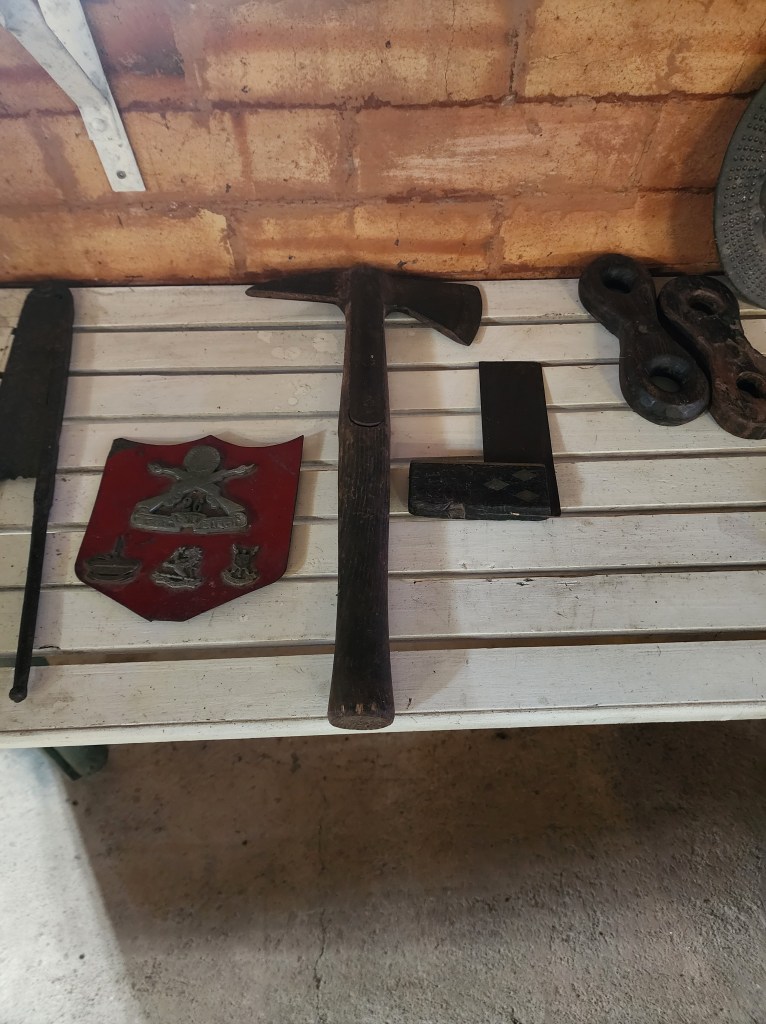
A two-headed axe, with a normal axe head on the right and a kama sickle blade on the left. This specimen is on display at the Kumarakom Heritage Museum, Vembanad, Kerala.

Now, once again look closely at the plough depicted in the right hand of Balarama in the ancient coin. It looks very similar to another tool which also doubled up as a weapon from Indian history! I am referring to the Ankusha or the elephant goad. The Ankusha is the weapon of choice for Lord Vayu, the God of the Wind and the Guardian of the Norwest.

In the image below, ignore the axe and the spearhead. The hook attached to a shaft is the Ankusha in its basic form. This is very similar to the depiction of the plough in the coin! This weapon, while combined with a spearhead or an axe or both was used in Indian history. The Ankusha was useful in hooking & deflecting weapons, shields and the limbs of opponents when necessary.
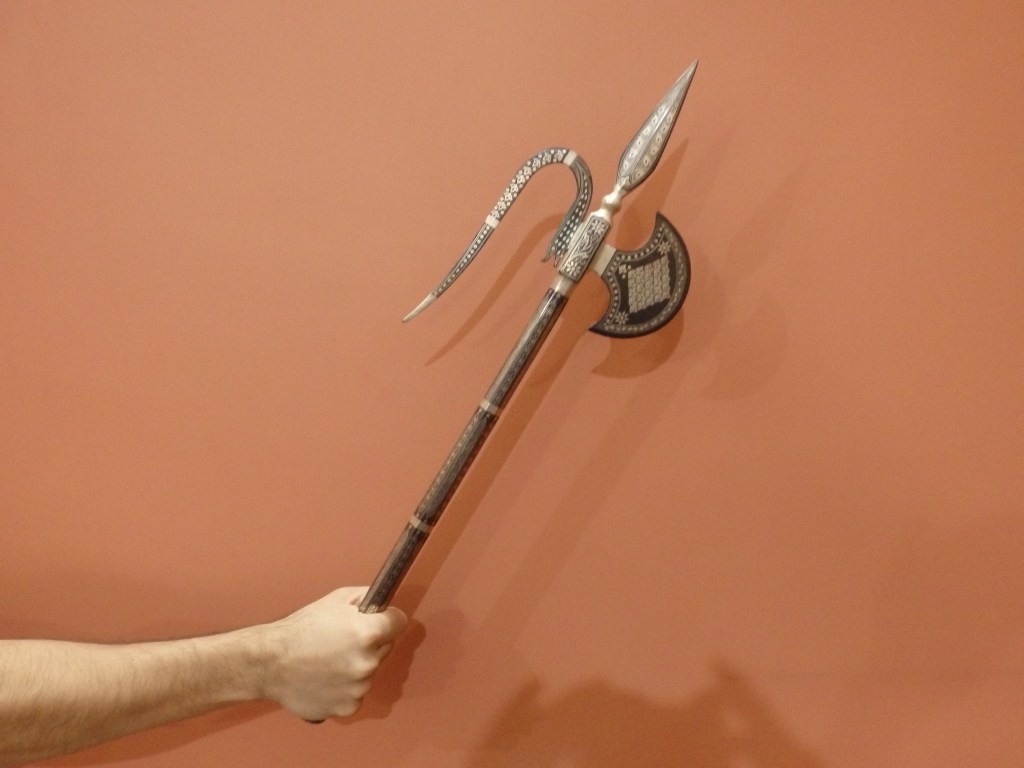
An Ankusha. Ignore the spearhead at the tip and the axe head. The hook with the shaft depicts a basic Ankusha. If one looks closely at the plough held in Balarama’s right hand on the coin seen earlier in this article, it looks remarkably similar to an Ankusha!

If we are speaking of an Ankusha and the plough can be held as an axe, we must mention the Bearded Axe. This is an axe that somewhat combines the utility of an axe and an Ankusha. The axe head delivers the blows while the “beard” of the axe head enables hooking weapons and the limbs of opponents. The shape of the axe head of a Bearded Axe, as seen in the image below indicates how an axe head could be constructed to function similarly to an Ankusha.
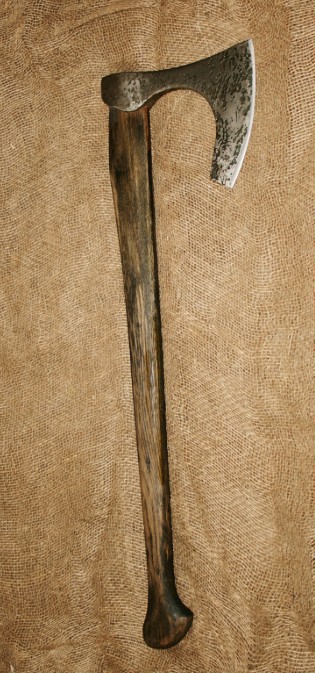
A Bearded Axe. Observe that the axe head also resembles the hook in the Ankusha in its form. Image credit – Wikimedia Commons.

Let’s now flip the plough, the smaller versions of course, that are depicted in Balarama’s hands. Imagine holding the plough depicted on the ancient coin, where the ploughshare is held near the fist and the shaft extends out beyond that. One could imagine this as the Ankusha from the image above held in reverse, with the spearhead being the handle. There did indeed exist such a weapon in Japan in the late 19th and early 20th centuries.

This was the Jutte. It was weapon issued to police officers in Japan when swords had been outlawed after the Meiji Restoration. The “hook” worked to catch/stop swords and redirect the attack. The protruding shaft made of metal worked efficiently as a club when necessary.
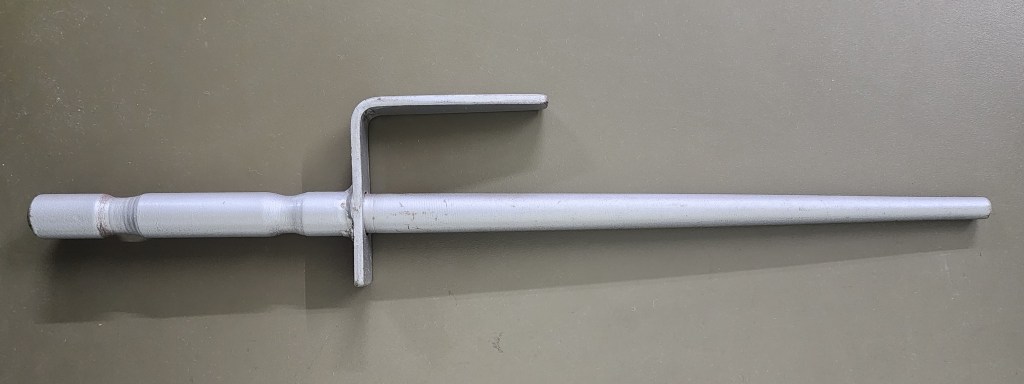
A training version of the Jutte. Observe that the slot looks similar to the hook on an Ankusha. This weapon is essentially a reversed Ankusha! Thus, it could be considered, in shape and form, a reversed plough as well!

Now let us get back to modern depictions of Balarama wielding a large plough. In the image below, while fighting the afore mentioned Vānara Dwivida, Balarama is depicted dual wielding a large pestle and a large plough! Imagine the strength that would require!
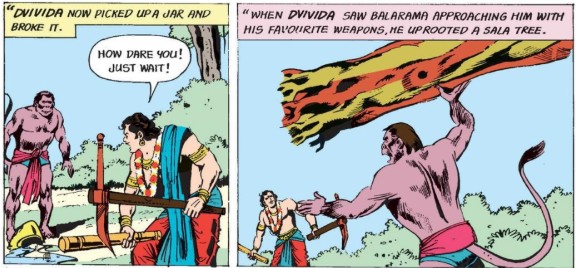
Balarama depicted dual wielding! With the plough and the pestle in each hand! Imagine the strength and skill needed to pull this off! :-) Image credit – “The Bhagavata, Special Edition” (Kindle version), published by Amar Chitra Katha.

A tool that would resemble a large plough in form factor, if not in weight is the Scythe. This again, is an agricultural tool with a large sickle blade. The blade seems like an oversized blade of a Kama from Japan. This tool is also commonly associated with depictions of the Grim Reaper, who symbolizes death.
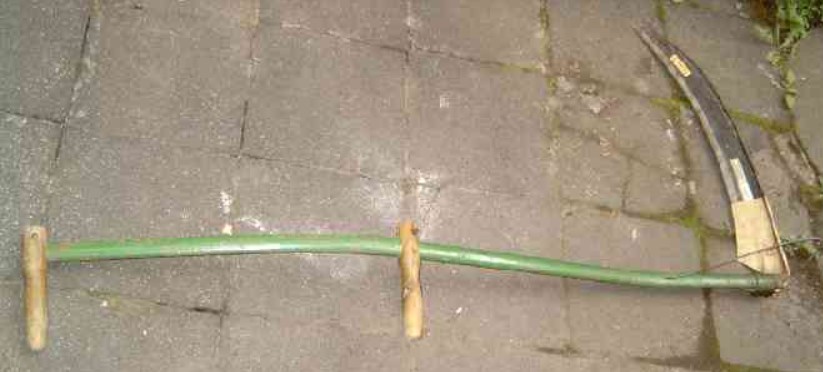
A Scythe. Image credit – Wikipedia.

While the Scythe in its original form might not have ever been used as a weapon, there existed a weaponized version called the “War Scythe”. This was a polearm with the blade turned up 90 degrees, to be parallel to the shaft rather than the usual perpendicular. This weapon, interestingly, leads us back to Japanese weapons from history. The War Scythe resembles the Naginata, which was itself a version of a glaive. The Naginata has a short blade on top of a long shaft. The difference though is that the Naginata has the sharp edge on the outer side of the curve of the blade, while the War Scythe has the same on the inner side of the curve of the blade, just like with a normal scythe.
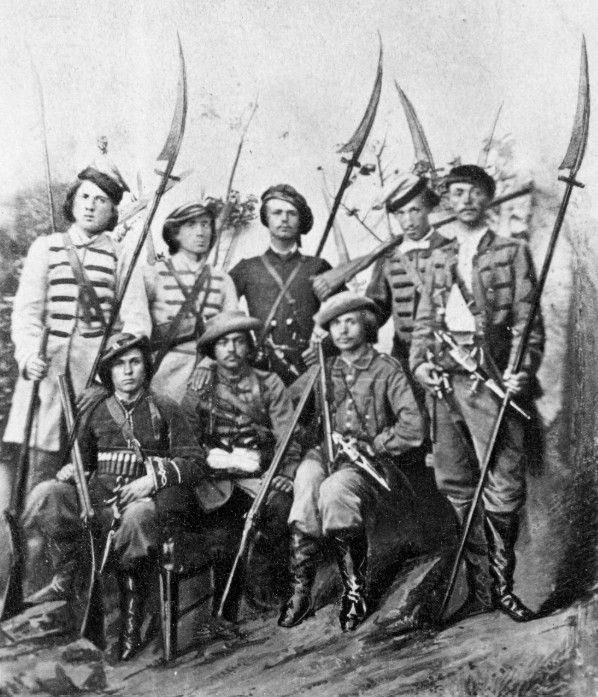
Troops from the Polish Lithuanian Commonwealth seen with their “War Scythes” in the mid-19th century. Image credit – Wikipedia.

I have no idea if Balarama ever used the plough like the weapons I described, but it is still worth considering, for warriors of the past, like their modern-day counterparts, could wield multiple weapons expertly, even if they had personal favourites among the tools of war. It would also not be wrong to presume that weapon designs borrowed from tools and warriors could adapt from one to the other as needed.

This concludes this article where I have tried to restrict myself to the martial aspects of Balarama that I could recollect. Balarama’s life is fascinating in many ways beyond his martial abilities. His marriage to Revathi has a sci-fi element to it, with time dilation being involved! Further, the pestle/musala/club/onake, while being a favourite weapon of Balarama’s, ended up being the implement responsible for the destruction of his entire clan! The Vrishni clan of the Yadavas literally self-destructed by killing each other with pestles! But these are points beyond the martial arts, at least for now.
Spears, Spearheads and Spearpoints – Part 3 (of 3)

This is the concluding article in this series of 3 posts where I share images and observations about various spears I have come across over the last few years. I continue in this article from where I had left off in the previous post. In this post we will continue looking at more spears, spearheads and spearpoints and consider their attributes, with a slightly greater focus in this one on spearpoints from cultures beyond India.

In the last 2 posts, we looked at images of parts of spears starting from about a thousand years ago. We also looked at the spear wielded by Maharana Pratap. While this post can be read as a standalone, I would highly recommend readers to go through the previous two articles in this series for a better appreciation of this one.

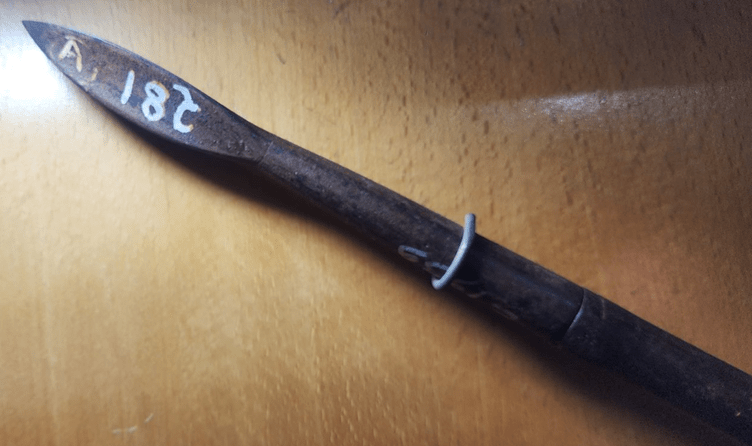
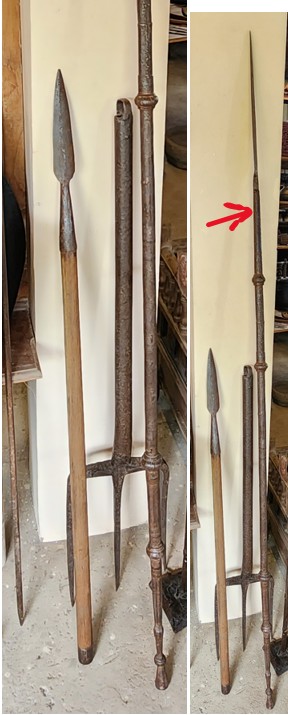
Images 1 (L) and 2 (R) – Image 1 shows a spear from the Kumarakom Heritage Museum, Vembanad, Kerala. Image 2 shows the spear in image 1 in comparison with the spear in image 14 in the previous post. This spear is also shown with a red arrow pointing to it in image 2.

We had left off in the previous article, the previous part to this post (Spears, Spearheads and Spearpoints – Part 2), with an image of a long spear (image 14 in the previous post) from the Kumarakom Heritage Museum in Kerala. We continue now with an image of another spear from the same museum. This is the one in image 1 above. The same spear from previous post is seen in image 2, with a red arrow pointing to it.

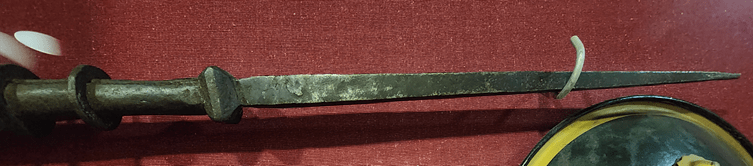
The spear in image 1 is very short, between 3 and 4 feet long. Image 2 shows this spear in comparison with the long spear (it is the same spear in image 14 in the previous article). The shorter one is less than half the length of the longer one. I am not sure if the shaft and the butt cap are the original ones that were mounted with this spearhead.

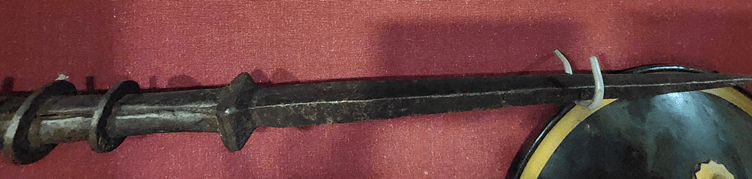
The most interesting thing about this spearhead is that it is remarkably similar to the spearheads the Vikings are supposed to have used. The image below will illustrate this point.

Image 3 – A replica of a Viking spearhead

I bought the spearhead seen in image 3 in Sweden, in the Old Town of Stockholm, at a store called “The Viking Store”! 😊This piece is supposed to be a replica of the regular spearheads that Viking soldiers used. It is about a foot long, with the spearpoint and the socket both being about 6 inches in length.

Now compare this spearhead with the one on the spear in image 1, displayed in the museum in Kerala. I think the 2 spearheads are very similar. This again goes to show how robust and versatile this design of spearhead was! The Viking era is considered to be from the 8th century to the 11th century. I suspect the example from the Kumarakom museum is from the 19th century. So, this design lasted for 1,200 years! Of course, in reality it lasted a lot longer than that!

Image 4 – A spearhead displayed at the Kumarakom Heritage Museum, Vembanad, Kerala.

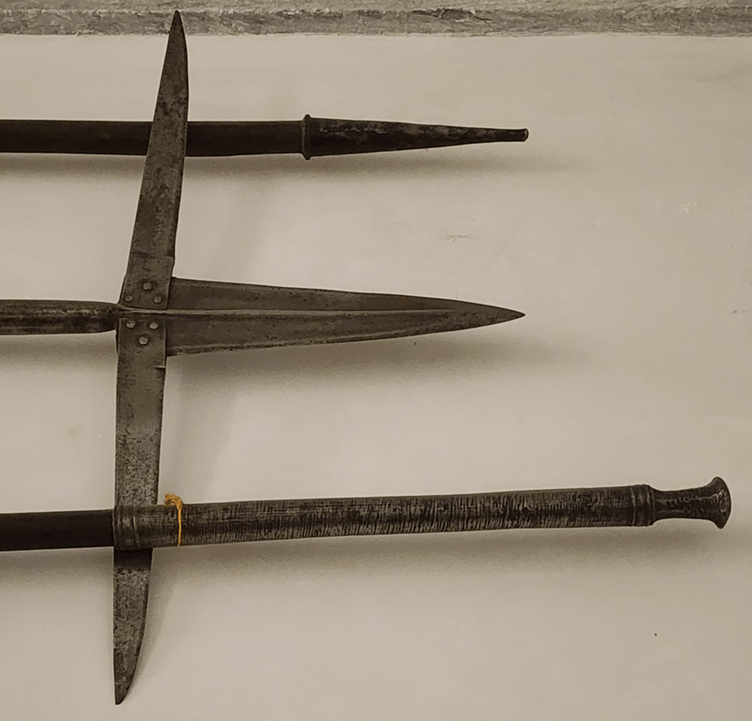
The image above shows another spearhead displayed at the Heritage Museum in Kerala. It has a flattened diamond section and 2 small wings between the spearpoint and the socket. The weapon above the spearhead is a hooded katar. It is a regular katar that has a “hood” to protect the knuckles and wrist of the wielder.

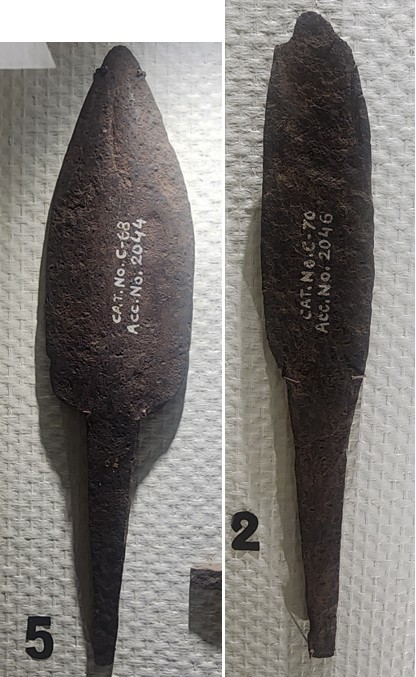
Image 5 – A spearhead displayed at a dojo.

Many years ago, our dojo rescued a set of antique arms. They were with a local antique dealer who was going to scrap them all as no one seemed interested. So, the dojo pooled resources and rescued the antiques which would otherwise likely have been melted as scrap. A set of these could be restored for display and study by martial artists. We do not know the age of any of these, or the actual metals used in their construction. We think they are from the 18th and 19th centuries and are mostly made in India.

Images of a few spearheads from this set are seen here, starting with the one in image 31. This spearhead has a leaf shaped point. The point and socket are both about 6 or seven inches long. The edge has come damage and is pretty thin. It is completely flat and has no pronounced increase in thickness towards the centre of the spearpoint.

Image 6 – A spearhead displayed at a dojo.

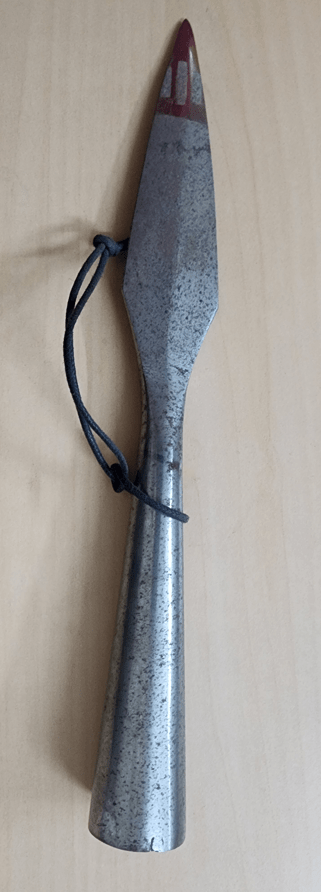
This spearhead seems to have a point made of steel affixed to a socket made of brass. I am not sure if the joint is with a weld or with glue. The spear point is triangular in shape and about 9 inches long. It has a substantial midrib that contributes to the rigidity of the spearpoint.

Image 7 – A spearhead displayed at a dojo.

This spearhead is large. The spearpoint itself is more than a foot long. The socket is another 10 or so inches long. The point is attached to the socket with 2 rivets as seen in image 7. This spearhead could be considered a short sword by itself. The spearpoint has 2 sharp edges that can cut if need be. The point also has a bit of reinforcement for effective thrusting against heavy clothing or chainmail.

The surface texture of this spearpoint keeps the hammered look. It is not polished to give a smooth finish. I wonder how long the actual spear on which this was originally mounted would have been?

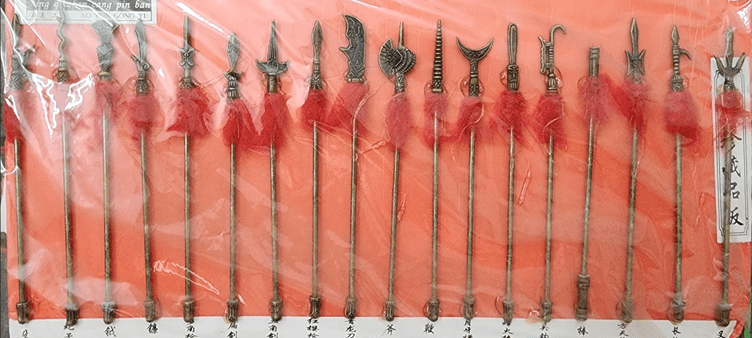
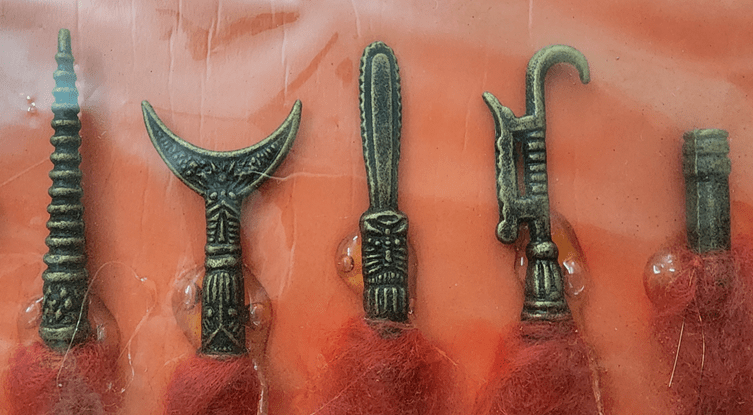
Image 8 – The 18 Arms of Wushu

The internet tells me that the above image depicts “The 18 Arms of Wushu”. Many years ago, I bought the set seen above as a souvenir from China. At the time I didn’t know this specific name and bought it as it depicted different polearms which are Chinese in origin. Apparently, this is a common souvenir that is also available online these days. Each of the pieces is about 6 inches in length.

Not all of the 18 are spears as we think of them in the conventional sense, but they are all polearms. Some are designed for cutting or hacking and some are even designed for digging, so they cannot be called spears as they are not thrust centric weapons.

I am not sure of the specific name for these. A search on the internet, even with AI, was not satisfactory. So, I shall only mention the names of the ones I know and just describe the rest.

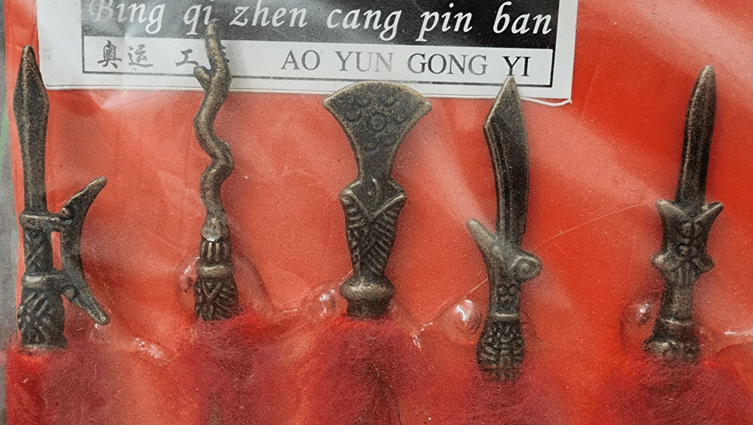
Image 9 – A close-up of 5 of the heads of the “18 Arms of Wushu”.

The weapon on the far left is certainly a spear. It has a crescent shaped cutting tool on its right, which could be an axe. The second weapon from the left has a spearhead resembling a snake, or perhaps an antler. I think of an antler as there is a single prong towards the tip that deviates from the sinuous point.

The weapon in the middle is what I believe is called the “Monk’s Spade”, for it was used by martial monks both as a spade and as a weapon. To the right of the Monk’s Spade is what I think of as a Kwan Dao. This is similar to the Japanese Naginata or a Glaive from other cultures. It is essentially a curved sword blade atop a spear shaft.

To the far right of the image is another spear. I am not aware if it has a specific name. It has what seem like wings below the spearpoint. I am not sure if they are wings or 2 small crescent blades just below the point.

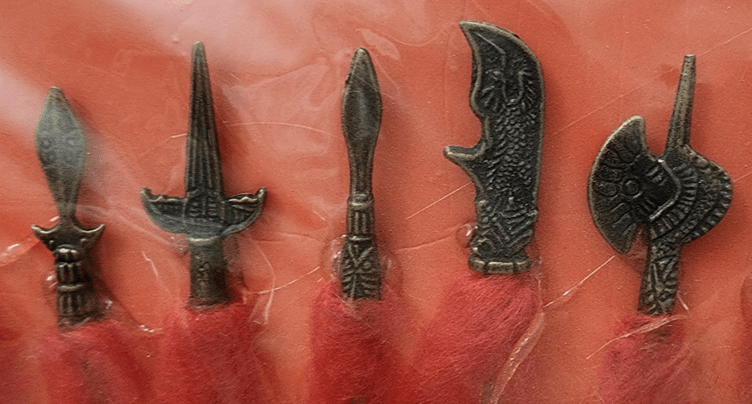
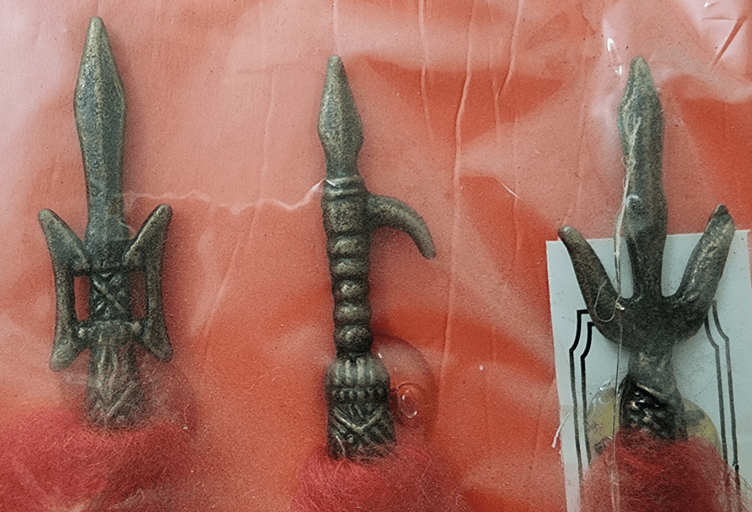
Image 10 – A close-up of another 5 heads of the “18 Arms of Wushu”.

The spear at the far left of image 10 resembles the spearhead in image 4, displayed at the museum in Kerala, India. It has a leaf shaped spearpoint and 2 wings below the point. The spearhead to its right reminds me of the European Partisan spear. In sheer size it also similar to the large Rajput spearpoints seen in images from part 1 of this series of articles. I am sharing that image here again. The spear in the middle seems like one with the classic leaf shaped spearpoint seen all over the world. I am not aware of the Chinese names of any of these.

The large polearm that is second from the right also looks a Kwan Dao to me, but his one seems a lot bigger than the one seen in image 9! I would say that this resembles the Japanese Bissento (horse cutter). To the far right is what seems an equivalent of the Farsa seen in an image in part 2 of this series of articles, which I am sharing again. It is a combination of an axe and a spearpoint on a pole. I am not sure what its Chinese name is.

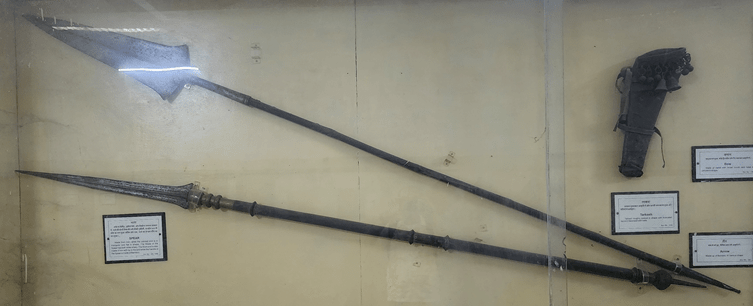
Image 11 – Display of two spears from the Government Museum, City Palace, Udaipur, Rajasthan.

The spearhead from image 10, that is second from the left, reminds me of the spearpoints on the 2 spears seen in image 11.

Image 12 – Display of two spears and a farsa (halberd) from the City Palace Museum, Udaipur, Rajasthan.

The combination weapon at the bottom of image 12 is the Farsa (halberd), which is what the weapon at the far right of image 10 reminds me of.

Image 13 – A close-up of 5 more heads of the “18 Arms of Wushu”.

I am not aware of the Chinese names of any of the polearms in image 13 either. The spearhead on the far left in image 13 is intriguing! It resembles a tapering spindle. I am not sure if it was purely a thrusting weapon or used for both thrusting and blunt force strikes with the lower parts of the spearpoint. The weapon that is second from the left is a crescent. I am not sure if is a blade or not. I can only imagine how this was wielded or deployed.

The weapon in the centre seems like a short sword at the top of a pole to me. To my eyes it resembles the spearpoint from image 7, but this one does not seem to have a point. The weapon that is second from the right seems like an anti-cavalry weapon as it has a hook at the tip. This would be useful in pulling riders off their horses, or in tripping horses. The other side of the hook seems to have a blade, though I cannot be sure.

The weapon on the far right is a double-sided weapon. It has the same head on both ends of a pole. It seems like a pole with a bludgeon on its two ends.

Image 14 – A close-up of the last 3 heads of the “18 Arms of Wushu”.

Again, I am not aware of the original Chinese names of the 3 weapons in the above image. The spear one on the far left seems like a variant of the spear on the far left of image 9. Here, there seem to be crescent blades on both sides of the spearpoint, unlike the one in image 9, where there was only one crescent blade with the spearpoint.

The weapon in the centre has a spearpoint with a hook to its right. The hook I guess could be used to parry the weapons of opponents and pull people off horses, if not just trip them. The last of the 18 arms, on the far right of image 14, seems like a trident where the central point is longer than the two prongs on the sides. To my eyes, this also seems like an Okinawan Sai mounted atop a spear shaft. The central spearpoint seems to flare and narrow along its length. I wonder what purpose that design serves?

If anyone knows details of “The 18 Arms of Wushu” and the weapons depicted in the above images, including their names, please do share the same with me, in the comments to this post. It would be great knowledge.

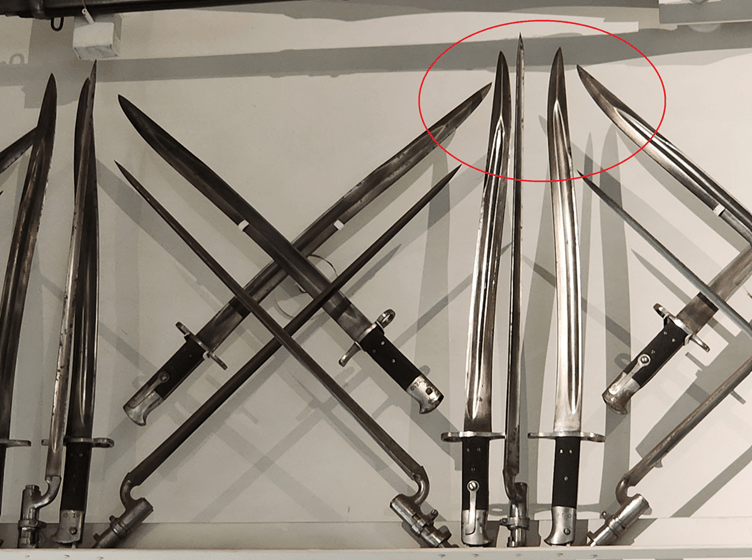
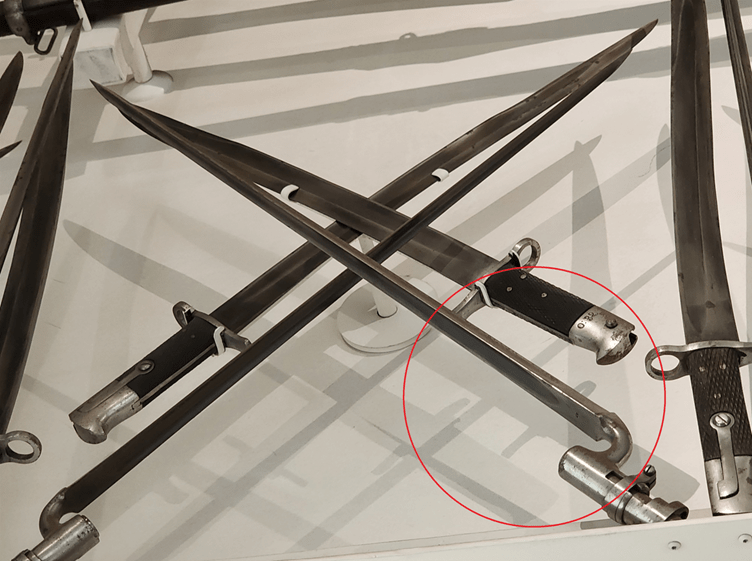
Image 15 – Display of bayonets from the City Palace Museum, Udaipur, Rajasthan.

Bayonets when fitted to rifles make the rifles modern equivalents of spears. This makes bayonets, in my opinions the last iteration of the spear in world history. Image 15 above shows a collection of bayonets of different kinds, all likely from the end of the 19th century.

In the above image, some weapons displayed look like swords, but they really are bayonets. Some bayonets were functional short swords. The swordlike bayonets in the above image have a forward curve with a recurve towards the tip. This type of blade was called the Sosun Pata in Maratha culture. In the British Army of that time, I believe it was called the “Yataghan Bayonet”. The Yataghan was a short Turkish (Ottoman) sword similar to the Maratha Sosun Pata and was used in the same time period. Instead of a conventional cross guard, a socket is added to these swords which make them bayonets. Th socket is used to fix the blade to the end of a rifle barrel.

Observe the 2 points encircled in red in the above image. Both points are reinforced. While the use of armour had disappeared by the time these bayonets were used, soldiers used heavy clothing and bayonet points had to be strong enough to get through these layers.

Image 16 – Display of bayonets from the City Palace Museum, Udaipur, Rajasthan.

Observe the bayonet encircled in red in image 40. It has a triangular section which tapers down to a fine point. It has no cutting ability but would thrust very well due to its rigidity. It has the famous offset design where the spearhead is parallel to the rifle barrel. The socket at the bottom is fixed to the end of the rifle and even if one were to shoot while the bayonet wat fixed, the point would not be in the path of the bullet.

Observe the swordlike bayonet above the one just described. In this image the hole in the cross guard is clearly visible. This hole is the socket which was used to affix this bayonet to the rifle.

This concludes this article and this series of 3 posts in which I shared images of spears and observations regarding their attributes, especially their spearpoints and spearheads.

Spears, Spearheads and Spearpoints – Part 1

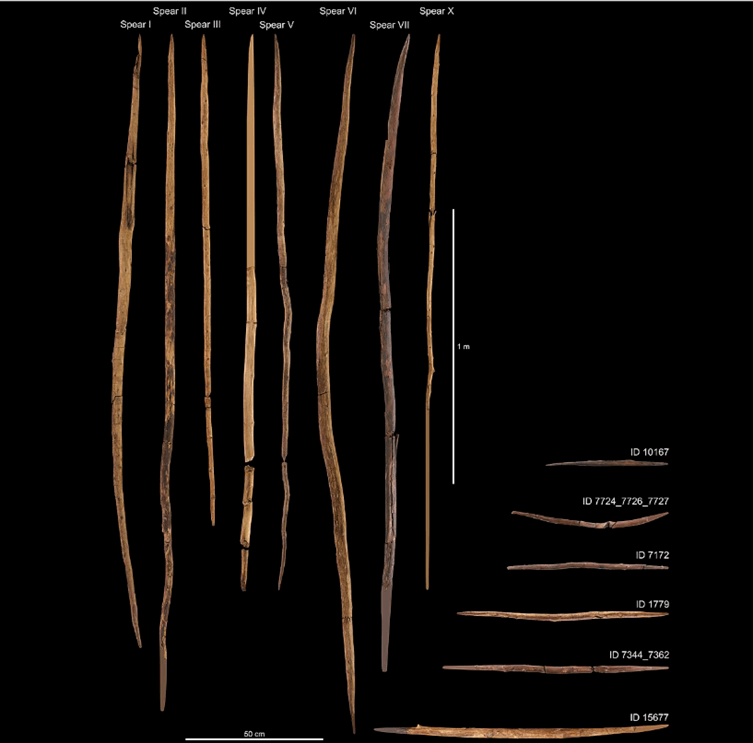
Spears have been used by modern humans, human ancestors and close relatives of homo sapiens for a very long time. The oldest known spears are supposed to be 400,000 years old, made by a sister species. Some of the best-preserved spears made entirely of wood, including sharpened points, are supposedly 300,000 years old, found in Schöningen in Germany. The oldest identified spear points made of stone are supposed to be around 500,000 years old.

Schöningen spears. Image credit – Wikipedia

Spears likely started out as tools for hunting and evolved into weapons of war. Spears, in their various forms have been in use since pre-historic conflicts all the way through to the 20th century. It is only in the current century, with long range weapons becoming the mainstay for all conflicts, that spears are not in use. The bayonet, that was used all through the 20th century on all kinds of automatic rifles was perhaps the last iteration of the spear.

Spears have varied from simple wooden staves to handheld spears, to javelins to very long pikes to lances of various types. They have been used on foot, on chariots and from horseback. Spearpoints became a part of various combination weapons, like halberds and poleaxes. Long spear points could double up as short swords, as happened in African cultures.

The shafts of spears went through several iterations too, in terms of material, length, decoration and girth. Shafts could be narrow and light, comprising of rattan or wider and stiff, being made of wood or metal. The metal shafts could be hollow as well, to keep the weight of the weapon down. The shaft could be long or short as the situation required.

The points of spears could be made of anything from stone or obsidian to copper, bronze, iron and steel. They could be long or short, sturdy or fragile (for a single use), wide or lean (depending on the opponent it expected to tackle).

In a series of 3 posts, I will share a few images of spears, spearheads and spearpoints I have come across over the last few years. Most are from India, while a few are images of representations of spears from cultures outside India. These 3 articles will be more of images with some observations from me.

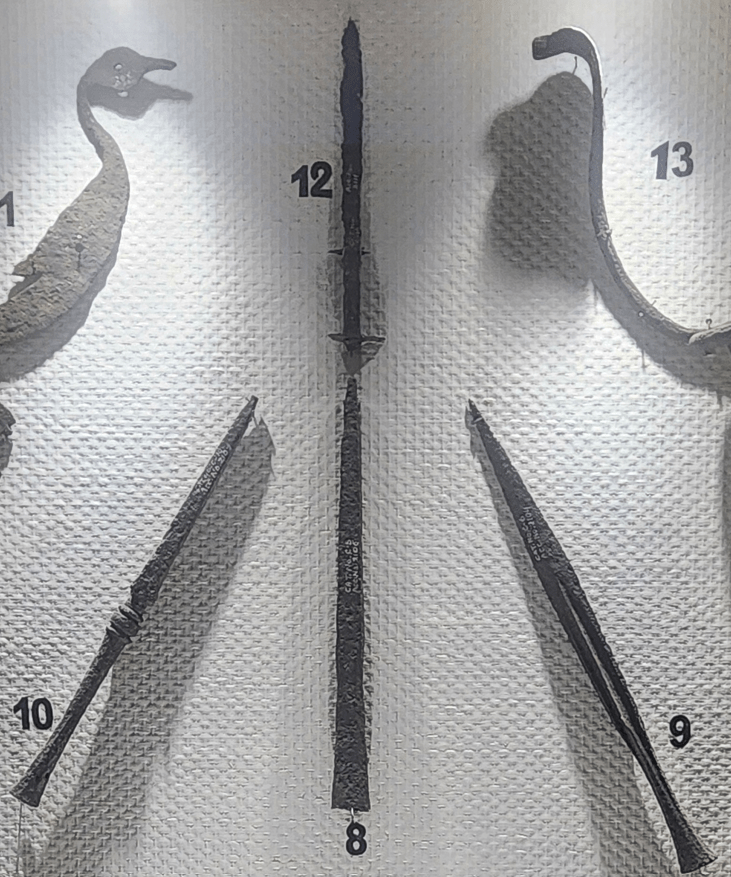
Image 1 – Display of spearheads from the Sanchi Museum, Sanchi, Madhya Pradesh. All of these are from the 11th century CE.

In the above image, through the exhibits labelled 8, 9, 10 and 12, 4 different spearpoints or spearheads are displayed. The exhibit labelled 8 looks like a long triangular spearpoint. The one labelled 12 seems to have two sets of “wings” or barbs sticking out perpendicular to the spearpoint itself. The spearhead labelled 10 has a square cross-section, tapering down to a point. The exhibit labelled 9 is a long leaf shaped spearhead with a groove down the middle in the lower half of the point. Each of these, based on what I estimated when I saw them, is between 12 and 18 inches long.

Image 1a – A spearhead displayed at a dojo.

This is an antique spearhead that was rescued from scrapping by our dojo. It is about 18 inches in length and the spearpoint is about 10 inches long. The spearpoint is square in section and tapers down to a point. I am not sure of the metal used in making this spearhead. I suspect that this spearhead is from the 19th century, though the exact age of this exhibit is not known.

Image 1b – Another view of the spearhead from image 1a.

Image 1b shows the same spearhead from image 1a, from a different angle. This shows the square section of the spearpoint more clearly. The profile of the spearhead in image 1a is remarkably similar to that of the exhibit labelled “10” in image 1. This means that the same type of spearhead was in use for about a thousand years, if not more! That is quite some consistency in human history!

Images 2 (L) & 3 (R) – Display of spearpoints from the Sanchi Museum, Sanchi, Madhya Pradesh. Both are from the 11th century CE.

Seen in the above 2 images are leaf shaped spearpoints. These are much shorter and wider than the specimen seen in image 1. In both the above exhibits, one side is convex (as seen in image 2) and the other side is flat (as seen in image 3). The length of both of these is about 8 inches according to my estimate. The material used in the spearpoints in the 3 images above was not mentioned, but they seem to be either iron or steel.

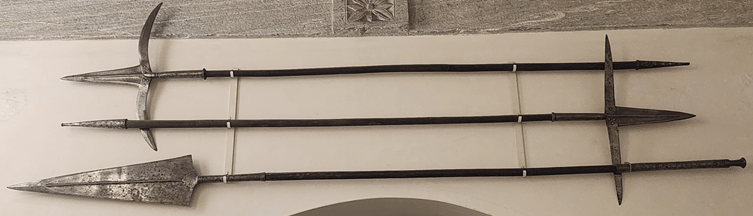
Image 4 – Display of spears from the City Palace Museum, Udaipur, Rajasthan.

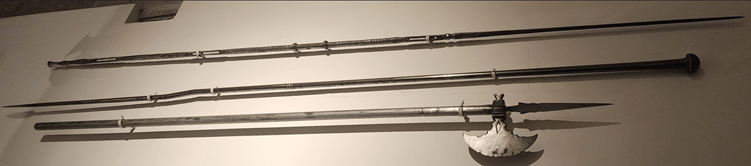
Each of the spears seen in image 4 is about 8 feet in total length. The shaft seems to be rattan and about an inch in diameter. I am not sure if the shafts are the original ones on which the spearheads were historically mounted. The age of the shaft and spearheads was not mentioned as part of the display. A close-up of the spearheads is seen in the following 2 images.

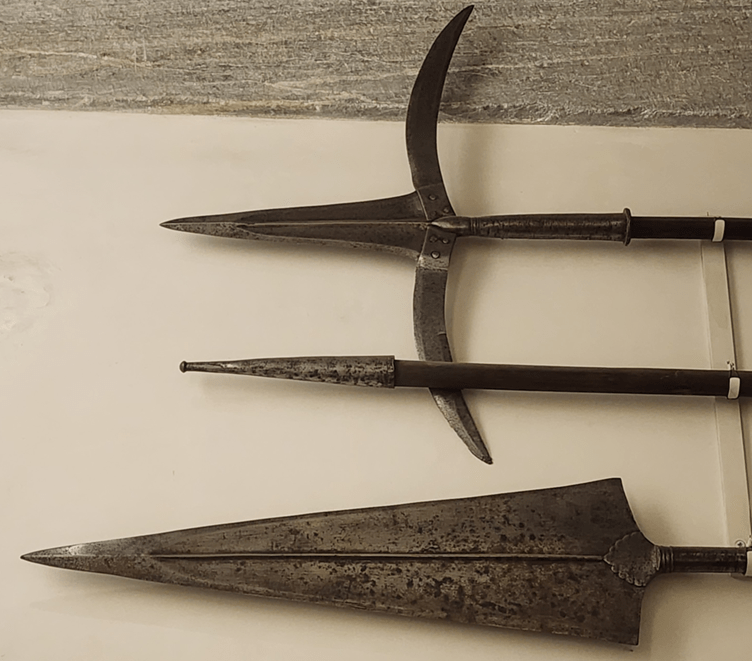
Image 5 – Close-up of the spearheads and butt spike of the spears seen in image 4.

The spearhead at the bottom is big. It is well over a foot long and very wide as well. The point is reinforced to enable better thrusts, which might go through chainmail. This spear with its large head reminds me of Renaissance era European Partisan spears.

The butt spike/cap of the middle spear is seen. The conical shape reminds me of what is called in Japanese spears (yari) as an Ishizuki.

The spearhead on the top spear has 2 wings on the side. The spearhead as a whole reminds me of a Japanese Jumonji Yari, which also have a central spearpoint with 2 wings on the side. The two wings enable with parrying weapons of opponents and also in hooking opponents, whether to trip them or to pull them off horses. The central point is about 10 inches in length while the total length of the two wings combined is 18 inches or more.

Image 6 – Close-up of the spearheads and butt spike of the spears seen in image 4.

The spearhead in the middle again resembles a Japanese Jumonji Yari. If there was only one blade instead of 2, it would be akin to the Japanese Kama Yari (Kama is the sickle in Japan, which looks a Crow’s Beak axe or an ice axe of modern times). The butt spike at the top is similar to an Ishizuki. The butt cap of the lowest spear, which is the rear end of the one with the large spearhead (reminiscent of the European Partisan) is not entirely conical, but has a blunt, slightly bulbous head. O a Japanese spear, this would likely be called a Hirumaki, which is also a protective counterweight at the rear end of a spear. But unlike the Ishizuki which resembles a spike, the Hirumaki resembles a ball.

Image 7 – Display of spears from the Government Museum, City Palace, Udaipur, Rajasthan.

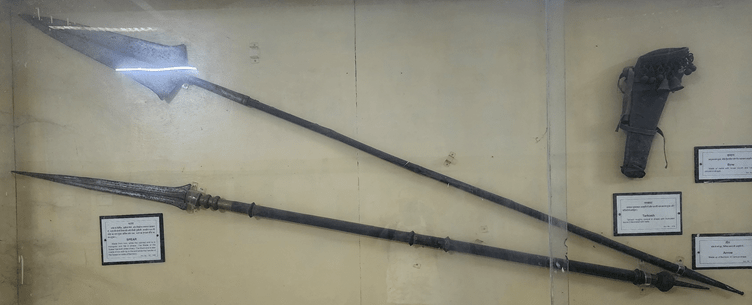
Image 7 shows 2 more spears. These are a bit shorter than the ones seen in image 4, maybe 6 to 7 feet in length. The one on top is similar to the one with the single large spearpoint, seen in the previous image. The one below has a narrower, slightly shorter spearhead. It has a proportionately more robust construction due to the robust midrib combined with a narrow profile. The age of these 2 exhibits was not available. My personal belief is that these are likely from the 18th and 19th centuries.

The lower spear brings to mind what is depicted as an “Assegai” in popular culture. The assegai is a spear used in Eastern Africa. Observe the rear end of this spear. The Ishizuki and Hirumaki are combined here! The spike at the end also has the counterweight for improved balance in handling the weapon. This weapon also has rings or bands along its length, which divides the shaft into segments, which are not of equal length. This will be seen in further examples. I will also write a separate article about what I think the purpose of these was.

Image 8 – Spear on display at the Government Museum, City Palace, Udaipur, Rajasthan.

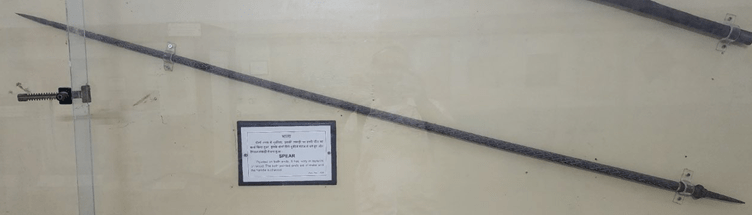
The spear in image 8 is also about 6 feet in length. It has a pronounced taper even in the shaft, almost like a needle! Due to the taper in the shaft and a small narrow point, this resembles the prehistoric Schöningen spears. This exhibit seems to have been a prestige piece. It has ivory inlay all along the shaft, though this is not visible in the picture. The butt cap again has both a ball and a spike integrated together.

Image 9 – Display of spear and spear shaft from the State Museum, Bhopal, Madhya Pradesh.

In the above image, both exhibits are referred to as spears, though I personally believe that the one on the left is just the butt cap on the shaft. The one on the right is over 7 feet long as I see it. A close up of the spear head is seen below.

Image 9 – Close-up of the spearheads seen in image 8.

In this spearhead the point itself is pretty short, just a few inches long. The spear head including the socket used to attach it to the spear shaft is about 10 inches or so in length, but the actual spearpoint is about 5 inches only. The spearpoint seems to have a triangular section with a hollow grind as seen in the close-up above.

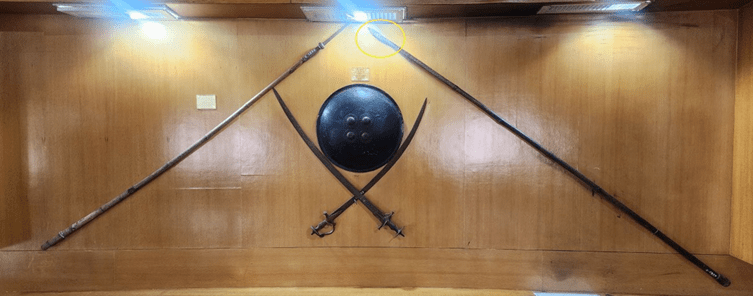
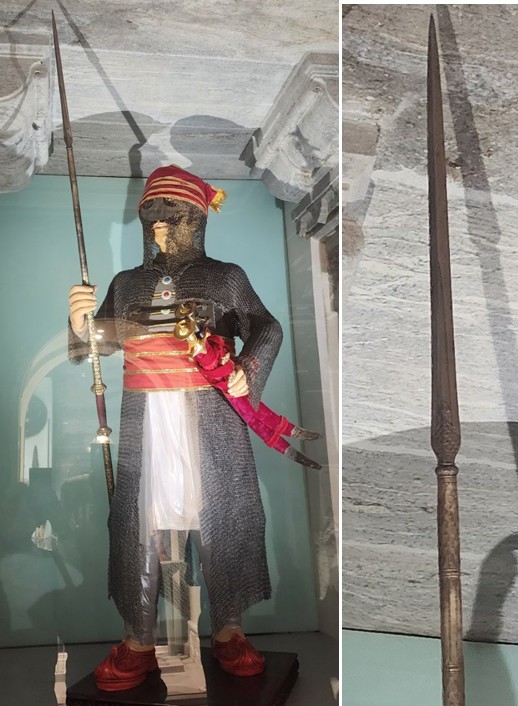
Images 10 & 11 – The image on the left shows the armour, swords and spear used by Maharana Pratap! The image on the right shows a closeup of the spearpoint and a part of the spearhead. This display is from the City Palace Museum, Udaipur, Rajasthan.

Maharana Pratap was supposed to have been 6 feet tall. So, I presume that this spear is around 8 feet long. The spearpoint itself is about a foot long. It is a narrow point, with a flattened diamond section and a bit of hollow grind towards the socket. The socket that attaches the point to the shaft is itself about a foot in length.

The spear shaft is richly decorated as befits a king. This spear also has the rings along its length that I mentioned in reference to the exhibit seen in image 7. This spear also has a distinct section near the centre similar to the ones seen on javelins used in the modern Olympic sport of javelin throwing. The spear and the javelin were supposed to be Maharana Pratap’s favourite weapons. So, if this spear could double up as a javelin there need be no surprise.

A video of the spear is seen below which shows the different sections in greater detail. The rear end of the spear has a cap which is similar to the one seen in image 6. The image and video are not of the best quality due to the reflection from the protective glass and museum lighting. ☹

The above video shows Maharana Pratap’s armour, two swords and spear.

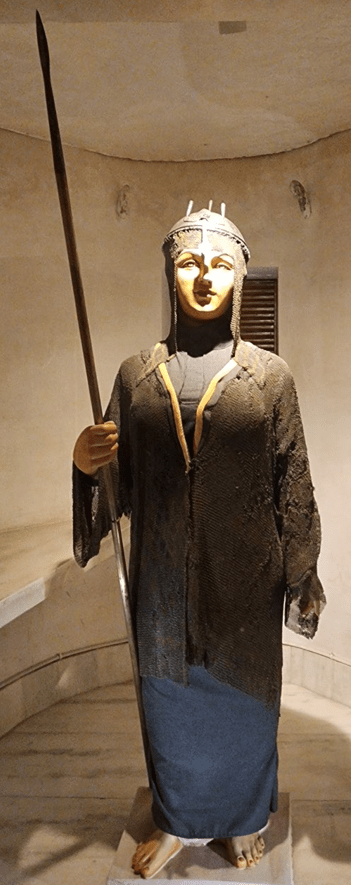
Image 12 – A representation of a female guard of the Zenana, including the chainmail armour and spear she is likely to have worn and wielded respectively. This display is from the City Palace Museum, Udaipur, Rajasthan.

I am sharing this image just to show that women were participants in the trade of arms as well. They wore armour and wielded weapons. The spear seen in this image is similar to the one in images 8 & 9. This exhibit is from the actual Zenana (women’s quarters) of the Udaipur City Palace.

I will continue this series of articles in 2 further posts. I will share more images and observations of spears and their attributes from other cultures in the upcoming posts.

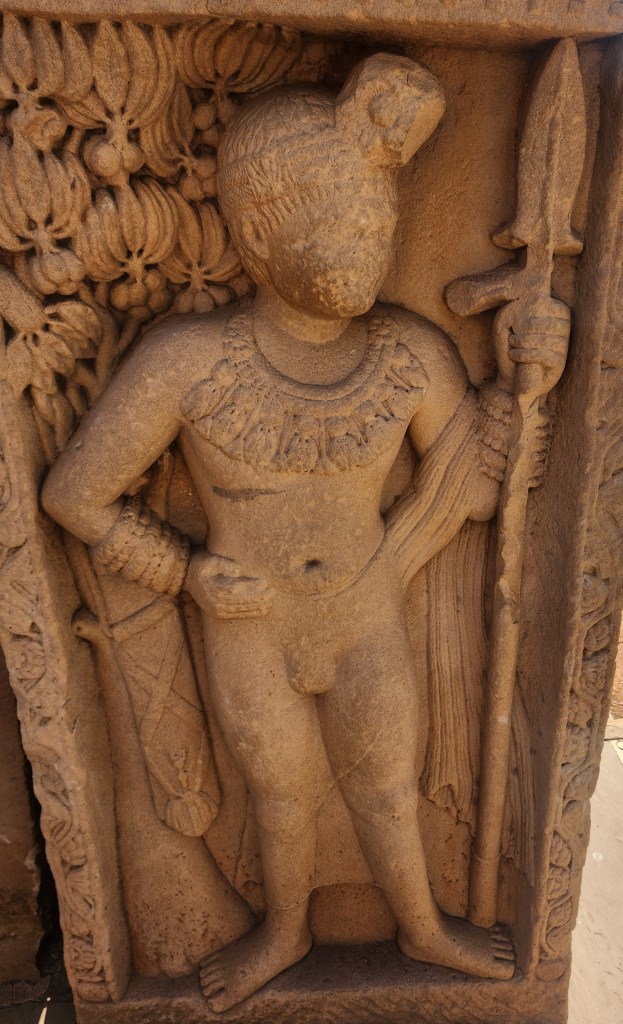
I am sharing the cover image of this article above, just to share information about it.

This image shows an armed doorkeeper, wielding a spear. This carving is from the one of the Torana (Gateways) at the Great Stupa in Sanchi. This individual is wielding a spear taller than himself, with a leaf shaped spearpoint with 2 wings at the bottom. This I think, is the oldest image in my collection of the use of a spear. Hence its choice as the cover image.